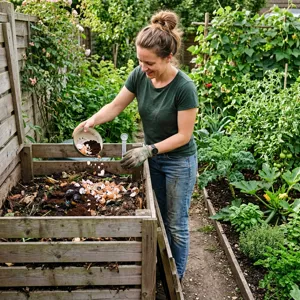
How to Dose Fertilizer for Plants: Calculator & Mixing Guide
Calculate fertilizer amounts for houseplants, containers, garden beds, and lawns. Learn label-based dilution, area-rate formulas, accurate measurement, and how to reduce fertilizer burn risk.
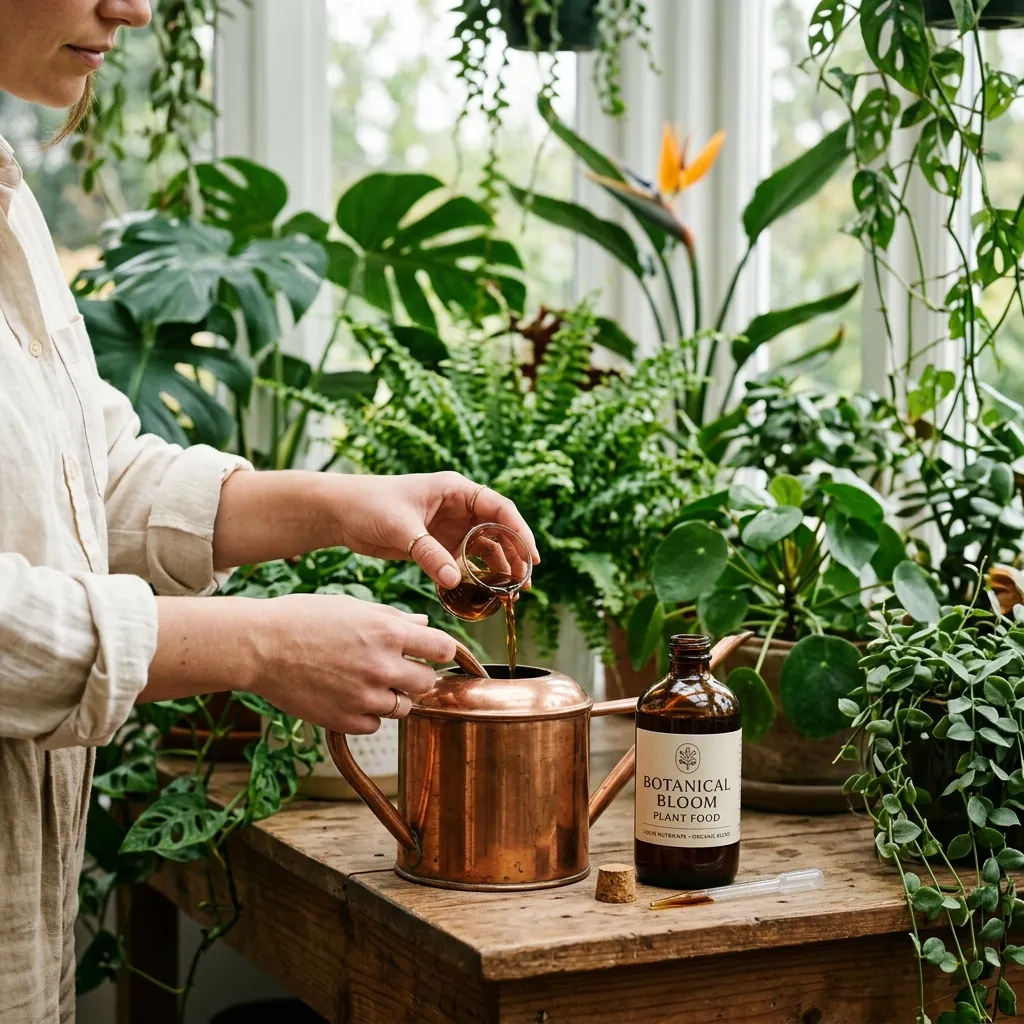
Quick Answer
There is no single fertilizer dose for every plant or product. The right amount depends on the product's N-P-K analysis, the plant, the growing medium, how you apply it, and the label. For liquid feeds, scale the label rate to your actual water volume. For granular products in pots, follow the label's rate per container. For lawns and garden beds, start from a soil test or local nutrient recommendation, divide the nutrient amount by the nutrient fraction on the label, then scale to the measured area. Keep per-litre or per-gallon dilution rates separate from per-area rates, measure accurately, and never exceed the label.
Calculate Your Fertilizer Dose
Enter your details below to generate a custom recommendation.
Recommended Output
Recommended Dose
Feeding Frequency
Recommended NPK Profile
Application Guidance
Caution: Safety Check
Recommended Actions
Key Takeaways
- Use the product label as your starting point; never assume one dose works for every fertilizer.
- For lawns and garden beds, use a soil test or locally appropriate nutrient recommendation to determine the required nutrient rate.
- Keep liquid dilution rates per liter or gallon separate from granular application rates per area or container.
- Measure liquids with a suitable calibrated syringe or measuring device and dry products with a scale when the label specifies weight.
- Follow the label's application instructions, including whether to moisten the growing medium before feeding.
- Do not routinely fertilize truly dormant plants; let active growth and the product label guide when feeding resumes.
- Product mass is not nutrient mass: nutrient amount = product amount × the nutrient percentage on the label (as a decimal).
- If you suspect overfertilization, stop feeding and assess the cause before applying more; flushing a well-drained container is a common first step.
Quick Facts
- Golden rule Always use the manufacturer's label rate first
- Formula Amount = Label Amount × (Target Volume ÷ Label Volume)
- Liquid measuring Use a calibrated syringe, not kitchen spoons
- Powder measuring Use a digital scale, not volume alone
- New product Start with the label rate; only reduce if label permits
- Dormant plants Routine feeding is usually paused during dormancy; resume when active growth returns and the label supports it
- Product vs nutrient Nutrient amount = Product amount × (Label % ÷ 100)
- Area-based rate Product per area = Nutrient rate ÷ Nutrient fraction
What Should I Do?
You're using a new fertilizer for the first time
Plant is in active growth (spring/summer)
Plant is dormant or slow-growing
You see white salt crust on soil surface or pot rim
Leaves show crispy brown edges or tips
You're repotting or have recently repotted
You're using kitchen spoons to measure
You want to fertilize every watering
PlantSolve Recommendation
- Conservative dosage designed for container plants
- Based on manufacturer instructions
- Adjusted using horticultural best practices
- Start low and increase only if vigorous growth is observed
Safe Starting Dose
If you're unsure, follow these conservative baselines:
Houseplants
¼ strength
Succulents
¼ strength
Vegetables
½–1×
Seedlings
⅛–¼ strength
Popular Scenarios
Standard Dosage Table
| Plant Group | Strength | Frequency |
|---|---|---|
| Houseplants | 1/4–1/2 | Every 2–4 weeks |
| Vegetables | Full | Weekly |
| Succulents | 1/4 | Monthly |
| Orchids | 1/4 | Every 2 weeks |
Dosage Calculator Formula
Example
Fertilizer math doesn't have to be intimidating. Whether you are using a liquid synthetic for houseplants, an organic fish emulsion for seedlings, or a granular slow-release for your outdoor containers, the principles of safe dosing remain the same.
How much fertilizer should I use? It depends on the product's N-P-K analysis, the plant, the growing medium, how you apply the fertilizer, and what the label says. Liquid feeds are scaled to the volume of water you mix, granular products are applied per container or per area, and garden beds and lawns are calculated from a nutrient recommendation and the measured area. There is no universal dose, so start from your own product's label.
This guide explains how to calculate fertilizer dosages correctly, why "more" is rarely better, and how to read the dilution instructions on different types of fertilizers to prevent fertilizer burn.
What You'll Learn
- Which Fertilizer Calculation Method Should You Use?
- The Math Behind Dilution
- Diagnose Before You Fertilize
- Why Overdosing Kills Plants
- How Fertilizer Dose Is Calculated
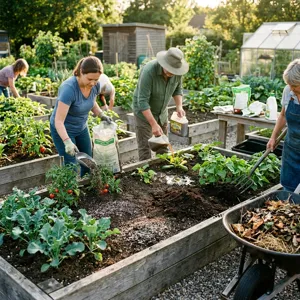
- How to Calculate Fertilizer for Garden Beds and Lawns
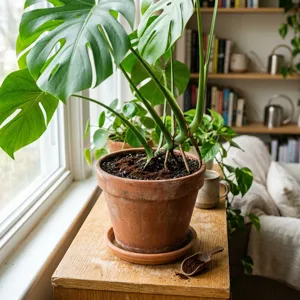
- How Much Fertilizer Does a Potted Plant Need?
- 8 Fertilizer Dosing Mistakes to Avoid
- Troubleshooting Fertilizer Dosing Problems
- Why There's No Universal Dosage Table
- Illustrative Example: Calculating a Dose
- Fertilizer Type Quick Reference
- Comparison: Liquid vs Granular vs Organic
- Seasonal Feeding: When to Pause in Winter
- When to Resume Fertilizing in Spring
Which Fertilizer Calculation Method Should You Use?
The correct calculation depends on the unit your fertilizer label uses and how you plan to apply the product. Match your situation to one of the four methods below before you start measuring.
| Your situation | Calculation method | What you need | Where to go |
|---|---|---|---|
| Liquid concentrate or water-soluble powder mixed into water | Dilution: scale the label rate to the volume of water you will actually mix | The label rate and the volume it refers to, plus your own water volume | The Math Behind Dilution |
| Granular or slow-release fertilizer in a pot or container | Label rate per container size or per surface area; not a water-volume calculation | The label rate per container, the container size, the plant, and the application interval | Potted plants |
| Garden bed, raised bed or lawn | Area-based: nutrient rate ÷ nutrient fraction, then scale to the measured area | A soil test or local nutrient recommendation, the label analysis, and the measured area | Garden beds and lawns |
| Branded feeding programs, fertigation or hydroponic systems | Follow the product's own schedule or chart, and check it with a calculator | The manufacturer's program, your water volume, and your system details | Fertilizer Dosage Calculator |
Organic fertilizers such as compost, manure and fish emulsion follow their own product or material guidance, and organic does not mean a product cannot be overdosed. Planted aquariums use a separate tool: see the aquarium fertilizer calculator.
The Math Behind Dilution
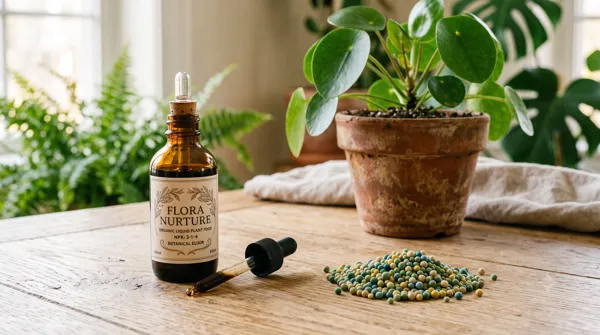
Most liquid fertilizers provide instructions in teaspoons per gallon or milliliters per liter. If you are mixing small batches for a few houseplants, you need to scale the math down. (For an exact dilution based on your pot size, use the PlantSolve Fertilizer Dosage Calculator rather than guessing.)
- 1 teaspoon (tsp) = 5 milliliters (ml)
- 1 tablespoon (Tbsp) = 15 ml (3 tsp)
- 1 gallon = 3.8 liters (approx 4L for easy math)
- 1 quart = ~1 liter (1000 ml)
Example 1: Scaling Down
If a label says "1 teaspoon per gallon," that means 5 ml per 4 liters. To make just 1 liter for your watering can, you need to divide by 4.
5 ml ÷ 4 = 1.25 ml per liter (using 4 L as a convenient approximation; with the more exact 3.785 L per US gallon the answer is about 1.3 ml per liter). You can use a blunt syringe or a medicine dropper to measure this precisely.
Example 2: The "Weakly, Weekly" Method
Many growers prefer feeding a very dilute solution with every watering rather than a strong dose once a month. This only works safely when the product label supports more frequent, lower-strength application—some labels explicitly list a weekly diluted rate, while others are formulated around a single monthly dose and should not simply be divided by four. Check whether your label offers a "constant feed" or "weekly" rate before converting a monthly dose this way, and if it does, that label rate—not an assumed 4× dilution—is what you should follow.
Diagnose Before You Fertilize
Yellowing leaves, pale growth, or stalled progress do not automatically mean your plant needs more fertilizer. Before increasing or applying a fertilizer dose, rule out non-nutritional causes first: overwatering, poor drainage, root rot, insufficient light, or active pest infestations can all cause symptoms that look identical to a nutrient deficiency. In fact, applying fertilizer to a plant already suffering from root stress or moisture overload can worsen root damage and accelerate decline through fertilizer burn.
Additionally, a genuine nutrient shortage may not be caused by a lack of fertilizer in the soil, but by nutrient lockout—where improper soil pH or heavy salt buildup prevents roots from absorbing available elements. As a general diagnostic clue, mobile nutrients (such as nitrogen, phosphorus, and potassium) typically show deficiency symptoms first on older, lower foliage as the plant translocates resources to new growth. In contrast, relatively immobile nutrients (such as iron and calcium) tend to show chlorosis or distortion on fresh, upper leaves first. Remember that this leaf position pattern is only a clue, not definitive proof, because watering issues, root damage, and light extremes frequently produce overlapping leaf symptoms. For a complete visual clue checklist, see our yellow leaves diagnostic guide.
Why Overdosing Kills Plants
Fertilizer salts change the chemistry of the soil. When you apply too much fertilizer, a specific biological chain reaction happens:
- Salts build up around roots
- Osmotic pressure draws water out of root cells into the salty soil
- Roots dehydrate and die — this is fertilizer burn
- Nutrient lockout occurs — excess salts block uptake of other nutrients
- Plant starves despite nutrients being present in the soil
This is why more fertilizer does not mean more growth. Once salinity exceeds the plant's tolerance, growth stops and damage begins.
In one sentence: Fertilizer burn happens when excess salts in the soil draw water out of roots through osmosis, dehydrating and killing them—not because the plant receives "too many nutrients."
How Fertilizer Dose Is Calculated
Fertilizer dosing confusion usually comes from mixing up four different concepts. Once you separate them, the math on any label becomes straightforward.
1. Fertilizer analysis
A number like 20-20-20 is the fertilizer analysis: the percentage, by weight, of nitrogen (N), phosphorus (as P₂O₅), and potassium (as K₂O) contained in that product. It is not a "strength" rating and it does not tell you how much of the product to use—it only tells you what is in it.
2. Nutrient concentration
Nutrient concentration, often expressed in ppm (parts per million) of a specific nutrient like nitrogen, describes how much of that nutrient ends up in your final mixed solution. This is a different number from the fertilizer analysis and a different number again from how much product you weighed or measured out.
3. Product dose
The product dose is the actual amount of fertilizer—grams, milliliters, teaspoons—you add to reach the label's intended rate. It depends on the product's formulation and its own label instructions, not on a generic rule that applies to every fertilizer equally.
4. Dilution/application rate
The application rate is how the label expresses that product dose: per liter or gallon of water, per square foot or raised bed, per container, or per fertigation cycle. The same product dose can be described in several of these units depending on how you plan to apply it, so the calculation you need depends on which unit your label actually uses.
Put together: fertilizer analysis tells you what nutrients are in the product; nutrient concentration tells you how much of a nutrient you want in solution; product dose is the amount of fertilizer you measure out; and the application rate is the unit the label uses to tell you how to apply that dose. These are related, but they are not interchangeable, and treating any two of them as the same number is where most dosing mistakes start.
Product mass versus nutrient mass
The percentages in an N-P-K analysis are by weight of the product. To find how much of one nutrient a given amount of product supplies, use:
Nutrient amount = Product amount × (Label percentage ÷ 100)
For example, 100 g of a 20-20-20 product contains 100 g × 0.20 = 20 g of nitrogen, 20 g of P₂O₅ and 20 g of K₂O. To work in the other direction and find the product needed for a target amount of one nutrient, divide by the nutrient fraction: Product amount = Nutrient amount ÷ Nutrient fraction. If you need elemental phosphorus or potassium, remember that P₂O₅ is about 43.6% phosphorus and K₂O is about 83% potassium by weight.
The same arithmetic links label percentages to ppm in a liquid mix. Because 1 mg per litre of a dilute solution is about 1 ppm, dissolving 1 g of a product that is 20% nitrogen in 1 litre of water supplies 0.2 g, or 200 mg, of nitrogen, about 200 ppm N. This is a unit illustration, not a recommended concentration; your label rate decides how much product to use. Nutrient and area calculators such as our NPK calculator—or tools for balanced formulations like our 13-13-13 calculator—follow the same logic.
How to Calculate Fertilizer for Garden Beds and Lawns
Fertilizer applied to a lawn or garden bed is calculated differently from liquid fertilizer mixed into a watering can. Start with a soil test or a locally appropriate nutrient recommendation to identify which nutrients are needed and the recommended application rate. Do not assume that every garden needs the same amount of nitrogen, phosphorus, or potassium.
Step 1: Check the recommendation and fertilizer label
A recommendation may specify the amount of a nutrient to apply per 1,000 square feet, per 100 square meters, or per acre. The fertilizer label's N-P-K analysis indicates the percentage by weight of nitrogen (N), phosphate expressed as P₂O₅, and potash expressed as K₂O. Match the nutrient in the recommendation to the corresponding label percentage. Do not treat the second and third label numbers as elemental phosphorus and potassium percentages.
Step 2: Calculate the amount of fertilizer product
When the recommendation specifies a nutrient amount and the label provides that nutrient's percentage by weight, use:
Fertilizer product required = Required nutrient amount ÷ Nutrient fraction in the product
Convert the percentage to a decimal before dividing. For example, 25% nitrogen becomes 0.25.
Step 3: Scale the result to the area you will treat
Product for your area = Product rate for the reference area × (Your measured area ÷ Reference area)
Measure the area first. If the recommendation is stated per 1,000 square feet, divide your measured square footage by 1,000. For metric calculations, use a recommendation and area in matching units, such as a rate per 100 square meters and an area measured in square meters.
Illustrative example: A nitrogen recommendation
Suppose a soil-test-based recommendation calls for 1 pound of nitrogen per 1,000 square feet, and the fertilizer label states 25% nitrogen. The product calculation is 1 lb ÷ 0.25 = 4 lb of fertilizer product per 1,000 square feet. This is a calculation example, not a recommendation to apply that rate to your lawn or garden. Use the nutrient rate appropriate to your soil, crop or turf, and local guidance, and follow the product label.
Scaling example: your own bed
Using the hypothetical 4 lb of product per 1,000 square feet from above, a bed measuring 8 ft × 12 ft is 96 square feet. Product for your area = 4 lb × (96 ÷ 1,000) = 0.384 lb, or about 6.1 oz (roughly 174 g). A larger area scales the same way: a 4,000 square foot lawn would need four times the per-1,000 square foot amount.
Metric version: if a recommendation calls for 5 g of nitrogen per square metre and the label states 25% nitrogen, the product amount is 5 ÷ 0.25 = 20 g of product per square metre. A 12 m² bed would need 20 g × 12 = 240 g. As above, this is arithmetic practice, not a recommended rate.
Blended fertilizers also supply other nutrients at the same time. Multiply the product amount by the P₂O₅ and K₂O percentages to see how much phosphate and potash a nitrogen-based rate delivers, and check that against your soil test before applying.
Important: This nutrient-per-area formula is not a substitute for a product label's instructions. If the label specifies a maximum rate, application interval, placement method, or other restriction, follow it. Do not apply nutrients that a soil test or local recommendation indicates are unnecessary, and do not convert a lawn or garden-bed rate directly into a dose for a pot or watering can.
How Much Fertilizer Does a Potted Plant Need?
Pot size alone does not set a fertilizer dose. The number that matters is the amount of fertilizer product required for the water or growing medium you are actually applying it to, and that depends on several things working together, not on container diameter by itself.
- Start with the actual product label, not a generic chart—different products are formulated at very different concentrations.
- Identify the label's application unit. Some labels are per liter/gallon of water, some are per square foot of bed, some are per plant or per container.
- Match your real application volume to that unit—for example, how much water you actually pour through the pot at each feeding—rather than assuming a fixed volume for every pot of a given size.
- Account for fertilizer density. Dry, granular products vary in how much a teaspoon or tablespoon weighs; a volume measurement (teaspoons) cannot be converted to a weight (grams) without knowing that specific product's density, which is usually only on the label or the manufacturer's technical sheet. For an example of a slow-release product, see our Osmocote guide.
- Consider the plant and growing medium—species, potting mix, and application method (top-dress, drench, foliar) can all shift what an appropriate rate looks like, but none of them replace checking the label.
In short: a product-specific label calculation will always be more reliable for a potted plant than a generic per-inch or per-pot-size rule.
8 Fertilizer Dosing Mistakes to Avoid
- ❌ Feeding dry soil — avoid applying fertilizer to bone-dry soil; follow the product's instructions and moisten the medium first when required.
- ❌ Ignoring the label's starting rate — the label rate is your baseline; only start lower if the label itself supports a reduced rate for sensitive plants, and observe before increasing.
- ❌ Guessing measurements — use a digital scale or calibrated syringe, not kitchen spoons.
- ❌ Fertilizing dormant plants — if growth has stopped, routine feeding can add salts without supporting new growth. Let active growth and product guidance determine when feeding resumes.
- ❌ Mixing incompatible fertilizers — calcium + phosphate = precipitation. Dilute separately first.
- ❌ Ignoring EC/TDS trends — EC can help monitor soluble-salt levels and detect changes, but it is not a substitute for label rates or plant-specific context.
- ❌ Ignoring runoff — if water drains immediately without saturating soil, roots aren't absorbing nutrients.
- ❌ Using the same dose year-round — nutrient demand may drop as growth slows in cooler, lower-light months, and a truly dormant plant generally does not need routine feeding; let active growth, not the calendar, decide when and how much to feed.
Troubleshooting Fertilizer Dosing Problems
Most dosing problems come from a handful of errors. Use this table to identify the cause and the safest next step.
| Problem | What goes wrong | What to do |
|---|---|---|
| Measuring or unit-conversion errors | Mixing up teaspoons and milliliters, gallons and litres, or grams and volume | Recalculate with consistent units, measure with a scale or calibrated syringe, and check the result against the label rate. If a too-strong mix was already applied, treat it as possible overfertilization (see below). |
| Product dose confused with nutrient dose | Using the 20 in 20-20-20 as the amount to apply, or treating the nutrient rate as the product rate | The label percentage is a nutrient fraction, not a dose. Convert with Product = Nutrient ÷ Nutrient fraction, or use the label's own rate. |
| Feeding dry or stressed plants | Applying fertilizer to bone-dry soil, or to plants with root rot, pests or severe wilting | Fix the underlying problem first. Follow the label on whether to moisten the growing medium before feeding. |
| Combining products without checking | Mixing concentrates, or using soluble and slow-release fertilizers together in one container | Check the labels for compatibility, dilute products separately before combining, and avoid stacking several products in a pot. |
| Fertilizing dormant or recently repotted plants | Adding nutrients when the plant is not growing, or when the new mix already contains fertilizer | Pause routine feeding and resume when active growth returns. Check whether the potting mix contains fertilizer before adding more. |
| Possible overfertilization | White or brown crust on the soil or pot rim, brown leaf edges, wilting despite moist soil | Stop feeding and assess the cause before applying anything else. For a container with drainage holes, flush with clean water until it drains freely. For beds and lawns, remove spilled granules where you can and ask your local extension service for advice. |
Why There's No Universal Dosage Table
You will find plenty of charts online listing a single "safe" rate for Pothos, Monstera, or tomatoes. Treat these with caution: a plant species by itself does not determine a fertilizer dose. Two people growing the same Monstera with two different fertilizer products can both be feeding correctly at very different ml or gram amounts, because the products themselves differ in analysis, concentration, and label rate.
What actually determines the right amount is the combination of:
- the specific fertilizer product and its analysis (e.g. 20-20-20 vs. 10-15-10)
- the label's stated rate and application unit
- the application method (drench, foliar, top-dress)
- the plant's current growth stage and the season
Rather than starting from a species-based table, start from your product's label and use the formula and calculator on this page to work out the amount for your situation.
Illustrative Example: Calculating a Fertilizer Dose
Illustrative example — not a universal fertilizer recommendation. Always use your own product's actual label rate.
- Fertilizer analysis: a hypothetical water-soluble 20-20-20 product.
- Label/application instruction: the label states "1 teaspoon (5 ml) per gallon of water for regular feeding."
- Your application volume: you want to mix 1 liter (about a quarter of a gallon) for a watering can.
- Formula: Product Dose = Label Dose × (Your Volume ÷ Label Volume).
- Calculation: 5 ml × (1 L ÷ 3.8 L) = 5 ml × 0.26 ≈ 1.3 ml.
- Result: mix approximately 1.3 ml of this hypothetical product into 1 liter of water, measured with a calibrated syringe rather than a kitchen spoon.
The calculation principles above explain how fertilizer dosing works. The PlantSolve calculator applies those same principles to your own product's label rate and your chosen application volume, so you do not have to do this arithmetic by hand each time.
Fertilizer Type Quick Reference
| Type | How to Dose | Burn Risk | Best For |
|---|---|---|---|
| Liquid Concentrate | Dilute in water per label; apply during watering | High if undiluted | Houseplants, vegetables, frequent feeders |
| Water-Soluble Powder | Dissolve in water; measure by weight or volume according to the label | Can be high if overdosed | General gardening, hydroponics |
| Granular / Pellet | Apply according to the label's stated rate, placement method, and interval; application varies by product | Varies by product and application rate | Outdoor beds, trees, shrubs |
| Slow-Release | Apply according to the label's stated rate and interval; breaks down gradually over the label's stated period | Generally lower immediate exposure when applied as labeled, but overdosing is still possible | Low-maintenance gardens, busy owners |
| Organic (Compost, Manure) | Apply or incorporate according to the material or product instructions; nutrient release characteristics vary | Varies by material and application rate; heavy over-application can still injure plants | Edible gardens, soil building |
| Fish Emulsion | Follow the product label; concentrations vary considerably between brands | Varies by product and dose | Leafy greens, organic gardens |
| Seaweed Extract | Follow the product label; use as foliar feed or soil drench | Varies by product and dose | Seedlings, stress recovery, foliar feeding |
Comparison: Liquid vs Granular vs Organic
| Factor | Liquid | Granular | Organic |
|---|---|---|---|
| Speed | Often rapid after application | Often gradual; product-dependent | Varies widely by material and product |
| Precision | Depends on label and measurement method | Depends on label and measurement method | Depends on material, product, and measurement method |
| Burn Risk | Can be high if undiluted or overdosed | Varies by product and application rate | Varies by material and application rate; overdosing can still cause injury |
| Frequency | Follow product label | Follow product label | Follow product label or material-specific guidance |
| EC Control | Can be monitored directly in the solution | Can be harder to interpret because release occurs over time | EC readings depend on the material, growing medium, and setup |
| Cost | Variable | Variable | Variable |
People Also Search For
- Fertilizer calculator
- NPK calculator
- Fertilizer mixing chart
- Fertilizer dilution calculator
- Fertilizer burn
- Nutrient deficiency
Related Guides
Learn Concepts
- NPK 20-20-20 Guide
- NPK 19-19-19 Guide
- Organic vs Synthetic Fertilizer
- Fish Emulsion Guide
- Liquid Fertilizer
- Slow-Release Fertilizer
- Micronutrients
- Macronutrients
Calculate & Measure
Solve Problems
Seasonal Feeding
Brands & Products
Seasonal Feeding: When to Pause in Winter
As days shorten and temperatures change in fall and winter, many houseplants slow their growth, although the degree of slowdown varies with species and indoor conditions. During this time, their nutrient requirements may drop. Continuing to fertilize heavily when a plant is barely growing can contribute to soluble-salt buildup in the growing medium and increase the risk of root injury.
However, the "no-feeding" rule is not absolute. Tropical or warm-season plants kept warm and under sufficiently bright indoor light may continue growing through winter, requiring fractional or reduced feeding based on their activity. The central rule is to let active growth dictate your feeding schedule.
For most standard houseplants whose growth stalls, pause feeding during the low-light months. Resume your normal fertilizer routine only when you see clear signs of active new growth, such as fresh leaves, root tips, or breaking buds. For exact recommendations tailored to your specific plant, its current growth phase, and the season, always refer to our Fertilizer Calculator rather than relying on a universal fixed dosage chart.
When to Resume Fertilizing in Spring
Do not resume fertilizing simply because the calendar says spring has arrived. For most houseplants, the better signal is sustained active growth supported by adequate light, suitable temperatures, and regular water use.
During winter, many houseplants naturally slow their growth because of shorter days, lower light, cooler conditions, or dormancy. If a plant is dormant or growing very slowly, adding fertilizer will not compensate for those conditions. Excess nutrients can instead accumulate in the potting mix and contribute to root stress or leaf-tip damage.
Look for signs that the plant is returning to active growth, such as new leaves emerging, shoots extending, or a noticeable increase in water use. Once active growth is sustained, you can gradually return to the fertilizer routine appropriate for that plant and fertilizer product.
Start Feeding Gradually
When active growth resumes, follow the dilution rate and feeding frequency appropriate for the fertilizer and plant rather than assuming every plant needs the same spring dose. Fertilizer should support healthy growth that is already underway, not substitute for adequate light, appropriate watering, or suitable growing conditions.
What About Recently Repotted Plants?
A recently repotted plant may not need fertilizer immediately. Fresh potting mix can already contain available nutrients, and newly disturbed roots may benefit from time to establish before regular feeding resumes. Check the potting mix and the fertilizer instructions before adding another nutrient source.
For guidance on choosing the right timing and approach for repotting, see our spring repotting guide.
Recommended next actions
Next Best Actions
Move from reading to action with related calculators, plant profiles, and quiz-based recommendations.
Calculator
NPK Fertilizer Calculator for Houseplants & Containers (Not Farms)
Calculate fertilizer dosage and dilution for watering cans, containers, houseplants, and small growing spaces using the fertilizer label or a target nitrogen concentration — built for pots, not fields.
Topic Guide
Fertilizer Burn: Symptoms and Treatment
Identify fertilizer burn symptoms like scorched leaf edges and treat overfertilized plants by flushing soil and adjusting feeding.
Topic Guide
Nutrient Lockout in Plants: Causes, Diagnosis & How to Fix It
Learn to identify and fix nutrient lockout. Discover why plants can't absorb nutrients due to pH imbalance, salt buildup, or overfertilization, and how to.
Topic Guide
EC Meter Guide for Plants
Use an EC meter to measure nutrient salt levels in soil or water and keep readings within the safe range for healthy plant roots.
Topic Guide
TDS Meter Guide: PPM, EC Conversion & Safe Ranges for Plants
Learn how TDS meters work, how they convert EC to PPM, what readings are safe for houseplants and hydroponics, and how to prevent over-fertilization with.
Topic Guide
Osmotic Pressure in Plant Roots
Learn how osmotic pressure moves water through plant roots and why excess fertilizer salts trigger fertilizer burn damage.
Frequently Asked Questions
Can I fertilize after repotting?
Should I fertilize dry soil?
Can you fertilize every watering?
How often should indoor plants be fertilized?
How much fertilizer should I use per liter of water?
How much fertilizer should I use per gallon of water?
How much fertilizer per pot?
What is the fertilizer dosage formula?
Why does too much fertilizer burn roots?
Should I use full strength fertilizer the first time?
Can I use kitchen spoons to measure fertilizer?
Should I fertilize dormant plants?
Can I mix different fertilizers together?
What is EC and why does it matter for fertilizing?
What is the difference between liquid, granular, and organic fertilizer dosing?
How much 20-20-20 fertilizer should I use?
How much fish emulsion per liter of water?
What does flushing soil mean and when should I do it?
When should I resume fertilizing my houseplants in spring?
How do I calculate fertilizer for a garden bed or lawn?
What do the N-P-K numbers mean when calculating a fertilizer dose?
Should I use the same fertilizer dose for every plant?
Can I use more fertilizer to make plants grow faster?
What should I do if I accidentally overfertilize a plant?
Sources & References
-
Source: pubs.ext.vt.edu
Fertilizer analysis, nutrient concentration (ppm), and dilution/fertilizer-calculation methodology used for the 'How Fertilizer Dose Is Calculated' section.
-
Source: pubs.ext.vt.edu
Fertilizer types and application-rate calculation methodology used to distinguish product dose from application/dilution rate.
-
Source: pubs.nmsu.edu
Small-area and container fertilizer calculation guidance, including why dry-fertilizer density varies and volume-to-weight is product-specific, used in the potted-plant section.
-
Source: extension.psu.edu
Worked method for converting a nutrient rate per 1,000 square feet into the amount of fertilizer product, used for the area-based section.
-
Source: turf.purdue.edu
Two-step calculation for pounds of fertilizer per area, used to check the area-based formulas and scaling example.
-
Source: extension.msstate.edu
Soil-test-based nutrient recommendation converted to product amount and scaled to lawn or garden area.
-
Source: extension.psu.edu
Signs of over-fertilization in potted plants, leaching, and the caution against combining slow-release and soluble fertilizers.
-
Source: hortsense.cahnrs.wsu.edu
Fertilizer burn symptoms and prevention, including applying fertilizer to moist soil and leaching container plants.
-
Source: homegarden.cahnr.uconn.edu
Houseplants respond to fertilizer during active growth, 'more is not better', and leaching to reduce excess salts.
Explore More