Osmotic Pressure in Plant Roots
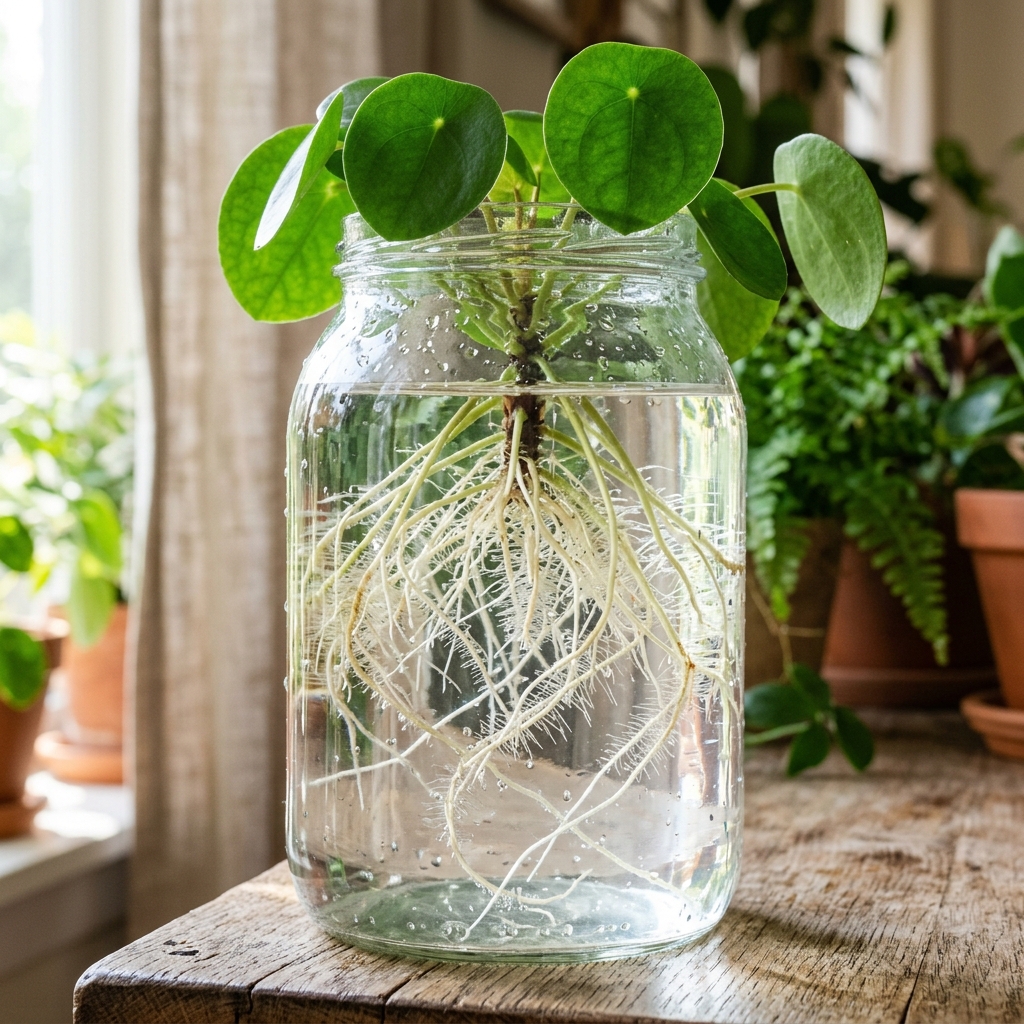
Osmotic pressure is the physical force governing water movement across the semipermeable membranes of plant root cells, moving from areas of lower solute concentration toward areas of higher concentration. Under normal conditions, roots maintain a solute concentration slightly higher than the surrounding soil, creating a gradient that continuously pulls water inward. When fertilizer salts accumulate in the soil beyond what the plant can tolerate, this gradient reverses: soil solute concentration exceeds that inside the root cells, and water is instead pulled out of the roots. This reversal is the core mechanism behind fertilizer burn, even in soil that still feels moist.
Quick Answer
Osmotic pressure drives water movement across plant root cell membranes, moving from lower to higher solute concentration. Roots normally maintain higher internal solute levels than surrounding soil, pulling water inward. Excess fertilizer salts reverse this gradient, pulling water out of roots instead, which is the underlying cause of fertilizer burn.
Key Takeaways
- Water moves toward higher solute concentration across root membranes.
- Roots normally maintain higher internal solute levels than surrounding soil.
- Excess fertilizer salts can reverse the normal osmotic water flow.
- Reversed osmosis pulls water out of roots, causing fertilizer burn.
- Understand this mechanism to explain why moist soil can still burn roots.
Symptoms
- Wilting or drooping despite moist or wet soil: The classic paradox of osmotic stress: roots lose water to the soil through reverse osmosis, so the plant dehydrates even when water is abundant.
- Brown, crispy leaf tips and margins: As root cells lose water and die, the plant cannot transport moisture to leaf margins, which dry out and necrose from the tips inward.
- Root dehydration and browning: Root cells shrivel and turn brown as water exits through the membrane; fine root hairs die first, crippling nutrient uptake.
- Leaf scorch or marginal burn: Salt accumulation at leaf edges creates localized osmotic stress, pulling water from margin cells and causing tissue death.
- Stunted or arrested growth: Without adequate water uptake, cell expansion stops. Turgor pressure is required for cell elongation; osmotic stress halts it.
- Fertilizer burn symptoms appearing days after feeding: Osmotic stress builds as salts accumulate; initial root damage may not produce visible leaf symptoms for 3–7 days.
- Poor water uptake even after thorough watering: Damaged root membranes lose selective permeability; even when soil salts are later flushed, roots may temporarily fail to re-establish normal osmosis.
Common Causes
- Excess fertilizer creating high soil solute concentration: When dissolved fertilizer salts exceed the solute concentration inside root cells, the osmotic gradient reverses and water exits the root.
- High EC or PPM in source water or nutrient solution: Hard tap water (200–400 PPM) or over-concentrated nutrient solutions raise external solute levels above the root's internal concentration.
- Salt buildup from repeated fertilization without flushing: Each feeding adds salts that accumulate in the root zone; over months, the cumulative concentration exceeds safe osmotic thresholds.
- Poor drainage preventing salt leaching: Without drainage, salts cannot exit the pot; evaporation concentrates them further, continuously steepening the osmotic gradient against the roots.
- Incorrect nutrient concentration in hydroponic reservoirs: In soilless systems, there is no soil buffer; a nutrient solution EC above 3.0 mS/cm can immediately reverse osmosis and damage roots.
- Drought stress followed by heavy fertilization: Dehydrated roots have elevated internal solute concentration; adding fertilizer salts can tip the gradient dangerously even at moderate doses.
- Using synthetic fertilizers at full strength on container plants: Manufacturer rates are often calibrated for garden beds with large soil volumes; small pots cannot dilute the same concentration.
- Applying fertilizer to dry soil: Dry roots already have reduced turgor and concentrated internal solutes; fertilizer salts contact roots at full strength without dilution.
Prevention
- Maintain nutrient solution EC within the safe range for your plant species and growth stage.
- Avoid overfertilizing; start at half the manufacturer's recommended strength and increase gradually.
- Flush container soil with plain water every 4–6 weeks to leach accumulated salts and reset the osmotic gradient.
- Water deeply and thoroughly before applying fertilizer to ensure roots are hydrated and internal solute concentration is diluted.
- Use balanced fertilizers rather than single-nutrient spikes that can create extreme localized solute concentrations.
- Monitor runoff EC monthly; if runoff EC exceeds input EC by more than 20%, flush immediately.
- Ensure pots have drainage holes so salts can exit rather than concentrate through evaporation.
- Use reverse osmosis or distilled water when source water EC exceeds 0.4 mS/cm to prevent hidden salt accumulation.
- Never fertilize dormant or drought-stressed plants whose roots are already operating at elevated internal solute levels.
Best Practices
- Feed at quarter to half strength initially, especially with new fertilizer products or on unfamiliar plants.
- Measure EC of every nutrient solution before it contacts roots; do not rely on manufacturer dilution ratios alone.
- Flush soil monthly in containers to prevent the cumulative salt buildup that gradually steepens osmotic gradients.
- Ensure all containers have unobstructed drainage holes so excess salts can exit rather than concentrate.
- Water thoroughly until 10–20% runoff before every fertilization to pre-hydrate roots and dilute salts.
- Allow the top 2–3 cm of soil to dry between waterings to encourage roots to develop strong osmotic uptake capacity.
What Is Osmotic Pressure?
Osmotic pressure is the physical force that drives the movement of water across a semipermeable membrane—such as a plant root cell membrane—from an area of lower solute concentration to an area of higher solute concentration. It is one of the most fundamental processes in plant physiology, governing everything from water uptake and nutrient transport to cell expansion and structural rigidity.
In simple terms: water follows salt. Where dissolved salts are more concentrated, water will move toward that area. Plant roots exploit this principle by maintaining a carefully regulated internal solute concentration that is slightly higher than the surrounding soil. This creates a favorable osmotic gradient that continuously pulls water from the soil into the root, up through the vascular system, and out through the leaves via transpiration.
How Osmosis Works in Plant Roots
Plant root cells are surrounded by a semipermeable membrane—a lipid bilayer that allows water molecules to pass freely but blocks most dissolved salts and large molecules. Inside the root cell, the cytoplasm contains dissolved sugars, amino acids, mineral ions, and organic acids. This internal solution has a measurable solute concentration.
When the soil solution has a lower solute concentration than the root cell interior, water moves into the root through osmosis. This influx of water creates turgor pressure—the outward pressure of the cell contents against the rigid cell wall. Turgor pressure is what keeps plant stems upright, leaves expanded, and cells functioning. Without it, plants wilt.
The process is passive: roots do not "pump" water. They simply maintain the solute gradient, and physics does the rest. This is why healthy roots are metabolically expensive—they must continuously synthesize and regulate organic solutes to maintain the gradient that drives water uptake.
Reverse Osmosis: When the Gradient Flips
Reverse osmosis occurs when the solute concentration in the soil becomes higher than the concentration inside the root cell. This reverses the direction of water flow. Instead of water entering the root, it is pulled out of the root and into the soil.
This is not a gradual process. Root cells begin losing water within hours of exposure to a reversed gradient. As water exits, the cell membrane pulls away from the cell wall in a process called plasmolysis. The cell collapses, metabolic function ceases, and the cell dies. Fine root hairs—which have the highest surface area for water absorption—are the first to die.
The plant experiences this as an internal drought: the soil may be soaking wet, but the plant is dehydrating. This is the single most important concept for understanding why over-fertilization causes damage that looks exactly like underwatering.
Why Fertilizer Burn Is an Osmotic Problem
Fertilizer burn is not caused by heat, acidity, or chemical corrosion in the way acid burns skin. It is caused by osmotic dehydration. When you apply too much fertilizer:
- Dissolved fertilizer salts (nitrogen, phosphorus, potassium, and accompanying ions) enter the soil water.
- The total dissolved solute concentration in the soil solution rises sharply.
- If this concentration exceeds the solute concentration inside root cells, the osmotic gradient reverses.
- Water exits root cells into the soil.
- Roots die, nutrient uptake stops, and the plant shows leaf scorch, wilting, and stunted growth.
This is why fertilizer burn can occur even when you water immediately after feeding. The water dilutes the fertilizer in the soil, but if the total salt load is still too high, the osmotic gradient remains reversed. The plant cannot rehydrate until the salts are physically removed from the root zone through flushing.
The Relationship Between EC and Osmotic Pressure
Electrical conductivity (EC) is the most practical tool for predicting osmotic stress. EC measures how well a solution conducts electricity, which is directly proportional to the concentration of dissolved ions (salts). More salts = higher EC = stronger osmotic gradient.
Every plant species has an EC tolerance range. Below this range, growth is limited by insufficient nutrients. Within the range, osmosis functions normally and the plant thrives. Above this range, osmotic stress begins:
- EC 0.2–1.5 mS/cm: Safe for most houseplants. Normal osmosis, healthy water uptake.
- EC 1.8–2.5 mS/cm: Osmotic stress threshold for sensitive plants. Reduced water uptake, subtle growth slowing.
- EC >2.5 mS/cm: Reverse osmosis likely for most houseplants. Visible wilting, leaf burn, root damage.
An EC meter does not measure osmotic pressure directly, but it measures the variable that causes osmotic pressure. This makes EC the single most valuable diagnostic number for preventing fertilizer burn before it happens.
Salt Buildup and Cumulative Osmotic Stress
Osmotic stress is rarely caused by a single over-fertilization event. More commonly, it develops gradually through cumulative salt buildup:
- Each feeding adds salts to the soil.
- Plants absorb some salts through roots, but not all.
- Evaporation from the soil surface leaves salts behind, concentrating them.
- Without periodic flushing, salt concentration rises month by month.
- Eventually, the cumulative EC exceeds the plant's tolerance, and osmotic stress manifests.
This is why a plant that has been "fine for months" can suddenly show burn symptoms. The final feeding was not necessarily too strong; it was simply the last straw that pushed total soil salinity over the osmotic threshold.
Water Uptake and the Soil-Plant-Atmosphere Continuum
Osmotic pressure is one link in a continuous chain called the soil-plant-atmosphere continuum:
Water moves from high potential (wet soil) to low potential (dry air). Osmotic pressure at the root is the engine that drives this entire flow. When osmotic pressure is compromised by high soil salts, the engine stalls. Water cannot enter roots, so it cannot reach leaves, so transpiration stops, so the plant overheats and wilts.
This is why osmotic stress is so dangerous: it does not just affect water uptake. It disrupts the entire physiological system of the plant.
Plant Cells and Turgor Maintenance
Individual plant cells are essentially water balloons. The cell wall is a rigid shell; the interior is a water-filled vacuole. Osmotic pressure fills the vacuole and pushes the cell membrane against the wall. This pressure—turgor—is what gives lettuce its crunch, keeps celery stalks upright, and allows leaves to present their full surface area to sunlight.
When osmotic pressure is lost:
- Cells shrink (plasmolysis)
- Stems go limp
- Leaves curl or droop
- Stomata close to conserve water, halting photosynthesis
- Growth stops because cell expansion requires turgor-driven wall stretching
A plant can survive moderate osmotic stress by closing stomata and slowing metabolism. But prolonged stress causes irreversible cell death, starting at the root tips and moving upward.
Practical Gardening Implications
Understanding osmotic pressure changes how you approach fertilization:
- Measure, don't guess: An EC meter tells you the osmotic environment your roots are experiencing. Use it.
- Flush preventively: Monthly flushing resets salt concentration and restores a favorable osmotic gradient.
- Water before feeding: Hydrated roots have lower internal solute concentration and are more resilient to salt spikes.
- Small pots are high-risk: A given fertilizer dose creates a much higher concentration in a small pot than in a garden bed. Always reduce rates for containers.
- Hard water is hidden salt: Tap water at 300 PPM adds osmotic load before you add any fertilizer. Account for it in your calculations.
Osmotic Pressure vs. Other Plant Stresses
| Stress Type | Mechanism | Key Differentiator | Solution |
|---|---|---|---|
| Osmotic stress | High soil salts reverse water flow | Wet soil + wilting plant + high EC | Flush salts, reduce feeding |
| Underwatering | Low soil water potential | Dry soil + wilting plant + low EC | Water thoroughly |
| Root rot | Pathogens destroy root tissue | Foul smell + mushy roots + wet soil | Repot, trim roots, improve drainage |
| Nutrient lockout | pH prevents nutrient solubility | Normal EC + wrong pH + specific deficiency pattern | Adjust pH, don't change fertilizer |
| Heat stress | Excessive transpiration demand | High temperature + rapid wilting + normal EC | Shade, increase humidity, water |
Frequently Asked Questions
What is osmotic pressure in plants?
Osmotic pressure is the physical force that drives water movement across plant cell membranes. It occurs because water naturally moves from areas with fewer dissolved salts (lower solute concentration) to areas with more dissolved salts (higher solute concentration) through a semipermeable membrane. In healthy plants, roots maintain a higher internal solute concentration than soil, pulling water inward.
What causes osmotic stress in plants?
Osmotic stress occurs when the dissolved salt concentration outside the root becomes higher than inside the root. This reverses the normal water flow, causing water to exit root cells instead of entering them. Common causes include over-fertilization, hard water, salt buildup from lack of flushing, poor drainage, and applying fertilizer to dry soil.
Why do plants wilt even when the soil is wet?
This is the classic sign of reverse osmosis. When soil salts are too concentrated, water moves out of the roots into the soil—opposite the normal direction. The plant loses turgor pressure and wilts despite abundant soil moisture. The solution is not more water; it is flushing the salts out of the soil.
How does fertilizer burn occur at the cellular level?
Fertilizer burn is osmotic damage. Excess fertilizer salts raise the solute concentration in soil water above that inside root cells. Through osmosis, water leaves the root cells to dilute the soil solution. Root cells dehydrate, die, and lose their ability to absorb water or nutrients. The plant then shows leaf scorch, wilting, and stunted growth.
Does EC affect osmotic pressure?
Yes. EC (electrical conductivity) directly measures the concentration of dissolved salts in a solution. Higher EC means more dissolved solutes, which creates a stronger osmotic gradient. An EC meter is essentially an osmotic stress predictor: it tells you how strongly salts will pull water out of roots.
Does pH affect osmosis?
pH does not directly change osmotic pressure, but it affects it indirectly. Extreme pH damages root cell membranes, making them leaky and unable to maintain the internal solute concentration needed for healthy osmosis. Additionally, pH affects nutrient solubility, which changes how many solute particles are available to drive osmotic gradients.
Can osmotic pressure be reversed once damage occurs?
The osmotic gradient itself can be reversed by flushing salts from the soil, which restores the normal direction of water flow. However, if root cells have already died from severe dehydration, those roots cannot recover. New roots must grow, which takes 2–6 weeks depending on the plant and growing conditions.
What is the difference between osmotic pressure and turgor pressure?
Osmotic pressure is the force that drives water into the cell. Turgor pressure is the resulting pressure of water pushing against the cell wall from the inside. Osmotic pressure creates turgor pressure. When osmotic pressure is lost (due to high external salts), turgor pressure collapses, and the cell wilts.
Explore More
Related Articles

Related Plant Guides
No specific plant guides found matching this topic.
Recommended next actions
Continue Exploring
Dive deeper into related plant care tools and profiles.
Topic Guide
EC Meter Guide for Plants
Use an EC meter to measure nutrient salt levels in soil or water and keep readings within the safe range for healthy plant roots.
Topic Guide
PPM Explained for Plant Feeding
Understand what PPM means for fertilizer strength and how to measure and adjust parts per million for safe plant feeding.
Topic Guide
TDS Meter Guide: PPM, EC Conversion & Safe Ranges for Plants
Learn how TDS meters work, how they convert EC to PPM, what readings are safe for houseplants and hydroponics, and how to prevent over-fertilization with.
Topic Guide
Salt Buildup in Plants: Causes, Symptoms & How to Fix It
Learn what salt buildup is, how to identify symptoms like leaf tip burn, what causes it, and how to flush soil and prevent fertilizer salt accumulation in.
Topic Guide
Fertilizer Burn: Symptoms and Treatment
Identify fertilizer burn symptoms like scorched leaf edges and treat overfertilized plants by flushing soil and adjusting feeding.
Topic Guide
Nutrient Lockout in Plants: Causes, Diagnosis & How to Fix It
Learn to identify and fix nutrient lockout. Discover why plants can't absorb nutrients due to pH imbalance, salt buildup, or overfertilization, and how to.