Plant Fertilizer Calculator: Find the Right Dose for Every Plant
Calculate the exact fertilizer dose and feeding schedule for your plant based on species, pot size, growth stage, and season.
Quick Answer
By factoring in your specific plant type and environmental conditions, you can precisely tailor your care routine to ensure optimal health and prevent common issues like root rot.
Enter your details
Enter your details below to generate a custom recommendation.
Recommended Output
Recommended Dose
Feeding Frequency
Recommended NPK Profile
Application Guidance
Caution: Safety Check
Recommended Actions
The Problem
Many plant owners guess at their care routines, leading to root rot, burned leaves, or stunted growth. Generic advice doesn't factor in specific plant species and local climate.
When to Use This Tool
Use this calculator when you bring home a new plant, when seasons change, or if your plant is showing signs of distress.
Who is this for?
- Beginner houseplant owners looking to avoid common mistakes
- Advanced collectors wanting to optimize growth rates
About this calculator
Determine precise feeding schedules and exact dosage calculations. This tool removes the guesswork from translating commercial label rates to your specific plant containers.
Once you've picked a fertilizer, use this calculator to work out the exact dose for your container volume or target N-ppm concentration.
How much fertilizer do I need for my water volume?
Scaling down agricultural label rates (like "1 tablespoon per gallon") to a small apartment watering can is the most common cause of fertilizer burn. This calculator does the math for you. Simply input your container volume (e.g., 1 liter or 1 quart), and the calculator will output the exact milligrams or fractional teaspoons needed for your specific water volume.
Converting a Label Rate to Your Container Volume
Label rates are often designed for large outdoor applications. If your liquid fertilizer says "5 mL per gallon", but you only have a 500 mL spray bottle, this calculator converts those disparate units directly. By inputting your target volume, the tool scales the dilution ratio accurately so you don't overfeed small indoor pots.
What changes when the fertilizer concentration changes?
As the NPK ratio increases, the concentration of nutrient salts per gram increases. For example, when switching from a 10-10-10 to a 20-20-20 fertilizer, you must reduce the physical mass of the fertilizer you apply by half to deliver the same amount of actual nitrogen. The calculator adjusts for these mass differences automatically.
Approaching Fertilizer for a Small Indoor Pot
For small indoor pots (e.g., 4-inch or 6-inch planters), avoid sprinkling dry granular fertilizer directly on the soil. It is very difficult to measure such tiny amounts accurately. Instead, mix a larger batch of highly diluted liquid solution in a watering can, and use that solution to water the plant until it drains.
How does 19-19-19 compare with 20-20-20 by mass?
NPK 20-20-20 contains 20% nitrogen by mass, while 19-19-19 contains 19%. This means 1 gram of 20-20-20 delivers slightly more nutrients than 1 gram of 19-19-19. While they are functionally similar balanced fertilizers, this calculator ensures that precision dosing accounts for that 1% difference, which is crucial for sensitive tropicals like Orchids or Alocasias.
Visual Diagnosis: Fertilizer Burn vs Fungus Gnats
If your plant is showing signs of distress, it's critical to visually confirm the root cause before altering your feeding schedule.
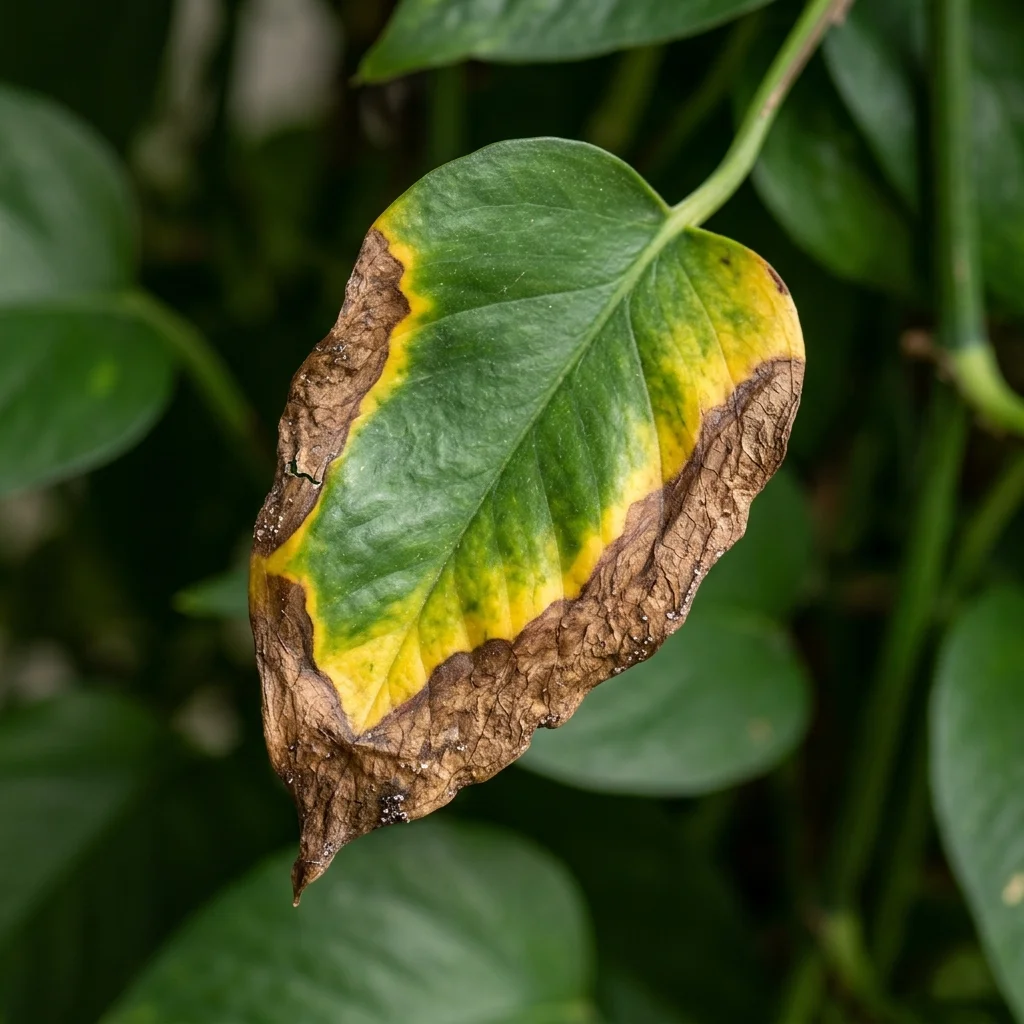
Fertilizer Burn: Notice the distinct crispy, brown edges and yellowing tips. This occurs when excess fertilizer salts build up in the soil and physically draw moisture out of the leaf tissue via reverse osmosis.
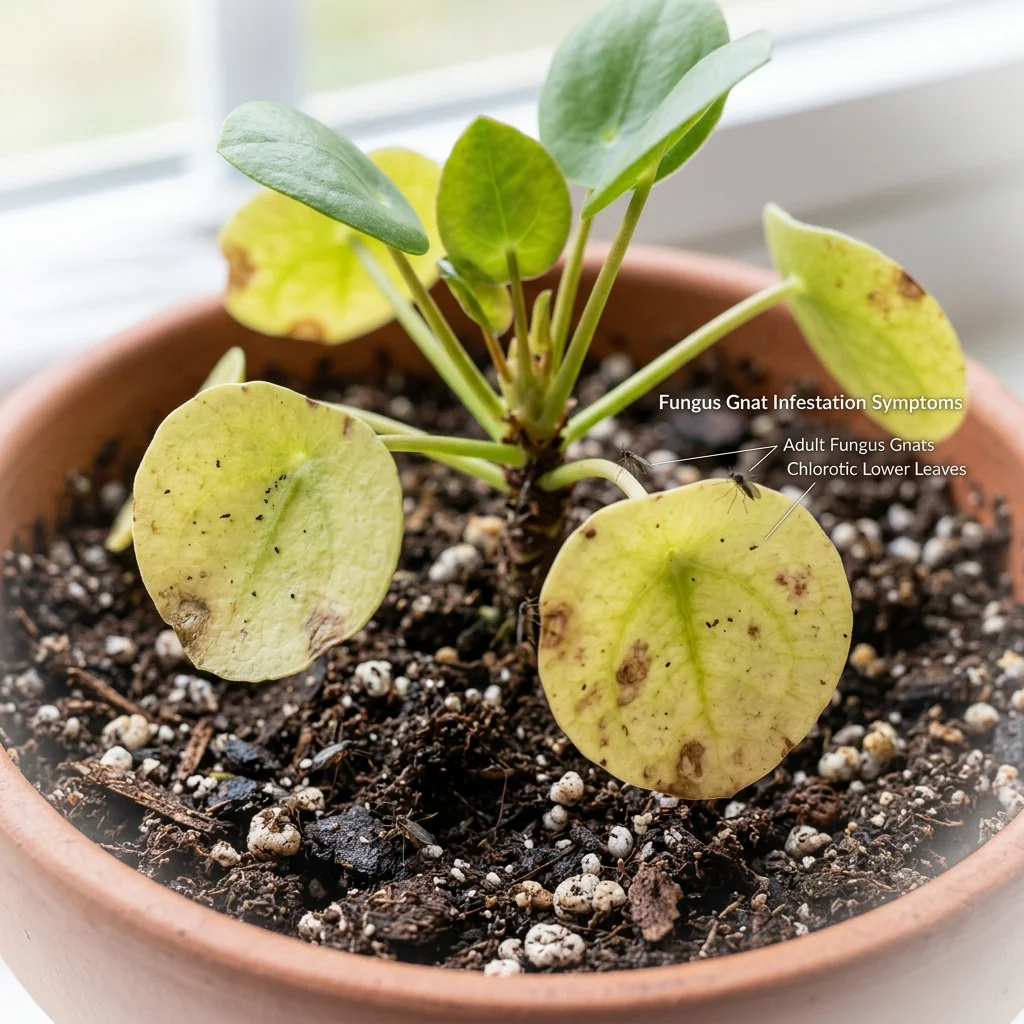
Fungus Gnat Damage: Characterized by the overall paling and yellowing of lower leaves, accompanied by tiny black adult flies resting on the soil surface. The larvae attack the root hairs, mimicking nutrient deficiency.
Recommended next actions
Next Best Actions
Use the result in a real care workflow with plant profiles, guides, and personalized quizzes.
Fertilizer Type Comparison: Liquid vs. Granular vs. Water-Soluble
| Fertilizer Type | Best Uses | Pros | Cons |
|---|---|---|---|
| Liquid Concentrate | Indoor houseplants, small pots, rapid correction of deficiencies | Exact dosing, instant availability to roots, easy to flush | Requires frequent application, more expensive per feed |
| Water-Soluble Powder | Container gardens, heavy feeders, foliar sprays | Highly concentrated, cost-effective, precise control | Must be mixed thoroughly; easy to overdose if not measured |
| Slow-Release Granular | Outdoor garden beds, large landscape shrubs | Low maintenance, steady nutrient release over months | Cannot be flushed out if overdosed, imprecise dosing per plant |
Troubleshooting & Diagnostics Guide
1 Plant is dropping leaves despite following the recommendation
Diagnosis: Drafts, sudden temperature changes, or pest issues not related to the calculator's focus area.
Treatment: Isolate the plant, check for pests, and ensure it is away from heating/cooling vents.
Glossary of Terms
- Transpiration
- The process of water movement through a plant and its evaporation from aerial parts.
- Photoperiod
- The period of time each day during which an organism receives illumination.
Frequently Asked Questions
How do I calculate fertilizer for a small pot?
Is liquid fertilizer better than granular fertilizer?
Is it safe to use this calculator for succulents?
Will using fertilizer bring my dying plant back to life?
Should I use liquid or slow-release fertilizer?
Why does the calculator suggest quarter-strength?
Do I need to water the plant before fertilizing?
Why are the tips of my plant's leaves turning brown and crispy?
My plant is growing long, weak stems after fertilizing — why?
How do I know when my plant goes dormant?
Scientific References
-
Source: fao.org
-
Source: content.ces.ncsu.edu
Reader Feedback
Feedback from PlantSolve readers who have used this guide. (5 reviews)
Michael C.
Austin, TX
Made fertilizer rates easier to calculate
I was always worried about fertilizer burn, but this gave me a very clear dosage and feeding frequency based on the NPK ratio of my liquid feed.
Brandon K.
Atlanta, GA
Figured out slow-release lawn food amounts
Entering the nitrogen ratio and square footage helped me figure out how much slow-release lawn food to spread without over-applying.
Derek S.
Charlotte, NC
Calculated total bag weight for my turf area
I needed to apply nitrogen across my 2,500 sq ft turf area. Entering the bag numbers gave me the total weight I needed so I had a better idea of how much product to pick up.
Claire H.
Portland, OR
Converted square foot rates to container spoons
I was setting up an organic granular feed for my potted tomatoes. The calculator made it easy to convert the square foot rate into a tablespoon amount per pot.
Travis W.
Tampa, FL
Made liquid fertilizer dilution simpler
I was mixing soluble citrus food in a watering can and wanted to make sure I wasn't mixing it too hot. It gave me a straightforward measurement per gallon.