Plant Watering Calculator: Estimate the Ideal Watering Schedule
Calculate the correct watering frequency for your plant based on species, pot size, soil type, season, and climate.
Quick Answer
By factoring in your specific plant type and environmental conditions, you can precisely tailor your care routine to ensure optimal health and prevent common issues like root rot.
Enter your details
Enter your details below to generate a custom recommendation.
Recommended Output
Estimated Watering Frequency
Botanical Advice
Caution: Climate Risk
Formula Note
The Problem
Many plant owners guess at their care routines, leading to root rot, burned leaves, or stunted growth. Generic advice doesn't factor in specific plant species and local climate.
When to Use This Tool
Use this calculator when you bring home a new plant, when seasons change, or if your plant is showing signs of distress.
Who is this for?
- Beginner houseplant owners looking to avoid common mistakes
- Advanced collectors wanting to optimize growth rates
How to check soil moisture before watering
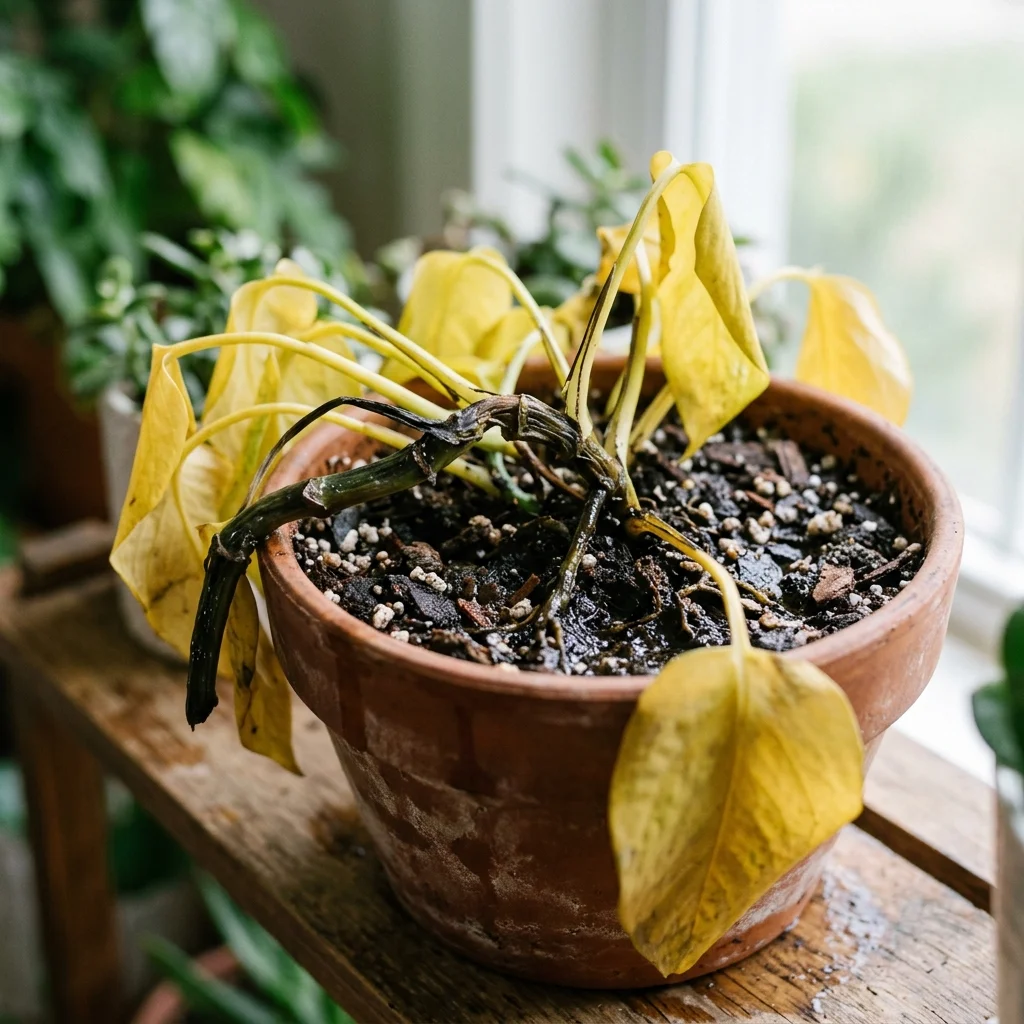
- Probe Soil Depth: Insert your finger or a wooden skewer 1 to 2 inches into the potting mix to gauge moisture at root depth.
- Assess Substrate Moisture: Feel whether the substrate is cool and damp or dry and powdery. If damp, delay watering by 1 to 2 days.
- Judge Container Weight: Lift the container to judge its weight. A noticeably lightweight pot indicates depleted moisture reserves.
- Inspect the Drainage Tray: Check the drainage tray. Standing water means the root zone is still saturated and watering should be skipped.
- Apply Water Based on Species Need: Only water when the top 1 to 2 inches are dry for tropical plants, or when the entire pot feels light for succulents.
Recommended next actions
Next Best Actions
Use the result in a real care workflow with plant profiles, guides, and personalized quizzes.
Topic Guide
Overwatering Plants: Symptoms, Diagnosis & Prevention
Learn how to identify, treat, and prevent overwatering in your indoor and aquarium plants. Expert care tips and troubleshooting.
Topic Guide
Underwatering
Learn everything about underwatering for your indoor and aquarium plants. Expert care tips, troubleshooting, and related guides.
Topic Guide
Soil Moisture
Learn how to accurately check soil moisture for houseplants. Discover when to water using finger tests, moisture meters, and pot weight.
Topic Guide
Bottom Watering Plants
Learn how and when to bottom water your houseplants. Discover the benefits for root growth, how it helps prevent fungus gnats, and which plants prefer it.
Plant Watering Calculator Variations & Requirements
| Variation | Light Requirement | Watering Frequency | Difficulty |
|---|---|---|---|
| Standard | Bright Indirect | Weekly | Medium |
| Variegated | High Light | Weekly | Hard |
| Dwarf | Medium Light | Bi-Weekly | Easy |
Troubleshooting & Diagnostics Guide
1 Plant is dropping leaves despite following the recommendation
Diagnosis: Drafts, sudden temperature changes, or pest issues not related to the calculator's focus area.
Treatment: Isolate the plant, check for pests, and ensure it is away from heating/cooling vents.
Glossary of Terms
- Transpiration
- The process of water movement through a plant and its evaporation from aerial parts.
- Photoperiod
- The period of time each day during which an organism receives illumination.
Frequently Asked Questions
Is this watering calculator accurate for all seasons?
What if I accidentally overwatered my plant today?
Why does pot material affect the watering frequency?
Should I water from the top or the bottom?
Does a larger pot mean I should water more often?
Why does water run straight through the pot when I water it?
My plant's leaves are turning yellow — is it overwatered or underwatered?
How do I adjust my watering routine while on vacation?
Scientific References
-
Source: rhs.org.uk
-
Source: edis.ifas.ufl.edu
Reader Feedback
Feedback from PlantSolve readers who have used this guide. (5 reviews)
David K.
Toronto, ON
Adjusted baseline intervals for winter humidity
Factoring in the pot size and seasonal humidity changes really helped me adjust my watering frequency for the winter.
Danielle S.
Dallas, TX
Set realistic soil check intervals
I was looking for a baseline watering schedule for my potted monstera. Entering the pot size and soil type gave me a much more realistic interval to test moisture.
Mason B.
Houston, TX
Factored in terracotta pot evaporation
I entered unglazed terracotta versus plastic nursery pots to see how evaporation changes. The output gave me a much better idea of how often to check the soil.
Emily C.
Sacramento, CA
Estimated target water volume per pot
I wasn't sure how much water volume to apply per container size. The calculation gave me a sensible target so I wasn't just guessing each week.
Garrett L.
Chicago, IL
Adjusted watering intervals for cool indoor temps
Factoring in cooler indoor temps during winter helped me lengthen the interval between waterings for my snake plant and ZZ plant.