Repotting Calculator: Check If Your Plant Is Root-Bound
Find out if your plant needs repotting now and get the correct new pot size based on species, current pot size, and root health indicators.
Quick Answer
By factoring in your specific plant type and environmental conditions, you can precisely tailor your care routine to ensure optimal health and prevent common issues like root rot.
Enter your details
Enter your details below to generate a custom recommendation.
Recommended Output
Repotting Verdict
Next Pot Size
Best Timing
Repotting Advice
The Problem
Many plant owners guess at their care routines, leading to root rot, burned leaves, or stunted growth. Generic advice doesn't factor in specific plant species and local climate.
When to Use This Tool
Use this calculator when you bring home a new plant, when seasons change, or if your plant is showing signs of distress.
Who is this for?
- Beginner houseplant owners looking to avoid common mistakes
- Advanced collectors wanting to optimize growth rates
About this calculator
Know when and how to repot with size and timing guidance Using this calculator removes the guesswork from your plant care routine.
How to Use
- Select your plant type.
- Input your environmental conditions.
- Get your personalized recommendation.
The Importance of Precision
Every plant species has adapted to specific conditions in the wild. By mimicking those conditions in your home, you can dramatically increase the lifespan and vitality of your collection.
Visual Reference: When to Repot
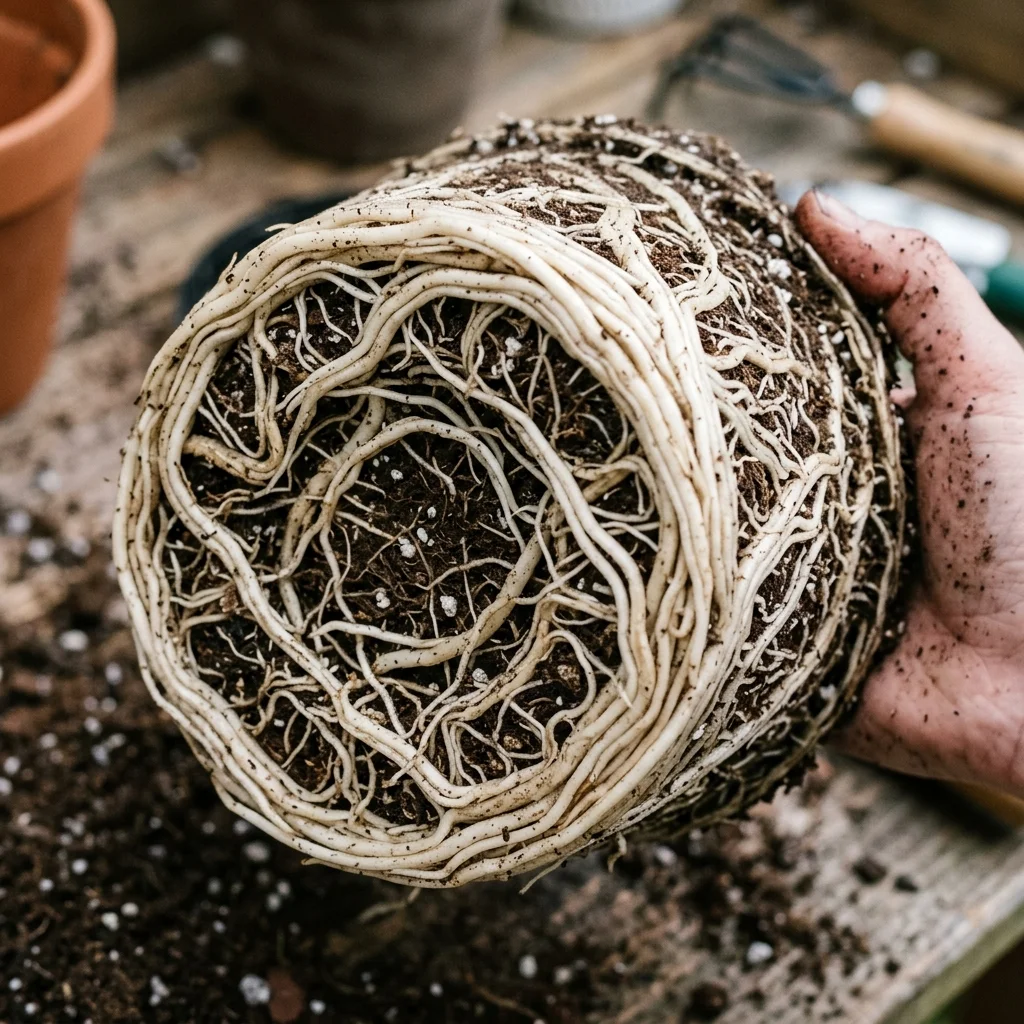
Severely Root Bound: When thick white roots circle tightly around the bottom and sides of the pot (as shown above), the plant is structurally bound and requires an immediate up-potting to continue absorbing water properly.
Recommended next actions
Next Best Actions
Use the result in a real care workflow with plant profiles, guides, and personalized quizzes.
Calculator
Potting Mix Calculator: Build the Perfect Soil Blend
Calculate the ideal potting mix ratios for any plant type — from moisture-loving tropicals to drought-tolerant succulents.
Calculator
Grow Bag Size Calculator: Find the Right Bag for Every Plant
Find the perfect grow bag size for your plant based on root depth, plant type, and expected mature size.
Repotting Calculator Variations & Requirements
| Variation | Light Requirement | Watering Frequency | Difficulty |
|---|---|---|---|
| Standard | Bright Indirect | Weekly | Medium |
| Variegated | High Light | Weekly | Hard |
| Dwarf | Medium Light | Bi-Weekly | Easy |
Troubleshooting & Diagnostics Guide
1 Plant is dropping leaves despite following the recommendation
Diagnosis: Drafts, sudden temperature changes, or pest issues not related to the calculator's focus area.
Treatment: Isolate the plant, check for pests, and ensure it is away from heating/cooling vents.
Glossary of Terms
- Transpiration
- The process of water movement through a plant and its evaporation from aerial parts.
- Photoperiod
- The period of time each day during which an organism receives illumination.
Frequently Asked Questions
Does my plant really need to be repotted?
Will repotting shock my plant?
Why does the calculator only suggest moving up one pot size?
Should I repot my plant immediately after buying it?
Do I need to remove all the old soil from the roots?
Why are the leaves turning yellow immediately after repotting?
What should I do if I find mushy, brown roots while repotting?
Can I repot during the winter?
Reader Feedback
Feedback from PlantSolve readers who have used this guide. (2 reviews)
Tom S.
Chicago, IL
Estimated target diameter for next container
I entered my current 6-inch planter diameter, and it gave me a practical recommendation for stepping up to an 8-inch pot rather than overpotting.
Samantha R.
Nashville, TN
Calculated extra soil needed for repotting
Entering my container dimensions helped me calculate the additional soil volume needed when moving my plant up to the next standard pot size.