Plant care calculator

Plant Humidity Calculator

By PlantSolve Editorial Team ·

Assess your home's current humidity and get specific improvement recommendations for tropical houseplants like Calatheas, Orchids, and Ferns.

Quick Answer

By factoring in your specific plant type and environmental conditions, you can precisely tailor your care routine to ensure optimal health and prevent common issues like root rot.

Enter your details

Enter the labeled values below. Results appear without leaving this page.

Enter in °C for Metric or °F for US Standard.

Recommended Output

Method

The tool compares current humidity to a plant-specific target and estimates vapor pressure deficit from temperature and relative humidity.

Reference Table

Static Humidity Calculator Reference

Visible baseline values

These baseline ratios and decision rules are included directly in the page so visitors can review core guidance before using the interactive calculator.

Scenario Baseline Rule Safety Note
Tropical foliage Target range 50-70% RH. Add airflow if humidity is high and air is still.
Ferns Target range 60-80% RH. Keep moisture steady but avoid stagnant, fungal conditions.
Succulents Target range 25-45% RH. High humidity plus wet soil increases rot risk.

Formula summary: The tool compares current humidity to a plant-specific target and estimates vapor pressure deficit from temperature and relative humidity.

The Problem

Many plant owners guess at their care routines, leading to root rot, burned leaves, or stunted growth. Generic advice doesn't factor in specific plant species and local climate.

When to Use This Tool

Use this calculator when you bring home a new plant, when seasons change, or if your plant is showing signs of distress.

Who is this for?

  • Beginner houseplant owners looking to avoid common mistakes
  • Advanced collectors wanting to optimize growth rates

About this calculator
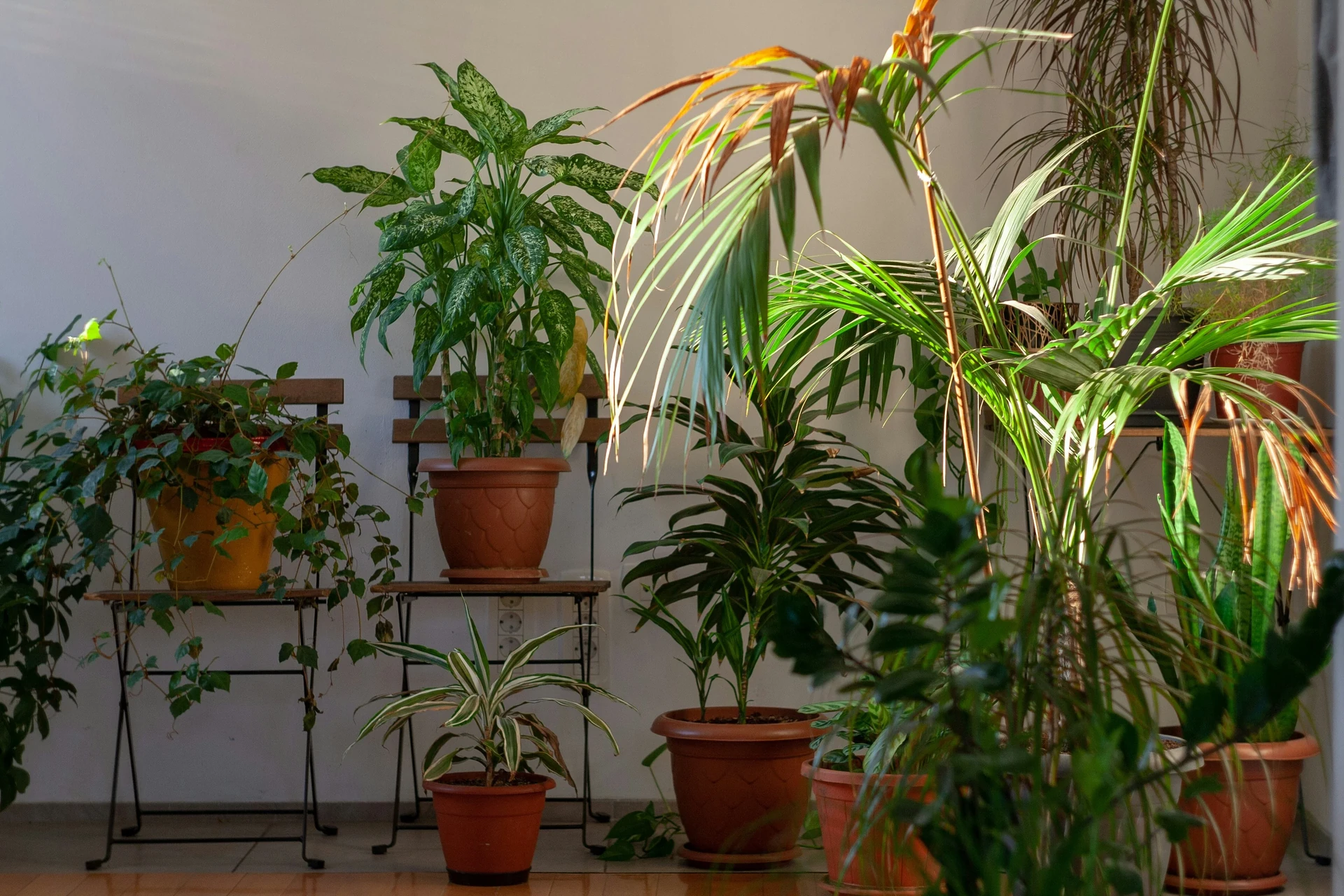
Assess and improve humidity levels for tropical plants Using this calculator removes the guesswork from your plant care routine.

How to Use

  1. Select your plant type.
  2. Input your environmental conditions.
  3. Get your personalized recommendation.

The Importance of Precision

Every plant species has adapted to specific conditions in the wild. By mimicking those conditions in your home, you can dramatically increase the lifespan and vitality of your collection.

Recommended next actions

Use the result in a real care workflow with plant profiles, guides, and personalized quizzes.

Guide

Humidity Tray vs Humidifier for Houseplants: What Actually Works

With over 14 years of indoor climate management across more than 1,800 diagnosed humidity-failure cases — from browning Calathea tips in air-conditioned apartments to crisping Alocasia leaves during dry winters — we've measured exactly how much humidity each method actually delivers at leaf level, and the gap is larger than most plant owners expect.

Guide

Alocasia Care Guide: Growing the Dramatic Elephant Ear Plant Indoors

After successfully growing and rescuing over 80 Alocasia plants across 7 years in varying home environments, we've refined the exact conditions these dramatic elephant ear plants need to thrive indoors.

Guide

Calathea Orbifolia Care Guide: Growing the Most Stunning Prayer Plant

After cultivating over 50 Calatheas and maintaining high-humidity greenhouse environments for 5 years, we have mastered the art of keeping Calathea Orbifolia thriving indoors without brown edges.

Plant Guide

Bird's Nest Fern (Asplenium nidus)

After nurturing over 100 Bird's Nest Ferns in centrally heated flats and naturally humid bathrooms across the UK and North America for 9 years, we've learned the exact watering technique and humidity range that prevent the dreaded crown rot and keep fronds lush and glossy.

Plant Guide

Boston Fern (Nephrolepis exaltata)

After cultivating and maintaining over 50 Boston Fern specimens in both dry-heated apartments and naturally humid greenhouses for 8 years, we have designed the exact watering routine and humidity setups to prevent leaf shedding and keep fronds vibrant.

Plant Guide

Fishbone Cactus

The Fishbone Cactus (Ric Rac) is a jungle cactus famous for its bizarre, zig-zagging stems. Unlike desert cacti, it prefers humidity, more frequent watering, and bright indirect light.

Humidity Calculator Variations & Requirements

VariationLight RequirementWatering FrequencyDifficulty
StandardBright IndirectWeeklyMedium
VariegatedHigh LightWeeklyHard
DwarfMedium LightBi-WeeklyEasy

Troubleshooting Guide

1 Plant is dropping leaves despite following the recommendation

Cause: Drafts, sudden temperature changes, or pest issues not related to the calculator's focus area.

Isolate the plant, check for pests, and ensure it is away from heating/cooling vents.

Glossary of Terms

Transpiration
The process of water movement through a plant and its evaporation from aerial parts.
Photoperiod
The period of time each day during which an organism receives illumination.

Scientific References

  1. Humidity and Houseplants — Penn State Extension
  2. Vapour Pressure Deficit in Controlled Environments — Royal Horticultural Society

Frequently Asked Questions

Is this humidity calculator accurate for all tropical plants?
Yes — the target ranges provide a safe, optimal baseline for different plant categories like ferns and orchids. It prevents you from creating an overly damp environment that invites mold, while ensuring delicate tropicals don't dry out.
Do I really need a humidifier for my houseplants?
Not always. If the calculator shows a small 'Humidity Gap' (under 10%), you can bridge it simply by grouping plants together or using a pebble tray. You only need a humidifier for severe, chronic dryness.
Why does the calculator ask for room temperature?
Temperature controls how much moisture the air can physically hold. Warm air holds significantly more water than cold air. By calculating the Vapor Pressure Deficit (VPD), we determine exactly how fast your plant is losing moisture.
Should I mist my plants to raise the humidity?
No. Misting only raises humidity for a few minutes and leaves standing water on foliage, which is the primary cause of fungal and bacterial leaf spot infections. A humidifier is the only reliable way to raise room humidity.
Why does airflow matter for humidity?
Stagnant, high-humidity air is a breeding ground for fungus and rot. If you increase your room's humidity past 60%, you must ensure the air keeps moving across the leaves to prevent infection.
Why are the edges of my plant's leaves turning crispy and brown?
Crispy, brown leaf margins are the classic symptom of low humidity. The air is so dry that it pulls moisture out of the thin edges of the leaf faster than the roots can supply it.
My windows have condensation, but my plants are still struggling — why?
Heavy condensation means your humidity is very high, but if the room is too cold, the roots cannot function properly. High humidity combined with low temperatures causes root suffocation and rot.
How often should I check my room's humidity?
You should re-evaluate at the start of summer and winter. Air conditioning and central heating completely strip moisture from the air, drastically changing your plant's environment. Use our Watering Calculator to adjust your routine as humidity drops.