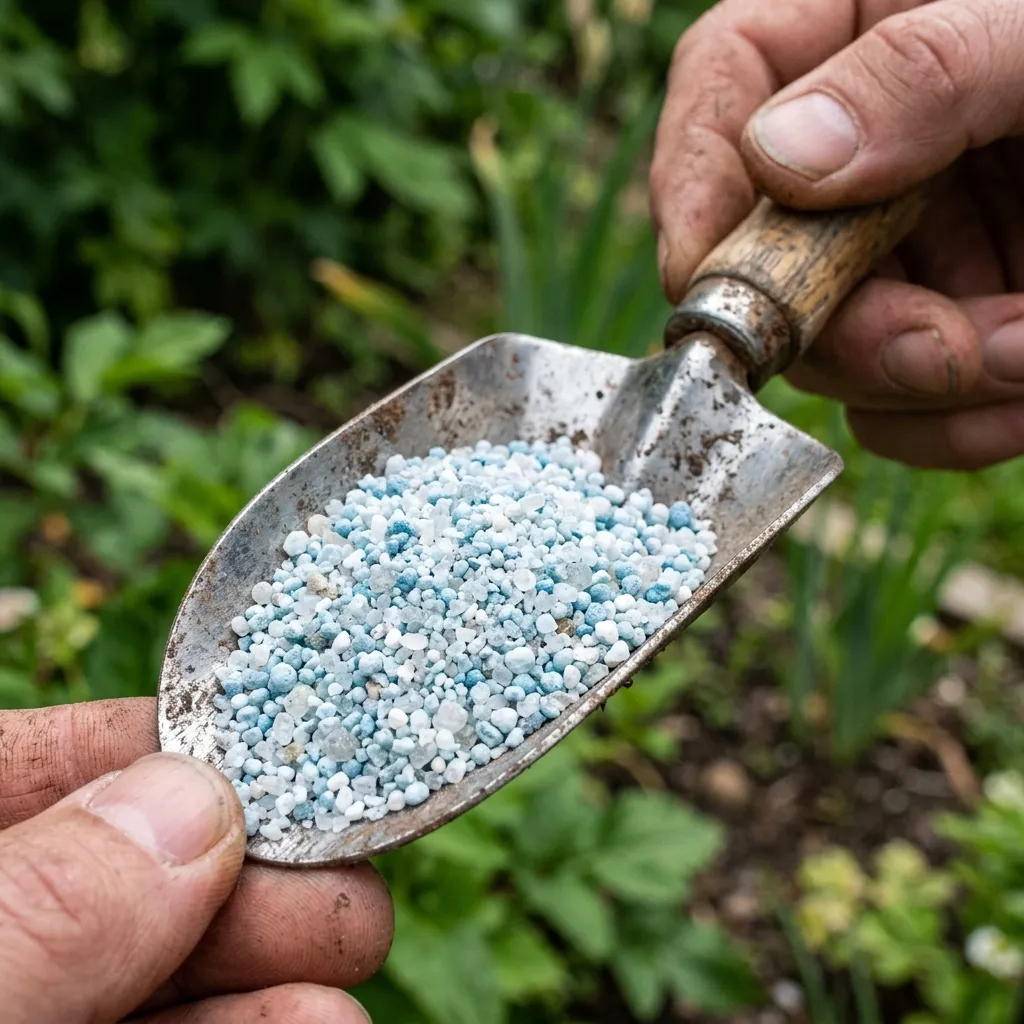
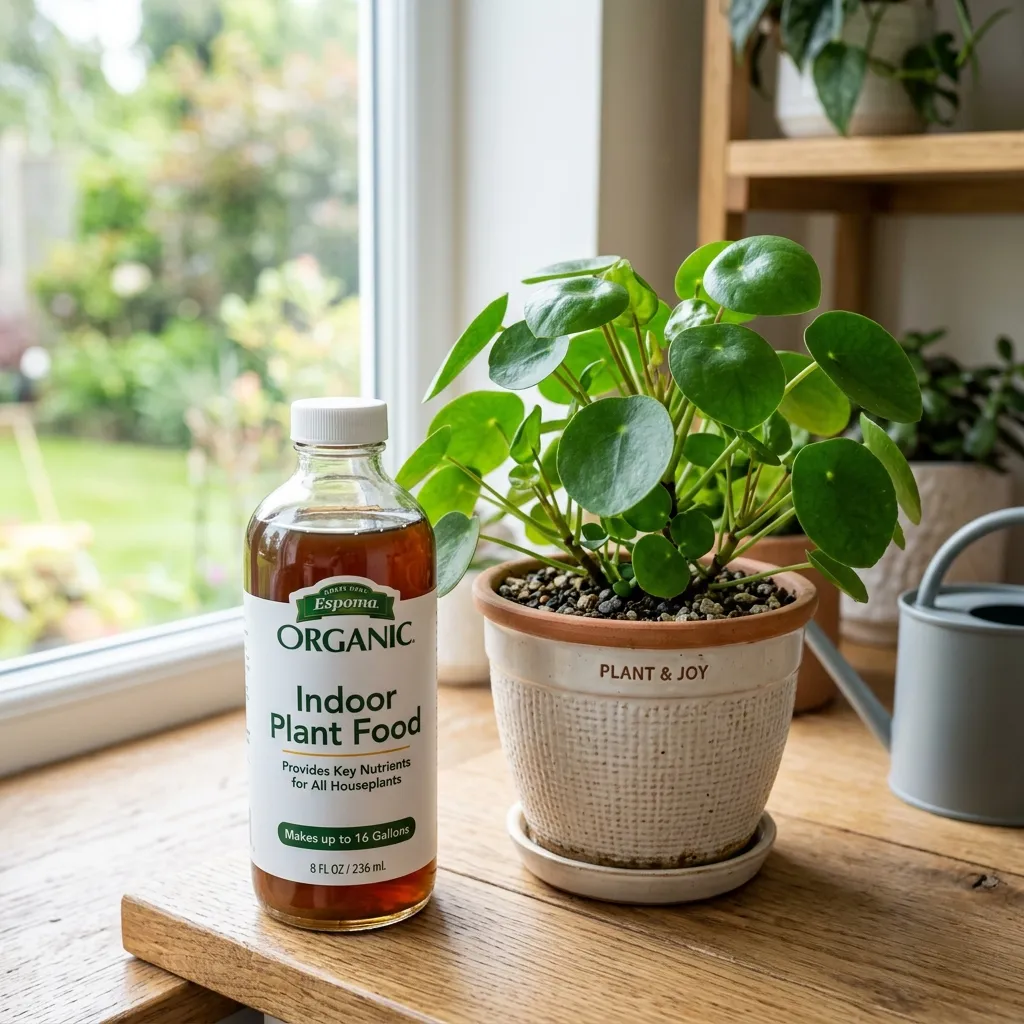
NPK 19-19-19
A balanced water-soluble fertilizer containing equal labeled proportions of nitrogen, phosphate, and potash.
Quick Answer
NPK 19-19-19 is a balanced water-soluble fertilizer with 19% total nitrogen and labeled phosphate and potash at 19% each. The correct dilution depends on the specific product label, crop, application method, and water volume. Use the manufacturer's directions and the PlantSolve Fertilizer Dosage Calculator for concentration conversions.
The Problem
Gardeners often see a 19-19-19 fertilizer ratio and assume that one universal grams-per-liter or per-plant dose applies to every product. The correct amount depends on the product label, crop, application method, and water volume.
When to Use This Tool
Use NPK 19-19-19 when a balanced fertilizer is appropriate for the crop and the product label permits its use. It is commonly used for general nutrient supply during active growth, but the crop-specific label should determine application rate and timing.
Who is this for?
- Indoor plant enthusiasts calculating fertilizer dilution
- Container gardeners using water-soluble fertilizer
- Vegetable gardeners following crop-specific fertilizer labels
- Gardeners comparing balanced NPK fertilizer ratios
Application Reference
| Context | Guideline |
|---|---|
| pots | Follow the product label for the crop and application method. Use the PlantSolve Fertilizer Dosage Calculator to convert a stated concentration into the amount needed for your water volume. |
| garden | Follow the product label for the specific crop, application method, and growing conditions. Do not substitute a universal per-plant dose. |
Recommended next actions
Next Best Actions
Use fertilizer guidance with calculators, plant profiles, and related care articles.
Calculator
Plant Fertilizer Calculator: Right Dose for Every Plant
Calculate the exact fertilizer dose and feeding schedule for your plant based on species, pot size, growth stage, and season.
Fertilizer Guide
Fertilizer Burn on Houseplants: Symptoms & Fast Fixes
How to identify, treat, and prevent fertilizer burn in houseplants and garden plants.
Fertilizer Guide
FoxFarm Grow Big for Houseplants: Dosage & Feeding Guide
A potent, fast-acting 6-4-4 liquid fertilizer designed for heavy-feeding plants.
What is NPK 19-19-19?
NPK 19-19-19 is a concentrated, balanced, water-soluble fertilizer. On a conventional fertilizer analysis, the first 19 represents 19% total nitrogen (N), while the second and third numbers represent 19% available phosphate expressed as P2O5 and 19% soluble potash expressed as K2O.
- Nitrogen (19%): Supports leaf and stem growth and is an essential component of plant proteins and chlorophyll.
- Phosphate (19% as P2O5): Supplies phosphorus in the form used for fertilizer labeling and contributes to energy transfer and root development.
- Potash (19% as K2O): Supplies potassium, which supports water regulation, enzyme activity, and overall plant function.
The three numbers describe fertilizer analysis, not a universal application rate. Two products with the same 19-19-19 analysis can still have different crop, application, and frequency directions.
What Else to Check on a 19-19-19 Label
The three headline numbers are only part of what a 19-19-19 product contains. Because brands formulate their products differently, read the full guaranteed analysis before using or comparing them.
- Nitrogen forms: Total nitrogen may be split between nitrate, ammoniacal nitrogen, and urea. These forms are taken up and processed differently by plants and growing media, so two 19% nitrogen products are not necessarily identical in behavior.
- Micronutrients: Some 19-19-19 products add iron, manganese, zinc, copper, boron, or molybdenum, sometimes in chelated form. Others contain none. Do not assume a plain 19-19-19 supplies trace elements.
- Secondary nutrients: Calcium, magnesium, and sulfur may or may not be listed.
- Intended crops: Some labels are written for houseplants, others for greenhouse crops, turf, or fertigation systems, and their directions differ accordingly.
- Solubility and residue: Fully water-soluble grades are formulated to dissolve cleanly. If a product leaves residue or clouding, follow the label's mixing instructions or contact the manufacturer.
When to Use NPK 19-19-19
A balanced fertilizer can be useful when a plant requires general nutrient supplementation and the product label recommends the fertilizer for that crop and growing situation.
- Supporting active vegetative growth when a balanced fertilizer is appropriate.
- Supplying nutrients to container plants when the product label permits houseplant or container use.
- Supporting vegetables, ornamentals, and landscape plants when the product is labeled for the crop and application method.
Fertilizer should not be used simply because a plant is growing slowly. Check light, watering, temperature, root health, pests, and other growing conditions before increasing fertilizer.
When to Hold Off on Fertilizing
Feeding is not always the right response to a struggling plant. Consider pausing or checking the label first in these situations:
- Dormancy or very slow growth: Plants that are not actively growing, such as many houseplants in low winter light, generally use fewer nutrients.
- Dry or wilted plants: A drought-stressed root system may be damaged by fertilizer salts. Follow the label about watering before applying.
- Root problems: Overwatered, rotting, or pest-damaged roots cannot use added nutrients effectively.
- Recent repotting or transplanting: Some labels advise waiting before fertilizing newly potted or transplanted plants, and fresh potting mixes often contain their own nutrient charge.
- Signs of existing salt stress: Crusty deposits or leaf-tip burn suggest reviewing your feeding program before adding more fertilizer.
Application Methods and Dilution Rates
Because NPK 19-19-19 is water-soluble, it can be mixed with water when the product directions specify a water-soluble application. The correct concentration must come from the product label for the crop and application method.
1. Soil Drench (Root Feeding)
Dissolve the amount specified by the manufacturer in the stated water volume and apply according to the label. For a safe concentration calculation, use the PlantSolve Fertilizer Dosage Calculator rather than guessing.
Do not treat 0.5 g/L, 1 g/L, 2 g/L, or any other generic concentration as a universal 19-19-19 rate. Product labels may specify different rates for houseplants, vegetables, landscape plants, fertigation, or other applications.
2. Foliar Application
Use NPK 19-19-19 as a foliar spray only when the product label specifically permits foliar use and provides a foliar concentration. Foliar rates can differ substantially between products and crops, so a generic foliar rate should not be presented as universally safe.
When foliar application is permitted, follow the label regarding concentration, spray timing, weather conditions, crop restrictions, and compatibility with other products.
3. Fertigation and Irrigation Systems
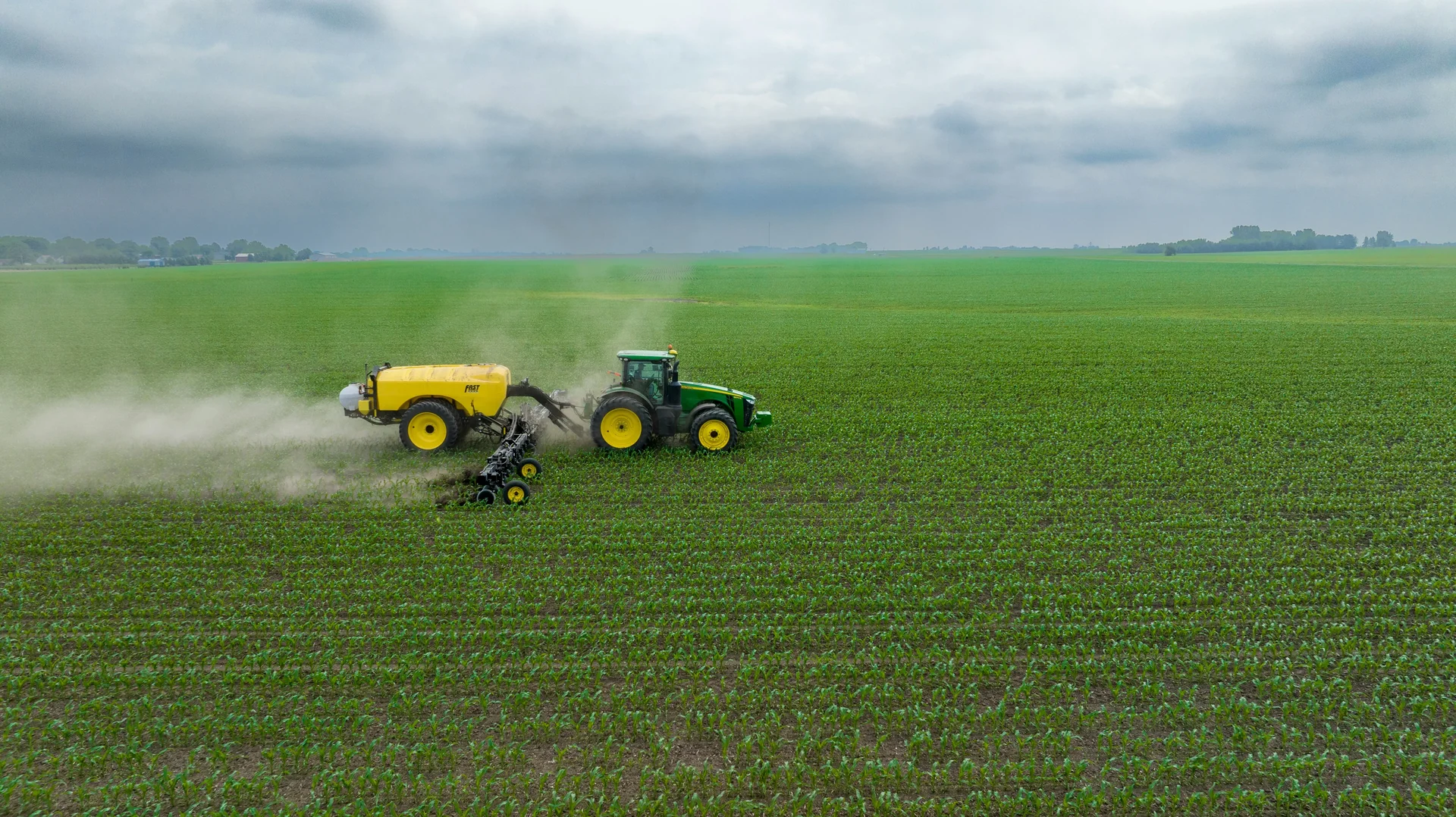
Water-soluble grades are often used in fertigation, where fertilizer is injected into irrigation water. Systems like this are typically managed against a target concentration, so the label or a crop-specific program should define the rate. Check product compatibility before mixing several products in one tank or stock solution, since some combinations can form precipitates that clog emitters.
Mixing, Water Quality, and Storage
- Measure accurately: Use a scale or a measuring spoon calibrated for the product rather than estimating. Powder density varies between brands, so a teaspoon of one product may not weigh the same as a teaspoon of another.
- Dissolve fully: Add the measured fertilizer to the water and stir until dissolved before applying.
- Mix fresh: Prepare only what you intend to use unless the label states that a prepared solution can be stored.
- Consider your water: Very hard or alkaline water can influence how a fertilizer behaves in the growing medium over time. If you see recurring residue or pH-related symptoms, check the water and medium rather than raising the fertilizer concentration.
- Store dry: Keep the product in a tightly closed original container in a cool, dry place, away from children and pets, and follow the storage directions on the label.
- Label your containers: Mark any mixing container so it is not confused with drinking water or other solutions.
How to Dose NPK 19-19-19 for Small Pots
Small containers do not require a separate universal fertilizer formula. Start with the manufacturer's concentration for the plant and application method, then calculate only the amount needed for the actual volume of water you are preparing.
- Find the label rate and confirm that it applies to your plant and application method.
- Measure the amount of water you will use.
- Convert the label concentration to the same unit used by your measuring tool if necessary.
- Mix the calculated fertilizer amount evenly into the water.
- Apply only the volume appropriate for the pot and growing medium, allowing excess water to drain when the plant and container require drainage.
Do not compensate for a small pot by making the fertilizer solution more concentrated. A smaller root zone can make excessive soluble-salt concentration more problematic.
Unit Conversion Example (Hypothetical Label Rate)
The example below is only meant to show the arithmetic. The 2 g/L figure is a made-up label rate and is not a recommendation for any product or plant. Always use the figure printed on your own label.
- Per US gallon: Suppose a label states 2 g per liter. One US gallon is about 3.785 liters, so 2 g/L × 3.785 ≈ 7.6 g per US gallon.
- For a smaller batch: To prepare 1.5 liters at that same label concentration, multiply 2 g/L × 1.5 L = 3 g of fertilizer.
- Nitrogen supplied: At 19% nitrogen, 3 g of product contains about 0.57 g of nitrogen (3 g × 0.19), with the same 0.57 g of P2O5 and K2O.
These steps convert a concentration into an amount. They do not tell you whether that concentration is suitable for a given plant, which is why the label comes first. The PlantSolve Fertilizer Dosage Calculator performs the same conversions for measured water volumes.
Comparing Ratios: 10-10-10 vs 19-19-19 vs 20-20-20
10-10-10, 19-19-19, and 20-20-20 are all balanced fertilizer analyses, but they are not interchangeable gram-for-gram because their nutrient concentrations differ.
- 10-10-10 contains 10% total nitrogen by mass.
- 19-19-19 contains 19% total nitrogen by mass.
- 20-20-20 contains 20% total nitrogen by mass.
For nitrogen alone, 100 g of 10-10-10 contains 10 g of nitrogen, while 100 g of 19-19-19 contains 19 g and 100 g of 20-20-20 contains 20 g. Therefore, replacing one fertilizer with another requires a calculation rather than a gram-for-gram substitution.
For example, if a recommendation calls for 100 g of 10-10-10 and the goal is to supply the same amount of nitrogen using 19-19-19, the theoretical nitrogen-equivalent mass is approximately 52.6 g before considering the product label, application method, and other nutrient requirements.
Use the 19-19-19 Fertilizer Dosage Calculator when converting a concentration or calculating a water-soluble fertilizer amount.
Limits of a Balanced Fertilizer
A balanced analysis supplies nitrogen, phosphate, and potash in equal proportions, but plants rarely use them in equal amounts. Leafy crops may draw more nitrogen, while some fruiting plants use relatively more potassium later in their growth. Growing media may also already contain adequate phosphorus, in which case continued phosphate applications add little.
This does not make 19-19-19 a poor choice. It means a balanced product is a general-purpose option, and a crop-specific label, a soil or growing-medium test, or plant symptoms may point toward a different analysis. See our NPK ratio comparison guide for how other common analyses differ.
Reading Plant Signs: Too Much, Too Little, or Something Else?
Plant symptoms are rarely specific to one cause, so treat these as prompts to investigate rather than diagnoses.
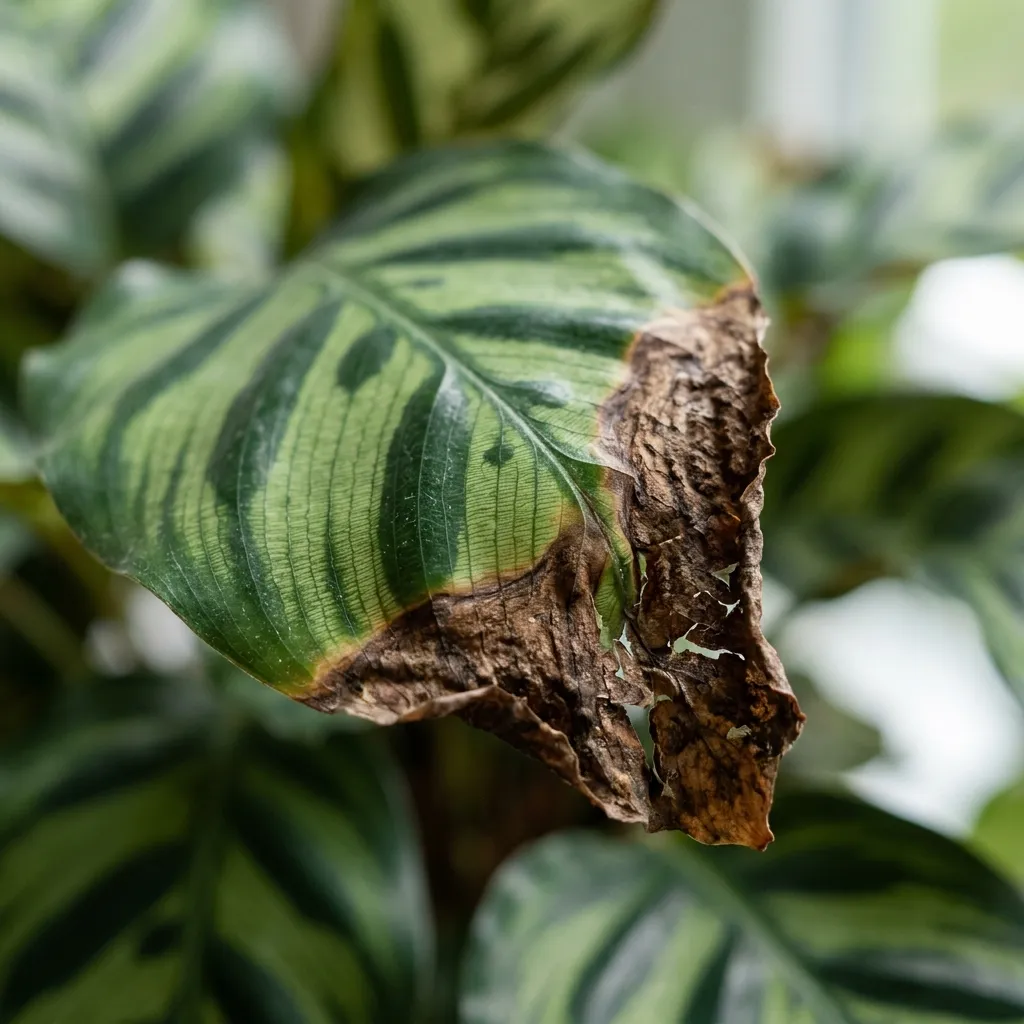
- Possible excess: Brown leaf tips or edges, white crust on the medium, wilting despite moist medium, or sudden leaf drop after feeding can indicate excess salts or an overly concentrated solution.
- Possible deficiency: Uniform pale or yellowing older foliage and reduced growth can be associated with low nitrogen, but light, water, and root problems can look similar.
- Possible non-nutrient causes: Insufficient light, poor drainage, temperature stress, pests, and pH problems all produce symptoms that are commonly mistaken for fertilizer needs.
When in doubt, correct growing conditions first, review the label rate, and change one variable at a time so you can tell what made the difference.
Safety Warnings and Precautions
Water-soluble fertilizers contain concentrated mineral nutrients and can cause plant injury when misapplied.
- Follow the product label: Use the rate, crop, application method, and frequency specified by the manufacturer.
- Avoid concentrated root contact: Do not place undiluted fertilizer directly against roots unless the product specifically instructs you to do so.
- Watch for salt buildup: Repeated fertilizer applications can contribute to soluble-salt accumulation in containers, especially when drainage is limited.
- Do not increase fertilizer to compensate for poor growth: Check light, water, temperature, roots, pests, and other growing conditions first.
- Follow foliar precautions: If foliar application is permitted, follow the product label for concentration, weather, timing, and crop safety.
- Handle safely: Follow the label's handling and first-aid directions, avoid inhaling dust, and keep fertilizer away from children, pets, food, and open water sources.
- Edible crops: Observe any crop restrictions or waiting periods on the label, and wash produce before eating.
Practical 19-19-19 Dosing Strategies
| Plant Situation | Starting Approach | Application Method | Frequency / Context | Adjustment / Safety Note |
|---|---|---|---|---|
| Low-light apartment plants (e.g., Pothos, ZZ plant, Snake plant) | Use the lowest applicable rate permitted by the product label when active growth justifies feeding | Soil drench when permitted by the product directions | Feed according to the product label and active growth rather than a fixed calendar schedule | Low light can mean slower nutrient demand. Avoid compensating for slow growth by increasing fertilizer concentration. |
| Large indoor aroids (e.g., Monstera, Philodendron) | Use the product's houseplant or container rate when provided | Soil drench | Follow the label and adjust timing to active growth and growing conditions | Monitor the plant and growing medium for fertilizer stress or salt accumulation. |
| Orchids (e.g., Phalaenopsis) | Use an orchid-specific fertilizer direction where available; otherwise follow the product label for orchids | Apply through the root-zone watering method specified on the label | Follow the product's orchid-specific feeding instructions | Do not assume a generic 19-19-19 houseplant rate is suitable for orchid roots or bark-based media. |
| Outdoor flowering plants (e.g., Bougainvillea, Roses) | Follow the crop and application rate stated on the fertilizer label | Soil drench or other label-approved method | Apply according to crop requirements and product directions during active growth | Flowering response depends on light, temperature, water, plant maturity, and nutrient balance; do not automatically increase phosphorus. |
| Vegetables (e.g., Tomatoes, Peppers, Leafy greens) | Use the edible-crop rate and application method stated on the product label | Soil drench, fertigation, or side-dressing only when permitted by the label | Follow crop-specific directions and observe any pre-harvest or application restrictions | Fruiting and leafy crops have different nutrient requirements. Use crop-specific label guidance rather than one universal rate. |
| Young plants (Seedlings, transplants) | Use only a rate specifically permitted for seedlings or transplants | Soil drench when permitted | Follow the product directions for young plants and transplant establishment | Do not automatically apply the adult-plant rate. Young roots can be sensitive to concentrated fertilizer solutions. |
Troubleshooting & Diagnostics Guide
1 Brown, crispy leaf edges or tips after fertilizing
Diagnosis: The fertilizer concentration may have been too high, the product may have been applied contrary to its label, or soluble salts may have accumulated in the growing medium.
Treatment: Stop fertilizing and review the product directions. For container plants, flush the growing medium with plain water when appropriate for the plant and potting medium, and allow excess water to drain.
2 White crust or salt deposits on the potting medium
Diagnosis: Repeated fertilizer applications and irrigation can allow soluble salts to accumulate in containers.
Treatment: Reduce unnecessary fertilizer inputs and, where appropriate for the plant and growing medium, flush the container thoroughly with plain water so excess salts can drain away.
3 Lots of vegetative growth but poor flowering
Diagnosis: Flowering depends on more than fertilizer ratio. Excessive nitrogen, insufficient light, incorrect photoperiod, plant maturity, temperature, and other growing conditions can all affect flowering.
Treatment: Review light, temperature, watering, plant maturity, and the fertilizer label before changing products. Do not automatically switch to a high-phosphorus fertilizer solely because flowering has started.
4 Seedlings show fertilizer stress after feeding
Diagnosis: Young plants have small root systems and can be sensitive to concentrated fertilizer solutions.
Treatment: Use fertilizer on seedlings only when the product label permits it and provides a suitable rate. Do not automatically apply the adult-plant rate to seedlings or recent transplants.
Glossary of Terms
- Water-soluble
- A fertilizer designed to dissolve in water so its soluble nutrients can be delivered in an irrigation or spray solution.
- NPK analysis
- The fertilizer analysis expressed by three numbers. In a conventional N-P-K label, the numbers represent total nitrogen (N), available phosphate expressed as P2O5, and soluble potash expressed as K2O.
- Vegetative Phase
- A period of plant development in which growth is primarily focused on leaves, stems, and roots before or alongside reproductive development.
Frequently Asked Questions
Is 19-19-19 stronger than 10-10-10?
How much 19-19-19 fertilizer should I use per plant?
Is NPK 19-19-19 safe for indoor houseplants?
How often should I apply NPK 19-19-19?
Can I use NPK 19-19-19 as a foliar spray?
Will NPK 19-19-19 burn my plants?
Can I use NPK 19-19-19 during the flowering stage?
What is the NPK 19-19-19 dosage per litre?
How much 19-19-19 fertilizer do I use per gallon?
How do I calculate 19-19-19 fertilizer for a small pot?
Explore More