Salt Buildup in Plants: Causes, Symptoms & How to Fix It
Salt buildup occurs when soluble salts from fertilizers, hard water, and soil amendments accumulate in the growing medium faster than they can be leached away. It raises soil EC, creates osmotic stress, and causes specific ion toxicities that damage roots and foliage. Common in container plants, indoor gardens, and arid climates, salt buildup is preventable through proper watering, periodic flushing, and regular EC monitoring. This approach helps maintain optimal conditions and prevents common issues that can affect your plant's overall health and longevity over time.
Quick Answer
Salt buildup is the accumulation of excess fertilizer salts and minerals in soil or potting mix, which raises electrical conductivity (EC) and makes it difficult for roots to absorb water. It causes leaf tip burn, stunted growth, and root damage. Prevent it by flushing soil monthly, using balanced fertilization, and monitoring EC levels.
Key Takeaways
- Salt buildup raises soil EC and creates osmotic stress that prevents roots from absorbing water.
- Primary sources are synthetic fertilizers, hard water, and insufficient leaching.
- Symptoms include leaf tip burn, brown margins, stunted growth, and white crust on soil surface.
- Container plants are at highest risk due to limited soil volume and no natural drainage.
- Prevent by flushing soil with plain water monthly and monitoring EC with a meter.
Symptoms
- Leaf tip burn: Brown, dried, or necrotic tips on older leaves are the most characteristic symptom. Salts accumulate at the leaf margins through transpiration, reaching toxic concentrations at the extremities.
- Brown leaf margins: Necrosis progresses inward from leaf edges, often with a yellow halo separating dead tissue from green. Affects older leaves first since they have transpired longer and accumulated more salts.
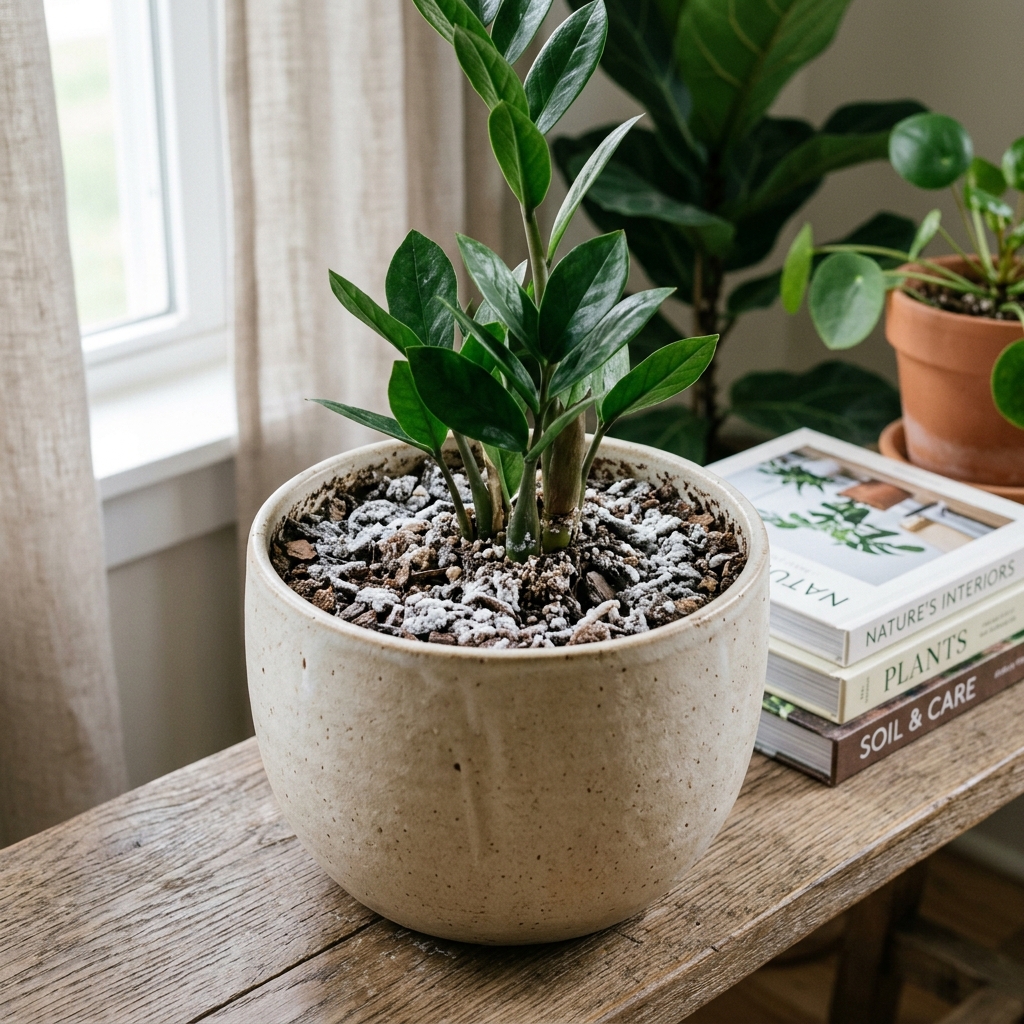
- White crust on soil surface: Visible crystalline deposits of fertilizer salts on the soil surface or rim of the pot. This is definitive evidence of salt accumulation and indicates severe buildup.
- Stunted growth: Reduced cell expansion and division due to osmotic stress and impaired nutrient uptake. New growth is smaller, internodes shorten, and overall vigor declines.
- Wilting despite moist soil: Roots cannot absorb water from a hypertonic soil solution even when moisture is present. Leaves wilt while soil feels damp—a classic sign of physiological drought from salt stress.
- Root browning and death: Salt-damaged roots turn brown, become brittle, and lose fine root hairs. Root tips die back first. When severe, the root system cannot support the plant even after salts are removed.
- Reduced flowering and fruiting: Reproductive processes are energy-intensive and the first to be abandoned under stress. Bud drop, poor fruit set, and smaller flowers result from chronic salt buildup.
- Dark green or bluish foliage: Some plants develop unusually dark green or slightly bluish leaves due to phosphorus accumulation and impaired nitrogen metabolism under high salt conditions.
Common Causes
- Over-fertilization: Applying fertilizer more frequently or at higher concentrations than plants can absorb is the leading cause of salt buildup. Excess nutrients remain in the soil and accumulate with each application.
- Insufficient leaching: Watering only enough to moisten soil without allowing drainage leaves salts behind. In container growing, every watering should produce 10–20% runoff to flush accumulated salts.
- Hard water: Water high in calcium, magnesium, and bicarbonates contributes dissolved minerals to the soil with every irrigation. Over time, these accumulate alongside fertilizer salts.
- High-frequency fertilization: Daily or every-other-day feeding with liquid fertilizers—common in hydroponics and intensive container growing—rapidly elevates EC if leaching is inadequate.
- Poor drainage: Containers without drainage holes, compacted soil, or waterlogged conditions prevent the flushing action that removes excess salts. Salts concentrate in the root zone.
- Low humidity and high temperature: Hot, dry conditions increase transpiration, which draws more water (and salts) to leaf margins, accelerating tip burn. Evaporation from soil surfaces also concentrates surface salts.
- Small container size: Plants in small pots have limited soil volume to buffer salt accumulation. The same fertilizer dose in a 4-inch pot creates much higher EC than in a 12-inch pot.
- Use of high-salt fertilizers: Some fertilizers, particularly those high in sodium or chloride (e.g., muriate of potash), contribute directly to toxic ion accumulation. Cheap, unbalanced fertilizers often contain filler salts.
Prevention
- Flush soil with plain water monthly: Water thoroughly until 20–30% of the applied volume drains from the bottom of the container. This leaches accumulated salts before they reach toxic levels. Use room-temperature water.
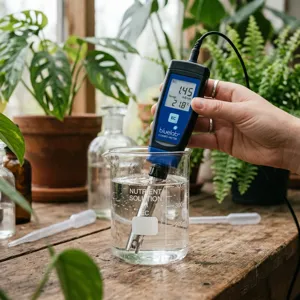
- Monitor EC with a meter: Measure runoff EC weekly for container plants or monthly for garden beds. Maintain EC below 2.0 mS/cm for most houseplants, below 3.0 for vegetables, and below 4.0 for established trees.
- Water until runoff occurs: Every watering should produce 10–20% drainage. This prevents the salt concentration that occurs when water is applied in small, frequent doses without leaching.
- Use balanced, quality fertilizers: Choose complete fertilizers with micronutrients and avoid products high in sodium or chloride. Slow-release and organic fertilizers release nutrients more gradually, reducing salt spikes.
- Avoid fertilizing dry soil: Dry roots are more susceptible to salt shock. Water lightly before applying fertilizer solution to ensure roots are hydrated and salts dissolve evenly.
- Repot annually in fresh mix: For container plants, replace potting mix yearly to remove accumulated salts. Choose a high-quality, well-draining mix. Do not reuse old soil without amendment and leaching.
- Use rainwater or filtered water: If your tap water is hard (EC > 0.5 mS/cm), use rainwater, reverse osmosis water, or distilled water for irrigation to reduce mineral input from the water source itself.
- Increase container size as plants grow: Larger soil volumes dilute salts and provide more buffering capacity. Repot into appropriately sized containers to prevent the rapid EC spikes common in small pots.
Best Practices
- Establish a monthly flushing routine: Schedule a plain-water flush on the same day each month. This is the single most effective prevention strategy for container-grown plants.
- Calibrate fertilizer to plant needs: Match fertilizer strength to growth stage, light levels, and plant species. Fast-growing plants in high light need more; slow-growing plants in low light need far less.
- Use the 'quarter-strength, twice as often' rule cautiously: While dilute frequent feeding reduces individual salt spikes, it only works if leaching occurs. Without runoff, even dilute solutions accumulate over time.
- Test water source EC: Measure your tap water's baseline EC. If it is above 0.5 mS/cm, your water is contributing significantly to salt load. Consider alternative water sources.
- Never let pots sit in drainage water: Saucers full of runoff allow salts to be reabsorbed into the soil. Empty saucers within 30 minutes of watering.
What is Salt Buildup?
Salt buildup occurs when soluble salts from fertilizers and hard water accumulate in the potting soil over time. Because indoor plants are grown in closed containers, the salts have nowhere to escape unless properly flushed. Over time, these salts reach toxic levels, reversing the osmotic pressure in the root zone and dehydrating the plant even when the soil is wet.
How to Prevent and Fix It
Prevention is straightforward: always water your plants until about 10-20% of the water drains out of the bottom of the pot. This is called leaching, and it washes away excess salts before they can accumulate. If you already have a severe salt crust on the soil surface, the best remedy is to place the pot in a sink or shower and flush it thoroughly with room-temperature water�running 3 to 4 times the pot's volume of water through the soil to dissolve and carry away the accumulated salts. If the buildup is extreme and roots are damaged, repotting into fresh soil is the safest option.
Explore More
Related Articles
Related Plant Guides
No specific plant guides found matching this topic.
Recommended next actions
Continue Exploring
Dive deeper into related plant care tools and profiles.
Topic Guide
Fertilizer
Learn everything about fertilizer for your indoor and aquarium plants. Expert care tips, troubleshooting, and related guides.
Topic Guide
Fertilizer Burn: Symptoms and Treatment
Identify fertilizer burn symptoms like scorched leaf edges and treat overfertilized plants by flushing soil and adjusting feeding.
Topic Guide
EC Meter Guide for Plants
Use an EC meter to measure nutrient salt levels in soil or water and keep readings within the safe range for healthy plant roots.
Topic Guide
PPM Explained for Plant Feeding
Understand what PPM means for fertilizer strength and how to measure and adjust parts per million for safe plant feeding.
Topic Guide
TDS Meter Guide: PPM, EC Conversion & Safe Ranges for Plants
Learn how TDS meters work, how they convert EC to PPM, what readings are safe for houseplants and hydroponics, and how to prevent over-fertilization with.
Topic Guide
Osmotic Pressure in Plant Roots
Learn how osmotic pressure moves water through plant roots and why excess fertilizer salts trigger fertilizer burn damage.