TDS Meter Guide: PPM, EC Conversion & Safe Ranges for Plants
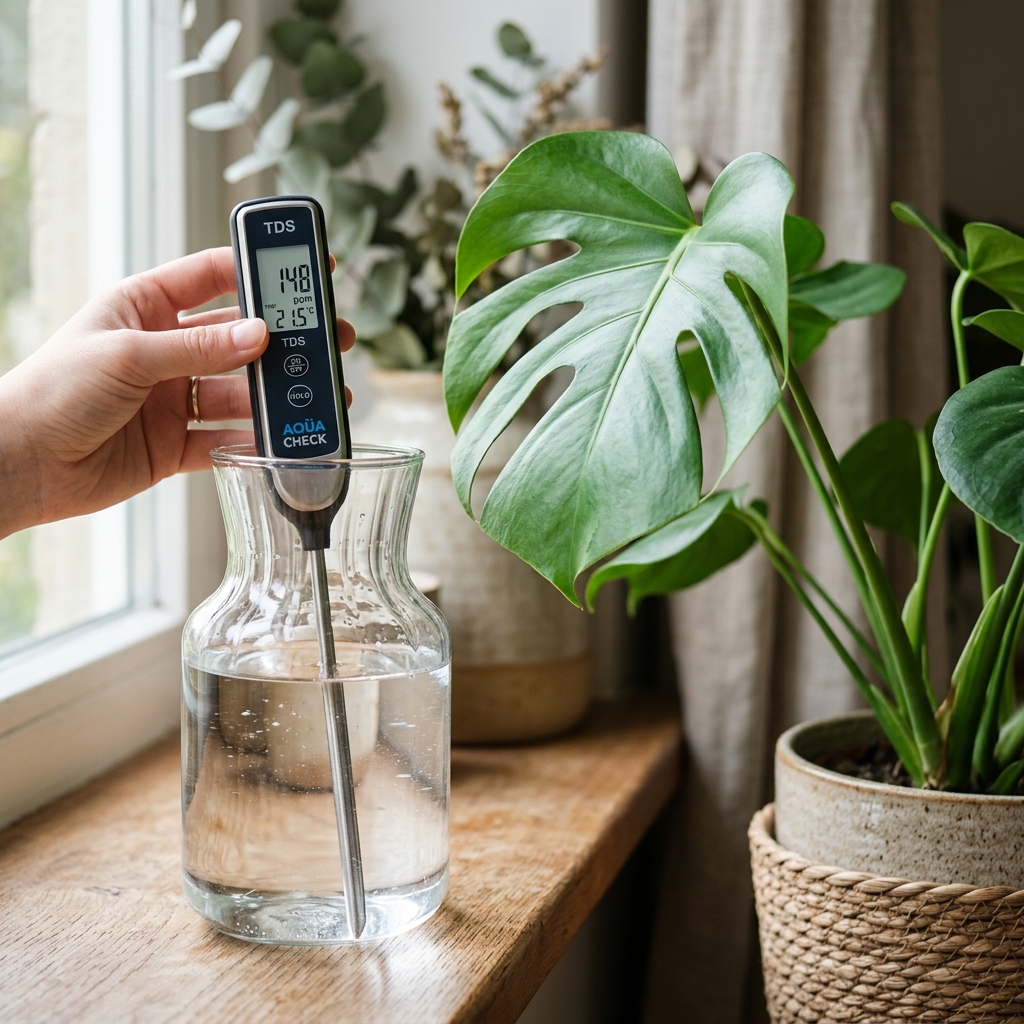
A TDS (Total Dissolved Solids) meter estimates the concentration of dissolved minerals, salts, and fertilizers in water by converting electrical conductivity (EC) into parts per million (ppm). It is an essential tool for hydroponic growers and container gardeners to mix nutrient solutions accurately, monitor feeding strength, and prevent fertilizer burn before it damages sensitive roots. This approach helps maintain optimal conditions and prevents common issues that can affect your plant's overall health and longevity over time.
Quick Answer
A TDS meter estimates how much dissolved fertilizer, minerals, and salts are in your water by measuring electrical conductivity (EC) and converting it to parts per million (ppm). Most TDS meters are actually EC meters internally, multiplying the EC value by a conversion factor (commonly 500, 640, or 700). TDS helps gardeners mix nutrients accurately and diagnose nutrient lockout, but it should always be used alongside a pH meter for complete nutrient management.
Key Takeaways
- TDS is displayed in ppm but is calculated from EC, not measured directly.
- Different manufacturers use different conversion factors (500, 640, or 700).
- TDS helps prevent fertilizer burn by monitoring total nutrient strength.
- Hydroponic growers typically monitor TDS daily to maintain optimal feeding.
- TDS readings must always be interpreted alongside pH for accurate diagnosis.
Symptoms
- Leaf tip burn and marginal necrosis: High ppm causes osmotic stress; leaf margins dry and turn brown.
- Stunted growth despite regular feeding: Runoff TDS significantly higher than input TDS indicates accumulation.
- Pale, chlorotic new growth: Solution ppm below 200–300 for established plants may be insufficient.
- Wilting in moist soil: Very high ppm prevents roots from drawing water, causing physiological drought.
Common Causes
- High TDS from over-fertilization or repeated feeding without flushing
- Hard tap water contributing baseline minerals to the reading
- Salt buildup in container media from insufficient runoff
- Evaporation concentrating nutrients in hydroponic reservoirs
- Using incorrect conversion factor leading to misjudged nutrient strength
Prevention
- Calibrate TDS meter monthly with a known standard
- Measure plain water baseline before every nutrient mix
- Maintain 10–20% runoff with each container irrigation
- Flush container plants every 3–4 weeks to prevent salt accumulation
- Use filtered or RO water if tap water baseline exceeds 300 ppm
- Record input and runoff TDS at every feeding
- Never exceed manufacturer-recommended fertilizer rates without testing
Best Practices
- Calibrate monthly using a 1,380 or 1,413 ppm standard solution
- Measure freshly mixed fertilizer before application
- Use distilled or RO water to establish a true zero baseline
- Record readings in a garden journal with date, input ppm, runoff ppm, and pH
- Measure at consistent room temperature for repeatable results
- Clean probe electrodes after each use to prevent mineral film buildup
- Always interpret TDS alongside a pH measurement
What is a TDS Meter?
A Total Dissolved Solids (TDS) meter is a handheld electronic device used to estimate the concentration of dissolved salts, minerals, and fertilizers in water. It displays results in parts per million (ppm), making it intuitive for growers who want to know "how much stuff" is in their nutrient solution.
Despite its name, a TDS meter does not actually count dissolved solids. Instead, it measures the water's ability to conduct electricity—its electrical conductivity (EC)—and applies a mathematical conversion factor to estimate ppm. The more dissolved ions (nutrients, salts, minerals) in the water, the higher the conductivity and the higher the TDS reading.
How Does a TDS Meter Work?
When you dip a TDS meter into a solution, an electrical current passes between two electrodes. Pure water is a poor conductor; dissolved ions from fertilizers and minerals allow current to flow more easily. The meter measures this conductivity, compensates for temperature, and multiplies the EC value by a conversion factor to produce a ppm reading.
Because TDS meters rely on conductivity, they cannot distinguish between beneficial nutrients (nitrogen, potassium) and harmful salts (sodium, chloride). They measure total ionic concentration, not composition.
TDS vs EC vs PPM
These three terms are closely related but not interchangeable:
- EC (Electrical Conductivity): Measured in mS/cm or µS/cm. It is the raw scientific measurement of how well a solution conducts electricity.
- TDS (Total Dissolved Solids): An estimated value derived from EC, expressed in ppm.
- PPM (Parts Per Million): A unit of concentration. In horticulture, it is the standard display unit for TDS meters.
Think of EC as the underlying measurement and TDS/ppm as the user-friendly translation. Some advanced growers prefer EC because it is universal and unambiguous. TDS is more accessible but introduces confusion because of varying conversion factors.
Conversion Factors Explained
This is the most misunderstood aspect of TDS meters. Because TDS is calculated from EC, the manufacturer must choose a conversion factor. The three most common are:
| Factor | Formula | Common Usage |
|---|---|---|
| 500 | ppm = EC (mS/cm) × 500 | North American general standard; Hanna, many generic meters |
| 640 | ppm = EC (mS/cm) × 640 | Some European meters; less common |
| 700 | ppm = EC (mS/cm) × 700 | Truncheon-style meters; Australian standard |
Example: A solution with an EC of 1.2 mS/cm would read:
- 600 ppm on a 500-scale meter
- 768 ppm on a 640-scale meter
- 840 ppm on a 700-scale meter
This is why two growers can test the same solution and get different ppm readings. Always know which conversion factor your meter uses. If your meter does not specify, it is likely the 500 scale.
Safe TDS/PPM Ranges for Plants
Optimal TDS depends on the plant species, growth stage, and growing medium. The following ranges are general guidelines for container-grown plants and hydroponics:
| Category | PPM Range (500 scale) | EC Range | Interpretation |
|---|---|---|---|
| Tap / Drinking Water | 50–200 ppm | 0.1–0.4 mS/cm | Baseline; may contain carbonates or chlorine |
| Light Feeders / Seedlings | 200–400 ppm | 0.4–0.8 mS/cm | Dilute solution for young or sensitive plants |
| Most Houseplants | 400–800 ppm | 0.8–1.6 mS/cm | Standard maintenance feeding |
| Heavy Feeders / Vegetables | 800–1,200 ppm | 1.6–2.4 mS/cm | Tomatoes, peppers, cannabis vegetative stage |
| Flowering / Fruiting Crops | 1,000–1,600 ppm | 2.0–3.2 mS/cm | Peak demand during bloom and fruit set |
| Excessive / Risk Zone | >1,800 ppm | >3.6 mS/cm | Possible over-fertilization, burn, or lockout |
Always start at the lower end of a range and increase gradually based on plant response. Measure the runoff from container plants; if runoff ppm is significantly higher than the input ppm, salts are accumulating and a flush is needed.
Using a TDS Meter for Diagnosis
TDS is a powerful diagnostic tool when paired with observation:
- Below 200 ppm in nutrient solution: Too weak for most established plants. Expect pale growth and deficiency symptoms.
- 400–900 ppm: Safe range for the majority of houseplants and leafy greens.
- 1,200+ ppm: Appropriate only for heavy-feeding crops in active growth. Monitor for tip burn.
- Above 1,800 ppm: High risk of osmotic stress, root burn, and nutrient lockout. Flush immediately.
Remember that TDS measures total ions. A reading of 600 ppm could mean 600 ppm of balanced fertilizer—or 600 ppm of toxic sodium. This is why TDS should be combined with pH testing and, when possible, a full water analysis.
How to Use a TDS Meter
- Calibrate: Use a calibration solution near your expected range (usually 1,413 ppm or 1,380 ppm NaCl standard). Calibrate monthly.
- Measure baseline water: Test your plain tap or RO water first. Record the ppm.
- Mix nutrients: Add fertilizer to your water and stir thoroughly.
- Measure solution: Immerse the probe, wait for the reading to stabilize, and record ppm.
- Measure runoff (containers): Collect water draining from the pot. Compare runoff ppm to input ppm.
- Rinse and store: Rinse the probe with distilled water and store it dry or in a storage solution per manufacturer instructions.
Best Practices
- Calibrate your meter monthly using a known standard solution.
- Measure fertilizer solutions immediately after mixing, before settling or precipitation occurs.
- Establish a baseline by measuring your plain water before adding nutrients.
- Record all readings (date, input ppm, runoff ppm, pH) in a grow journal.
- Measure at consistent temperatures; EC changes with temperature even if the meter compensates.
- Clean probe electrodes regularly to prevent mineral buildup that skews readings.
- Always pair TDS measurement with a pH reading for complete nutrient assessment.
Common Mistakes
- Assuming TDS is a direct measurement. It is calculated from EC. Understand the conversion factor your device uses.
- Ignoring the conversion factor. Comparing a 500-scale reading to a 700-scale target will lead to severe under- or over-feeding.
- Ignoring pH. A perfect TDS reading is useless if pH is locking out nutrients. Always test both.
- Testing cold water. Let solutions reach room temperature for the most accurate reading.
- Measuring after nutrients have settled. Undissolved fertilizer granules at the bottom of a reservoir do not contribute to the reading.
- Not measuring runoff. Input ppm tells you what you added; runoff ppm tells you what accumulated in the root zone.
Frequently Asked Questions
What does a TDS meter measure?
A TDS meter measures the electrical conductivity (EC) of water and converts it to an estimated concentration of dissolved solids, displayed in parts per million (ppm). It measures total ionic content but cannot identify individual substances.
Is TDS the same as EC?
No. EC is the raw measurement of electrical conductivity. TDS is a calculated estimate derived from EC by multiplying it by a conversion factor (usually 500, 640, or 700). EC is universal; TDS varies by meter.
What ppm is safe for houseplants?
Most houseplants thrive with a nutrient solution between 400 and 800 ppm (500 scale). Seedlings and sensitive plants prefer 200–400 ppm. Always start at the lower end and increase based on plant response.
What is the 500 conversion factor?
The 500 scale is the most common conversion factor in North America. It multiplies the EC reading (in mS/cm) by 500 to produce ppm. For example, an EC of 1.0 mS/cm equals 500 ppm on this scale.
What is the 700 conversion factor?
The 700 scale is used by some meters, particularly in Australia and by certainTruncheon-style devices. It multiplies EC by 700. An EC of 1.0 mS/cm equals 700 ppm on this scale, which can cause confusion if compared to 500-scale targets.
Can a TDS meter detect fertilizer burn?
Indirectly, yes. Fertilizer burn typically occurs when TDS exceeds 1,800 ppm or when runoff TDS is significantly higher than input TDS. However, TDS alone cannot distinguish between fertilizer salts and other dissolved solids.
Do I need both an EC meter and a TDS meter?
Not necessarily. Most TDS meters are EC meters with a built-in conversion display. If you own a TDS meter, you already have an EC meter internally. However, serious hydroponic growers often prefer dedicated EC meters to avoid conversion ambiguity.
How accurate is a TDS meter?
Consumer TDS meters are typically accurate within ±2% of full scale when properly calibrated. Accuracy degrades if the probe is dirty, the battery is low, or the temperature is extreme. Calibrate monthly for best results.
How often should I calibrate my TDS meter?
Calibrate at least once a month if used regularly. Calibrate immediately if readings seem inconsistent, after dropping the meter, or when switching between very different concentration ranges.
Why does my tap water already show a TDS reading?
Tap water contains dissolved minerals like calcium, magnesium, sodium, and bicarbonates. This is your baseline TDS. Subtract this baseline from your nutrient solution reading to determine how much fertilizer you have actually added.
Can I use a TDS meter for soil?
TDS meters measure liquids. To test soil, you must create a saturated paste extract or measure the runoff/leachate after watering. Runoff TDS is the most practical method for container growers.
Does temperature affect TDS readings?
Yes. Conductivity increases with temperature. Quality TDS meters include Automatic Temperature Compensation (ATC), but for the most accurate results, allow solutions to reach room temperature before measuring.
What is a good TDS for hydroponics?
It varies by crop and stage. Leafy greens typically prefer 560–840 ppm (500 scale). Fruiting crops like tomatoes and peppers may need 1,400–1,960 ppm during peak flowering. Always follow crop-specific guidelines.
Why do my plants look deficient even though TDS is high?
High TDS with deficiency symptoms usually indicates nutrient lockout caused by incorrect pH, salt antagonism, or root damage. TDS measures quantity, not availability. Test pH and inspect roots immediately.
Can I use a TDS meter to test compost tea?
Yes, but with caution. Compost tea contains organic particles that may not conduct electricity well, so TDS readings may underrepresent actual nutrient content. Use TDS as a rough guide only for organic teas.
Explore More
Related Articles
Related Plant Guides
No specific plant guides found matching this topic.
Recommended next actions
Continue Exploring
Dive deeper into related plant care tools and profiles.
Topic Guide
PPM Explained for Plant Feeding
Understand what PPM means for fertilizer strength and how to measure and adjust parts per million for safe plant feeding.
Topic Guide
EC Meter Guide for Plants
Use an EC meter to measure nutrient salt levels in soil or water and keep readings within the safe range for healthy plant roots.
Topic Guide
Water Quality for Houseplants
Compare tap, filtered, distilled, and rainwater for houseplants. Learn which water is best for sensitive plants and how to prevent mineral buildup.
Topic Guide
Salt Buildup in Plants: Causes, Symptoms & How to Fix It
Learn what salt buildup is, how to identify symptoms like leaf tip burn, what causes it, and how to flush soil and prevent fertilizer salt accumulation in.
Topic Guide
Osmotic Pressure in Plant Roots
Learn how osmotic pressure moves water through plant roots and why excess fertilizer salts trigger fertilizer burn damage.
Topic Guide
Nutrient Lockout in Plants: Causes, Diagnosis & How to Fix It
Learn to identify and fix nutrient lockout. Discover why plants can't absorb nutrients due to pH imbalance, salt buildup, or overfertilization, and how to.