Topic Guide

Yellow Leaves | Plant Care Topic Guide

By PlantSolve Editorial Team ·

Yellow leaves (chlorosis) are a common symptom of plant stress caused by overwatering, underwatering, nutrient deficiencies, or natural aging. Fixing the issue requires evaluating the pattern of yellowing and other environmental factors.

Yellow Leaves - Plant Care Guide

From the Grower's Bench

Real-world experience

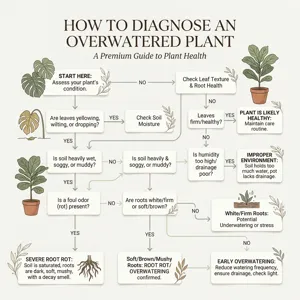
"I see yellow leaves more than any other issue. People immediately assume it means the plant needs water, but 80% of the time I find it’s the exact opposite: the roots have been sitting in dense, soggy soil for weeks. Always check the root ball before you water a yellowing plant."

What Are Yellow Leaves? Yellow leaves, known as chlorosis, indicate that a plant is producing insufficient chlorophyll or that existing chlorophyll is degrading. Because chlorophyll is the green pigment responsible for photosynthesis, its breakdown reveals underlying yellow and orange pigments. This color change is a visible sign that the plant's metabolic processes are under stress. Chlorosis often points to a problem with nutrient uptake, particularly nitrogen or magnesium, which are essential for chlorophyll synthesis. When a plant cannot access these nutrients from the soil, it may reallocate them from its older, lower leaves to support new growth, resulting in yellowing at the base of the plant. However, chlorosis isn't always a simple lack of nutrients in the potting mix. Often, the minerals are present but unavailable due to environmental issues. For example, overwatering can suffocate root hairs, preventing nutrient absorption, while incorrect soil pH can lock out essential trace minerals like iron. Therefore, yellowing leaves should be treated as a diagnostic symptom rather than just a cosmetic issue. Signs and Symptoms Lower Foliage Yellowing: The yellowing begins at the bottom of the plant. Older leaves take on a uniform, pale yellow appearance that slowly progresses upward, typically indicating a nitrogen deficiency or overwatering. Interveinal Chlorosis on Young Growth: The tissue between the veins on the newest leaves turns yellow or white, while the veins remain distinctly green, which usually points to an iron deficiency. Marginal Yellowing: The outer edges of mature leaves turn bright yellow before drying into a brown, crispy crust. This pattern can suggest a potassium deficiency or fertilizer burn. Splotchy Yellow Halos: Circular yellow halos surrounding dark, sunken spots scattered across the canopy often indicate a localized bacterial or fungal leaf spot infection. Entire Canopy Yellowing: The entire plant fades from deep green to a washed-out yellow. This rapid color shift, often accompanied by stunted growth, points to severe root issues like hypoxia or rot. Sudden Yellowing and Dropping: Mature, previously healthy leaves turn yellow and drop off the plant within 48 hours. This typically indicates sudden thermal shock or physical root trauma. Step-by-Step: How to Treat Yellow Leaves Check the soil moisture 3 to 4 inches below the surface using a probe or your finger to determine if the roots are sitting in saturated soil or are too dry. Test the soil pH using a digital meter or test kit to ensure it falls within the optimal range (typically 6.0 to 6.5 for most houseplants), which maximizes nutrient availability. Flush the potting mix thoroughly with water to dissolve and wash away accumulated fertilizer salts that could be burning the roots. Apply a balanced liquid fertilizer diluted to half strength if the symptoms point to a general nutrient deficiency. Trim away fully yellowed foliage using clean pruning shears. Leaves that have lost all green pigment will not recover, and removing them allows the plant to redirect energy to healthy tissue. Maintain consistent room temperatures between 68 and 75 degrees Fahrenheit to support proper transpiration and nutrient uptake. Monitor the plant over the next 14 to 21 days. Severely damaged leaves will not turn green again, so look for healthy new growth as the primary sign of recovery. Best Practices and Pro Tips Foliar Feeding: For quick correction of minor trace element issues, apply a specialized iron chelate foliar spray at a diluted concentration to allow immediate absorption through the leaves. Monitor Substrate Temperature: Keep the root zone temperature above 65 degrees Fahrenheit. Cold, wet soils can restrict phosphorus uptake and trigger yellowing. Calibrate Irrigation pH: Adjust your irrigation water to a pH around 6.2, especially for acid-loving plants, to prevent hard water from locking out essential nutrients. Inspect for Pests: Examine the undersides of yellowing leaves with a magnifying loop. Pests like spider mites can drain cellular fluids and cause stippled chlorosis. Manage Light Exposure: Ensure the plant receives adequate light for its species, but avoid sudden exposure to direct, intense sunlight which can scorch the leaves. Quick Reference Table Factor | Recommended Range | Why It Matters Soil pH | 6.0 to 6.5 pH | Prevents heavy metal lock-out that causes interveinal chlorosis. Flushing Water Volume | 2x the container volume | Dissolves and removes toxic fertilizer salts from the root zone. Substrate Temperature Minimum | 65°F (18°C) | Ensures proper root function without thermal stalling. Recovery Observation Window | 14 to 21 days | Provides time for the plant to absorb nutrients and produce new growth. Plants Most Susceptible to Yellow Leaves While any plant can develop chlorosis, some species are particularly sensitive to environmental imbalances. Pothos (Epipremnum aureum) frequently shows bright yellow lower leaves when overwatered, a symptom tied to root suffocation. The Fiddle Leaf Fig (Ficus lyrata) is notoriously sensitive to changes in its watering routine or light exposure, quickly dropping yellowed leaves in response to stress. For the Peace Lily (Spathiphyllum wallisii), overall canopy yellowing can occur rapidly due to either severe underwatering or root rot. Gardenias (Gardenia jasminoides) are highly susceptible to interveinal chlorosis if the soil pH becomes too alkaline, which restricts iron availability. Bougainvillea (Bougainvillea glabra) requires excellent drainage and will quickly drop a shower of yellow leaves if left sitting in standing water. Finally, the Weeping Fig (Ficus benjamina) reacts to almost any sudden environmental shift—such as a cold draft or a change in seasonal light—by withdrawing chlorophyll from older leaves, turning them yellow, and shedding them to conserve energy. Common Mistakes to Avoid Mistake: Immediate Over-Fertilization. Assuming all yellow leaves mean starvation and applying a strong fertilizer can burn the roots, especially if the real issue is overwatering. Always dilute emergency feeds to 25 percent strength until the plant stabilizes. Mistake: Using Hard Tap Water. Continuously using untreated tap water high in calcium carbonate can raise the soil pH over time, locking out vital iron and causing systemic interveinal chlorosis. Mistake: Leaving Dead Foliage Attached. Allowing fully yellowed, dying leaves to remain on the plant can provide an entry point for opportunistic bacterial and fungal pathogens. Mistake: Ignoring Temperature Drops. Placing tropical plants near uninsulated, drafty windows where nighttime temperatures drop below 55 degrees Fahrenheit can halt phosphorus uptake, resulting in localized yellowing. Mistake: Drastic Light Changes. Moving a shade-adapted plant directly into intense sunlight to "cure" its yellowing can cause severe photo-oxidation, bleaching the remaining chlorophyll and burning the foliage.

Frequently Asked Questions

Can a totally yellow leaf turn green again?

Once a leaf has turned completely yellow, it will not become green again. This happens because the chlorophyll has broken down, and the plant has reabsorbed the mobile nutrients from that tissue. Correcting the underlying problem will protect new growth, but fully yellowed leaves should be removed to improve the plant's appearance and redirect energy.

Is the winter season the most common time for yellow leaves to appear?

Yes, yellow leaves are more common in winter. Lower light levels and cooler temperatures slow the plant's growth and reduce its water use. If you continue watering at your summer frequency, the soil will stay wet for too long, leading to root suffocation and widespread yellowing across the lower canopy. Reduce your watering frequency during the winter dormancy period.

What tools do I need to accurately diagnose yellowing leaves?

Accurate diagnosis requires checking the plant's environment rather than guessing. A digital soil moisture meter or a wooden dowel helps determine if the soil is too wet or dry deep in the pot. A soil pH meter can verify if trace nutrients are chemically locked out. A magnifying loupe is useful for inspecting the undersides of leaves for microscopic pests like spider mites.

How should I adjust my long-term maintenance to prevent chlorosis?

Long-term prevention focuses on maintaining a consistent environment. Always allow the top 2 to 3 inches of your potting mix to dry out before watering to prevent root rot. Establish a light, consistent fertilization schedule so the plant has steady access to nutrients, and flush the container every few months to wash away accumulated salt buildup.

My plant's leaves turned yellow and dropped within two days, what happened?

Rapid yellowing accompanied by immediate leaf drop within 48 hours is usually caused by physical or environmental shock, not a nutrient deficiency. This sudden reaction often occurs when a sensitive plant is exposed to freezing drafts, cold irrigation water, or root damage during repotting. The plant drops its leaves to quickly reduce its surface area and conserve moisture while it recovers.

Related Plant Guides

No specific plant guides found matching this topic.

Recommended next actions

Dive deeper into related plant care tools and profiles.

Guide

Why Are My Houseplant Leaves Turning Yellow? Complete Diagnosis & Fix

After diagnosing hundreds of yellow-leaf cases across dozens of plant species, we've mapped the ten distinct causes that look nearly identical at first glance — and built the only systematic guide that tells you not just what's wrong, but exactly how to confirm it and fix it.

Guide

Why Are My Houseplant Leaves Turning Yellow? Complete Diagnosis & Fix

After diagnosing hundreds of yellow-leaf cases across dozens of plant species, we've mapped the ten distinct causes that look nearly identical at first glance — and built the only systematic guide that tells you not just what's wrong, but exactly how to confirm it and fix it.

Guide

Fertilizer Burn on Houseplants: How to Identify, Fix & Prevent Salt Damage

Fertilizer burn is one of the most misdiagnosed houseplant problems because its symptoms — brown tips, wilting, yellowing leaves — are nearly identical to overwatering, underwatering, and root rot. The treatment for root rot is opposite to the treatment for fertilizer burn, which means getting the diagnosis wrong makes the plant worse. This guide is built around that diagnostic problem first.

Plant Guide

Why Are My Indoor Plants Dying? Common Causes Explained

Having diagnosed over 3,500 dying houseplants in western homes, I’ll walk you through the 7 silent killers—from forced-air heating dryness to light-starved corners—and exactly how to stop them.

Plant Guide

Java Fern

Ultimate Java Fern (Microsorum pteropus) care guide. Learn planting, propagation, solving black leaves, potassium deficiency, and the best low-tech aquarium setup.

Plant Guide

Spider Plant

Discover why Spider Plants are making a massive comeback. Learn how to care for them properly, prevent crispy brown tips, and propagate their tiny spiderettes.