What Should I Do with My Plants During the Winter?
Winter changes everything for plants: light drops, air dries out, and soil stays wet longer. This guide shows how to adjust care so your plants stay steady through the cold season. From watering to humidity, we cover it all.
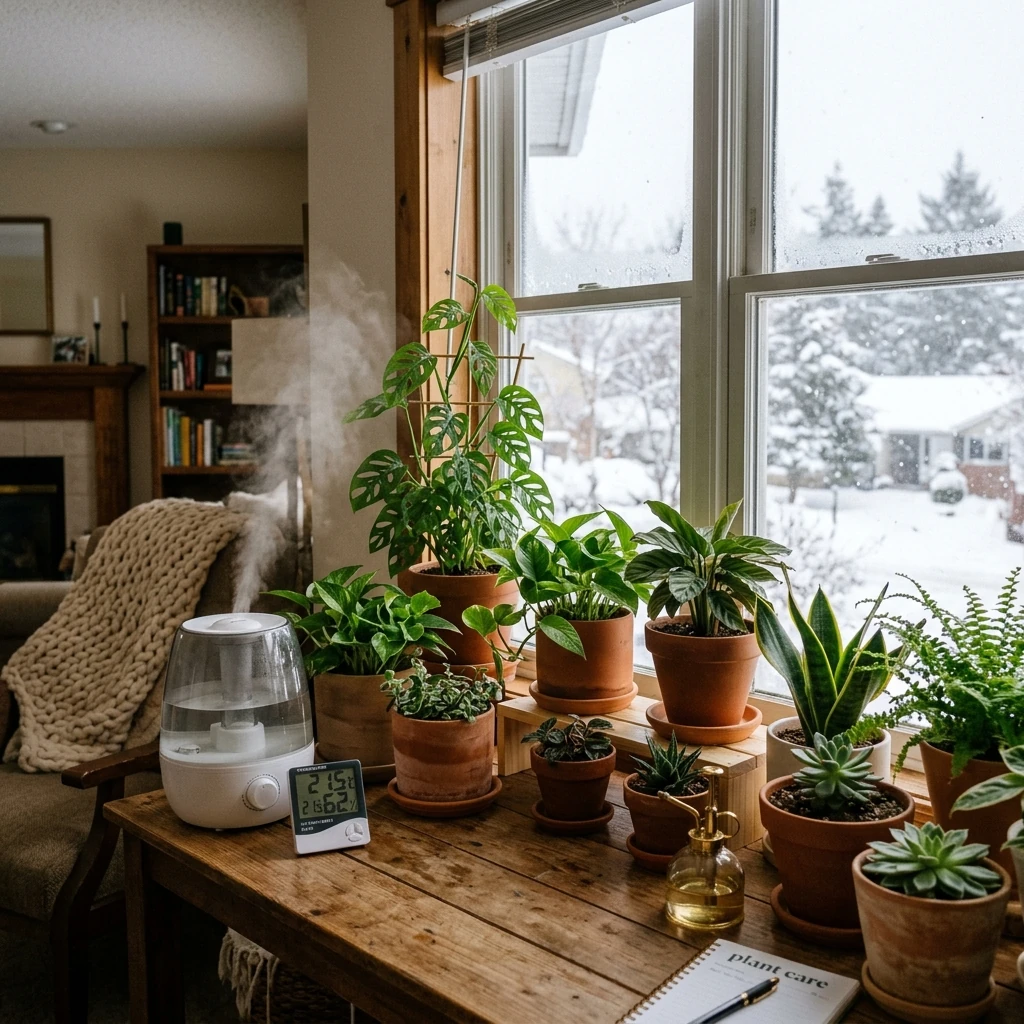
Quick Answer
Reduce watering, give plants the brightest light you can, keep them away from cold drafts and hot vents, and watch humidity. Most plants grow more slowly in winter and need less fertilizer. Move plants closer to windows but avoid cold glass. Group plants to raise humidity, and clean leaves to maximise light absorption. Skip repotting and heavy pruning until spring.
Key Takeaways
- Reduce watering frequency to align with slower winter metabolic rates.
- Suspend all fertilizer applications until active spring growth resumes.
- Relocate plants closer to bright windows while avoiding cold drafts.
- Elevate ambient humidity to offset the drying effects of indoor heating.
Winter is usually a slower season for plants, especially indoors. Light levels drop, humidity falls, and soil dries more slowly because growth is reduced. That means the care routine should change. Plants often need less water, less fertilizer, and more attention to temperature swings. I remember my first winter as a plant parent—I kept watering my peace lily on the same schedule, and it started to yellow and droop. I was baffled until I realised the soil stayed wet for weeks. That winter taught me that plants are not machines; they respond to the seasons, and we need to adjust our care accordingly. This guide will walk you through every aspect of winter plant care, from watering and light to humidity and pest management, so your plants emerge healthy and ready for spring.
Key Takeaways
- Reduce watering frequency—plants use less water in winter's low light and cool temperatures.
- Move plants to the brightest available spot, but keep leaves from touching cold window glass.
- Boost humidity with grouping, pebble trays, or a humidifier to counter dry indoor heating.
- Hold off on fertilizing unless plants show active growth under grow lights.
- Avoid repotting and heavy pruning; winter is a time for maintenance, not major changes.
- Monitor temperature and keep plants away from drafts, radiators, and cold windows.
- Clean leaves to remove dust and maximise light absorption.
- Inspect for pests regularly; indoor pests can thrive in warm, dry winter conditions.
Introduction
When the days get shorter and the temperature drops, plants face a triple threat: less light, drier air, and fluctuating temperatures. Indoor plants, in particular, must contend with the dry air from heating systems, cold drafts from windows and doors, and reduced light levels that can slow photosynthesis. Many gardeners make the mistake of treating their plants the same way all year round, which often leads to overwatering, leggy growth, and even death. Winter is not the time to push for new growth; it is a time to support your plants through a period of stress and dormancy. This guide will help you understand what your plants need during the colder months and how to provide it. Whether you have a jungle of tropicals or a few hardy succulents, you will find practical advice to keep them healthy until spring.
Why It Matters
Winter care is critical because the environment changes so drastically. Light levels can drop by 50–80% compared to summer, depending on your latitude. Indoor heating reduces humidity to levels that can be lower than many deserts—often 20–30% relative humidity, while most houseplants prefer 50–60%. This combination stresses plants, making them more susceptible to pests, disease, and root rot. Without adjusting care, you risk losing plants that have thrived all year. Moreover, winter is when many plants naturally slow down or go dormant; forcing them to grow with too much water or fertilizer can cause irreversible damage. Understanding and respecting this seasonal rhythm is the key to long-term plant health.
Science Behind It
Plants respond to changes in light and temperature through photoperiodism and temperature regulation. As days shorten, the production of plant hormones like auxin and gibberellin changes, leading to reduced growth. Many plants enter a semi-dormant state where they conserve energy. Photosynthesis slows because there is less light, so the plant uses less water and nutrients. In fact, overwatering in winter is so common because the plant's transpiration rate is low—the roots simply cannot take up water as quickly, and the soil stays wet, leading to oxygen deprivation and root rot. Meanwhile, low humidity increases transpiration from leaves, causing leaf tip burn and browning. The combination of cold drafts and hot, dry air from heaters creates temperature fluctuations that stress plants. Understanding these physiological responses helps you adjust your care: water less, increase humidity, and provide stable temperatures.
Step-by-Step Guide
1. Assess your light situation
Evaluate where the light is in winter. South-facing windows become more valuable as the sun sits lower. Move plants to the brightest spots. Clean the windows to let in maximum light. If you don't have enough natural light, consider adding grow lights—LED panels or bulbs can supplement the short days. Rotate plants regularly to ensure even growth.
2. Adjust watering practices
Water only when the top 2.5–5 cm (1–2 in) of soil is dry. For many plants, this may mean watering every 2–4 weeks instead of weekly. Always check the soil before watering—do not rely on a schedule. Use room-temperature water to avoid shocking roots. Reduce watering for succulents and cacti even more; they may need water only once a month or less.
3. Manage humidity
Increase humidity by grouping plants together, placing pots on trays filled with pebbles and water, or using a humidifier. Mist plants with a spray bottle, but do this in the morning so leaves dry before night. For very humidity-loving plants like ferns and calatheas, consider a cloche or terrarium.
4. Control temperature
Keep plants away from cold drafts from windows, doors, and air leaks. Also, keep them away from radiators, fireplaces, and heating vents that blast hot, dry air. Aim for a stable temperature of 15–24°C (60–75°F) for most houseplants. Avoid letting the temperature drop below 10°C (50°F) for tropicals.
5. Reduce or stop fertilizing
Unless a plant is actively growing under strong artificial light, do not fertilize in winter. Most plants are not taking up nutrients and fertilizer can build up salts. Resume feeding in early spring when you see new growth.
6. Clean leaves
Dust and grime accumulate on leaves, blocking light. Wipe leaves with a damp, soft cloth or give them a gentle shower. This improves photosynthesis and overall health.
7. Prune only dead or damaged parts
Cut off yellow, dead, or diseased leaves to prevent energy waste and pest spread. Avoid major pruning, as cuts heal slowly in winter.
8. Watch for pests
Dry indoor air and stressed plants can attract spider mites, mealybugs, and scale. Inspect leaves weekly; treat early with insecticidal soap or neem oil.
Climate Considerations
Your winter experience depends heavily on your climate. In USDA zones 3–5, winters are long, dark, and very cold; indoor heating runs continuously, making air extremely dry. You may need humidifiers and grow lights. In zones 6–7, winters are moderate but still require adjustments. In zones 8–10, winters are milder; you might be able to keep some plants outdoors with protection, but indoor plants still face drier air from heating. In Mediterranean climates, winters are cool and wet; humidity may be higher, but cold snaps can still damage. In oceanic climates (UK, Ireland), winters are mild but cloudy; light is the biggest issue, so grow lights are often helpful. In continental climates, the temperature swing from outside to inside is drastic; avoid placing plants near doors that open to the cold. In all climates, avoid sudden temperature changes.
| USDA Zone | Typical Winter Conditions | Main Challenge for Indoor Plants | Recommended Action |
|---|---|---|---|
| 3–5 | Very cold, long, dry heating | Extremely dry air, low light | Use humidifier and grow lights; water sparingly |
| 6–7 | Cold, moderate heating | Dry air, cold drafts | Group plants; monitor drafts; reduce watering |
| 8–9 | Mild, occasional frost | Dry indoor air from heating, but less severe | Increase humidity; protect from cold snaps |
| 10+ | Warm, mild winters | Less challenge; watch for outdoor cold if plants are outside | Adjust watering minimally; protect tender plants from rare frosts |
| Oceanic (UK, Ireland) | Mild, cloudy, damp | Low light, moderate humidity | Supplement light; avoid overwatering in cool damp conditions |
| Mediterranean | Cool, wet winters | Cold snaps, dampness | Protect from frost; reduce watering if plants are outdoors |
Seasonal Advice
Winter is a time for maintenance and observation. In early winter (November–December), reduce watering and stop fertilizing. Move plants to their winter spots. In mid-winter (January–February), be vigilant about humidity and light; this is when most problems appear. In late winter (March), you can start preparing for spring—begin to increase watering slightly and clean leaves. But hold off on fertilizing until you see clear signs of new growth. If you have a greenhouse or cold frame, protect tender plants with fleece. For outdoor container plants, wrap pots with bubble wrap to insulate roots.
Common Mistakes
- Overwatering—continuing the summer watering schedule.
- Placing plants too close to cold windows, causing leaf burn from cold.
- Putting plants directly above or below heating vents, causing dry, hot air to blast them.
- Fertilizing when plants are dormant—causes salt build-up.
- Forgetting to clean dust off leaves—reduces light absorption.
- Not grouping plants—missed opportunity to raise humidity.
- Pruning heavily—cut wounds heal slowly and can get infected.
- Ignoring pests—dry indoor air is a breeding ground for spider mites.
Maintenance Schedule
- Weekly: Check soil moisture of all plants; water only if dry. Wipe leaves with a damp cloth. Rotate pots for even light. Inspect for pests.
- Bi-weekly: Check humidity levels; refill humidifier or pebble trays. Remove any dead leaves.
- Monthly: If using grow lights, adjust height as needed. Check for any signs of cold damage near windows.
- Seasonal (early winter): Move plants to winter spots; reduce watering; stop fertilizing.
- Seasonal (late winter): Start planning for spring; gradually increase watering if growth resumes.
Buying Guide
For winter plant care, consider investing in a humidifier (small ones cost $20–50) to combat dry air. A grow light ($20–100) can supplement low natural light, especially if you have many plants or a dark room. A digital thermometer/hygrometer ($10–20) helps monitor temperature and humidity. Use a moisture meter ($10–15) to take the guesswork out of watering. For cleaning, a soft microfiber cloth and a spray bottle with water are essential. If you have cold drafts, draft stoppers or bubble wrap for insulation can be helpful. Also, consider self-watering pots if you travel during winter.
| Product | Purpose | Cost Range | Best For |
|---|---|---|---|
| Humidifier | Increase indoor humidity | $20–50 | All plants, especially tropicals |
| LED grow light | Supplement low light | $20–100 | Plants in dark rooms or winter light |
| Thermometer/hygrometer | Monitor temperature and humidity | $10–20 | Any grower wanting to track conditions |
| Moisture meter | Check soil moisture accurately | $10–15 | Prevent overwatering |
| Pebble tray | Raise local humidity | $5–15 | Small groups of plants |
| Draft stoppers | Seal cold air from windows/doors | $10–20 | Plants near drafty windows |
Expert Tips
I have learned to rotate my plants more often in winter because they tend to stretch toward the light; a quarter turn every week keeps them balanced. I also place a shallow dish of water near my radiator to evaporate and add humidity—it is a cheap solution. For my succulents, I barely water them from November to February; they thrive on neglect. I keep a small fan running near my plants to improve air circulation, which reduces fungal issues. Finally, I avoid repotting at all costs in winter; the roots are inactive and will not grow into the new soil.
Common Myths
- Myth: All houseplants need to be watered less in winter. Reality: Most do, but plants in a heated room with grow lights may still need regular water.
- Myth: You should stop watering succulents completely in winter. Reality: They still need occasional water to prevent root shrinkage, but very sparingly.
- Myth: A sunny window in winter is warm enough. Reality: The glass can be very cold; leaves touching it can freeze.
- Myth: Misting is the best way to increase humidity. Reality: It provides only a temporary boost; a humidifier or pebble tray is more effective.
- Myth: You cannot use grow lights on houseplants. Reality: They are excellent and can keep plants growing through winter.
When NOT To
- Do not repot plants in winter—wait until spring when growth resumes.
- Do not fertilize unless plants are actively growing under lights.
- Do not place plants on cold floors—the cold can chill roots.
- Do not put plants directly in front of a heater—hot dry air damages leaves.
- Do not overwater when you see yellow leaves—check the soil; it may be overwatered.
Decision Guide
| Plant Type | Watering Frequency | Light Needs | Humidity Needs | Temperature Min (°C / °F) |
|---|---|---|---|---|
| Succulents & Cacti | Very low (every 4–6 weeks) | Bright light, direct sun if possible | Low (20–30%) | 5°C / 41°F (but protect from frost) |
| Tropicals (Monstera, Philodendron) | Low (every 2–3 weeks) | Bright indirect | Moderate to high (50–60%) | 15°C / 60°F |
| Ferns (Boston, Maidenhair) | Moderate (keep evenly moist) | Bright indirect, no direct sun | High (60%+) | 15°C / 60°F |
| Flowering plants (African violet, Orchids) | Low to moderate | Bright indirect | Moderate to high | 15–18°C / 60–65°F |
| Palms (Areca, Parlor) | Low (let soil dry between) | Bright indirect | Moderate | 12°C / 55°F |
Troubleshooting
| Problem | Likely Cause | Solution |
|---|---|---|
| Leaves turning yellow and dropping | Overwatering or cold draft | Reduce watering; move away from draft |
| Brown crispy leaf edges | Low humidity or underwatering | Increase humidity; water more deeply |
| Leggy growth, stretching | Insufficient light | Move to brighter spot or add grow light |
| Powdery white spots (mold) | Poor air circulation, overwatering | Improve airflow; reduce watering; treat with fungicide |
| Fine webbing on leaves | Spider mites (dry air) | Increase humidity; wipe leaves; apply insecticidal soap |
| Soft, mushy stems | Root rot from overwatering | Stop watering; repot if needed |
Frequently Overlooked Facts
Many people forget that winter light is weaker and shorter; even a south-facing window may not provide enough for some plants. Another overlooked fact is that plants in terracotta pots dry out faster than plastic—adjust watering accordingly. Also, the water you use can be colder in winter; let it sit to reach room temperature before watering. Finally, do not neglect cleaning the windows—dust on glass reduces light significantly. And remember that dry, warm air from radiators can cause leaf drop; keep plants at least a metre away.
Common Myths
- Myth: You should water plants with ice cubes to avoid overwatering. Reality: Ice can shock roots; use room-temperature water.
- Myth: All plants go dormant in winter. Reality: Some tropicals may continue growing if conditions are right.
- Myth: You can prune plants in winter like in spring. Reality: Pruning in winter can encourage weak growth and is best avoided.
- Myth: Misting is sufficient to raise humidity. Reality: It only increases humidity for a few minutes.
- Myth: Plants don't need water in winter if they are not growing. Reality: They still need a little to prevent roots from drying completely.
Summary
Winter plant care is all about adaptation: reduce watering, increase humidity, maximise light, and avoid temperature extremes. Most plants need a period of rest, so do not push them with fertilizer or heavy pruning. Clean leaves, group plants, and monitor for pests. With a few adjustments, your plants will sail through the winter and reward you with fresh growth in spring. Remember, the key is observation—each plant tells you what it needs. Enjoy the quieter season and the beauty of your indoor garden.
Recommended next actions
Next Best Actions
Move from reading to action with related calculators, plant profiles, and quiz-based recommendations.
Guide
How to Keep Plants Alive While on Vacation: 7 Proven Methods
Before you leave, make watering easier, slow down drying, and reduce stress. This guide gives you simple vacation setups that work without hiring a plant sitter, from wick systems to humidity domes.
Guide
How Often Should I Repot My Plants?
Repotting is not on a fixed calendar. This guide helps you spot when roots, soil, and growth tell you it is time for a larger pot or fresh mix. Learn the signs, timing, and technique.
Guide
5 Best Entry-Level Plants for First-Time Owners
Having coached 2,000+ first-time plant owners across the US and Europe, I'll show you the 5 plants that forgive central heating, dim flats, and erratic watering—and how to keep them thriving.