Spider Plant Care Guide 2026: Stop Brown Tips & Propagate
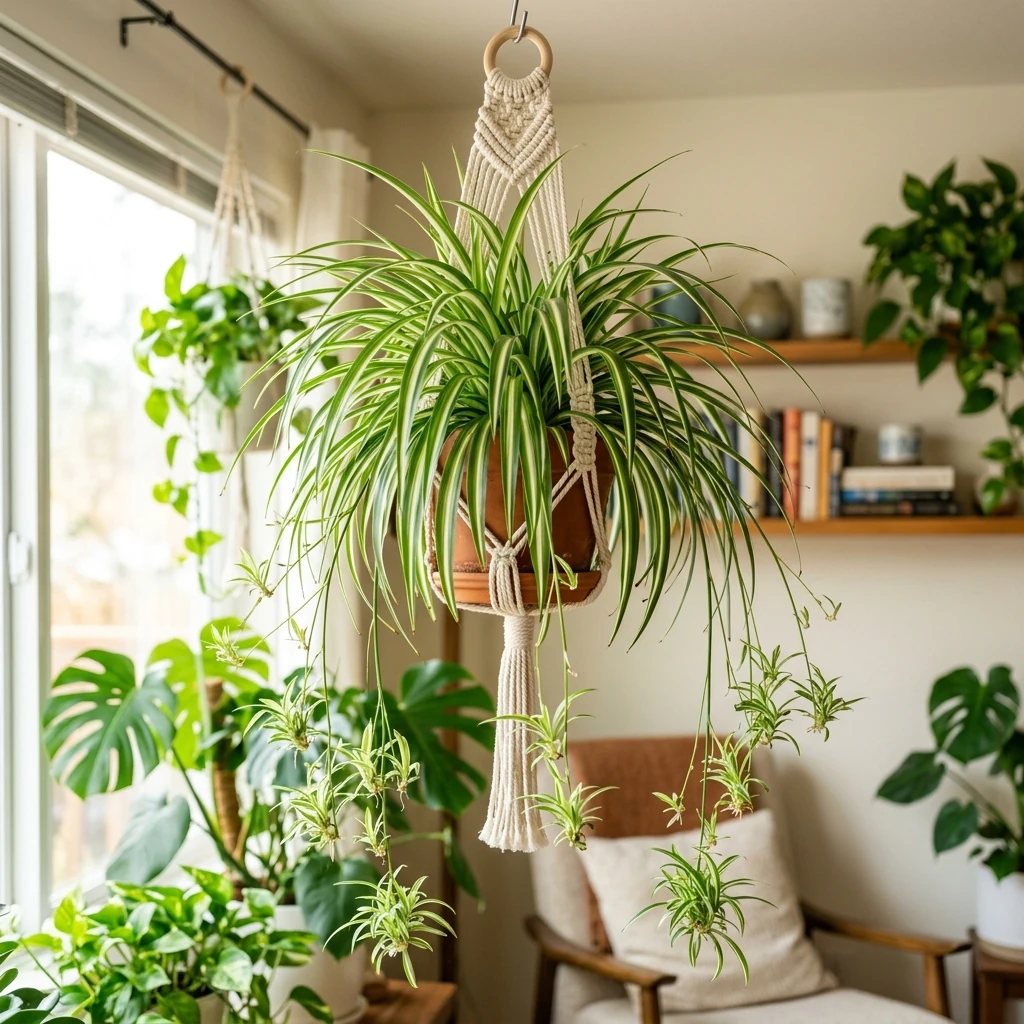
Chlorophytum comosum
Discover why Spider Plants are making a massive comeback. Learn how to care for them properly, prevent crispy brown tips, and propagate their tiny spiderettes.
-
Light
Thrives in bright, indirect sunlight. It can survive in lower light, but growth will slow drastically and variegation (the white stripes) may fade to solid green.
-
Temperature
60-80°F (15-27°C)
Growth
fast
pH Range
6.0-7.2
-
Biggest Owner Mistake
Overwatering because the grassy, arching leaves suggest a lawn-like thirst for moisture—but spider plants have thick, fleshy tuberous roots specifically designed to store water between waterings, and soggy soil causes those roots to rot. Let the top inch of soil dry out before watering again.
-
What Nobody Tells You
Brown leaf tips are almost universally caused by fluoride and dissolved salts in tap water accumulating in the leaf tissue over time—not underwatering, not low humidity, and not any deficiency. Switching to distilled or filtered water stops new browning, though existing brown tips won't reverse.
-
Real Home Conditions
In low light, the plant stops producing the hanging stolons (runners) with baby plantlets that make it iconic, because it needs sufficient energy from light to invest in reproduction. Bright indirect light triggers the production of those cascading babies.
The Big Comeback
The Spider Plant (Chlorophytum comosum) was a staple of 1970s interior design, and in 2026, it is experiencing a massive resurgence in popularity. Plant lovers are returning to this classic "bread and butter" plant because it is practically indestructible, incredibly fast-growing, and completely non-toxic to pets.
A Warning for Cat Owners
While Spider Plants are listed as 100% non-toxic by the ASPCA, they are known to have a mild, harmless hallucinogenic effect on felines (similar to catnip). If you have cats, you will likely find them obsessively chewing the long, grassy leaves. To preserve the aesthetic of your plant, it is best kept in a hanging basket out of feline reach.
Recommended next actions
Next Best Actions
Use calculators and guides to turn this plant profile into a practical care routine.
Calculator
Watering Calculator
Calculate the correct watering frequency for your plant based on species, pot size, soil type, season, and climate.
Calculator
Humidity Calculator
Assess your home's current humidity and get specific improvement recommendations for tropical houseplants like Calatheas, Orchids, and Ferns.
Guide
Why Are My Houseplant Leaves Turning Yellow? Complete Diagnosis & Fix
After diagnosing hundreds of yellow-leaf cases across dozens of plant species, we've mapped the ten distinct causes that look nearly identical at first glance — and built the only systematic guide that tells you not just what's wrong, but exactly how to confirm it and fix it.
Calculator
Repotting Calculator
Find out if your plant needs repotting now and get the correct new pot size based on species, current pot size, and root health indicators.
Guide
Fertilizer Burn on Houseplants: How to Identify, Fix & Prevent Salt Damage
Fertilizer burn is one of the most misdiagnosed houseplant problems because its symptoms — brown tips, wilting, yellowing leaves — are nearly identical to overwatering, underwatering, and root rot. The treatment for root rot is opposite to the treatment for fertilizer burn, which means getting the diagnosis wrong makes the plant worse. This guide is built around that diagnostic problem first.
Guide
Why Your Houseplants Are Scorching in June: 2026 Heat Dome Survival Guide
After triaging 800+ heat‑stressed indoor plants during record heatwaves, I’ll show exactly how to stop leaf scorch, cool roots, and keep your collection alive through the 2026 June spikes.
Structured Plant Data
Plant Data Profile
Care values below are generated from the plant JSON fields so users and crawlers can read the structured plant profile directly on the page.
Growth Characteristics
Growth Rate
fast
Mature Height
1-2 feet
Mature Spread
2-3 feet
Life Cycle
Perennial
Flowering Season
Spring/Summer (produces tiny white star-shaped flowers)
Container Friendly
yes
Indoor Capable
yes
Environmental Parameters
| Parameter | Recommended | Survivable |
|---|---|---|
| Temperature | 60-80°F (15-27°C) | 50-90°F (10-32°C) |
| Humidity | 40-60% | 20-80% |
| Soil PH | 6.0-7.2 | 5.5-7.5 |
Lighting
Description
Thrives in bright, indirect sunlight. It can survive in lower light, but growth will slow drastically and variegation (the white stripes) may fade to solid green.
Nutrients
Nitrogen Demand
low
Phosphate Demand
low
Potassium Demand
low
Micronutrient Notes
Extremely susceptible to fluoride toxicity from tap water.
Fertilizer Frequency
Feed sparingly. Once a month during spring/summer with a half-strength liquid fertilizer.
Organic Options
A light top dressing of worm castings.
Relationships
-
Tap Water
Vulnerability | Strength 9
Highly sensitive to fluoride and chlorine in municipal tap water, which directly causes their tips to turn black or crispy brown.