Fertilizer Burn on Houseplants: How to Diagnose, Fix & Prevent Salt Damage
Fertilizer burn is one of the most misdiagnosed houseplant problems because its symptoms — brown tips, wilting, yellowing leaves — are nearly identical to overwatering, underwatering, and root rot. The treatment for root rot is opposite to the treatment for fertilizer burn, which means getting the diagnosis wrong makes the plant worse. This guide is built around that diagnostic problem first.
Quick Answer
Fertilizer burn on houseplants occurs when excess fertilizer salts accumulate in the potting mix, drawing water out of roots rather than letting roots absorb it. Symptoms are brown, crispy leaf tips with a yellow border, white salt crust on the soil surface, wilting despite damp soil, and stunted growth. Fix it by stopping all feeding, scraping surface salt deposits, and flushing the root zone thoroughly with plain room-temperature water three times over 48 hours. Do not fertilize again until the plant shows active new growth.
Key Takeaways
- Identify fertilizer burn by marginal leaf necrosis and crusty white soil deposits.
- Halt all nutrient applications immediately upon observing symptoms.
- Leach potting substrates thoroughly with room-temperature water over 48 hours.
- Resume fertilization at half-strength only after active new growth resumes.
Why Fertilizer Burn Is So Often Misdiagnosed
When a houseplant develops brown leaf tips, the most common response is to water more. When it wilts despite moist soil, the next guess is root rot. When leaves yellow rapidly, nitrogen deficiency gets the blame. All three of these diagnoses can be wrong if the plant was recently fertilised — and applying the wrong treatment makes the situation significantly worse.
Fertilizer burn produces symptoms that overlap almost perfectly with the three most common houseplant problems: drought stress, overwatering damage, and nutrient deficiency. It is also important to distinguish fertilizer burn—which is primarily a root-zone, soil salt injury—from direct foliar chemical burn caused by topical pest sprays or soaps on exposed leaves. In soil fertilizer burn, the reason is disrupted root water movement: excess fertilizer salts in the potting mix create high osmotic pressure around the roots, drawing water out of root cells into salty soil so the plant dehydrates from the inside.
This is why the correct first step is always diagnosis, not treatment. Flushing a root-rotted plant with liters of water kills it faster. Withholding water from a fertilizer-burned plant makes it worse. The two most important questions before doing anything are: when did you last fertilize, and what does the soil smell like?
What Fertilizer Burn Actually Is: The Chemistry in Plain Language
All fertilisers — liquid, granular, organic, and synthetic — contain mineral salts. These are the compounds that carry nitrogen (N), phosphorus (P), and potassium (K) into the soil solution where roots can absorb them. In correct amounts, these salts dissolve in soil water, move through the root membrane, and feed the plant. This process depends on the concentration difference between the soil solution and the inside of the root cells: when outside is less concentrated than inside, water moves into the root. When you over-fertilize, the concentration outside rises above the concentration inside the root. Water flows the wrong way. Roots dehydrate. Tip cells — the furthest from the root system and last to receive water — die first. That is the brown, crispy tip margin you see.
Synthetic fertilisers create this concentration spike faster than organic ones because they dissolve rapidly and release all their salts at once. Organic fertilisers break down more slowly, which is why organic over-feeding takes two to four weeks to show symptoms while synthetic over-feeding can cause visible damage within 48–72 hours of application. This timing difference is a key diagnostic clue.
Container plants are far more vulnerable than garden plants for one simple reason: in a pot, salts have nowhere to go. In garden soil, rainfall dilutes and leaches excess salts continuously. In a sealed plastic or ceramic pot with limited drainage, every fertilizer application adds to the salt concentration already present. Salts accumulate with each feeding cycle until the level crosses the damage threshold — often several months after the over-feeding habit began.
Symptoms of Fertilizer Burn: How to Read What Your Plant Is Showing You
The symptoms of fertilizer burn follow a consistent progression. Recognising which stage your plant is in tells you how urgently you need to act and how likely recovery is.
Stage 1 — Early damage (reversible with prompt action)
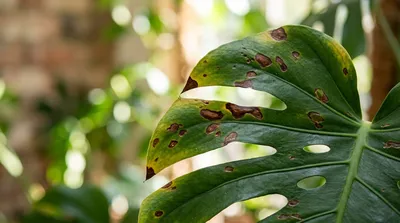
- Brown, crispy leaf tips and margins — typically starting at the very tip of the leaf and progressing inward, often with a thin yellow border separating dead brown tissue from living green. This is the most consistent early sign and appears on the oldest leaves and the longest-leaved species first (Dracaena, Spider Plant, Peace Lily, Snake Plant).
- Slightly wilted leaves despite moist soil — the plant looks underwatered but the compost is clearly damp when you push a finger in. This is the osmotic dehydration effect: roots cannot pull water from salty soil efficiently.
- White or pale crust on the soil surface or around the drainage holes and pot rim — dried salt deposits left by evaporating water. Not always present, and can also appear from mineral-heavy tap water, but in combination with other symptoms it confirms salt accumulation.
Stage 2 — Established damage (recoverable but slower)
- Yellowing of lower and older leaves — progressing upward from the base of the plant as roots lose function. Can be confused with nitrogen deficiency but occurs alongside the brown tip pattern rather than in isolation.
- Stunted or completely halted new growth — the plant may have been pushing new leaves regularly before the damage but now shows no new growth despite adequate light and the correct season.
- Leaf drop, particularly of lower leaves — the plant shedding leaves it can no longer support as root function declines.
- Wilting that does not fully recover overnight — a healthy underwatered plant bounces back within hours of watering. A fertilizer-burned plant showing persistent wilt has significant root damage and the osmotic problem has not been resolved by watering alone.
Stage 3 — Severe damage (difficult to recover)
- Majority of leaves yellowed, browned, or dropped
- Roots dark, shrunken, or brittle when unpotted — different from root rot (which produces soft, black, mushy roots with a foul smell). Salt-damaged roots are often dry, brown, and thread-like rather than rotten, and the soil does not smell sour.
- Collapse of growing tips
The Diagnostic Checklist: Is It Fertilizer Burn, Overwatering, or Drought?
Before treating, work through these four questions. They will distinguish fertilizer burn from the two most commonly confused conditions:
| Check | Fertilizer Burn | Overwatering / Root Rot | Underwatering / Drought |
|---|---|---|---|
| Soil moisture? | Damp to normal | Wet, soggy, heavy | Bone dry, pulling from pot edges |
| Soil smell? | Normal or slightly mineral | Sour, musty, or rotten | Neutral or dusty |
| White crust on soil or pot? | Often present | Rarely | Rarely |
| Fertilised recently? | Yes — within days (synthetic) or weeks (organic) | Unrelated | Unrelated |
| Leaf tip pattern? | Brown tips with yellow border, dry and crispy | Soft yellow or brown, often starting from base leaves | Dry, curling, entire plant wilted |
| Root condition? | Dry, brown, brittle tips but firm overall | Black, mushy, foul-smelling | White or tan, dry and firm |
Step-by-Step Recovery: How to Fix Fertilizer Burn
Step 1: Stop feeding immediately
Do not apply any fertilizer, compost tea, plant food, or slow-release granules until the plant has fully recovered and shows active new growth. This includes any products marketed as "gentle" or "organic" — any additional nutrients will worsen the salt concentration in the compost before flushing can reduce it.
Step 2: Scrape surface salt deposits
If a white or pale crust is visible on the compost surface, carefully scrape away the top 1–2cm of soil with a spoon and discard it. This removes the most concentrated layer of salt deposits before flushing and means less salt to leach through the pot during the next step.
Step 3: Flush the root zone thoroughly
This is the core treatment. Take the plant to a sink, bath, or outdoor space and run room-temperature water slowly and continuously through the compost for 3–5 minutes, allowing it to flow freely out of the drainage holes. The goal is to dissolve accumulated salts and carry them out of the pot with the water. One thorough flush is not sufficient — repeat this process two more times over the following 48 hours.
Do not use cold water — thermal shock stresses already-weakened roots. Do not add any fertilizer or supplements to the flushing water. Plain water only.
After flushing, allow the pot to drain completely before returning it to its saucer. Do not let it sit in the water that drains out — that water contains the salts you just removed.
Step 4: Assess whether repotting is necessary
If the plant shows Stage 2 or Stage 3 symptoms — significant leaf drop, persistent wilting after flushing, or when you unpot and find dark, shrunken root tips — flushing alone may not be enough. Repotting into fresh, unamended potting mix removes the salt-laden soil entirely and gives roots an immediate clean environment to recover in. Use a pot of the same size or only slightly larger. Do not add fertilizer to the new mix.
If the plant is in Stage 1 — brown tips only, no significant wilting or leaf drop — flushing without repotting is sufficient for most species.
Step 5: Prune damaged leaf tips
Browned leaf tips will not turn green again — the cells are dead. Trim the brown sections with clean, sharp scissors, cutting at a slight angle to mimic the natural leaf shape. This is cosmetic rather than essential, but it removes dead tissue that can harbour fungal issues in high-humidity conditions. Do not cut into the green tissue — trim only to where the brown ends and healthy tissue begins.
Step 6: Recovery care
For the first 4–6 weeks after treatment, keep the plant in stable, consistent conditions: bright indirect light, correct watering based on soil dryness, and no fertilizer. Avoid repotting, propagating, or moving the plant to a new position during this period — every additional stressor slows root recovery. New growth is the reliable sign that the root system has recovered sufficiently to begin a careful, diluted feeding schedule again.
How to Fertilize Correctly: Preventing Burn From Recurring
Always dilute to half-strength or less
The instructions on fertilizer packaging are typically written for optimal commercial growing conditions — healthy plants in optimal light with consistent professional care. For most home gardeners, the label dose is too strong. A half-strength solution applied at the same frequency provides more than adequate nutrition while dramatically reducing salt accumulation risk. Use PlantSolve's fertilizer calculator to determine the correct dilution for your specific plant type, pot size, and current season rather than guessing from the label alone.
Never fertilize dry soil
Applying liquid fertilizer to dry compost concentrates the salts at the root zone instantly — there is not enough water present to dilute them. Always water the plant with plain water first, allow it to drain, and then apply diluted fertilizer. This buffers the salt concentration the roots encounter.
Only fertilize during active growth
Houseplants can only absorb and use nutrients when they are producing new leaves, roots, and stems. This is typically March through September in northern hemisphere homes. Fertilising a plant in winter dormancy or low-light conditions means nutrients sit unused in the soil as salts, accumulating with each application. A plant that is not pushing new growth does not need feeding.
Flush the pot every 2–3 months as routine maintenance
Even correct fertilising accumulates some salt over time. A preventive flush with plain water every 2–3 months during the growing season — particularly important for slow-draining plastic pots — resets the salt balance before it reaches damaging levels. This single habit prevents the majority of fertilizer burn cases entirely.
Use slow-release or organic fertilisers for lower-risk feeding
Slow-release granules and organic fertilisers break down gradually, releasing small amounts of nutrients continuously rather than creating the salt spike of a liquid synthetic feed. They are significantly less likely to cause acute fertilizer burn. The trade-off is less precise control over timing — you cannot stop a slow-release granule from releasing after it is applied the way you can stop a liquid feed.
Plants Most Sensitive to Fertilizer Burn
Some houseplants are significantly more sensitive to salt accumulation than others. These species show fertilizer burn symptoms faster and at lower concentration thresholds, and should always be fed at half-strength or less:
- Spider Plant (Chlorophytum comosum): Brown tips from fertilizer burn are one of the most common problems reported. Feed at quarter-strength maximum.
- Peace Lily (Spathiphyllum): Extremely salt-sensitive. Brown leaf margins appear rapidly after any over-feeding. Flush monthly as standard practice.
- Dracaena (all species): Long strap leaves show tip burn quickly. Avoid fertilizer containing fluoride — Dracaenas are particularly sensitive to fluoride salt specifically.
- Calathea and Maranta: Highly sensitive to both salt and fluoride. Use filtered or rainwater for both watering and any liquid feeds. Feed at most once every 6–8 weeks during growing season.
- Orchids (Phalaenopsis): Roots are directly visible and turn grey-green when salt-stressed. Feed at one-quarter label strength or use a specialist orchid fertilizer formulated for low-salt application.
- Ferns: Brown frond tips are almost always caused by either low humidity or fertilizer salt. Feed monthly at most during summer.
Common Mistakes That Lead to Fertilizer Burn
- Feeding on a fixed calendar schedule regardless of the plant's growth rate. A plant not pushing new growth in a dark winter room needs no feeding even if the calendar says it has been four weeks.
- Using fertilizer spikes at the manufacturer's recommended rate. Fertilizer spikes concentrate salts in a small area directly around the spike, often burning roots in that zone while the rest of the root system goes unfed.
- Adding fertilizer to a newly repotted plant. Fresh potting mix contains sufficient nutrients for 4–8 weeks. Feeding immediately after repotting adds salts to an already-adequate nutrient level and stresses transplant-shocked roots.
- Doubling the dose to compensate for skipped feedings. A double-strength application causes twice the salt spike. It is better to resume a normal diluted schedule than to try to compensate for missed feeds.
- Assuming more fertilizer will fix yellowing leaves. Yellowing caused by overwatering, low light, or pests is made worse by adding more fertilizer, not better. Always diagnose the cause before feeding.
Propagation Steps
- Identify a healthy stem or section of the plant.
- Using sterilized shears, make a clean cut below a node.
- Place the cutting in water or a well-draining propagation mix.
- Keep in high humidity and bright indirect light until roots form (usually 3-4 weeks).
Repotting Guide
Repot every 12 to 18 months in the early spring before the active growing season begins. Only go up one pot size (1-2 inches larger in diameter). Always use fresh, well-draining soil to ensure the roots receive adequate oxygen and to prevent root rot.
Toxicity Warning
It is important to note that many common houseplants contain calcium oxalate crystals or other compounds that are toxic to cats, dogs, and humans if ingested. Always keep this plant out of reach of pets and children to avoid symptoms like mouth irritation or vomiting.
Common Problems and Solutions
- Yellow leaves generally indicate overwatering or poor soil drainage. Ensure your pot has drainage holes and allow the top inch of soil to dry out between waterings.
- Brown, crispy leaf edges are typically a sign of low ambient humidity. Use a humidifier to raise the moisture levels in the room to at least 60%.
- Drooping foliage can be caused by severe underwatering or root rot. Check the soil moisture immediately to determine which extreme is the cause.
- Pest infestations (like spider mites or fungus gnats) thrive in stressed plants. Treat early with neem oil and ensure proper airflow around the foliage.
Temperature
Maintain temperatures between 65–80°F (18–27°C). Avoid placing the plant near cold drafts or AC vents.
Humidity
Aim for a humidity level of 50-70%. If your home is dry, especially in winter, consider running a humidifier nearby.
Watering
Water thoroughly when the top two inches of soil feel dry. Ensure excess water drains completely from the pot.
Light
Provide bright, indirect sunlight. Direct harsh rays will scorch the leaves, while too little light will stunt growth.
Recommended next actions
Next Best Actions
Move from reading to action with related calculators, plant profiles, and quiz-based recommendations.
Calculator
Plant Fertilizer Calculator: Right Dose for Every Plant
Calculate the exact fertilizer dose and feeding schedule for your plant based on species, pot size, growth stage, and season.
Guide
Yellow Houseplant Leaves: Diagnose & Fix Guide 2026
After diagnosing hundreds of yellow-leaf cases across dozens of plant species, we've mapped the ten distinct causes that look nearly identical at first glance — and built the only systematic guide that tells you not just what's wrong, but exactly how to confirm it and fix it.
Guide
Kitchen Scrap Fertilizers: Which Ones Actually Work
After testing dozens of DIY natural fertilizers on over 300 houseplants for the past 6 years, we have identified the exact kitchen scraps that actually boost growth without attracting pests.
Frequently Asked Questions
What does fertilizer burn look like on houseplants?
How do you fix fertilizer burn on houseplants?
Why does my plant have brown tips after fertilizing?
What is the white stuff on my houseplant soil?
How often should you fertilize houseplants?
Is fertilizer burn the same as overwatering?
Can plants recover from fertilizer burn?
Which houseplants are most sensitive to fertilizer?
Explore More