How Do I Keep My Hanging Plants Hydrated?
Hanging plants dry out faster because air reaches the pot from every side. This guide shows how to water them well, reduce drying, and avoid the constant wilt-dry cycle with practical, proven techniques.
Quick Answer
Use a pot with good water retention, water thoroughly until excess drains, and check hanging plants more often than floor plants. Grouping, shade, and larger reservoirs can slow drying. Choose a moisture-retentive potting mix with added coir or compost, and consider self-watering planters or drip irrigation for multiple baskets.
Key Takeaways
- Check moisture frequently, as elevated air currents dry baskets rapidly.
- Use aerated, moisture-retentive substrates containing coco coir or peat.
- Take baskets down to soak thoroughly in sinks or basins when dry.
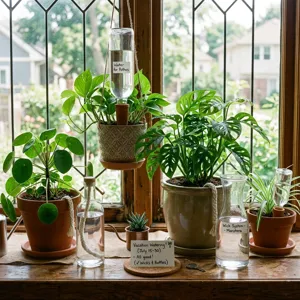
- Consider self-watering hanging containers for consistently thirsty plants.
Hanging plants dry out faster than plants on the ground because air moves around the container from every side. That means you need to pay closer attention to the soil and may need a mix that holds moisture a little longer. A basket that seems fine in the morning can be dry by evening in hot weather. I learned this the hard way when I hung a beautiful fern on my porch. Within a week, it was crispy and brown despite my daily watering. It turned out that the pot was too small, the soil was too light, and the afternoon sun was baking it. Over the years, I have refined my approach and now have hanging baskets that stay lush and green even in summer heat. This guide will teach you everything you need to know to keep your hanging plants hydrated, from choosing the right pot and soil to watering techniques and seasonal adjustments.
Key Takeaways
- Hanging plants dry out faster due to increased air exposure on all sides of the pot.
- Use a moisture-retentive potting mix with ingredients like coir, compost, or water-holding polymers.
- Water thoroughly until water drains out the bottom; never just sprinkle the surface.
- Check moisture daily in hot weather; hanging baskets may need water twice a day in summer.
- Choose pots or liners that are slightly larger to provide more soil volume and moisture buffer.
- Self-watering planters and drip irrigation can greatly reduce watering frequency.
- Group hanging plants together to create a humid microclimate and reduce drying.
- Match plant choice to your climate—some plants are more drought-tolerant than others.
Introduction
Hanging plants add a beautiful vertical dimension to any garden, balcony, or porch. But they come with a unique challenge: they dry out much faster than plants sitting on the ground. When a pot is suspended, air circulates around the entire container, wicking moisture from all sides. The wind, even a gentle breeze, accelerates evaporation. Combine that with the fact that most hanging baskets are relatively small, and you have a recipe for rapid soil drying. I have seen many gardeners give up on hanging baskets because they could not keep up with the watering demands. But with the right techniques and a few smart choices, you can enjoy lush, thriving hanging plants without becoming a slave to the watering can. This guide covers everything from pot selection to advanced moisture-management strategies, so you can keep your hanging plants hydrated and healthy.
Why It Matters
Proper hydration is critical for hanging plants because they are more exposed to drying conditions than ground-level containers. When the soil dries out too quickly, plants experience stress, wilting, leaf burn, and eventually death. The constant cycle of drying and re-wetting can also damage roots, leading to poor nutrient uptake and reduced flowering. Conversely, overwatering in an attempt to keep up can lead to root rot. Finding the right balance is essential for plant health and for reducing your maintenance time. A well-hydrated hanging plant is not only healthier but also more attractive, with vibrant foliage and abundant flowers. Understanding the factors that affect drying—such as pot material, soil composition, wind, and sun exposure—allows you to create an environment where your hanging plants thrive.
Science Behind It
The rapid drying of hanging plants is due to several physical factors. First, the exposed surface area: a hanging pot is surrounded by air, unlike a pot sitting on the ground where the bottom is shielded. This increases evaporation from all sides. Second, wind accelerates moisture loss by removing the boundary layer of humid air adjacent to the pot and leaves. Third, the small volume of soil in many hanging baskets means there is less water storage capacity; the roots quickly deplete the available moisture. Fourth, the material of the pot matters: porous terracotta or unglazed clay wicks moisture from the soil and releases it to the air, whereas plastic or glazed pots retain moisture better. Finally, the plant itself: trailing and leafy plants have high transpiration rates, losing water through their leaves. Understanding these factors helps you choose appropriate strategies—like using a more moisture-retentive soil mix, a larger pot, or a self-watering system—to counteract the natural drying forces. For more on soil properties, see [best soil for growing healthy plants at home].
Step-by-Step Guide
1. Choose the right pot or liner
Select a hanging container that is large enough to hold a good volume of soil—at least 20–30 cm (8–12 in) in diameter for most plants. Larger pots dry out slower. Consider using plastic or glazed ceramic pots, which retain moisture better than unglazed terracotta. If you use wire baskets with a liner, use a thick coir or moss liner that holds moisture and slows drying.
2. Use a moisture-retentive potting mix
Mix standard potting soil with water-retaining amendments like coconut coir, compost, or water-absorbing polymers (hydrogels). A good mix might be 2 parts potting soil, 1 part coir, and 1 part perlite (for drainage). The coir holds water, perlite ensures aeration, and the compost provides nutrients. Avoid sandy or very light mixes that dry too quickly.
3. Water thoroughly and deeply
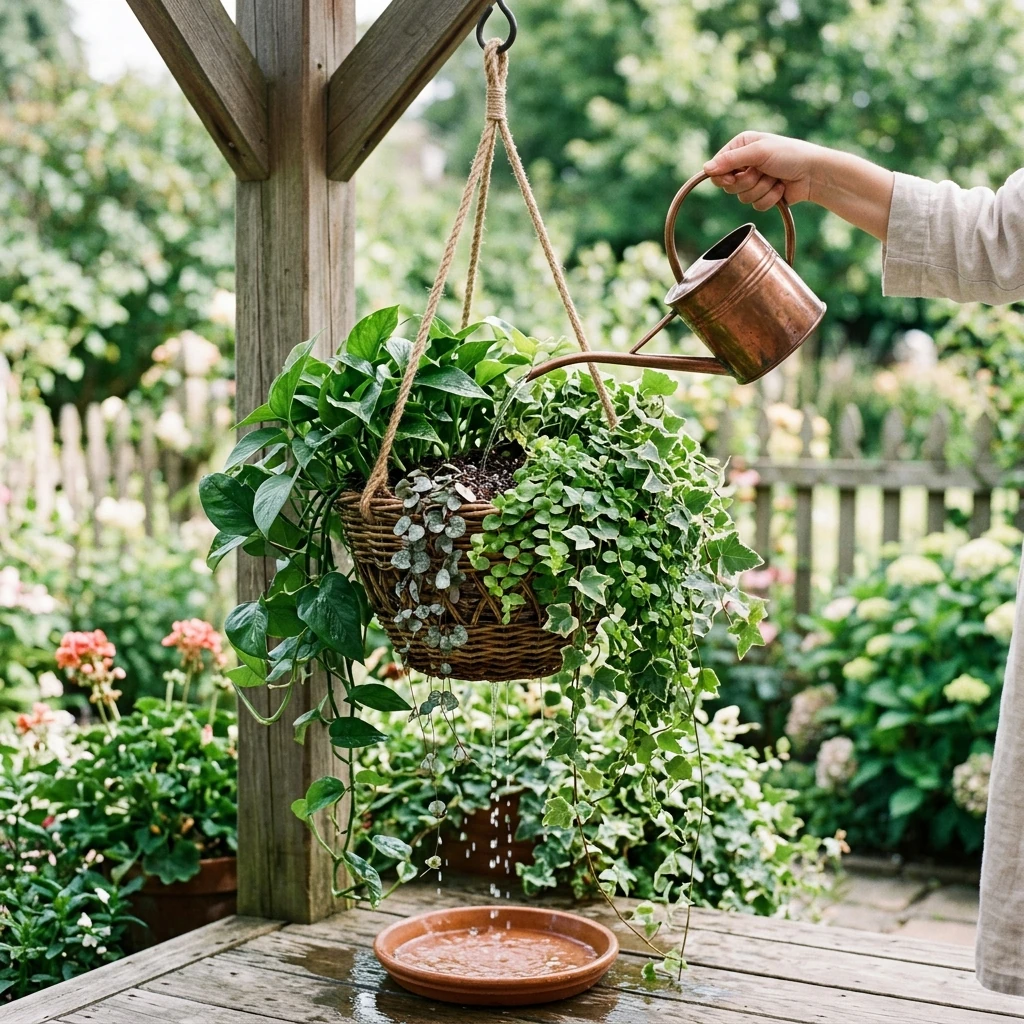
When you water, do so slowly and thoroughly until water runs out of the drainage holes. This ensures the entire root ball is moistened. Do not just wet the surface. If the soil has shrunk away from the pot sides, water may run straight through; in that case, soak the pot in a bucket of water for 15–20 minutes to rehydrate the soil.
4. Check moisture frequency
Check hanging plants daily, especially in warm weather. Insert your finger about 2.5–5 cm (1–2 in) into the soil. If it feels dry, water. If it feels moist, wait. During heatwaves, you may need to water twice a day—once in the morning and once in the evening. Always empty any saucer or tray to prevent waterlogging.
5. Improve the environment
Group hanging plants together to create a humid microclimate. Place them in a spot that gets morning sun and afternoon shade, or use shade cloth to reduce heat stress. If you have many baskets, consider installing a drip irrigation system with a timer to automate watering.
6. Use mulch or top dressing
Add a layer of compost, bark chips, or decorative pebbles on the soil surface to reduce evaporation. This also helps keep the soil cooler.
7. Monitor plant health
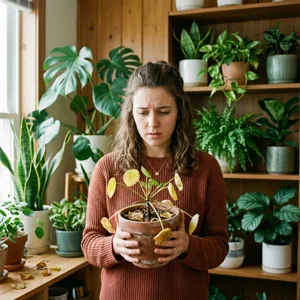
Watch for signs of underwatering (wilting, dry crispy leaves) and overwatering (yellowing, soft leaves). Adjust your watering routine accordingly. For more on watering, see our [watering houseplants] guide.
Climate Considerations
Your local climate dramatically affects how often you need to water hanging plants. In hot, arid climates (desert, Mediterranean summers), you may need to water daily or even twice daily. In cool, humid climates (oceanic, coastal), watering every 2–3 days might be sufficient. In continental climates with hot summers and cold winters, you will water heavily in summer and very little in winter. In windy locations, evaporation is faster; consider windbreaks or move baskets to sheltered spots. For USDA zones, zone 3–5 with short summers: water frequently during the warm months but reduce as temperatures drop. Zone 8–10 with long, hot summers: you may need to use self-watering systems or choose drought-tolerant plants like succulents or trailing geraniums. Always adjust to your local microclimate—a balcony with reflected heat from walls dries faster than a garden under trees.
| Climate Type | Summer Watering (per week) | Winter Watering (per month) | Recommendation |
|---|---|---|---|
| Hot & dry (arid, Mediterranean summer) | 7–14 times | 1–2 times | Use self-watering pots; choose drought-tolerant plants; provide shade |
| Warm & humid (subtropical) | 3–5 times | 1–2 times | Ensure good airflow to prevent fungal issues; water in morning |
| Temperate (continental) | 3–4 times | 1–2 times | Adjust for heatwaves; protect from drying winds |
| Cool & humid (oceanic) | 2–3 times | 1–2 times | Less frequent watering; avoid overwatering in cool, damp weather |
Seasonal Advice
Spring: As temperatures rise, start watering more frequently. Repot or refresh soil if needed. Summer: This is the most demanding season. Water daily or twice daily, and consider moving hanging plants to a shadier spot during heatwaves. Autumn: Growth slows; reduce watering frequency. Winter: Most hanging plants go dormant; water sparingly, only when the soil is completely dry. In winter, if your plants are indoors, they may still need water, but much less often. Always adjust based on actual weather—a rainy period may mean you skip watering, while a dry spell demands more.
Common Mistakes
- Watering only the surface—roots at the bottom stay dry and die.
- Using a pot that is too small, which dries out too quickly.
- Using a light, fast-draining mix in a hanging basket—it will dry too fast.
- Not emptying saucers—standing water can cause root rot.
- Overwatering in winter—plants need much less.
- Not adjusting for wind and heat—exposed locations need more water.
- Letting plants wilt repeatedly—stress leads to leaf drop and poor recovery.
Maintenance Schedule
- Daily: Check soil moisture; water if dry. In summer, check twice.
- Weekly: Inspect for pests; remove dead leaves; rotate pots for even growth.
- Monthly: Apply a balanced liquid fertilizer at half strength during growing season; top up mulch or compost.
- Seasonally: Repot or refresh soil if plants are root-bound; adjust watering frequency.
- Annually: Replace old potting mix; clean pots and liners.
Buying Guide
When buying hanging planters, look for those with drainage holes and a removable saucer or a self-watering reservoir. Plastic and glazed ceramic are best for moisture retention; terracotta is beautiful but dries faster. For liners, choose thick coir or moss that holds moisture. For soil, buy a quality potting mix and add coir or water-retaining granules. If you have many baskets, consider a drip irrigation kit (starting at $20–50) with a timer. Self-watering planters ($15–40 each) can be a good investment for plants that need consistent moisture.
| Material | Moisture Retention | Weight | Best For | Cost |
|---|---|---|---|---|
| Plastic (standard) | Good | Light | Most plants; cost-effective | $5–15 |
| Glazed ceramic | Excellent | Heavy | Decorative; retains moisture well | $20–50 |
| Unglazed terracotta | Poor (wicking) | Heavy | For plants that like dry soil | $10–25 |
| Coir liner (wire basket) | Good (holds moisture) | Light | Traditional hanging baskets | $5–15 |
| Sphagnum moss liner | Excellent | Light to medium | High-moisture plants; natural look | $10–20 |
Expert Tips
Over the years, I have found that using a self-watering hanging planter with a wick system is a game-changer for summer. The wick draws water from a reservoir below, keeping the soil evenly moist without waterlogging. I also add water-absorbing crystals to the soil mix—they can hold up to 200 times their weight in water and release it slowly. Another tip: water in the morning so the leaves dry off during the day, reducing fungal risk. And don't forget to water from the top as well as let the bottom soak—some roots may be dry if you only bottom-water. Finally, if you have a hanging fern that keeps wilting, try moving it to a spot with more shade—it often solves the problem.
Common Myths
- Myth: You should water hanging plants every day no matter what. Reality: Water only when the soil is dry; frequency varies with weather.
- Myth: Self-watering planters eliminate all watering. Reality: They still need reservoir refilling, especially in hot weather.
- Myth: Adding gravel to the bottom improves drainage and prevents drying. Reality: It actually reduces root space and can create a perched water table; use a well-draining mix instead.
- Myth: Misting the leaves is enough to hydrate the plant. Reality: Misting only raises humidity; roots need water.
- Myth: All hanging plants need the same watering routine. Reality: Succulents need less, ferns need more; know your plant.
When NOT To
- Do not use a terracotta pot if you struggle to keep plants hydrated—they wick moisture away.
- Do not use a mix that is too water-retentive for succulents—they need fast drainage.
- Do not water in the evening if the plant is in a cool spot—wet leaves overnight can cause fungal issues.
- Do not let your hanging plant sit in a saucer of water for long—roots can rot.
- Do not place hanging plants where they get blasted by hot sun and wind—they will dry out too fast.
Decision Guide
| Plant Type | Water Needs | Recommended Pot Type | Soil Mix | Watering Frequency |
|---|---|---|---|---|
| Succulents (e.g., String of Pearls) | Low | Plastic or terracotta (if you water carefully) | Cactus mix + perlite | Every 1–2 weeks (dry thoroughly) |
| Trailing tropicals (e.g., Pothos, Philodendron) | Moderate | Plastic or glazed ceramic | Standard potting mix + coir | Weekly; check soil |
| Ferns (e.g., Boston fern) | High | Plastic with reservoir or self-watering | Moisture-retentive mix (coir, compost) | Every 2–3 days; keep evenly moist |
| Flowering annuals (e.g., Petunias, Lobelia) | High | Self-watering or plastic | Potting mix + water-holding polymers | Daily in summer; may need twice |
| Herbs (e.g., trailing thyme) | Moderate | Plastic | Potting mix + perlite | When top inch is dry |
Troubleshooting
| Problem | Likely Cause | Solution |
|---|---|---|
| Plant wilts despite daily watering | Soil is hydrophobic; water runs through | Soak pot in water for 20 minutes; add wetting agent; repot with better mix |
| Leaves yellow and drop | Overwatering or poor drainage | Reduce watering; check drainage holes; let soil dry out |
| Leaf edges brown and crispy | Underwatering or low humidity | Water more deeply; increase humidity; move from hot sun |
| Water pooling on soil surface | Soil compaction or wrong texture | Repot with lighter, well-aerated mix; aerate soil with chopstick |
| Fungus gnats | Overwatering and organic matter | Allow soil to dry; use sticky traps; water less frequently |
Frequently Overlooked Facts
Many gardeners forget that hanging plants can dry out from the bottom too—if the pot is porous, moisture wicks away from the drainage holes. Placing a saucer under a hanging pot can help, but it must be emptied to avoid root rot. Another overlooked fact is that wind is a major desiccating factor; a light breeze can double the drying rate. Also, the colour of the pot matters—dark pots absorb heat and can dry the soil faster. Finally, the type of water matters; hard water can leave mineral deposits that clog soil pores, reducing water uptake. Using rainwater or filtered water can help.
Common Myths
- Myth: Hanging plants need to be watered by submerging the entire pot. Reality: Only if the soil is extremely dry; regular top-watering is fine.
- Myth: You can't overwater a hanging plant because water drains out. Reality: Overwatering can still happen if you water too frequently or the soil doesn't drain well.
- Myth: All hanging baskets need a liner. Reality: Wire baskets do, but plastic or ceramic pots don't.
- Myth: Watering in the middle of the day is okay. Reality: It can cause leaf burn and water loss; early morning is best.
Summary
Keeping hanging plants hydrated is all about understanding their unique drying environment and countering it with smart choices. Choose a moisture-retentive pot and soil, water deeply and frequently during hot weather, and monitor daily. Use shade, grouping, and self-watering systems to reduce maintenance. Adjust for your climate and season—more water in summer, less in winter. Avoid common mistakes like shallow watering or using the wrong pot material. With these strategies, your hanging plants will stay lush, green, and vibrant, turning your space into a vertical garden oasis.
Recommended next actions
Next Best Actions
Move from reading to action with related calculators, plant profiles, and quiz-based recommendations.
Guide
How to Keep Plants Alive While on Vacation: 7 Proven Methods
Before you leave, make watering easier, slow down drying, and reduce stress. This guide gives you simple vacation setups that work without hiring a plant sitter, from wick systems to humidity domes.
Guide
Best Soil for Indoor Plants: Potting Mix Recipes & Guide
Learn how to build a well-aerated potting mix that balances moisture retention, drainage, and root-zone oxygen for different types of houseplants.
Guide
How Often Should I Repot My Plants?
Repotting is not on a fixed calendar. This guide helps you spot when roots, soil, and growth tell you it is time for a larger pot or fresh mix. Learn the signs, timing, and technique.
Frequently Asked Questions
Why do hanging plants dry out so fast?
How often should I water hanging baskets?
Do hanging plants need special soil?
Can I use self watering hanging planters?
How do I stop hanging plants from wilting?
What is the best potting mix for hanging baskets?
How do I water hanging plants without making a mess?
Can I use water-retaining crystals in hanging baskets?
Do hanging plants need more water in summer?
Should I mist hanging plants?
How do I know if my hanging plant is overwatered?
What are the best hanging plants for low-maintenance watering?
Explore More