String of Pearls Care: Master the Squeeze Test & Prevent Crown Rot
After rescuing and rehabilitating over 30 String of Pearls from severe crown rot over the past 6 years, we have cracked the code to keeping this notoriously finicky succulent dense, plump, and thriving indoors.
-
Difficulty
intermediate
-
Light
Requires several hours of direct morning or late afternoon sun to maintain dense, compact growth and prevent the crown from rotting.
-
Temperature
70°F - 80°F (21°C - 27°C)
-
Growth
fast
-
Humidity
30% - 40% (Standard to low home humidity)
-
pH range
6.0 - 7.0
-
Biggest Owner Mistake
Overwatering because the round, bead-like pearls look like they should stay firm and full—but each pearl is a water storage organ, and consistently wet soil causes the plant to rot from the crown down while the pearls still look plump. Wait until the pearls look slightly deflated and wrinkled at the surface before watering.
-
What Nobody Tells You
The crown of the plant (where pearls meet soil) is the most vulnerable point and rots easily if top-watered carelessly—water pooling at the base of the stems causes crown rot even when overall soil moisture is appropriate. Bottom-watering or careful directed watering keeps the crown dry.
-
Real Home Conditions
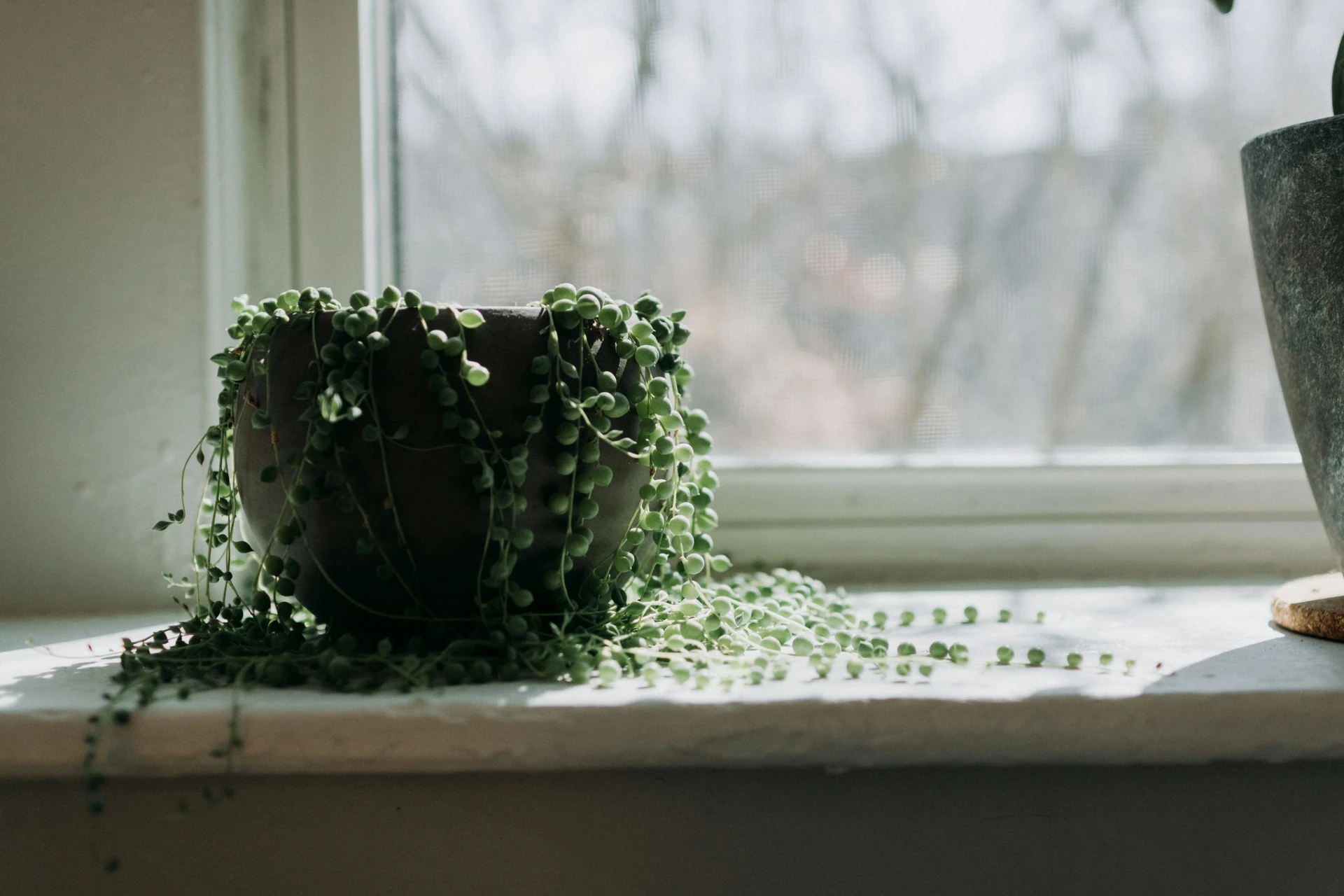
In low light, the pearls become elongated and oval rather than round, and strands stretch with large gaps between them as the plant reaches for more light. A very sunny windowsill is the minimum for maintaining round, tight, closely-spaced pearls.
Quick Answer
String of Pearls is a trailing succulent with spherical leaves that requires bright light including some direct sun for compact bead formation. Water only after soil fully dries, using a fast-draining succulent mix to prevent pearl rot. Avoid overwatering, which is the most common cause of shriveled or mushy pearls in this popular hanging plant.
Key Takeaways
- Provide bright light, including some direct sun, for compact growth.
- Water only after the soil has fully dried out between waterings.
- Use a fast-draining succulent mix to help prevent bead rot.
- Avoid overwatering, the most common cause of shriveled or mushy pearls.
Overview
The String of Pearls (Senecio rowleyanus) is one of the most highly sought-after houseplants on social media, famous for its cascading vines of perfect, pea-like spheres. However, it also has a reputation as a "heartbreaker" plant. The most common frustrating experience growers face is bringing home a lush, full pot, only to watch the top of the plant slowly rot away into a mushy, brown mess while the vines below shrivel and die. This guide will solve that exact problem by teaching you how to properly light the crown and water strictly by the "squeeze test."
Native to the arid, desert regions of Southwest Africa, this plant survives brutal dry seasons by storing immense amounts of water inside its modified, spherical leaves. In its natural habitat, it doesn't trail gracefully from the sky; it creeps along the ground, forming a dense mat that takes root wherever the stem touches the sandy soil. Understanding this creeping, arid nature is essential: it means the plant requires a shallow root system, brutal drainage, and an absolute intolerance for sitting in wet, heavy indoor potting soil.
Light
Light is the single most critical factor in keeping a String of Pearls alive, and it is where most growers fail. This succulent requires bright, direct sunlight for several hours a day. An east or south-facing window is ideal. However, the crucial secret is that the light must hit the *top of the pot*. If you hang the plant so high that only the trailing vines receive light while the top of the soil (the "crown") is in shadow, the soil will stay wet too long, and the stems will rot at the soil line. Always ensure the crown of the plant is bathed in sunlight.
Temperature
String of Pearls thrives in average household temperatures between 70°F and 80°F (21°C - 27°C). During the winter, it can tolerate cooler temperatures down to 50°F (10°C), which can actually help induce blooming if combined with strict water restriction. It is highly sensitive to cold drafts and should never be placed near a freezing window pane or an AC vent.
Humidity
Being a desert succulent, the String of Pearls prefers low humidity. The typical dry air of a climate-controlled Western home is perfect for it. High humidity environments, such as a steamy bathroom, can actually increase the risk of fungal infections and stem rot, especially if the air circulation is poor.
Watering
Throw away your watering schedule. Overwatering is the number one killer of this plant. Instead, you must learn to "read" the pearls. A fully hydrated pearl is perfectly spherical, firm to the touch, and features a small, translucent vertical line (the "epidermal window") which allows light into the interior of the leaf. When the plant is thirsty, the water reserves deplete, and the pearl will feel slightly soft when gently squeezed. You will also notice a slight indent or "pucker" forming on the side of the sphere. Only water when you see and feel these signs of dehydration. When you do water, soak the soil thoroughly, then let it drain completely. Read our full String of Pearls troubleshooting guide for visual examples of thirsty pearls.
Soil
Never plant a String of Pearls in standard indoor potting soil; it will hold moisture too long and rot the shallow roots. You must use a highly porous, gritty succulent or cactus mix. If mixing your own, combine 40% potting soil with 60% inorganic grit like perlite, pumice, or coarse sand. Furthermore, always use a shallow pot (like a low bowl) rather than a deep nursery pot. The roots are shallow, and a deep pot contains too much soil at the bottom that will stay wet and stagnant.
Fertilizer
This plant is a very light feeder and grows quickly without much assistance if given enough light. Apply a weak, half-strength liquid succulent fertilizer just once or twice during the early spring and summer. Avoid fertilizing in the winter, and never fertilize a plant that is struggling with root rot, as the nitrogen will only burn the remaining delicate roots.
Propagation
String of Pearls is incredibly easy to propagate, which is helpful if you need to rescue the healthy vines of a rotting plant. Because it naturally creeps along the ground, the easiest method is "soil propagation." Simply take a healthy cutting, lay it flat across the surface of moist (not wet) succulent soil, and lightly pin it down if necessary. The stem will push new roots down into the soil from the nodes along the vine. Alternatively, you can strip the bottom few pearls off a cutting and insert the bare stem directly into the soil.
Repotting
Because they have very shallow, delicate root systems, String of Pearls rarely need to be repotted. They are perfectly happy being slightly root-bound. You should only repot if the soil has broken down entirely, become compacted, or if you are dealing with a severe pest infestation in the soil. When repotting, be incredibly gentle, as the pearls break off the stems very easily. Always choose a pot with excellent drainage holes, preferably unglazed terracotta, which allows the soil to "breathe" and dry out faster.
Toxicity
The String of Pearls is toxic to dogs, cats, and humans. The sap contains toxic compounds that can cause skin irritation upon contact. If ingested, it causes drooling, vomiting, lethargy, and diarrhea in pets. Because the dangling pearls look remarkably like a toy to a cat, it is imperative to hang this plant securely out of reach.
Common Problems
Crown rot is the nemesis of the String of Pearls. If the top of the plant looks black, mushy, or stringy, while the bottom vines look healthy, the crown has rotted. You cannot save the rotted roots; you must immediately cut off all the healthy green vines above the rot line and propagate them as new plants. Conversely, if the pearls are shriveling into dry, crispy little husks, the plant is severely underwatered and needs a deep, immediate soaking. Mealybugs are the most common pest; they look like small cotton tufts hiding where the pearls meet the stem. Treat them by dabbing them directly with a cotton swab dipped in rubbing alcohol.
Calculator
Interactive Calculators for String Of Pearls
Recommended next actions
Next Best Actions
Use calculators and guides to turn this plant profile into a practical care routine.
Topic Guide
Watering
Learn everything about watering for your indoor and aquarium plants. Expert care tips, troubleshooting, and related guides.
Guide
String of Pearls Care: Shriveling & Mushy Fixes
String of pearls is one of the most beautiful and most misunderstood plants we grow. After years of working with them — including rescuing dozens that arrived half-dead — we've identified the two counterintuitive mistakes that account for almost every struggling specimen. This guide exists because most advice online gets the diagnosis completely backwards.
Topic Guide
Root Rot
Learn how to identify and treat root rot in houseplants. Discover causes, symptoms, and step-by-step solutions to save your plants from overwatering.
Structured Plant Data
Plant Data Profile
The following data is extracted directly from our botanical knowledge graph for accuracy and transparency.
Growth Characteristics
Growth Rate
fast
Mature Height
Trailing stems can reach 2-3 feet long indoors
Mature Spread
Forms a dense mat on the soil surface before trailing
Life Cycle
Perennial
Flowering Season
Winter or spring indoors (small, white, cinnamon-scented flowers)
Container Friendly
yes
Indoor Capable
yes
Environmental Parameters
| Parameter | Recommended | Survivable |
|---|---|---|
| Temperature | 70°F - 80°F (21°C - 27°C) | 50°F - 95°F (10°C - 35°C) |
| Humidity | 30% - 40% (Standard to low home humidity) | 10% - 60% |
| Soil PH | 6.0 - 7.0 | 5.5 - 7.5 |
Lighting
Description
Requires several hours of direct morning or late afternoon sun to maintain dense, compact growth and prevent the crown from rotting.
Nutrients
Nitrogen Demand
low
Phosphate Demand
low
Potassium Demand
low
Micronutrient Notes
Very light feeder. Over-fertilizing causes weak, elongated growth.
Fertilizer Frequency
Once in early spring with half-strength succulent fertilizer.
Organic Options
A light top dressing of worm castings.
Relationships
-
Root Rot
Vulnerability | Strength 10
Crown rot and root rot are the primary causes of death, usually due to overwatering or insufficient light hitting the top of the soil.
Senecio (Curio) Variety Comparison
| Variety | Leaf Shape | Care Difference |
|---|---|---|
| String of Pearls | Perfectly spherical, pea-like | Most sensitive to overwatering |
| String of Bananas | Curved, banana or fish-hook shaped | Grows much faster, slightly more tolerant of lower light |
| String of Tears | Teardrop or fig-shaped, pointing upwards | Similar care to Pearls, but stems tend to be thicker |
Troubleshooting & Diagnostics Guide
1 Stems at the soil line are thin, brown, and mushy, while trailing vines look okay
Diagnosis: Crown rot caused by overwatering or a lack of light hitting the top of the pot.
Treatment: Cut off the healthy green vines, discard the rotted roots and soil, and propagate the healthy cuttings on top of fresh, dry succulent mix.
Prevention: Maintain optimal care conditions.
Authoritative Resources
For additional peer-reviewed information on plant diseases, toxicity, and care, consult these trusted botanical and agricultural extensions:
Glossary of Terms
- Epidermal Window
- A specialized, translucent slit on the side of a succulent leaf (like a String of Pearls) that allows sunlight to penetrate deep into the interior of the leaf for photosynthesis, reducing the surface area exposed to harsh desert sun.
- Internode
- The section of the stem situated between two nodes (the points where leaves attach). Long internodes on a String of Pearls indicate the plant is stretching for more light.
Frequently Asked Questions
How do I know when to water my String of Pearls?
Why is my String of Pearls dying at the top of the soil?
Why are the pearls on my plant shriveling up and turning brown?
Does String of Pearls need direct sunlight?
What is the best soil for a String of Pearls?
How do you propagate a String of Pearls?
Why are the pearls on my plant spaced so far apart?
Is the String of Pearls toxic?
Sources & References
-
Source: powo.science.kew.org
-
Source: missouribotanicalgarden.org
-
Source: plants.ces.ncsu.edu
-
Source: edis.ifas.ufl.edu
-
Source: worldfloraonline.org
Explore More