String of Pearls Care Guide: Why Yours Is Dying and How to Fix It (2026)
String of pearls is one of the most beautiful and most misunderstood plants we grow. After years of working with them — including rescuing dozens that arrived half-dead — we've identified the two counterintuitive mistakes that account for almost every struggling specimen. This guide exists because most advice online gets the diagnosis completely backwards.
Quick Answer
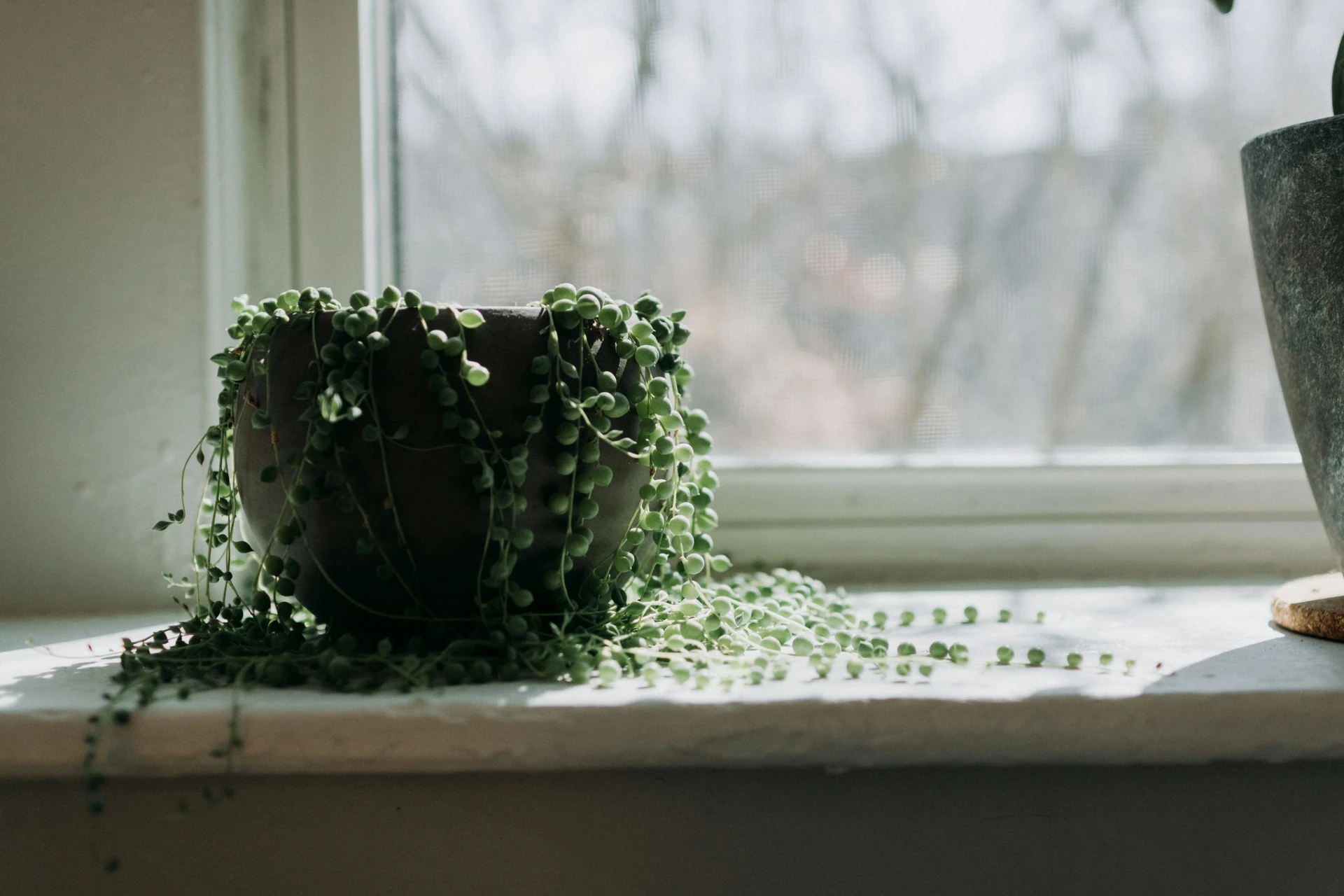
String of Pearls requires bright light with 2 to 3 hours of direct morning sun and a gritty, fast-draining cactus substrate. Water deeply only when the potting soil is 100% dry and the epidermal windows on the pearls begin to narrow. Avoid overhead watering to protect delicate trailing stems from rot.
Key Takeaways
- Provide bright light with several hours of direct morning sun exposure.
- Allow the potting mix to dry completely before bottom-watering deeply.
- Plant in shallow containers using gritty, fast-draining succulent soil.
- Avoid overhead watering, which can cause epidermal bead rot.
Let's Start With the Mistake That Kills Most of Them
String of pearls (Curio rowleyanus, formerly Senecio rowleyanus) has a reputation for being nearly impossible to keep alive. We want to push back on that. After growing and rescuing these plants across a wide range of home environments, our experience is that they are actually quite predictable — they just require you to unlearn two pieces of conventional succulent wisdom that do not apply here.
Mistake one: people water them the way they water cacti — once a month, or less. This is the cause of shriveling pearls in the vast majority of cases we see, and it is the exact opposite of what the plant needs. Mistake two: people put them in the sunniest spot they can find. String of pearls is a shade-adapted plant in nature. It grows along the ground beneath shrubs in South Africa, shielded from direct sun. A south-facing window with harsh afternoon light will scorch it. If you know both of these things, you are already ahead of most string of pearls owners on the internet.
A Note on Related Varieties
String of Pearls (Curio rowleyanus)
The classic, with perfectly spherical green beads and a slightly translucent quality. It is the most widely available and the most frequently mismanaged. The advice in this guide applies directly to this variety.
String of Tears (Curio citriformis)
Teardrop-shaped rather than spherical, with a pointed tip. Slightly more drought-tolerant than string of pearls but shares the same fundamental care requirements. We find it marginally easier to maintain, though it is less commonly available.
String of Dolphins (Curio x peregrinus)
A hybrid with leaves that genuinely resemble leaping dolphins. It is the most demanding of the three — more sensitive to overwatering, more dependent on bright indirect light, and slower to recover from stress. Start with standard string of pearls before working your way to this one.
String of Bananas (Curio radicans)
Banana-shaped, faster growing, and considerably more forgiving than string of pearls. If you have struggled repeatedly with string of pearls, string of bananas gives you the same trailing aesthetic with a much wider margin for error.
Essential Care Requirements
Temperature
65–80°F (18–27°C) is the sweet spot. These plants handle brief dips to 50°F (10°C) but suffer in sustained cold. Keep them well away from heating vents, cold drafts from window gaps, and air conditioning units — all of which cause rapid dehydration that new growers consistently misdiagnose as underwatering and then compound by overwatering in response.
Humidity
Average household humidity of 40–60% is fine. String of pearls is one of the few trailing plants that does not benefit from added humidity — in fact, excessively humid conditions with poor airflow around the strands increase the risk of fungal rot at the soil line. Good air circulation matters more than humidity level for this plant.
Light
This is where we see the most confident wrongness from other guides. String of pearls thrives in bright indirect light — ideally within 2–4 feet of an east-facing window, or a few feet back from a south or west window with a sheer curtain. It will tolerate a few hours of gentle direct morning sun, but sustained harsh afternoon sun bleaches the pearls, causes sunken flat spots, and leads to strand dieback from the tips inward. We have lost healthy strands to a single week of direct summer sun that we failed to account for when moving them to a new location. Treat the light requirements more like a pothos than a cactus.
Watering
Here is the number we wish every string of pearls guide would lead with: water every 7–14 days during the active growing season. Not monthly. The pearls store water, yes — but they are small reservoirs, and a plant hanging in a terracotta pot in a warm, bright home burns through that reserve faster than most people realize. The reliable test is to squeeze a pearl gently between your fingers. A healthy, well-hydrated pearl feels firm and resists compression. A pearl that is beginning to wrinkle, deflate, or collapse inward is telling you it is already past the point of ideal hydration — water immediately. In winter with lower light and slower growth, extend to every 14–21 days, but still check the pearls rather than following a fixed schedule. When you do water, water thoroughly — soak the soil completely and let it drain. Frequent light watering that barely reaches the roots is another common mistake we see.
Soil
A mix of 60–70% well-draining succulent and cactus mix with 30–40% perlite works reliably. Pure cactus mix alone drains too aggressively for string of pearls, which needs a slightly longer moisture window than a true desert cactus. The goal is soil that drains completely within 30 minutes of watering but retains enough residual moisture to sustain the plant for 7–10 days. Avoid any mix that stays visibly damp for more than 3 days — that is a root rot situation waiting to happen.
Pots
Terracotta is our preference — it wicks excess moisture from the soil and creates a buffer against overwatering that plastic pots cannot provide. Whatever material you choose, drainage holes are non-negotiable. String of pearls in a pot without drainage is one of the fastest ways to rot the root system entirely. it is common to see plants lose their entire root structure within 3 weeks of being placed in a sealed decorative cache pot with standing water at the bottom.
Reading Your Plant: A Diagnostic Framework
Before you do anything to a struggling string of pearls, take 60 seconds to perform this assessment. Acting on the wrong diagnosis — adding water to a rotting plant, or withholding water from a dehydrated one — accelerates the decline you are trying to stop.
- Pearls that are shriveled, wrinkled, or deflated but still green: this is dehydration. Check that the soil has actually dried between waterings (not just the surface), and water thoroughly. Recovery typically shows within 48–72 hours as pearls re-inflate.
- Pearls that are mushy, translucent, or soft when pressed: this is overwatering or root rot. Do not add water. Unpot the plant, remove all mushy roots, allow to dry for 24–48 hours, and repot in fresh dry mix.
- Pearls that are flattened, brown, or have dry papery patches on one side: this is sunburn. Move immediately out of direct light. Damaged pearls will not recover, but new growth will come in correctly.
- Sparse strands with large gaps and very small new pearls: this is a light problem. The plant is not receiving enough bright indirect light to sustain dense growth. Move closer to a window.
- Yellowing at the soil line with strands dying back from the base: this indicates rot at the crown or soil line. Examine the stems at the soil surface — if they are dark, soft, and mushy, the plant needs emergency intervention (see the rescue section below).
Step-by-Step Rescue Plan
For a Shriveling Plant (Dehydration)
- Water immediately and thoroughly, allowing water to drain completely. Do not mist — surface moisture does nothing for a dehydrated root system.
- Check that the drainage holes are not blocked and that water is reaching the bottom of the pot.
- If the soil has become so dry that it has pulled away from the pot edges and water runs straight through without absorbing, place the pot in a tray of water for 20 minutes to allow the soil to rehydrate from the bottom, then remove and drain.
- Move the plant away from any direct sun or heat sources that may have accelerated the dehydration.
- Check the pearls daily for re-inflation. Most healthy plants with intact roots recover visibly within 48–72 hours. If there is no improvement after 5 days, investigate the roots — persistent wilting despite adequate watering usually means root damage has occurred.
For a Mushy Plant (Overwatering or Root Rot)
- Stop watering entirely. Remove the plant from its pot and gently shake away all the old soil.
- Examine the roots under good light. Healthy roots are white or pale tan and firm. Rotted roots are brown or black, soft, and may smell faintly sour. Trim all rotted roots with clean scissors sterilized with isopropyl alcohol.
- Trim any mushy strands back to healthy tissue. If pearls pop off at the lightest touch or feel like they are full of water rather than firm flesh, those strands cannot be saved.
- Allow the plant and the remaining healthy roots to air-dry on a paper towel in bright indirect light for 12–24 hours before repotting. This seals the cut root ends and reduces the chance of re-infection.
- Repot into fresh, dry succulent mix in a clean pot with drainage. Do not water for 5–7 days, allowing any remaining cut surfaces to callous.
- If healthy strands remain even after significant root loss, you can propagate them directly into fresh soil (see below) and treat the original plant as a separate recovery project.
Fertilizing String of Pearls
We fertilize string of pearls lightly and infrequently — a half-strength balanced liquid fertilizer (10-10-10) once a month from March through August is sufficient. The plant does not need heavy feeding, and over-fertilizing pushes weak, leggy growth rather than the dense, compact strands that make the plant worth growing. Never fertilize a stressed, underwatered, or recovering plant. Never fertilize in winter. Flush the soil with plain water every 2–3 months to prevent salt accumulation, which is a surprisingly common cause of root tip damage in plants that are otherwise well-managed.
Propagation (This Is the Easy Part)
String of pearls is one of the most satisfying plants to propagate because it requires almost no intervention — the plant does most of the work. Lay healthy 3–5 inch strand sections directly on the surface of moist succulent mix, press them lightly so the nodes contact the soil, and keep the soil barely moist in bright indirect light. New roots emerge from the nodes within 2–3 weeks. There is no need to strip leaves or submerge nodes in water — surface contact with moist soil is sufficient. We propagate in spring and early summer for the fastest results, and we always root several cuttings at once, as some inevitably take better than others.
Repotting Guide
String of pearls is one plant we prefer to keep slightly root-bound — it tends to focus on producing the aerial strands we want rather than root development when lightly constrained. Repot only when roots are visibly escaping the drainage holes or growth has stalled completely. Choose a pot only 1 inch larger and refresh the soil at the same time. Spring is ideal. Handle strands carefully during repotting — they detach from the mother plant with very little force and will not reattach once separated.
Toxicity Warning
String of pearls is mildly to moderately toxic to cats, dogs, and humans if ingested. Symptoms include vomiting, diarrhea, and lethargy in pets. Keep it out of reach — as a hanging plant it is often assumed to be safe, but cats in particular will pursue a trailing strand given the opportunity.
Common Problems & Solutions
- Shriveling pearls despite regular watering: check that water is actually penetrating the soil rather than running down the inside edge of the pot. Bone-dry, hydrophobic soil repels water. Bottom-water the plant for 20 minutes in a tray, then resume normal top-watering going forward.
- Rot at the soil line with healthy-looking strands above: this is crown rot, and it is the most serious and fastest-moving problem we encounter. Remove the healthy strands immediately and propagate them as cuttings in fresh soil. The original plant base cannot be saved once crown rot has set in.
- Sparse growth with very long internodal spacing: a light problem. Move significantly closer to a window. Pruning the longest bare strands encourages new growth from lower nodes.
- Strands that dry out and die from the tips inward: sunburn or heat stress. Check for proximity to direct light, heat vents, or south-facing windows in summer. Move the plant and trim dead strands to the last healthy pearl.
- White crusty residue on the soil surface or pot exterior: salt buildup from fertilizer or mineral-heavy tap water. Flush the soil with filtered water and reduce fertilizer frequency. Switch to rainwater or filtered water if the problem recurs.
Recommended next actions
Next Best Actions
Move from reading to action with related calculators, plant profiles, and quiz-based recommendations.
Topic Guide
Watering
Learn everything about watering for your indoor and aquarium plants. Expert care tips, troubleshooting, and related guides.
Calculator
Plant Light Calculator: Find the Best Window for Your Plant
Determine the ideal indoor light placement for your plant based on species, window direction, and seasonal light availability.
Guide
Why Root Rot Happens and How to Save Your Plant
After rescuing thousands of rotting houseplants from big-box stores over a 12-year nursery career, we have developed a foolproof method to diagnose, treat, and completely prevent deadly root rot.
Frequently Asked Questions
Why is my string of pearls shriveling?
Why are my string of pearls going mushy?
How often should I water string of pearls?
Does string of pearls need direct sunlight?
Why does my string of pearls keep dying?
Can I save a string of pearls with root rot?
How do I propagate string of pearls?
Is string of pearls toxic to cats?
Explore More