Repotting
Repotting is the practice of transferring a plant into a new container, typically with fresh growing media and a slightly larger pot, addressing the gradual degradation of potting media and root expansion that occur over time. It's an essential part of long-term container plant care. As root systems expand within a fixed container volume, they can begin circling the pot walls and becoming rootbound, restricting water movement, nutrient uptake, and respiration. Fresh potting media also restores physical and chemical soil properties that decompose and compact over time, improving both aeration and drainage.
Quick Answer
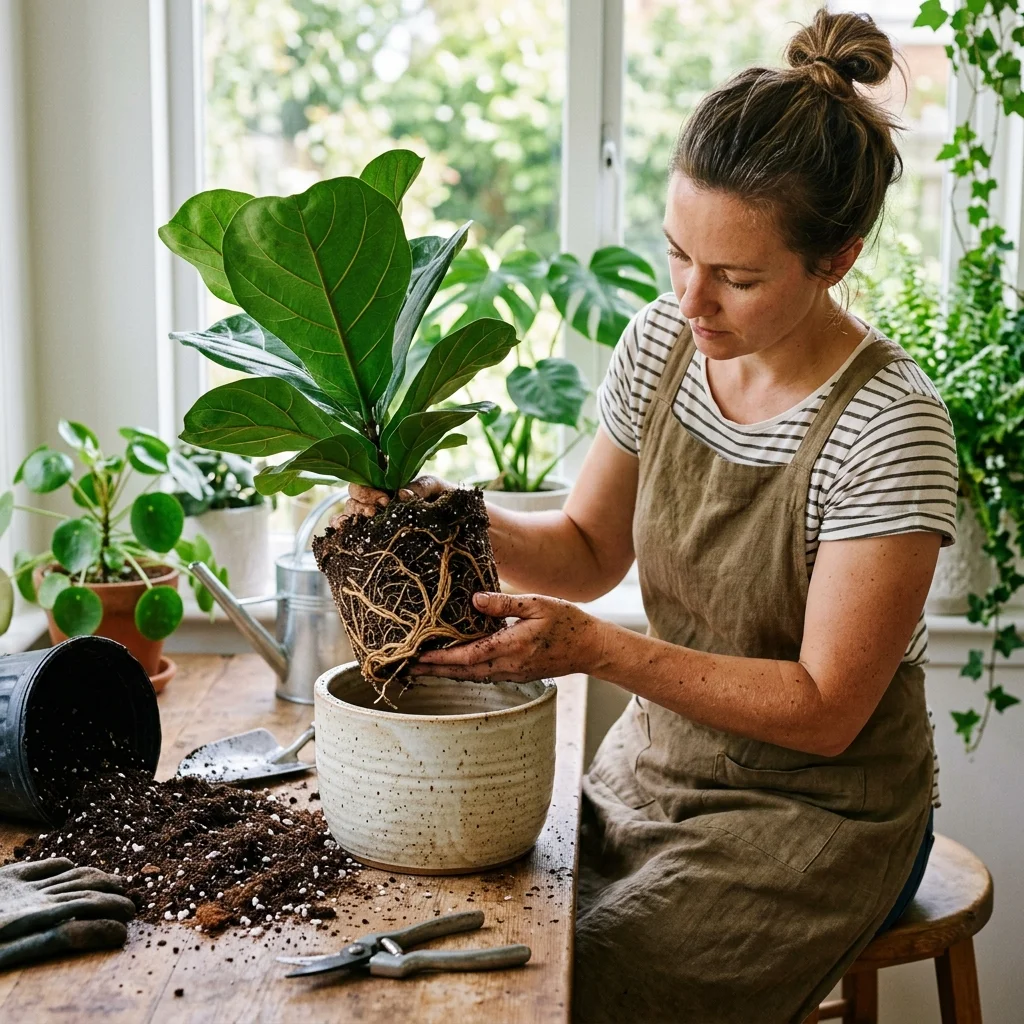
Repotting transfers a plant into fresh growing media, usually in a slightly larger pot, to restore a healthy root environment as roots expand and nutrient reserves deplete over time. Signs a plant needs repotting include roots circling the pot walls or emerging from drainage holes. Fresh potting media also reverses the compaction and reduced aeration that develop in older soil.
What Is Repotting?
Repotting is the horticultural practice of transferring a plant from one container into another, usually with fresh growing media and, in many cases, a slightly larger pot. It is an essential aspect of container plant care because potting media gradually degrades, roots expand over time, and nutrient reserves become depleted. Repotting restores a healthy root environment and allows continued plant development.
As plants grow, their root systems occupy an increasing proportion of the available container volume. Eventually, roots may begin circling the pot walls, creating a rootbound condition. When this occurs, water movement, nutrient uptake, and root respiration can become restricted. Repotting provides an opportunity to loosen or prune congested roots and re-establish healthy root architecture.
Fresh potting media also improves physical and chemical properties within the root zone. Over time, organic materials decompose and compact, reducing aeration and drainage. Healthy roots require oxygen for cellular respiration, which powers nutrient absorption and growth. Replacing old media improves air-filled pore space and supports better root function.
Repotting is more than simply moving a plant into a larger container. It is an opportunity to inspect root health, remove damaged tissue, improve growing conditions, and encourage vigorous growth. When performed correctly, repotting can significantly improve plant health, flowering, and long-term performance.
Tools and Materials You'll Need
- New plant container: A pot with drainage holes that is typically 2–5 cm wider than the current container.
- Fresh potting mix: Provides renewed structure, aeration, drainage, and nutrient-holding capacity.
- Hand trowel: Useful for filling containers and positioning growing media around roots.
- Pruning shears: Used to remove damaged, dead, or excessively circling roots when necessary.
- Root inspection mat: Keeps the work area clean while examining the root system.
- Watering can: Used to settle the media after repotting and eliminate air pockets.
- Drainage tray: Collects excess water and protects indoor surfaces.
- Gloves: Help maintain cleanliness and improve grip while handling plants and soil.
Step-by-Step: How to Perform Repotting
- Water the plant lightly 24 hours before repotting to reduce root stress and make removal easier.
- Select a new container that is approximately 2–5 cm wider in diameter than the existing pot.
- Remove the plant carefully and inspect the root system for circling, damaged, or decaying roots.
- Trim dead roots with clean pruning shears and gently loosen congested root masses before planting.
- Add enough fresh potting mix so the root ball sits at the same depth it occupied in the original container.
- Fill around the root ball, leaving 1–2 cm of space below the rim to facilitate watering.
- Water thoroughly after repotting and monitor the plant over the next 2–4 weeks while it establishes in the new container.
Best Practices and Pro Tips
- Repot During Active Growth: Spring is often the ideal season because plants recover more quickly from root disturbance.
- Increase Size Gradually: Move up only 2–5 cm in diameter to avoid excessive moisture retention.
- Inspect Every Rootball: Examine roots carefully during each repotting session to identify hidden problems.
- Replace Old Media: Refresh the growing medium every 1–3 years even if a larger container is unnecessary.
- Delay Fertilizing Briefly: Allow roots time to recover before resuming regular feeding programs.
Quick Reference Table
| Factor | Recommended Range | Why It Matters |
|---|---|---|
| Pot Upgrade Size | 2–5 cm wider | Provides additional root space without excessive wet media. |
| Watering Before Repotting | 24 hours prior | Reduces root stress during removal. |
| Watering Rim Space | 1–2 cm below rim | Improves irrigation efficiency. |
| Media Replacement Interval | Every 1–3 years | Maintains structure and aeration. |
| Monitoring Period | 2–4 weeks | Ensures successful establishment after transplanting. |
Best Plants for Repotting
The pothos (Epipremnum aureum) responds exceptionally well to repotting because its vigorous root system quickly colonizes fresh growing media and benefits from renewed nutrient availability.
The monstera (Monstera deliciosa) develops substantial roots and often requires periodic container upgrades to support continued foliage production and overall vigor.
The peace lily (Spathiphyllum wallisii) frequently benefits from repotting when rootbound, as fresh media improves moisture balance and supports flowering.
The spider plant (Chlorophytum comosum) produces dense root systems that can rapidly fill containers. Repotting restores root-zone space and improves growth.
The fiddle-leaf fig (Ficus lyrata) appreciates occasional repotting because fresh media improves drainage and supports long-term root health.
The rubber plant (Ficus elastica) benefits from periodic soil renewal and gradual container size increases as the root system matures.
Choosing the correct container is discussed in our Pot Size guide. Understanding root congestion is important, as explained in our Rootbound guide. Selecting the proper growing medium is equally essential, as explained in our Potting Mix guide. If you also need to determine how much mix is required for the new container, use our Potting Mix Calculator.
Common Mistakes to Avoid
- Using an Oversized Pot: Increasing container diameter by more than 5–10 cm can leave excessive wet soil around roots and increase the likelihood of root problems.
- Repotting Too Frequently: Disturbing roots every few months may slow growth and delay establishment.
- Ignoring Root Health: Failing to inspect roots can allow rot, circling roots, or pest problems to go unnoticed.
- Planting Too Deep: Burying the crown below its original level can create moisture-related issues around stems.
- Fertilizing Immediately: Applying fertilizer before roots recover may increase stress. Allow several weeks for establishment first.
Frequently Asked Questions
How effective is repotting for improving plant health?
Repotting is often one of the most effective ways to improve container plant health. Fresh growing media restores aeration, improves drainage, and provides a better environment for root growth. Plants suffering from rootbound conditions, depleted soil, or poor drainage frequently show noticeable improvement once they establish in a refreshed root zone.
When is the best time of year to repot plants?
Spring is generally considered the best time because many plants are entering active growth and can recover quickly from root disturbance. However, severely rootbound plants or those experiencing media-related problems may benefit from repotting at other times when necessary. Plant species and growing conditions should always be considered.
What materials are required for successful repotting?
A suitable container with drainage holes, fresh potting mix, a watering can, and basic gardening tools are usually sufficient. The most important factors are selecting an appropriately sized pot and using a growing medium suited to the plant's requirements. Clean tools also help reduce the risk of disease transmission.
How should I care for a plant after repotting?
Water thoroughly after repotting and place the plant in suitable light conditions for its species. Monitor moisture carefully during the next 2–4 weeks because the new growing medium may behave differently from the old one. Avoid excessive fertilization until the plant resumes active growth and appears well established.
Why is my plant wilting after repotting?
Temporary wilting can occur because roots experience disturbance during the process. Minor transplant stress is common, especially in plants with dense root systems. Ensure the plant receives appropriate watering, avoid additional stress, and allow time for recovery. Persistent wilting may indicate root damage, drainage problems, or improper container sizing.
Frequently Asked Questions
How effective is repotting for improving plant health?
Repotting is often one of the most effective ways to improve container plant health. Fresh growing media restores aeration, improves drainage, and provides a better environment for root growth. Plants suffering from rootbound conditions, depleted soil, or poor drainage frequently show noticeable improvement once they establish in a refreshed root zone.
When is the best time of year to repot plants?
Spring is generally considered the best time because many plants are entering active growth and can recover quickly from root disturbance. However, severely rootbound plants or those experiencing media-related problems may benefit from repotting at other times when necessary. Plant species and growing conditions should always be considered.
What materials are required for successful repotting?
A suitable container with drainage holes, fresh potting mix, a watering can, and basic gardening tools are usually sufficient. The most important factors are selecting an appropriately sized pot and using a growing medium suited to the plant's requirements. Clean tools also help reduce the risk of disease transmission.
How should I care for a plant after repotting?
Water thoroughly after repotting and place the plant in suitable light conditions for its species. Monitor moisture carefully during the next 2–4 weeks because the new growing medium may behave differently from the old one. Avoid excessive fertilization until the plant resumes active growth and appears well established.
Why is my plant wilting after repotting?
Temporary wilting can occur because roots experience disturbance during the process. Minor transplant stress is common, especially in plants with dense root systems. Ensure the plant receives appropriate watering, avoid additional stress, and allow time for recovery. Persistent wilting may indicate root damage, drainage problems, or improper container sizing.
Explore More
Related Topics
Related Plant Guides
No specific plant guides found matching this topic.
Recommended next actions
Continue Exploring
Dive deeper into related plant care tools and profiles.
Topic Guide
Pot Size
Learn everything about pot size for your indoor and aquarium plants. Expert care tips, troubleshooting, and related guides.
Topic Guide
Rootbound
Learn everything about rootbound for your indoor and aquarium plants. Expert care tips, troubleshooting, and related guides.
Topic Guide
Potting Mix
Learn everything about potting mix for your indoor and aquarium plants. Expert care tips, troubleshooting, and related guides.
Calculator
Potting Mix Calculator: Build the Perfect Soil Blend
Calculate the ideal potting mix ratios for any plant type — from moisture-loving tropicals to drought-tolerant succulents.