Repotting Shock Rescue: Why Your Plant Collapsed and Exactly How to Save It
After rehabilitating stressed nursery stock and rescuing more than 1,500 cases of severe transplant collapse over 12 years, we have mapped the precise physiological timeline of repotting shock and the critical rescue steps required to prevent total hydraulic failure.
Quick Answer
Repotting shock occurs when delicate root hairs are damaged during a soil change, reducing water uptake. Do not flood the soil with water or fertilizer. Instead, keep soil lightly moist, place a clear plastic bag loosely over the foliage to raise humidity, and move the plant to dim light.
Key Takeaways
- Keep post-repotting conditions stable and avoid moving the plant repeatedly.
- Maintain lightly damp substrate without overwatering stressed root systems.
- Enclose wilting foliage in a clear plastic bag to reduce transpiration loss.
- Withhold all fertilizer applications for 3 to 4 weeks after repotting.
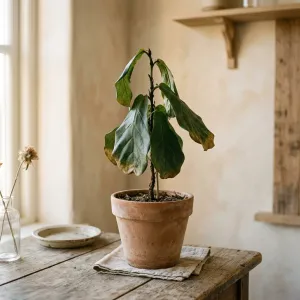
Watching a perfectly healthy Peace Lily or Monstera collapse into a limp, wilted mess just hours after you carefully moved it to a new pot is incredibly demoralizing. Your first instinct is usually to flood the new soil with water, assuming the plant is simply thirsty from the physical move. However, overwatering a plant in acute transplant shock is a fast way to permanently damage it. The wilting isn't caused by a lack of moisture in the pot—it is the result of invisible mechanical damage to the root system that prevents the plant from drinking efficiently. In this guide, you will learn how to bypass the damaged roots and artificially stabilize the plant while it heals.
Science/Mechanism: Root Hairs and Hydraulic Failure
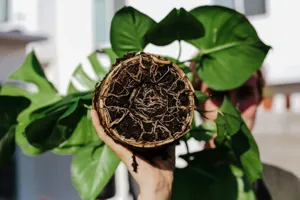
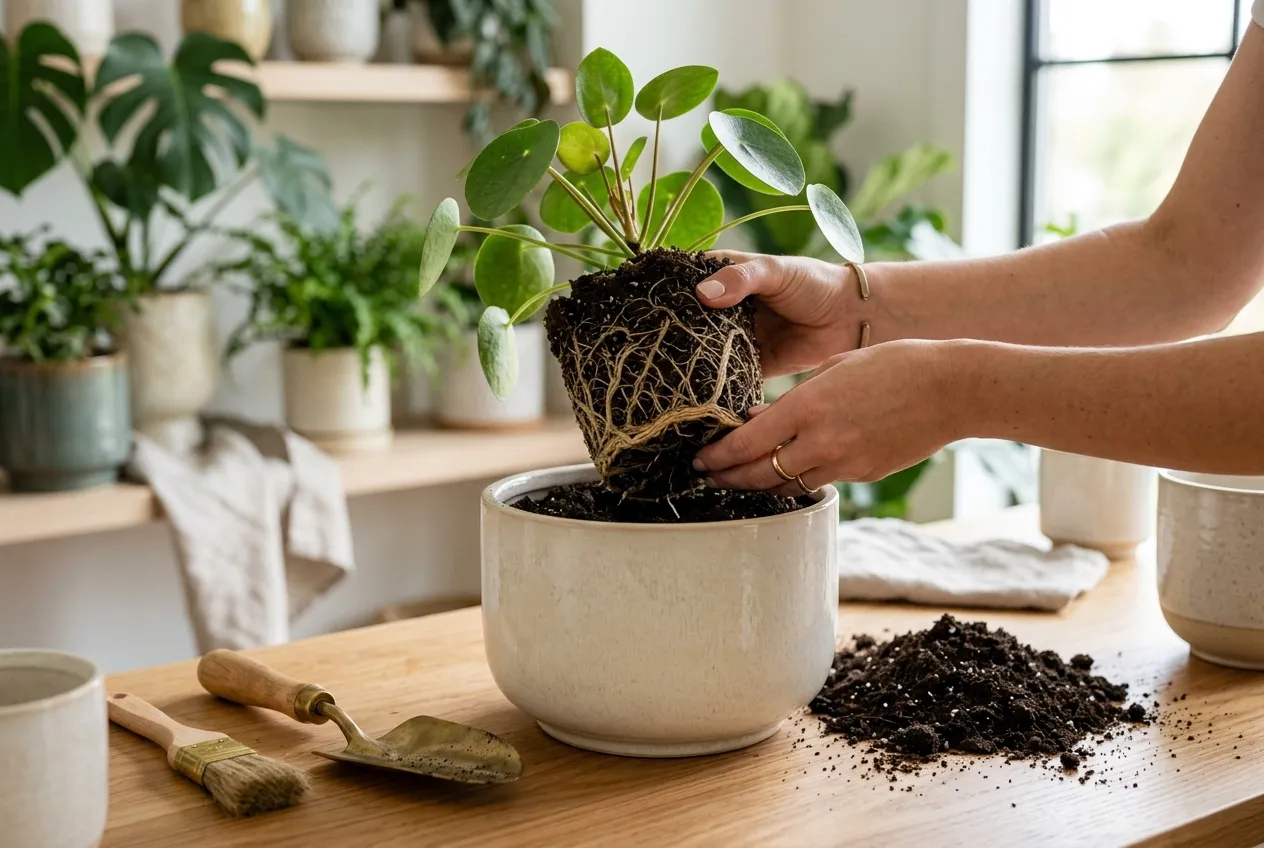
To understand repotting shock, you have to look at roots on a microscopic level. The thick, visible roots you see when unpotting a plant do not absorb much water. Water uptake is largely handled by millions of microscopic, fragile "root hairs" that grow off the main root structures. When you pull a plant out of its old pot or massage away the old dirt, many root hairs are damaged during the aggressive root disturbance.
Once those hairs are stripped, the plant's vascular system experiences sudden hydraulic failure. The leaves continue to transpire (sweat out moisture) at their normal rate, but the stripped roots can no longer pull replacement water from the fresh soil quickly enough. The internal turgor pressure plummets, and the plant collapses. Pouring excessive water into the soil does nothing because the plant has temporarily lost its anatomical "drinking straws." Instead, the excess water simply fills the air pockets in the new potting mix, suffocating the wounded root system.
Identification: Diagnosing Repotting Shock vs. General Wilting
Is your plant just thirsty, or is it in active shock? Use this diagnostic matrix to verify the condition before applying a rescue protocol.
| Diagnostic Feature | Acute Repotting Shock | Standard Underwatering | Root Rot (Post-Repot) |
|---|---|---|---|
| Timeline of Collapse | Sudden; occurs 12 to 48 hours immediately following a soil change. | Gradual; slowly droops over 3 to 5 days. | Delayed; begins 7 to 14 days after repotting into overly dense or saturated soil. |
| Soil Moisture Level | Moist. The fresh soil was watered during repotting, but the plant remains limp. | Bone dry. Pulls away from the sides of the container. | Soggy, heavy, and smells sour or swampy. |
| Leaf Appearance | Perfectly green but completely devoid of internal pressure (floppy). | Dull green with dry, crispy, or curling edges. | Yellowing from the bottom foliage upward; soft and mushy stems. |
| Primary Intervention | Reduce ambient transpiration immediately; do NOT flood with water. | Bottom-water for 45 minutes to rehydrate the soil. | Unpot, trim rotting tissue, and refer to a root rot rescue guide. |
Solutions/Alternatives: The Transpiration Tent Protocol
Because the roots cannot supply water quickly enough, your best option is to stop the leaves from losing it. You must eliminate all environmental factors that drive transpiration (heat, dry air, and intense light) until the plant regrows its root hairs.
Step 1: Build a High-Humidity Tent. If the plant is small enough, place a large, clear plastic bag over the entire canopy, creating a makeshift greenhouse. Do not seal it tightly at the bottom—allow a small gap for airflow to prevent fungal blooms. This traps the moisture the leaves are sweating out, raising the local humidity. The high humidity signals the stomata to close, which drastically slows down water loss and takes the strain off the damaged roots.
Step 2: Relocate to "ICU" Conditions. Move the plant into dim, indirect light. Photosynthesis requires water; by lowering the light level, you force the plant to slow its metabolism. Furthermore, keep the plant completely isolated from any air conditioning vents or ceiling fans. In Indian summers, an AC draft blowing across a shocked plant will desiccate the foliage rapidly.
Step 3: The Golden Rules of Waiting.
- Watering: Keep the soil lightly moist but never saturated. Wounded roots need oxygen to heal, but completely drying them out will cause further dieback.
- Fertilizing: Wait until new growth resumes before fertilizing. Chemical salts will severely burn the raw, broken root tips.
- Pruning: Unless a leaf turns completely yellow or crispy, leave it attached. The plant may pull mobile nutrients from older leaves to fund the growth of new roots.
After 7 to 10 days, open the humidity tent for a few hours. If the plant remains upright, the root hairs are regenerating successfully. Remove the tent completely and gradually move the plant back to its optimal lighting location. To prevent this entirely in the future, follow our spring repotting guide, which emphasizes leaving the inner root ball intact.
Recommended next actions
Next Best Actions
Move from reading to action with related calculators, plant profiles, and quiz-based recommendations.
Topic Guide
Watering
Learn everything about watering for your indoor and aquarium plants. Expert care tips, troubleshooting, and related guides.
Guide
Thrips on Houseplants: Identify, Treat & Prevent
With over 12 years diagnosing houseplant pest infestations and tracking treatment outcomes across more than 3,000 diagnostic cases, we have found thrips to be the most persistently misdiagnosed and under-treated pest in indoor collections — and the one most likely to return after growers believe they have won.
Guide
How to Repot Houseplants in Spring: Complete Guide
After managing a commercial nursery and successfully repotting over 5,000 tropical houseplants across 10 spring seasons, we have perfected the exact process to avoid transplant shock and guarantee explosive spring growth.
Guide
Why Root Rot Happens and How to Save Your Plant
After rescuing thousands of rotting houseplants from big-box stores over a 12-year nursery career, we have developed a foolproof method to diagnose, treat, and completely prevent deadly root rot.
Frequently Asked Questions
How long does repotting shock last in houseplants?
Should I water a plant experiencing transplant shock?
Should I cut off wilting leaves after repotting?
Can a plant die from repotting shock?
Does fertilizer help a plant recover from repotting shock?
How does air conditioning affect a recently repotted plant?
Will a humidity dome help my drooping plant recover?
Why did my Peace Lily collapse immediately after changing the soil?
Explore More