How to Care for a Fiddle Leaf Fig Indoors
Ficus lyrata
After growing, propagating, and rescuing over 150 Ficus lyrata specimens across diverse indoor environments over the past 10 years, we have mapped the evidence-based lighting and temperature thresholds needed to stop leaf drop.
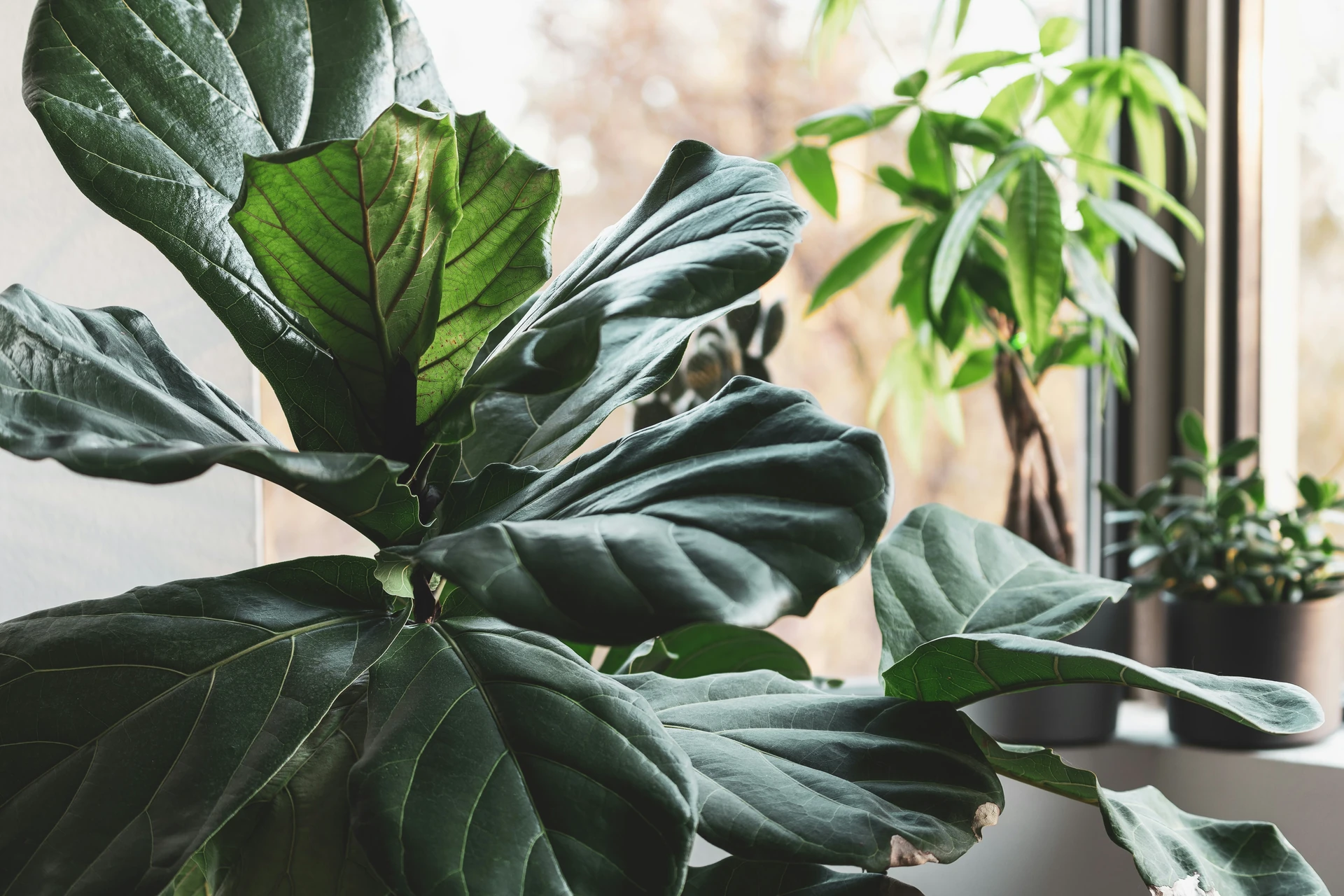
-
Light
Bright indirect light with several hours of direct morning or late-afternoon sun. In regions with significant seasonal daylight changes, supplemental LED grow lighting supports consistent growth.
-
Temperature
65°F to 80°F (18°C to 27°C)
Growth
moderate
pH Range
6.0 to 7.0
-
Biggest Owner Mistake
Overwatering—it's the single most common cause of death. Brown spots that start in the interior of the leaf rather than along the edges are the diagnostic sign of root rot from overwatering, while edge browning indicates underwatering or low humidity. These two look similar but have opposite solutions.
-
What Nobody Tells You
Dust on the leaves noticeably slows growth because fiddle leaf figs are light-hungry and the large horizontal leaves collect dust rapidly. Wiping each leaf with a damp cloth monthly is one of the most impactful care habits you can develop.
-
Real Home Conditions
In dry or drafty homes, lower leaves develop brown edges and drop progressively, and the plant refuses to push new growth at the top—it's conserving energy rather than expanding. Consistent humidity above 40% and protection from cold air drafts are the two most important environmental factors.
Quick Answer
Place your Fiddle Leaf Fig in the brightest location available, ideally near a south- or west-facing window. Water deeply only when the top 2-3 inches of the chunky soil mix are completely dry. Maintain humidity above 50% and protect the plant from extreme temperature fluctuations.
Light
Fiddle Leaf Figs perform best in the brightest location available. Ideally, place them near a south- or west-facing window in the Northern Hemisphere, or a north-facing window in the Southern Hemisphere. They require bright indirect light with several hours of direct morning or late-afternoon sun.
Pro Tip: Rotate the plant a quarter turn every time you water to ensure even growth and prevent the trunk from leaning toward the light source.
If natural light is insufficient—especially during winter months with shorter daylight hours—supplementing with a full-spectrum LED grow light ensures the plant receives the energy needed to sustain its canopy.
Temperature
Maintain a stable environment between 65°F and 80°F (18°C to 27°C). Ficus lyrata does not tolerate sudden temperature fluctuations.
- Keep the plant away from exterior doors that frequently open to cold drafts.
- Avoid placing it directly in the path of active air conditioning vents.
- Ensure the pot is not positioned immediately next to active winter heating radiators.
Humidity
Native to tropical environments, Fiddle Leaf Figs prefer relative humidity between 50% and 75%. When humidity drops below 40% (common in climate-controlled homes), the large leaves lose water vapor rapidly through transpiration, leading to desiccated, crispy margins.
To maintain optimal atmospheric moisture:
- Use an ultrasonic room humidifier nearby.
- Group plants together to create a shared transpiration microclimate.
- Avoid relying solely on misting, as it provides only temporary surface moisture and can encourage fungal issues if airflow is poor.
Watering
Water thoroughly only when the top 2 to 3 inches of the soil are completely dry. Allow water to flow entirely through the drainage holes, and empty the saucer after 20 minutes to prevent the roots from sitting in standing water.
During periods of active growth in spring and summer, watering may be required every 7 to 10 days. In cooler months, when the plant's metabolism slows and light levels drop, watering frequency should be reduced significantly, sometimes stretching to every 2 to 3 weeks. Always check the soil manually rather than adhering to a strict calendar schedule.
Soil
A fast-draining, well-aerated potting mix is crucial. Heavy, moisture-retaining soils can lead to anaerobic conditions, suffocating the roots and inviting Pythium root rot.
An ideal aroid mix consists of:
- 60% high-quality potting soil
- 20% coarse perlite or pumice
- 20% chunky orchid bark
Fertilizer
Feed the plant every 4 weeks during the active growing season using a high-quality liquid fertilizer diluted to half strength. A formulation with a 3-1-2 NPK ratio effectively supports healthy foliage expansion. Stop fertilizing completely during late autumn and winter to prevent mineral salt buildup, which can cause chemical root burn.
Propagation
Propagating Ficus lyrata requires patience and sterile tools.
- Take a 6 to 8-inch tip cutting containing at least two healthy leaves and an intact node.
- Allow the white latex sap to dry and callous for about an hour.
- Place the stem in a jar of clean, room-temperature water.
- Change the water weekly to prevent bacterial growth. Roots typically emerge in 4 to 8 weeks.
- Transplant into a chunky soil mix once the new root system is several inches long.
Repotting
Repot only every 2 to 3 years during the spring or early summer, and only when the plant is visibly root-bound (roots circling the bottom or pushing through drainage holes). Ficus lyrata is sensitive to root disturbance. Choose a heavy container, such as terracotta, that is no more than 2 inches wider than the previous pot to prevent excess moisture retention.
Toxicity
Ficus lyrata produces a milky white latex sap containing ficin enzymes and calcium oxalate crystals. It is toxic to dogs, cats, and humans. Ingestion can cause oral irritation, drooling, and gastrointestinal upset. Wear protective gloves when pruning, propagating, or handling broken stems to avoid skin irritation.
Common Problems
Regularly inspect the foliage for early signs of stress. Tiny reddish-brown dots on new leaves indicate edema, a harmless condition resulting from inconsistent watering. Fine webbing under the leaves signals a spider mite infestation, which thrives in dry indoor air. Maintaining proper humidity and regularly wiping the leaves with a damp cloth will prevent most common environmental and pest issues.
Recommended next actions
Next Best Actions
Use calculators and guides to turn this plant profile into a practical care routine.
Guide
Monstera Deliciosa Care: Watering, Light & Growth Tips
After growing and troubleshooting Monstera deliciosa plants across nine years and multiple home environments, we've mapped out exactly what this iconic climbing aroid needs to produce large, dramatically split leaves indoors.
Guide
Wilting Houseplants: Is it Thirsty, Drowning, or Dying?
As horticulturists, we've found that the biggest mistake indoor gardeners make when seeing a wilted plant is blindly reaching for the watering can. We use a simple diagnostic matrix based on turgor pressure to determine exactly why a plant has collapsed.
Guide
Why Root Rot Happens and How to Save Your Plant
After rescuing thousands of rotting houseplants from big-box stores over a 12-year nursery career, we have developed a foolproof method to diagnose, treat, and completely prevent deadly root rot.
Calculator
Plant Watering Calculator: How Often to Water
Calculate the correct watering frequency for your plant based on species, pot size, soil type, season, and climate.
Calculator
Plant Humidity Calculator: Right Levels for Tropical Plants
Assess your home's current humidity and get specific improvement recommendations for tropical houseplants like Calatheas, Orchids, and Ferns.
Calculator
Repotting Calculator: Does Your Plant Need a Bigger Pot?
Find out if your plant needs repotting now and get the correct new pot size based on species, current pot size, and root health indicators.
Structured Plant Data
Plant Data Profile
Care values below are generated from the plant JSON fields so users and crawlers can read the structured plant profile directly on the page.
Growth Characteristics
Growth Rate
moderate
Mature Height
6-10 feet indoors (up to 50 feet outdoors)
Mature Spread
2-3 feet indoors
Life Cycle
Perennial
Flowering Season
Rarely to never indoors
Container Friendly
yes
Indoor Capable
yes
Environmental Parameters
| Parameter | Recommended | Survivable |
|---|---|---|
| Temperature | 65°F to 80°F (18°C to 27°C) | 55°F to 85°F (13°C to 29°C) |
| Humidity | 50% to 75% | 30% to 80% |
| Soil PH | 6.0 to 7.0 | 5.5 to 7.5 |
Lighting
Description
Bright indirect light with several hours of direct morning or late-afternoon sun. In regions with significant seasonal daylight changes, supplemental LED grow lighting supports consistent growth.
Nutrients
Nitrogen Demand
high
Phosphate Demand
moderate
Potassium Demand
high
Micronutrient Notes
Prone to iron deficiency in compacted or alkaline soils, presenting as yellowing young leaves with green veins.
Fertilizer Frequency
Every 4 weeks during spring and summer with a high-nitrogen liquid fertilizer. Stop entirely in winter.
Organic Options
Fish emulsion or liquid kelp diluted to half strength during the active growing season.
Relationships
-
Root Rot
Vulnerability | Strength 9
Highly susceptible to Pythium root rot during cooler seasons when light drops, temperatures cool, and water uptake slows significantly.
-
Spider Mites
Vulnerability | Strength 7
In heated homes during winter, indoor humidity can fall below 30%, creating optimal breeding conditions for spider mites on the large leaf surfaces.
Ficus Lyrata Cultivar Comparison
| Variety | Key Feature | Size |
|---|---|---|
| Ficus lyrata (Standard) | The classic form with massive violin-shaped leaves; typically grown as a tall, single-trunk floor tree. | 6-10 feet tall, 2-3 feet wide |
| Ficus lyrata 'Bambino' | A true dwarf cultivar with thicker, smaller, cabbage-shaped leaves clustered closely together on the stem. | 2-3 feet tall, 1-2 feet wide |
| Ficus lyrata 'Compacta' | A bushier variation that produces shorter internodes than the standard, creating a denser, shrub-like appearance. | 3-5 feet tall, 2-3 feet wide |
Troubleshooting Guide
1 Brown spots with yellow halos
Cause: Bacterial leaf spot (often Xanthomonas) triggered by overwatering and poor airflow.
Remove affected leaves with sterile shears, improve air circulation, and reduce watering frequency.
2 Soft brown patches on lower leaves
Cause: Root rot due to anaerobic, waterlogged soil.
Unpot the plant, trim away black or mushy roots, and repot in a fresh, fast-draining aroid mix.
3 Crispy brown leaf edges
Cause: Low atmospheric humidity (below 40%) or severe underwatering.
Increase relative humidity using an ultrasonic room humidifier and ensure thorough, deep waterings.
4 Dropping lower leaves
Cause: Sudden environmental shift, such as cold drafts, relocation shock, or heating vent exposure.
Move the plant to a stable environment away from drafts and vents, and avoid further relocation.
5 Dropping new or upper leaves
Cause: Severe underwatering or extreme lack of light.
Check soil moisture deep in the pot and ensure the plant is receiving bright indirect light.
6 Reddish-brown dots on new leaves
Cause: Edema (cells bursting from rapid water uptake).
Ensure consistent watering practices. The spots typically fade harmlessly as the leaf matures.
7 Fine webbing under leaves
Cause: Spider mites, which thrive in hot, dry indoor air.
Wipe leaves with a damp cloth, apply insecticidal soap or neem oil, and increase ambient humidity.
8 White cottony masses in leaf crevices
Cause: Mealybugs.
Dab pests with a cotton swab soaked in 70% isopropyl alcohol, then treat the plant with horticultural oil.
9 Small brown, raised bumps on stems and leaves
Cause: Scale insects.
Physically remove the bumps and treat the foliage consistently with an appropriate systemic or topical insecticidal soap.
10 Pale, small new growth
Cause: Nutrient deficiency or insufficient light.
Supplement with a balanced liquid fertilizer during the growing season and move closer to a bright window.
Glossary of Terms
- Apical Dominance
- The biological phenomenon where the main, central stem of the plant grows more strongly than the side stems. Pinching off the top bud removes this dominance, forcing the Fiddle Leaf Fig to branch outward.
- Edema
- A physiological disorder presenting as tiny reddish-brown spots on new leaves. It occurs when roots take up water faster than the plant can transpire it, causing internal leaf cells to swell and burst.