Soil Aeration for Houseplants
Soil aeration is essential to houseplant health because container soil, unlike garden soil, has no natural mechanisms (earthworms, insects, freeze-thaw cycles) to keep it from compacting over time. As potting mix breaks down and compacts, oxygen levels in the root zone drop, threatening the plant even when watering habits are otherwise correct. Understanding that roots perform cellular respiration and require oxygen to convert sugars into usable energy explains why waterlogged, airless soil suffocates roots rather than simply overwatering them. Amending soil with coarse materials and avoiding compacted, dense mixes keeps this exchange functioning properly.
Quick Answer
Soil aeration loosens compacted potting mix so oxygen can reach plant roots, which need to breathe just as leaves do. Without aeration, compacted or waterlogged soil starves roots of oxygen within 24-48 hours, leading to root rot. Adding chunky amendments like perlite or bark, and avoiding overwatering, are the main ways to keep soil aerated.
Key Takeaways
- Add perlite, pumice, or bark to potting mix to maintain pore space.
- Avoid soil compaction, which cuts off oxygen to the root zone.
- Roots can begin suffocating within 24-48 hours in waterlogged soil.
- Repot periodically, since potting mix naturally compacts over time.
- Avoid overwatering, which fills air pockets in soil with standing water.
Symptoms
- Yellowing leaves, starting from the oldest and moving upward: Oxygen-starved roots cannot respire or transport nutrients; nitrogen uptake collapses first, causing classic chlorosis.
- Wilting despite moist or wet soil: Roots suffocate and lose the ability to take up water through osmosis; the plant dehydrates from the inside out.
- Slow or stunted growth: Without oxygen, root metabolic rate drops dramatically, limiting the energy available for cell division and nutrient transport.
- Foul, sour, or rotten smell from the soil: Anaerobic bacteria and fungi proliferate in oxygen-depleted soil, producing hydrogen sulfide and other toxic byproducts.
- Water pools on the soil surface instead of soaking in: Severely compacted soil loses its porosity; water cannot penetrate macropores and runs off the surface or down the sides of the pot.
- Fungus gnats or mold on the soil surface: Constantly wet, poorly aerated soil creates ideal breeding conditions for fungus gnats and surface molds.
- Brown, mushy roots visible at drainage holes or when repotting: Root rot caused by prolonged anaerobic conditions; roots turn soft, dark, and slimy as cells break down.
- Soil pulling away from the pot walls: Compacted, dehydrated soil shrinks and cracks, creating channels where water runs down the sides without reaching roots.
Common Causes
- Overwatering and waterlogged soil: Water fills air-filled macropores and displaces oxygen; after 24–48 hours of saturation, root oxygen levels drop to critical thresholds.
- Peat-heavy or fine-textured potting mix: Peat moss and fine compost particles decompose and compress over 6–12 months, collapsing pore structure and eliminating air spaces.
- Lack of drainage holes or blocked drainage: Water cannot escape the pot, creating a perched water table at the bottom that remains saturated and anaerobic.
- Using decorative pots without inner drainage: Cache pots and decorative ceramic containers trap water at the base, saturating the lower root zone.
- Soil compaction from repeated watering pressure: The mechanical force of pouring water onto dry soil breaks down aggregates and packs particles together over time.
- Pot size too large for the root ball: Excess soil holds water longer than the roots can absorb it, keeping the center of the pot wet and oxygen-poor.
- Using garden soil or heavy clay in containers: Garden soil lacks the coarse structure of potting mix; clay particles pack tightly and hold water for days.
- Topping soil with decorative rocks or moss: A dense top layer traps moisture and prevents evaporation, keeping the upper root zone wet and airless.
Prevention
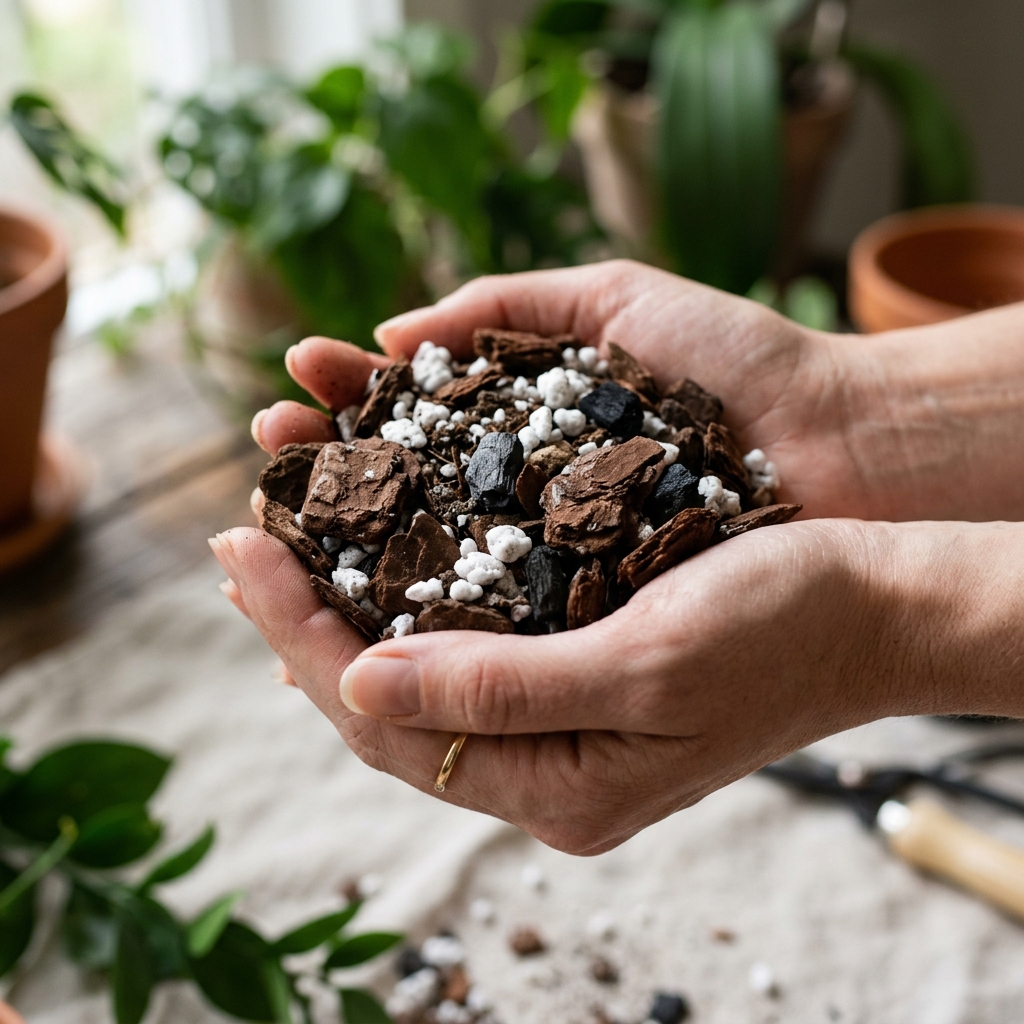
- Amend potting mix with 20–30% perlite, pumice, or coarse orchid bark to maintain pore structure.
- Use pots with adequate drainage holes; never plant directly into containers without exit points for water.
- Choose terracotta, unglazed ceramic, or fabric pots that allow passive air exchange through the walls.
- Water only when the top 2–3 cm of soil is dry; avoid keeping soil constantly moist.
- Aerate soil gently with a chopstick every 2–3 months, especially for plants in standard peat-based mixes.
- Repot annually or biennially into fresh, coarse potting mix before severe compaction occurs.
- Avoid using garden soil, topsoil, or heavy compost as the primary medium in containers.
- Remove decorative top dressings like rocks or moss that trap moisture on the soil surface.
Best Practices
- Aerate soil every 2–3 months for plants in standard peat-based potting mixes.
- Use a clean wooden chopstick or skewer; avoid metal tools that can damage roots or create anaerobic iron reactions.
- Insert the chopstick at a slight angle, not straight down, to minimize root shearing.
- Water thoroughly after aerating to help settle soil around the new air channels without re-compacting.
- Top-dress with a thin layer of worm castings or compost after aeration to replenish nutrients disturbed by poking.
- Repot into fresh mix before compaction becomes severe—prevention is far easier than recovery from root rot.
- For large plants that cannot be repotted easily, core aeration (removing small soil plugs) is more effective than simple poking.
What Is Soil Aeration?
Soil aeration is the process of introducing air into the root zone by loosening compacted potting soil and maintaining pore spaces that hold oxygen. Plant roots do not just absorb water and nutrients—they must also breathe. Through cellular respiration, roots convert sugars into usable energy, a process that requires oxygen. When soil becomes compacted or waterlogged, oxygen levels in the root zone plummet, and roots begin to suffocate within 24–48 hours.
In nature, earthworms, insects, and freeze-thaw cycles constantly aerate soil. In a container, none of these natural mechanisms exist. The potting mix you pour into a pot is the only environment your plant's roots will ever know, and without your intervention, it will gradually compact, collapse, and suffocate them.
The Science: Why Roots Need Oxygen
Root cells, like all living cells, require oxygen to produce ATP (adenosine triphosphate), the energy currency of the cell. This happens through aerobic respiration:
When oxygen is absent, roots switch to anaerobic respiration, which is 18 times less efficient and produces toxic byproducts like ethanol and lactic acid. Within days, root cells die. Dead roots become food for anaerobic bacteria and water molds (Phytophthora, Pythium), triggering the cascade we call root rot.
Even before rot sets in, oxygen-starved roots lose the ability to take up water and nutrients through active transport. The plant wilts despite wet soil—a paradox that confuses many growers into watering more, accelerating the death spiral.
Soil Structure: Macropores vs. Micropores
Healthy potting soil is roughly 50% solid particles and 50% pore space. That pore space is divided into two categories:
- Micropores (<0.08mm): Hold water through capillary action. Too many micropores = waterlogged, anaerobic soil.
- Macropores (>0.08mm): Hold air and allow rapid drainage. These are the spaces that keep roots oxygenated.
Compaction collapses macropores into micropores. A peat-based mix that starts with 20% macropores can drop below 5% within a year of watering and root pressure. The result is soil that holds water like a sponge but breathes like mud.
How to Aerate Houseplants: The Chopstick Method
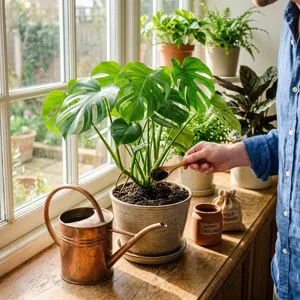
The chopstick method is the safest, fastest way to restore aeration without repotting:
- Choose your tool: A smooth wooden chopstick, bamboo skewer, or dibber. Avoid metal—it damages roots and can react with soil chemistry.
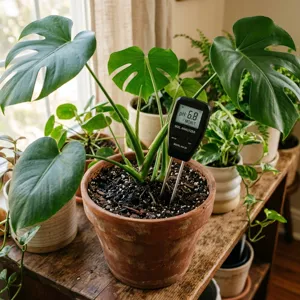
- Check soil moisture: Aerate when soil is slightly moist (1–2 days after watering), not bone dry or soggy.
- Insert at an angle: Push the chopstick gently into the soil at a 45-degree angle, aiming toward the center of the root ball. Go all the way to the bottom of the pot.
- Wiggle and withdraw: Wiggle the chopstick slightly to widen the channel, then pull it out slowly. The hole will remain as an air channel.
- Space evenly: Create 6–8 channels around the pot, avoiding areas directly over thick roots if you can feel them.
- Water lightly: After aerating, water just enough to settle soil around the channels without collapsing them.
This method provides immediate relief but is temporary. If compaction returns within weeks, the potting mix has degraded and needs replacement.
Long-Term Aeration: Soil Amendments
The only permanent solution to compaction is building a mix that resists collapse. Amendments create rigid, inorganic pore spaces that do not decompose:
| Amendment | Ideal Ratio | Best For |
|---|---|---|
| Perlite | 20–30% | General houseplants; lightweight, sterile, pH neutral |
| Pumice | 20–30% | Succulents, cacti, heavy pots; heavier than perlite, does not float |
| Orchid bark | 20–40% | Aroids, orchids, epiphytes; adds organic structure and acidity |
| Leca (clay pebbles) | 20–40% | Semi-hydroponics, large aroids; excellent drainage, reusable |
| Coarse horticultural sand | 10–20% | Cacti and succulents only; fine sand worsens compaction |
Important: Do NOT add rocks to the bottom of your pot for "drainage." This creates a perched water table that keeps the root zone saturated. Use drainage holes and a well-draining mix instead.
Pot Selection and Passive Aeration
The container itself is an aeration tool:
- Terracotta (unglazed): Porous clay allows air and water vapor to pass through walls. Roots near the edge receive oxygen directly from the room air. Terracotta also wicks moisture away, reducing the risk of overwatering.
- Fabric pots (grow bags): The most aerated option. Air pruning prevents root circling, and the entire surface breathes. Best for large tropicals and outdoor containers.
- Plastic nursery pots: Non-porous and inexpensive. Work fine if the mix is coarse and drainage is excellent, but offer zero passive aeration.
- Glazed ceramic: Beautiful but functionally identical to plastic for aeration purposes. Ensure excellent drainage holes.
Signs Your Soil Needs Aeration
| Sign | What It Means | Immediate Action |
|---|---|---|
| Water pools on surface | Soil is hydrophobic and compacted | Bottom-water for 30 min, then chopstick aerate |
| Foul smell from soil | Anaerobic bacteria active | Aerate immediately; reduce watering; consider repotting |
| Soil pulling from pot walls | Compacted, shrunken soil | Aerate and top-dress with fresh mix |
| Wilting despite wet soil | Roots cannot respire or absorb water | Aerate and check for root rot; reduce watering frequency |
| Fungus gnats flying around plant | Constantly wet, poorly aerated surface | Aerate, let top 3 cm dry, add sand or diatomaceous earth top layer |
| Slow growth in growing season | Oxygen-limited root metabolism | Aerate and evaluate mix quality; repot if needed |
Aeration vs. Repotting: When to Choose Which
Aeration (chopstick method) is appropriate when:
- The plant was repotted within the last 6–12 months
- Soil is slightly firm but not rock-hard
- Roots appear healthy when inspected
- You need a quick maintenance intervention
Repotting is necessary when:
- Soil re-compacts within 2–4 weeks of aeration
- Roots are circling the pot or emerging from drainage holes
- Root rot is present (brown, mushy, foul-smelling roots)
- The potting mix has visibly degraded into fine dust
- The plant has been in the same mix for 18+ months
The Overwatering Connection
Overwatering and poor aeration are two sides of the same coin. Water fills macropores and displaces oxygen. A potting mix that drains in 30 seconds after watering will re-aerate quickly. A mix that holds water for days keeps roots oxygen-deprived for days.
The solution is not just to water less—it is to create a soil structure that forgives watering mistakes. A mix with 30% perlite can tolerate occasional overwatering far better than pure peat because the perlite particles remain air-filled even when the peat is saturated.
Frequently Asked Questions
What is soil aeration and why does it matter?
Soil aeration is the process of creating air channels in potting soil so oxygen can reach plant roots. Roots need oxygen for cellular respiration—the process that generates the energy required to absorb water and nutrients. Without adequate aeration, roots suffocate, nutrient uptake collapses, and anaerobic bacteria cause root rot.
How do I aerate a houseplant without repotting?
Use the chopstick method: take a clean wooden chopstick or bamboo skewer and gently push it into the soil in 6–8 places, all the way to the bottom of the pot. Wiggle slightly to create air channels, then withdraw. Water lightly afterward. Repeat every 2–3 months or whenever the soil feels hard.
How often should I aerate my houseplants?
For plants in standard peat-based potting mixes, aerate every 2–3 months during active growth. Fast-growing plants in small pots may need monthly aeration. Plants in very coarse, well-draining mixes (with 40%+ perlite or bark) may only need aeration twice a year.
Can I use a fork or screwdriver instead of a chopstick?
It is not recommended. Metal tools can damage fine roots, introduce rust, and create anaerobic micro-environments. A smooth wooden chopstick or bamboo skewer is ideal because it is gentle, inert, and unlikely to harm roots.
What is the best soil mix for long-term aeration?
A high-quality potting mix amended with 20–30% perlite, pumice, or coarse orchid bark maintains pore structure far longer than pure peat. For succulents and cacti, increase to 40–50% inorganic amendment. Avoid fine sand, which actually worsens compaction in containers.
Do terracotta pots really help with aeration?
Yes. Unglazed terracotta is porous, allowing air and water vapor to pass through the walls. This passive gas exchange keeps the root zone cooler and better oxygenated compared to plastic or glazed ceramic. Fabric pots (grow bags) provide even more aeration through their breathable walls.
Why does my soil get hard again soon after aerating?
Repeated compaction indicates the potting mix has broken down beyond recovery. Peat decomposes into fine particles that re-settle quickly. The permanent solution is repotting into fresh, coarse mix with adequate perlite or bark. Chronic overwatering also accelerates breakdown.
Should I aerate before or after watering?
Aerate when the soil is slightly moist but not saturated—ideally 1–2 days after watering. Dry soil is brittle and may crack; soggy soil will collapse the channels you create. After aerating, water lightly to settle the soil without re-compacting it.
Can aeration fix root rot?
Aeration alone cannot fix established root rot. If roots are already brown, mushy, and foul-smelling, you must unpot the plant, trim all rotted tissue with sterile shears, treat with hydrogen peroxide or cinnamon, and repot in fresh, well-draining mix. Aeration is preventive, not curative, for advanced rot.
Does adding rocks at the bottom of a pot improve aeration?
No. This is a persistent myth. Rocks at the bottom create a perched water table—the soil above the rocks stays saturated longer, reducing oxygen at the root zone. Instead, use a pot with drainage holes and a well-draining mix. If you need weight at the bottom, use large clay shards that do not block the entire surface.
Explore More
Related Articles
Related Plant Guides
No specific plant guides found matching this topic.
Recommended next actions
Continue Exploring
Dive deeper into related plant care tools and profiles.
Topic Guide
Drainage
Learn everything about drainage for your indoor and aquarium plants. Expert care tips, troubleshooting, and related guides.
Topic Guide
Soil Moisture
Learn how to accurately check soil moisture for houseplants. Discover when to water using finger tests, moisture meters, and pot weight.
Topic Guide
Root Rot
Learn how to identify and treat root rot in houseplants. Discover causes, symptoms, and step-by-step solutions to save your plants from overwatering.
Topic Guide
Overwatering Plants: Symptoms, Diagnosis & Prevention
Learn how to identify, treat, and prevent overwatering in your indoor and aquarium plants. Expert care tips and troubleshooting.
Topic Guide
Potting Mix
Learn everything about potting mix for your indoor and aquarium plants. Expert care tips, troubleshooting, and related guides.
Topic Guide
Perlite
Learn how perlite improves drainage, how long it lasts in soil, when to replace it, and how to use it in potting mixes.