Plant Macronutrients Explained
Macronutrients are the mineral elements plants need in the largest quantities to support structural growth, photosynthesis, and reproduction. The primary macronutrients, nitrogen, phosphorus, and potassium, form the basis of virtually every commercial fertilizer and are collectively known as NPK. Beyond NPK, secondary macronutrients like calcium, magnesium, and sulfur are also required in significant amounts, though they're less commonly featured on fertilizer labels. Understanding what each macronutrient does helps growers diagnose deficiency symptoms and choose fertilizer formulas suited to a plant's current growth stage.

Quick Answer
Plant macronutrients are essential minerals required in large amounts: primarily nitrogen, phosphorus, and potassium (NPK), plus secondary nutrients calcium, magnesium, and sulfur. Nitrogen drives leafy growth, phosphorus supports roots and flowering, and potassium regulates overall plant function. Deficiency in any one produces distinct, recognizable symptoms.
Key Takeaways
- Nitrogen fuels leafy, vegetative growth and chlorophyll production.
- Phosphorus supports root development, flowering, and energy transfer.
- Potassium regulates overall plant function and stress tolerance.
- Secondary macronutrients calcium, magnesium, and sulfur are also essential.
- Match fertilizer NPK ratios to a plant's current growth stage.
Symptoms
- Yellow older leaves: Generalized yellowing (chlorosis) starting from the bottom of the plant indicates nitrogen deficiency. Nitrogen is mobile, so the plant reallocates it from old leaves to new growth.
- Purple foliage: Dark green or purple discoloration, especially on leaf undersides and older leaves, is characteristic of phosphorus deficiency. Anthocyanin pigment accumulation occurs when phosphorus is insufficient for normal metabolism.
- Weak stems: Thin, brittle, or lodging stems indicate potassium deficiency or nitrogen excess. Potassium is essential for stem lignification and structural integrity.
- Poor flowering: Reduced flower bud formation, delayed blooming, or flower drop results from phosphorus deficiency or excessive nitrogen, which prioritizes vegetative growth over reproduction.
- Small leaves: Stunted or undersized new growth can indicate nitrogen, phosphorus, or sulfur deficiency. Reduced cell division and expansion limit leaf size.
- Slow growth: Overall reduced vigor and delayed development is a general symptom of macronutrient deficiency, most commonly nitrogen or phosphorus.
- Leaf scorching: Brown necrotic margins or tips on older leaves, progressing inward, is the classic symptom of potassium deficiency. Also occurs with salt toxicity from over-fertilization.
- Poor fruit quality: Small, misshapen, or tasteless fruit; blossom end rot in tomatoes and peppers; and reduced shelf life are linked to potassium and calcium deficiencies.
- Interveinal chlorosis on old leaves: Yellowing between leaf veins while veins remain green on older leaves indicates magnesium deficiency. This occurs because magnesium is mobile and relocates to new growth.
- Distorted new growth: Curling, cupping, or death of terminal buds and young leaves signals calcium deficiency. Calcium is immobile, so deficiency affects new tissue first.
Common Causes
- Poor soil fertility: Sandy, eroded, or heavily leached soils naturally lack sufficient macronutrients. Organic matter depletion reduces nutrient-holding capacity and natural mineralization.
- Leaching: Nitrate nitrogen and potassium are highly water-soluble and easily leached below the root zone by heavy rainfall or excessive irrigation, especially in sandy soils.
- Incorrect pH: Macronutrient availability is pH-dependent. Below pH 5.5, calcium, magnesium, and phosphorus become less available. Above pH 7.5, iron, zinc, and phosphorus availability drops while magnesium may become excessive.
- Root damage: Compaction, root rot, nematodes, transplant shock, or physical damage reduces the root system's ability to explore soil and absorb nutrients, even when present in adequate amounts.
- Overwatering: Saturated soils displace oxygen, causing root hypoxia and reducing nutrient uptake. Overwatering also accelerates leaching of mobile nutrients like nitrogen and potassium.
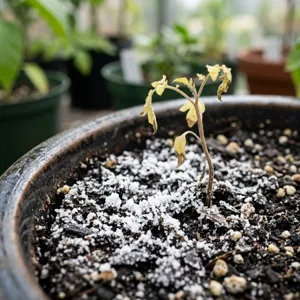
- High EC (electrical conductivity): Excessively saline soils or over-fertilization raise EC, creating osmotic stress that makes it difficult for roots to absorb water and nutrients. Salt buildup is common in container growing.
- Salt buildup: Repeated application of synthetic fertilizers without adequate leaching accumulates salts in the root zone, causing nutrient lockout and direct toxicity.
- Nutrient imbalance: Excessive application of one macronutrient can antagonize the uptake of another. For example, high potassium induces magnesium deficiency; high calcium induces potassium deficiency.
Prevention
- Use balanced fertilizer: Apply fertilizers with appropriate NPK ratios for the plant's growth stage, and ensure secondary macronutrients are included or supplemented separately when needed.
- Maintain proper pH: Keep soil pH in the optimal range (typically 6.0-7.0 for most plants) through liming (to raise pH) or sulfur amendment (to lower pH). Test pH annually.
- Monitor EC: Use an EC meter to measure soluble salt levels in soil or nutrient solutions. For most crops, maintain EC between 1.0-3.0 mS/cm depending on species and growth stage.
- Use organic matter: Incorporate compost, well-rotted manure, or cover crops to improve soil structure, water retention, cation exchange capacity, and slow-release nutrient availability.
- Regular soil testing: Conduct comprehensive soil tests every 1-3 years to monitor macronutrient levels, pH, organic matter, and CEC. Adjust fertilization programs based on results.
- Avoid overwatering: Irrigate based on plant needs and soil moisture rather than on a fixed schedule. Ensure proper drainage to prevent waterlogging and leaching.
- Apply nutrients seasonally: Match fertilization to plant phenology: higher nitrogen in spring for vegetative growth, balanced or potassium-heavy in summer for fruiting, and reduced nitrogen in fall to promote hardening off.
Best Practices
- Feed according to growth stage: Vegetative stages require higher nitrogen; reproductive stages need more phosphorus and potassium. Adjust fertilizer formulations seasonally rather than using the same product year-round.
- Avoid excessive nitrogen: More nitrogen does not mean more growth. Excess nitrogen causes weak tissue, delayed flowering, pest susceptibility, and environmental runoff. Apply only what soil tests indicate is needed.
- Test soil annually: Annual soil testing prevents guesswork, saves money on unnecessary fertilizers, and identifies problems before visible symptoms appear. Include secondary macronutrients in the test panel.
- Use slow-release fertilizers: Controlled-release or organic fertilizers provide steady nutrient availability over time, reducing leaching risk, salt buildup, and the boom-bust cycle associated with quick-release synthetics.
- Supplement calcium separately if needed: Many NPK fertilizers lack adequate calcium. In calcium-demanding crops (tomatoes, peppers, brassicas), supplement with gypsum or calcium nitrate, especially during fruit development.
- Maintain root health: Healthy roots are the foundation of nutrient uptake. Avoid compaction, ensure drainage, prevent root rot, and consider mycorrhizal inoculants to extend the effective root surface area.
What Are Macronutrients?
Macronutrients are essential mineral elements that plants require in relatively large concentrations for structural development, metabolism, enzyme activation, photosynthesis, energy transfer, and reproduction. Unlike micronutrients, which are needed only in trace amounts, macronutrients form the backbone of plant nutrition and are consumed in significant quantities throughout the plant's life cycle.
These nutrients are absorbed primarily through the root system in ionic form from the soil solution, though foliar feeding can supplement uptake in certain conditions. Their availability is heavily influenced by soil pH, moisture, temperature, and the presence of organic matter.
Primary Macronutrients (NPK)
The three primary macronutrients—nitrogen (N), phosphorus (P), and potassium (K)—are the most heavily demanded by plants and are the basis of virtually all commercial fertilizers. They are often referred to collectively as "NPK."
Nitrogen (N)
Nitrogen is a core component of amino acids, proteins, chlorophyll, and nucleic acids (DNA and RNA). It is the nutrient most responsible for vegetative growth, leaf development, and the deep green color in foliage. Plants absorb nitrogen primarily as nitrate (NO₃⁻) and ammonium (NH₄⁺).
- Functions: Chlorophyll production, protein synthesis, cell division, vegetative growth
- Deficiency symptoms: Yellowing (chlorosis) of older leaves first, stunted growth, thin stems, reduced branching
- Excess symptoms: Dark green leaves, weak succulent growth, delayed flowering, increased pest susceptibility, salt burn
- Common sources: Urea, ammonium nitrate, blood meal, fish emulsion, composted manure, legume cover crops
Phosphorus (P)
Phosphorus is critical for energy transfer within the plant (ATP), root development, flowering, fruiting, and seed production. It is a structural component of cell membranes and nucleic acids. Plants absorb phosphorus as phosphate ions (H₂PO₄⁻ or HPO₄²⁻).
- Functions: Energy transfer (ATP/ADP), root growth, flower and fruit formation, seed development, early plant establishment
- Deficiency symptoms: Dark green or purple-tinged foliage (especially undersides), stunted roots, delayed maturity, poor flowering and fruit set
- Excess symptoms: Micronutrient lockout (especially zinc and iron), reduced mycorrhizal colonization
- Common sources: Superphosphate, bone meal, rock phosphate, fish bone meal, bat guano
Potassium (K)
Potassium regulates stomatal opening and closing, enzyme activation, water balance, and carbohydrate transport. It is not incorporated into plant structures but acts as an activator and regulator. Plants absorb potassium as the K⁺ ion.
- Functions: Water regulation, disease resistance, protein synthesis, carbohydrate metabolism, stem strength, cold hardiness
- Deficiency symptoms: Marginal leaf scorching or necrosis (starting on older leaves), weak stems, poor fruit quality, increased disease susceptibility, wilting
- Excess symptoms: Magnesium and calcium deficiency (antagonism), salt buildup
- Common sources: Potassium chloride (muriate of potash), potassium sulfate, langbeinite, kelp meal, wood ash
Secondary Macronutrients
Calcium, magnesium, and sulfur are classified as secondary macronutrients. While required in smaller quantities than NPK, they are still essential and deficiencies are common in intensive growing systems.
Calcium (Ca)
Calcium is a structural component of cell walls and membranes. It stabilizes cell walls through calcium pectate and plays a role in cell division and elongation. Plants absorb calcium as Ca²⁺.
- Functions: Cell wall stability, membrane integrity, root tip growth, neutralizing organic acids, enzyme activation
- Deficiency symptoms: Blossom end rot in tomatoes and peppers, tip burn in lettuce, distorted new growth, weakened cell walls, root tip death
- Common sources: Gypsum (calcium sulfate), lime (calcium carbonate), calcium nitrate, crushed eggshells
Magnesium (Mg)
Magnesium is the central atom in the chlorophyll molecule and is essential for photosynthesis. It also activates many enzymes involved in carbohydrate metabolism and protein synthesis. Plants absorb magnesium as Mg²⁺.
- Functions: Chlorophyll core, photosynthesis, enzyme activation, phosphorus metabolism, carbohydrate partitioning
- Deficiency symptoms: Interveinal chlorosis on older leaves (yellow between veins, veins stay green), leaf curling, reduced fruit set, stunted growth
- Common sources: Epsom salt (magnesium sulfate), dolomitic lime, magnesium oxide, langbeinite
Sulfur (S)
Sulfur is a constituent of certain amino acids (cysteine, methionine) and vitamins, and is essential for protein synthesis and chlorophyll formation. Plants absorb sulfur primarily as sulfate (SO₄²⁻).
- Functions: Protein and enzyme synthesis, chlorophyll production, nitrogen fixation in legumes, flavor compounds in alliums
- Deficiency symptoms: General yellowing of young leaves (similar to nitrogen but on new growth first), stunted growth, reduced protein content
- Common sources: Gypsum, elemental sulfur, ammonium sulfate, magnesium sulfate, compost
How Plants Absorb Macronutrients
Macronutrients are absorbed primarily through root hairs via active transport, passive diffusion, or mass flow depending on the nutrient and concentration gradient. Key factors affecting uptake include:
- Soil pH: Most macronutrients are optimally available between pH 6.0 and 7.0. Extreme pH levels cause lockout.
- Soil moisture: Nutrients must be dissolved in the soil solution to be absorbed. Both drought and waterlogging reduce uptake.
- Root health: Damaged, diseased, or compacted roots cannot effectively absorb nutrients.
- Temperature: Low soil temperatures slow metabolic processes and reduce nutrient uptake.
- Mycorrhizal associations: Symbiotic fungi extend root surface area and improve phosphorus and micronutrient uptake.
Nutrient Mobility in Plants
Understanding nutrient mobility helps diagnose deficiency symptoms:
- Mobile nutrients (N, P, K, Mg, S): Deficiency symptoms appear first on older leaves because the plant can relocate these nutrients to new growth.
- Immobile nutrients (Ca): Deficiency symptoms appear first on new growth because the plant cannot move calcium from old tissue to new tissue.
NPK Explained
NPK refers to the three numbers displayed on fertilizer packaging (e.g., 10-10-10 or 20-5-10), representing the percentage by weight of nitrogen, phosphorus (as P₂O₅), and potassium (as K₂O) respectively.
- Balanced fertilizers (e.g., 10-10-10) support general growth.
- High-nitrogen fertilizers (e.g., 24-0-0) promote leafy vegetative growth.
- High-phosphorus fertilizers (e.g., 5-10-5) support rooting and flowering.
- High-potassium fertilizers (e.g., 5-5-15) enhance fruiting and stress resistance.
However, NPK fertilizers alone are often insufficient for optimal plant health because they typically lack calcium, magnesium, and sulfur in meaningful amounts.
Macronutrients vs. Micronutrients
While macronutrients are required in large quantities (typically >0.1% dry plant weight), micronutrients (iron, manganese, zinc, copper, boron, molybdenum, chlorine, nickel) are needed in trace amounts (typically <0.01% dry plant weight). Both are essential, but deficiencies manifest differently and require different management strategies.
Organic Sources of Macronutrients
| Source | N | P | K | Ca | Mg | S |
|---|---|---|---|---|---|---|
| Composted manure | 1-3% | 0.5-2% | 1-2% | Low | Low | Low |
| Blood meal | 12-14% | 1% | 0.6% | Low | Low | Low |
| Bone meal | 3-4% | 15-27% | Low | 22% | Low | Low |
| Fish emulsion | 5% | 2% | 2% | Low | Low | Low |
| Kelp meal | 1% | 0.5% | 4-13% | 2% | Low | Low |
| Wood ash | Low | 2% | 4-10% | 25-50% | Low | Low |
| Gypsum | Low | Low | Low | 23% | Low | 19% |
| Epsom salt | Low | Low | Low | Low | 10% | 13% |
Synthetic Sources of Macronutrients
- Nitrogen: Urea (46-0-0), ammonium nitrate (34-0-0), calcium ammonium nitrate
- Phosphorus: Single superphosphate, triple superphosphate, diammonium phosphate (DAP)
- Potassium: Muriate of potash (KCl), potassium sulfate (SOP), potassium nitrate
- Calcium: Calcium nitrate, calcium chloride
- Magnesium: Magnesium sulfate, magnesium oxide
- Sulfur: Ammonium sulfate, potassium sulfate, elemental sulfur
Testing Soil for Macronutrients
Regular soil testing is the most reliable way to assess macronutrient status. Tests typically measure:
- Available nitrogen (nitrate-N)
- Phosphorus (Bray or Olsen P)
- Exchangeable potassium, calcium, and magnesium
- Sulfate-sulfur
- pH and cation exchange capacity (CEC)
Soil tests should be conducted annually for intensive growing systems and every 2-3 years for home gardens. Tissue testing (leaf analysis) provides a snapshot of current plant nutritional status and can reveal deficiencies before visible symptoms appear.
Seasonal Requirements
- Spring: Higher nitrogen to support new vegetative growth; adequate phosphorus for root establishment
- Summer: Balanced NPK; increased potassium during fruiting and flowering; calcium critical for fruit development
- Fall: Reduce nitrogen to harden off growth; maintain potassium for winter hardiness; avoid late-season nitrogen that delays dormancy
- Winter: Minimal fertilization for dormant plants; focus on soil amendment and pH correction
Nutrient Interactions and Antagonisms
Macronutrients do not act in isolation. Excessive levels of one nutrient can inhibit uptake of another:
- High potassium → magnesium and calcium deficiency
- High calcium → magnesium, potassium, and iron deficiency
- High magnesium → calcium and potassium deficiency
- High phosphorus → zinc and iron deficiency
- High nitrogen → delayed flowering, reduced fruit set, potassium deficiency
Maintaining balanced fertility is more important than maximizing any single nutrient.
Frequently Asked Questions
What are macronutrients?
Macronutrients are essential mineral elements required by plants in relatively large quantities for growth, metabolism, and reproduction. The primary macronutrients are nitrogen (N), phosphorus (P), and potassium (K). The secondary macronutrients are calcium (Ca), magnesium (Mg), and sulfur (S).
What are the 3 primary macronutrients?
The three primary macronutrients are nitrogen (N), phosphorus (P), and potassium (K), commonly referred to as NPK. They are the nutrients plants need in the largest quantities and form the basis of most commercial fertilizers.
Are calcium and magnesium macronutrients?
Yes, calcium and magnesium are classified as secondary macronutrients. While plants require them in smaller amounts than NPK, they are still essential. Calcium is critical for cell wall structure, while magnesium is the central atom in chlorophyll.
What does nitrogen do for plants?
Nitrogen is a core component of chlorophyll, amino acids, proteins, and nucleic acids. It drives vegetative growth, leaf development, and the green color of foliage. It is the nutrient most responsible for lush, leafy growth.
What does phosphorus do for plants?
Phosphorus is essential for energy transfer (ATP), root development, flowering, fruiting, and seed production. It is critical during early plant establishment and reproductive phases.
What does potassium do for plants?
Potassium regulates water balance, enzyme activation, stomatal function, and carbohydrate transport. It strengthens stems, improves disease resistance, and enhances fruit quality and cold hardiness.
Can too much nitrogen hurt plants?
Yes, excessive nitrogen causes weak, succulent growth that is prone to pests and diseases. It can delay flowering and fruiting, increase susceptibility to frost damage, and cause salt burn or nitrogen toxicity characterized by dark green leaves and clawing.
Which macronutrient promotes flowering?
Phosphorus is the macronutrient most associated with flowering, fruiting, and seed production. However, excessive phosphorus can cause micronutrient lockout, so balanced fertility is important.
Which nutrient grows leaves?
Nitrogen is the primary nutrient responsible for leafy vegetative growth. It is the main constituent of chlorophyll and proteins that build new leaf tissue.
Can plants survive without potassium?
No, plants cannot survive without potassium. While they may persist for a short time with marginal deficiency, severe potassium deficiency leads to cell death, weak stems, poor water regulation, and eventually plant death.
How do plants absorb macronutrients?
Plants absorb macronutrients primarily through root hairs in ionic form from the soil solution. Uptake is influenced by soil pH, moisture, temperature, root health, and mycorrhizal associations. Foliar feeding can supplement root uptake in some cases.
Are NPK fertilizers enough?
NPK fertilizers provide the three primary macronutrients but often lack sufficient calcium, magnesium, and sulfur. For complete plant nutrition, secondary macronutrients and micronutrients must also be considered, especially in intensive growing systems or deficient soils.
Do organic fertilizers contain macronutrients?
Yes, organic fertilizers such as compost, manure, bone meal, blood meal, and kelp meal contain macronutrients. However, their nutrient concentrations are generally lower and release rates slower than synthetic fertilizers, making regular application important.
What happens when macronutrients are deficient?
Macronutrient deficiency causes stunted growth, chlorosis (yellowing), poor flowering and fruiting, weak stems, increased disease susceptibility, and in severe cases, plant death. Specific symptoms vary by nutrient and appear on either old or new leaves depending on nutrient mobility.
How do I know which nutrient is missing?
Diagnose nutrient deficiencies by observing symptom location (old vs. new leaves), color patterns (interveinal chlorosis, marginal necrosis, purple tinting), and growth stage. Confirm with soil testing and tissue analysis. Yellow older leaves suggest nitrogen deficiency; purple foliage suggests phosphorus deficiency; interveinal chlorosis on old leaves suggests magnesium deficiency.
Explore More
Related Articles





Related Plant Guides
No specific plant guides found matching this topic.
Recommended next actions
Continue Exploring
Dive deeper into related plant care tools and profiles.
Topic Guide
Fertilizer
Learn everything about fertilizer for your indoor and aquarium plants. Expert care tips, troubleshooting, and related guides.
Topic Guide
NPK Explained for Plant Care
Understand what NPK means, how nitrogen, phosphorus and potassium affect plant growth and how to choose the right balance.
Topic Guide
NPK Ratios Explained
Read NPK ratios on fertilizer labels correctly and choose the right nitrogen, phosphorus and potassium formula for each plant stage.
Topic Guide
Nutrient Lockout in Plants: Causes, Diagnosis & How to Fix It
Learn to identify and fix nutrient lockout. Discover why plants can't absorb nutrients due to pH imbalance, salt buildup, or overfertilization, and how to.
Topic Guide
Soil pH and Nutrient Availability
Learn how soil pH affects nutrient absorption in houseplants and garden soils. Discover how to test, raise, or lower soil pH effectively.
Topic Guide
Micronutrients for Plants
Spot iron, zinc and boron deficiency signs in houseplants and correct trace mineral shortages before growth is affected.