Micronutrients for Plants
Micronutrients are essential mineral elements plants require in far smaller quantities than macronutrients like nitrogen or potassium, yet their absence triggers significant physiological problems that macronutrient supplementation cannot fix. These trace minerals include iron, manganese, zinc, copper, boron, and several others measured in parts per million. Soil pH is the primary factor controlling micronutrient availability; outside the optimal range, iron and manganese in particular form insoluble compounds that roots cannot absorb, even when the soil technically contains enough of the nutrient. This is why correcting pH is often the real fix for a suspected micronutrient deficiency.

Quick Answer
Plant micronutrients are trace minerals like iron, zinc, manganese, and boron needed only in tiny amounts, but their absence still causes serious growth problems. Soil pH strongly controls micronutrient availability, with most becoming accessible in a slightly acidic 6.0-6.5 range. Deficiency symptoms often appear as yellowing between leaf veins.
Symptoms
- Interveinal chlorosis on young leaves: Youngest leaves turn pale yellow to near-white while veins remain distinctly green; begins at leaf margins and progresses inward.
- Interveinal chlorosis on older leaves with necrotic flecks: Tan or grey necrotic spots develop within yellowed interveinal zones, especially under cool, waterlogged conditions.
- Small, distorted new leaves with shortened internodes: Emerging leaves are stunted and narrow (little leaf); shoots develop a rosette appearance with bronze or brown mottling.
- Dieback of growing tips and brittle young leaves: Apical meristem dies back producing witches' broom; young leaves thicken, cup, or curl downward; root tips also affected.
- Marginal leaf scorch on new growth: New growth appears bluish-green then pale yellow; leaf edges brown and scorch; stems may lose rigidity.
- Cupping and purple tints on older leaves: Older leaves show marginal scorch working inward with upward cupping; purplish discoloration on undersides in some species.
- General stunting and pale washed-out foliage across all leaf ages: Diffuse slow growth and pale coloration indicating depleted growing medium rather than a single-element shortage.
Common Causes
- High soil pH causing micronutrient lockout: Above pH 7.0, iron and manganese form insoluble hydroxide complexes that roots cannot absorb.
- Low soil pH causing micronutrient toxicity: Below pH 5.5, manganese and copper may reach phytotoxic concentrations while macronutrients become unavailable.
- Leaching from regular irrigation in containers: Container media have limited volume; frequent watering washes soluble micronutrient ions out of the root zone.
- Depleted peat-based or coir-based growing media: Modern soilless mixes are inherently low in native micronutrients and exhaust their charge over time.
- Excess phosphorus antagonizing zinc uptake: High phosphorus concentrations compete with zinc at root surfaces and dilute tissue zinc through rapid growth.
- High calcium or magnesium from hard water: Hard water displaces other cations on exchange sites and raises pH over time, reducing micronutrient availability.
- Waterlogged or compacted soil: Reduced oxygen availability impairs active transport mechanisms that absorb iron and manganese.
- Cold soil temperatures below 10°C: Low temperatures slow root metabolic activity and reduce nutrient uptake even in healthy, well-fertilised plants.
- Root damage from rot, pests, or physical disturbance: Compromised root systems cannot absorb micronutrients regardless of their concentration in the medium.
- Sandy or low-CEC soils: Low organic matter soils cannot retain micronutrient cations on exchange sites, leading to rapid loss through leaching.
Prevention
Best Practices
- Test growing medium pH before applying any micronutrient supplement
- Use EDDHA-chelated iron in alkaline or high-pH conditions
- Apply foliar micronutrient sprays during cool morning or evening hours
- Flush accumulated salts from containers every 2–3 months
- Record pH, fertilizer rates, and symptom observations in a grow journal
- Feed mycorrhizal networks by avoiding excessive phosphorus after inoculation
What Are Micronutrients?
Micronutrients are the trace mineral elements that plants require in comparatively small quantities yet depend upon absolutely for healthy growth and development. Unlike the macronutrients nitrogen, phosphorus, and potassium that plants consume in large amounts, micronutrients — including iron (Fe), manganese (Mn), zinc (Zn), copper (Cu), boron (B), molybdenum (Mo), chlorine (Cl), and nickel (Ni) — are needed only in parts per million concentrations within plant tissue. Despite these tiny quantities, their absence triggers cascading physiological failures that no amount of macronutrient supplementation can correct.
The availability of micronutrients to plant roots is governed primarily by soil pH, which controls the solubility of mineral ions in the soil solution. Most micronutrients reach peak plant-available concentrations in a slightly acidic pH range of 6.0–6.5. When soil pH climbs above 7.0, iron and manganese rapidly form insoluble hydroxide complexes that roots cannot absorb — a condition called lime-induced chlorosis. Conversely, highly acidic conditions below pH 5.5 can push manganese and copper into phytotoxic ranges. Cation exchange capacity (CEC) also plays a central role: soils with higher organic matter hold micronutrient cations on exchange sites, releasing them gradually into the soil solution, whereas sandy or low-CEC soils lose these ions rapidly through leaching.
Many micronutrients function as cofactors for specific enzymes. Iron is critical for the synthesis of chlorophyll precursors and is a component of cytochromes and ferredoxin in the electron transport chain. Zinc activates over 300 enzymes including RNA polymerase and carbonic anhydrase, directly affecting protein synthesis and cell division. Boron is unique among micronutrients in that it is not a metallic cation — it regulates cell wall formation, pollen tube growth, and sugar transport across membranes. Molybdenum is essential for nitrate reductase, the enzyme that converts absorbed nitrate into ammonium for amino acid synthesis, which means molybdenum deficiency can manifest similarly to nitrogen deficiency even when nitrogen supply is adequate.
Modern growing media, particularly peat-based and coir-based mixes, are inherently low in native micronutrients. Container-grown plants are especially vulnerable because their root systems cannot forage through a large soil volume, and regular irrigation leaches soluble micronutrient ions out of the pot. Chelated micronutrient formulations — in which metal ions are bound to organic molecules like EDTA, DTPA, or EDDHA — address this by keeping iron and other metals soluble across a broader pH range, significantly improving plant uptake.
Signs and Symptoms
- Interveinal chlorosis on young leaves (iron deficiency): The youngest leaves at shoot tips turn pale yellow to near-white while the veins remain distinctly green. This pattern, called interveinal chlorosis, begins at the leaf margins and progresses inward. As deficiency deepens, entire new leaves emerge bleached, and growth stalls noticeably.
- Interveinal chlorosis on older leaves (manganese deficiency): Similar in appearance to iron deficiency but appearing first on middle-aged to older leaves rather than the newest growth. Tan or grey necrotic flecks develop within the yellowed interveinal zones as the condition advances, particularly under cool, waterlogged conditions.
- Small, distorted new leaves (zinc deficiency): Emerging leaves are stunted and abnormally narrow, a symptom called little leaf or microphylly. Internodes shorten dramatically, giving shoots a rosette appearance. Leaf surfaces may show mottled chlorosis with irregular bronze or brown patches.
- Dieback of growing tips (boron deficiency): The apical meristem dies back, causing lateral buds to break and producing a bushy, multi-stemmed appearance known as witches' broom. Young leaves are thickened, brittle, and may cup or curl downward. Root tips are also affected, leading to poor water and nutrient uptake.
- Marginal leaf scorch (copper deficiency): New growth appears bluish-green before turning pale yellow, with leaf edges eventually browning and scorching. Stems may lose rigidity and flop. In fruiting plants, copper deficiency disrupts pollen viability, reducing fruit and seed set.
- Cupping and distortion with purple tints (molybdenum deficiency): Older leaves develop a marginal scorch that works inward, and leaf blades may cup upward. In some species a distinctive purplish discoloration appears on leaf undersides. Since molybdenum is needed for nitrate reduction, plants also show general nitrogen starvation symptoms even under adequate nitrogen supply.
- General stunting and pale, washed-out foliage: When multiple micronutrients are simultaneously deficient — common in exhausted or heavily leached potting media — plants show non-specific slow growth, pale coloration across all leaf ages, and poor root development. This diffuse presentation often signals the growing medium has been depleted of its micronutrient charge rather than a single-element shortage.
Step-by-Step: How to Correct Micronutrient Deficiencies
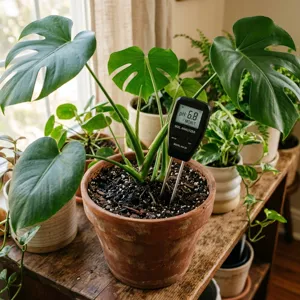
- Test your growing medium pH first. Using a calibrated pH meter or a quality soil test kit, measure the pH of your potting mix or garden bed. Most micronutrient deficiencies in otherwise well-fertilized plants are actually pH-induced lockout rather than true soil depletion. Target a pH of 6.0–6.5 for most houseplants and vegetables; ericaceous plants such as blueberries and camellias prefer 4.5–5.5.
- Adjust pH before adding micronutrient supplements. If your medium reads above 7.0, water with a diluted solution of pH-down (phosphoric acid) or incorporate granular sulfur at the rate recommended on your product label — typically 10–15 g per litre of potting mix — then retest after two weeks. Applying micronutrient fertilizers into an alkaline medium is largely futile, as the ions will precipitate before roots can absorb them.
- Select the appropriate micronutrient product. For container-grown plants, choose a chelated micronutrient liquid fertilizer containing at minimum iron-DTPA or iron-EDDHA, zinc, manganese, copper, boron, and molybdenum. EDDHA chelates remain stable up to pH 9 and are preferable for alkaline conditions. For garden beds, a granular complete micronutrient blend broadcast and lightly worked into the top 5–8 cm is effective.
- Apply as a soil drench at the correct dilution. Mix liquid chelated micronutrient concentrate according to label directions — a common rate is 2–5 ml per litre of water. Water the plant thoroughly, allowing at least 20% of the applied volume to drain freely from the pot. Apply during moderate temperatures; avoid applications when the growing medium is bone dry or when the plant is under heat or cold stress, as impaired root activity reduces uptake.
- Follow up with a foliar spray for faster correction of acute deficiencies. For severe interveinal chlorosis, prepare a foliar spray using chelated iron or a complete micronutrient blend at approximately half the soil-drench concentration — roughly 1–2 ml per litre. Apply in the early morning or late afternoon when temperatures are below 25°C to minimise risk of leaf scorch. Coat both upper and lower leaf surfaces thoroughly and allow to dry before the plant receives direct sunlight.
- Amend your potting mix with compost or worm castings for long-term supply. Incorporating 20–25% by volume of mature compost or worm castings into a standard peat or coir-based mix supplies a slow-release micronutrient reservoir alongside beneficial microbial activity. Mycorrhizal fungi in particular greatly extend the effective rooting volume and improve iron and zinc uptake — their hyphae access pore spaces roots cannot enter.
- Monitor and retest after four to six weeks. Reassess leaf colour on newly emerging growth, which is the most reliable indicator of current nutrient status. Old damaged leaves will not recover, but new leaves that emerge green and normally sized confirm the correction is working. If deficiency persists despite correct pH, test water quality — high bicarbonate alkalinity in tap water can re-alkalise your medium with each irrigation and may require the use of rainwater or reverse osmosis water.
Best Practices and Pro Tips
Prioritise pH before products: Spending money on micronutrient supplements without first correcting an unfavourable pH is one of the most common and costly errors in plant care. A pH shift of just half a unit can make the difference between iron being freely available and completely precipitated from the soil solution.
Use EDDHA iron in alkaline conditions: Standard EDTA-chelated iron breaks down above pH 6.5, releasing the iron ion which immediately precipitates. EDDHA chelates are stable to pH 9 and deliver measurably better results in calcareous or high-pH soils and mixes. They are worth the higher cost for alkaline-prone situations.
Don't exceed label rates for boron: Boron has one of the narrowest margins between deficiency and toxicity of any plant nutrient — a foliar spray at 2–3 times the recommended concentration can cause tip burn within 48 hours, and soil accumulation is not easily reversed. Always measure accurately and err on the lower end of the recommended rate range.
Flush accumulated salts every 2–3 months: In containers, fertiliser salts accumulate over time and can create nutrient antagonisms that block micronutrient uptake even when the elements are present. Flushing with 3–4 times the pot volume of plain, pH-adjusted water every few months resets the ionic balance and restores healthy absorption.
Feed mycorrhizal networks: Plants colonised by arbuscular mycorrhizal fungi show significantly improved uptake of zinc and copper in particular. When repotting, introduce a mycorrhizal inoculant and avoid applying phosphorus at high rates immediately afterward — elevated phosphorus suppresses mycorrhizal colonisation and undermines the biological micronutrient delivery system.
Quick Reference Table
| Factor | Recommended Range | Why It Matters |
|---|---|---|
| Growing medium pH | 6.0–6.5 for most plants; 4.5–5.5 for ericaceous | Controls solubility of metal micronutrients; outside this range, ions precipitate and become unavailable regardless of their total concentration in the mix |
| Chelated iron drench concentration | 2–5 ml per litre (DTPA or EDDHA formulation) | Delivers iron in a stable, plant-available form that resists precipitation; concentration above this range risks osmotic stress to fine roots |
| Foliar micronutrient spray interval | Every 2–3 weeks during active growth; pause in dormancy | Leaf cuticle uptake is rapid but temporary; regular light applications maintain tissue levels without the salt accumulation risk of heavy soil applications |
| Compost amendment rate | 20–25% by volume of final mix | Supplies a slow-release micronutrient bank and supports the microbial and mycorrhizal activity that mediates mineral solubilisation |
| Boron application rate | Label rate only; typically 0.1–0.3 g per litre of water | Boron toxicity threshold is unusually close to the deficiency threshold; even modest over-application causes irreversible necrosis of leaf margins and root tips |
Plants Most Susceptible to Micronutrient Deficiencies
Gardenias (Gardenia jasminoides) are among the most iron-demanding houseplants in cultivation. Their requirement for an acidic rooting environment (pH 5.0–6.0) means that even slightly alkaline tap water used regularly will induce iron chlorosis within weeks, causing the iconic yellowing between bright green veins that frustrates so many growers. Maintaining the correct pH is non-negotiable for this species.
Roses (Rosa spp.) are heavy feeders that frequently display iron, manganese, and zinc deficiencies, particularly in alkaline clay soils or when grown in containers with spent potting mix. The vigorous repeat-blooming cultivars place especially high demands on micronutrient supply because every flush of new growth and flowers draws heavily on trace mineral reserves.
Blueberries (Vaccinium corymbosum) naturally inhabit highly acidic, organic-rich soils and struggle severely when planted outside their preferred pH range of 4.5–5.5. Iron and manganese chlorosis are routine problems when blueberries are grown in soils above pH 6.0, and the symptoms can appear even when soil iron levels are chemically adequate, because the iron is simply locked in an unavailable form.
Citrus trees (Citrus spp.) are notoriously sensitive to iron, zinc, and manganese deficiencies, especially in the calcareous, alkaline soils common in Mediterranean and subtropical regions. The condition known as lime-induced chlorosis is so prevalent in container-grown citrus that chelated iron applications are considered routine maintenance rather than remedial treatment in commercial nurseries.
Peace lilies (Spathiphyllum wallisii) develop pronounced interveinal chlorosis when their iron supply is disrupted. Because peace lilies are typically grown in low-light conditions where photosynthetic demand is modest, the visual contrast between pale interveinal tissue and green veins is particularly striking and often alarming to growers unfamiliar with micronutrient deficiency patterns.
Hydrangeas (Hydrangea macrophylla) respond dramatically to soil micronutrient chemistry, most visibly in the way aluminium and pH interact to produce blue or pink flower colour — but they are equally susceptible to iron and manganese chlorosis in alkaline soils. Young foliage turns pale with green veins, growth slows, and flower production diminishes sharply when trace mineral availability is compromised.
Common Mistakes to Avoid
Applying micronutrient fertilisers without checking pH: This is the single most prevalent error. A plant showing iron chlorosis in an alkaline medium (pH above 7.2) will not respond to even a chelated iron drench because the correction must start with pH adjustment. Apply sulfur or acidifying fertilisers first, wait two to three weeks for pH to stabilise, then begin micronutrient supplementation.
Using EDTA chelates in high-pH growing media: EDTA-chelated iron becomes unstable above pH 6.5, releasing free iron ions that precipitate immediately as ferric hydroxide. Growers who apply standard EDTA products to alkaline soils and wonder why there is no improvement are experiencing this chemistry firsthand. Switch to DTPA (stable to pH 7.5) or EDDHA (stable to pH 9) for reliable results.
Over-applying phosphorus and inadvertently locking out zinc: High phosphorus concentrations in the soil solution compete with zinc uptake at the root surface and also stimulate rapid plant growth that dilutes existing zinc in plant tissue. Maintaining a phosphorus-to-zinc ratio that doesn't overwhelm zinc availability is important; avoid applying high-phosphorus bloom fertilisers at more than the recommended rate, and include a balanced micronutrient supplement when phosphorus levels are elevated.
Ignoring irrigation water quality: Tap water with total alkalinity above 150–200 mg/L as calcium carbonate will steadily raise the pH of container growing media even if the initial mix pH was correct. Over a growing season, this bicarbonate buffering effect can push a well-adjusted medium from pH 6.2 to above 7.5. Test your irrigation water alkalinity and, if high, acidify it to pH 5.8–6.2 before watering or use collected rainwater.
Confusing micronutrient deficiency with pest or disease damage: The interveinal chlorosis of iron deficiency is sometimes mistaken for spider mite stippling, and the distorted new growth of zinc or boron deficiency can resemble cyclamen mite or broad mite damage. Misdiagnosis leads to unnecessary pesticide applications that stress the plant further without addressing the root cause. Always examine the underside of leaves for pest signs and consider the full growth pattern and pH history before reaching for a treatment product.
Frequently Asked Questions
How quickly can I expect to see results after applying chelated iron to a chlorotic plant?
Foliar applications of chelated iron typically produce visible improvement in newly emerging leaves within one to two weeks, as the iron is absorbed through the leaf cuticle and redirected to meristematic tissue. Existing bleached leaves will not green up — the chloroplast damage in mature tissue is largely irreversible. Soil drenches act more slowly, improving new growth over three to four weeks. The critical factor is pH: if the growing medium remains above 6.8, even repeated chelated iron applications will yield minimal response.
What is the best time of year to address micronutrient deficiencies in container plants?
Early spring, as plants break dormancy and active growth resumes, is the ideal window to correct micronutrient imbalances. Roots are becoming metabolically active and uptake rates are rising, meaning applied nutrients are quickly absorbed rather than sitting in the medium. Addressing deficiencies before the main growing season also means new growth emerges healthy from the outset rather than having to recover from an established deficiency. Avoid heavy micronutrient applications in late autumn or winter when root activity is low and solution concentrations can build to phytotoxic levels.
Can I use homemade compost as a micronutrient source, or do I need commercial products?
Mature homemade compost is a genuine source of micronutrients, particularly iron, zinc, manganese, and copper, provided the feedstock material was diverse and not exclusively from nutrient-poor sources like cardboard or sawdust. However, the micronutrient content of compost is variable and difficult to quantify, and pH-induced lockout affects compost-derived minerals just as it does synthetic fertilisers. For plants with acute or diagnosed deficiencies, targeted chelated micronutrient products provide a more reliable correction. Compost is best viewed as a long-term soil health and micronutrient reservoir strategy rather than a rapid deficiency fix.
Do grow lights affect how plants use micronutrients?
Grow lights influence micronutrient demand indirectly through their effect on photosynthesis rates and growth velocity. Plants under high-intensity lighting grow faster and therefore cycle through micronutrients — particularly iron and zinc, which are tied to chlorophyll synthesis and cell division — more rapidly than plants in lower light. This means container plants under supplemental lighting may exhaust the micronutrient charge in their growing medium faster than expected, requiring more frequent foliar feeds or medium amendments. Conversely, plants in genuinely low light have reduced metabolic activity and lower micronutrient demand, so excess application carries a greater toxicity risk in these conditions.
My plant shows interveinal chlorosis but my soil pH is correct — what else could be causing it?
Several factors beyond pH can induce micronutrient deficiency even when pH is optimal. Waterlogged or compacted growing media reduces oxygen availability around roots, impairing the active transport mechanisms that absorb iron and manganese. Excessive competing ions — particularly high calcium or magnesium from hard water or heavy liming — can displace other cations on exchange sites. Root damage from overwatering, root rot pathogens, or physical disturbance impairs the plant's ability to absorb any nutrients. Finally, very cold growing medium temperatures (below 10°C) significantly slow root metabolic activity and nutrient uptake even in healthy, well-fertilised plants.
What are the 8 micronutrients plants need?
The eight essential micronutrients are iron (Fe), manganese (Mn), zinc (Zn), copper (Cu), boron (B), molybdenum (Mo), chlorine (Cl), and nickel (Ni). Each plays a unique enzymatic or structural role. Iron and manganese are involved in chlorophyll and photosynthesis; zinc drives cell division; copper strengthens stems; boron regulates cell walls; molybdenum enables nitrogen metabolism; chlorine supports photosystem II; and nickel is required for urease enzyme function.
How is a micronutrient deficiency different from a macronutrient deficiency?
Macronutrient deficiencies (nitrogen, phosphorus, potassium) typically cause broad, uniform symptoms like overall yellowing or stunted growth because these elements are needed in large amounts and are mobile within the plant. Micronutrient deficiencies produce more specific, localized symptoms tied to the element's biochemical role: iron causes interveinal chlorosis on young leaves, zinc causes distorted rosette growth, and boron causes tip dieback. Micronutrient deficiencies also appear even when macronutrients are adequately supplied.
Can you give plants too many micronutrients?
Yes. Micronutrient toxicity is a real risk, especially with boron, copper, and manganese, which have narrow margins between deficiency and toxicity. Excess micronutrients can antagonize each other—high iron can block manganese, and high zinc can block copper. Always apply at label rates and confirm deficiency with symptoms and pH testing before treating.
What is chelated iron and why does it matter?
Chelated iron is iron bound to an organic molecule (EDTA, DTPA, or EDDHA) that keeps it soluble in soil solution. Without chelation, iron precipitates into insoluble forms when pH rises above 6.5. EDDHA chelates are the most stable, remaining effective up to pH 9, making them essential for alkaline soils and water.
Which plants are most prone to iron deficiency?
Gardenias, blueberries, citrus, roses, hydrangeas, and peace lilies are among the most iron-sensitive plants. These species either require acidic soil (gardenias, blueberries, citrus) or grow rapidly enough to deplete iron quickly (roses). In alkaline regions, chelated iron is considered routine maintenance for these plants.
How often should I apply micronutrients?
For maintenance, include micronutrients in every watering or feeding using a complete fertilizer. For corrective foliar sprays, apply every 2–3 weeks during active growth. Soil drenches can be applied monthly. Always pause applications during dormancy or low-light winter conditions when plant uptake is minimal.
Can I use Epsom salt for micronutrient deficiency?
No. Epsom salt is magnesium sulfate, which supplies magnesium—a secondary macronutrient—not a micronutrient. It will not correct iron, zinc, boron, or other trace mineral deficiencies. Using Epsom salt as a universal tonic is a common misconception.
What pH is best for micronutrient uptake?
Most micronutrients are optimally available between pH 6.0 and 6.5. Below 5.5, manganese and copper can become toxic. Above 7.0, iron, manganese, zinc, and boron rapidly lock out. Ericaceous plants (blueberries, azaleas) prefer pH 4.5–5.5 and require specialized chelates to access iron at those levels.
Do micronutrients leach from potting soil?
Yes. Micronutrient cations (iron, manganese, zinc, copper) can leach from containers with each irrigation, especially in peat-based or coir-based mixes with low cation exchange capacity. This is why container plants need more frequent micronutrient supplementation than garden plants.
Are micronutrients needed in hydroponics?
Absolutely. Hydroponic systems require all eight micronutrients in the nutrient solution because there is no soil reservoir to draw from. Deficiencies develop faster in hydroponics because the root system depends entirely on the solution. Most hydroponic fertilizers include a complete micronutrient profile, but pH must be maintained between 5.5 and 6.5 to ensure availability.
Explore More
Related Topics
Related Plant Guides
No specific plant guides found matching this topic.
Recommended next actions
Continue Exploring
Dive deeper into related plant care tools and profiles.
Topic Guide
Plant Macronutrients Explained
Understand plant macronutrients including nitrogen, phosphorus and potassium functions and how to spot deficiency symptoms early.
Topic Guide
NPK Explained for Plant Care
Understand what NPK means, how nitrogen, phosphorus and potassium affect plant growth and how to choose the right balance.
Topic Guide
Nutrient Lockout in Plants: Causes, Diagnosis & How to Fix It
Learn to identify and fix nutrient lockout. Discover why plants can't absorb nutrients due to pH imbalance, salt buildup, or overfertilization, and how to.
Topic Guide
Yellow Leaves
Learn why plant leaves turn yellow (chlorosis) and how to identify and treat common causes like overwatering, nutrient deficiencies, or root stress.
Topic Guide
Potting Mix
Learn everything about potting mix for your indoor and aquarium plants. Expert care tips, troubleshooting, and related guides.
Topic Guide
Compost
Learn everything about compost for your indoor and aquarium plants. Expert care tips, troubleshooting, and related guides.