How Do I Use Coffee Grounds or Eggshells as Fertilizer?
Coffee grounds and eggshells can help, but not in the way many people think. This guide explains when to compost them, when to use them directly, and when to skip them entirely. Learn the science and the best practices.
Quick Answer
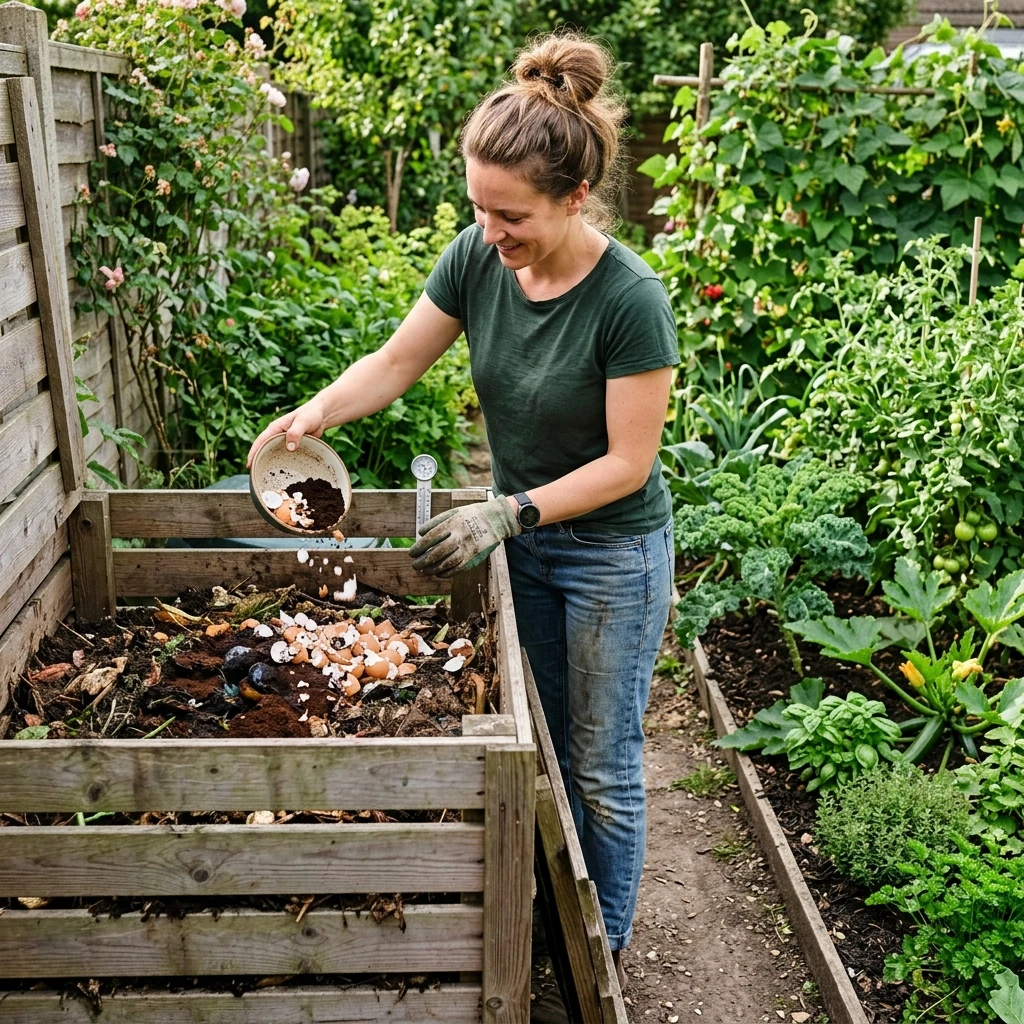
Coffee grounds are best used in compost or in small amounts as a soil amendment; they add organic matter but are not a complete fertilizer. Crushed eggshells break down slowly and are more useful in compost than as a quick calcium source. Both are supplements, not substitutes for balanced fertilizer. Compost them first for best results.
Key Takeaways
- Compost coffee grounds thoroughly before adding them to indoor potting mixes.
- Pulverize eggshells into a fine powder to facilitate calcium mineral breakdown.
- Use domestic scraps as mild soil amendments rather than primary fertilizers.
- Mix amendments into the soil rather than leaving thick layers on the surface.
Coffee grounds and eggshells are popular kitchen scraps for gardeners, but they are not magic fertilizers. Coffee grounds can add organic matter and belong in compost or in very small amounts around plants. Eggshells are mostly calcium carbonate and break down slowly, so they are usually more useful in compost than as an immediate nutrient source. I have used both for years, and I can tell you that while they are great additions, they are often misunderstood. Many gardeners think coffee grounds acidify the soil instantly or that eggshells prevent blossom end rot overnight. The reality is more nuanced. This guide will walk you through what these kitchen scraps actually do, how to use them effectively, and when to skip them.
Key Takeaways
- Coffee grounds are a good source of organic matter and contain about 2% nitrogen, but they are not a balanced fertilizer.
- Eggshells are mostly calcium carbonate and take a long time to break down; they are best used in compost or crushed very finely.
- Neither material is a substitute for a complete fertilizer, especially for heavy-feeding plants.
- Coffee grounds can improve soil structure and attract earthworms when composted.
- Contrary to popular belief, used coffee grounds are only slightly acidic and do not significantly alter soil pH.
- Eggshells can contribute calcium over time, but they need to be ground to a powder to be available quickly.
- Both materials are excellent additions to a compost pile, where they break down and enrich the final compost.
Introduction
Every morning, millions of people brew coffee and cook eggs, generating kitchen scraps that many gardeners save for their plants. I used to toss coffee grounds directly onto my garden beds, thinking I was giving my plants a caffeine boost. I was wrong on both counts—coffee grounds are not a quick fix, and they don't contain much caffeine. But over time, I learned that these scraps are valuable soil amendments when used correctly. They are not fertilizers in the traditional sense—they don't provide a balanced N-P-K ratio—but they can improve soil health, support microbial life, and contribute nutrients slowly. This guide will clear up the myths and show you how to use coffee grounds and eggshells effectively in your garden.
Why It Matters
Using kitchen scraps in the garden is a great way to reduce waste and recycle nutrients. Coffee grounds and eggshells are abundant, free, and organic. When used correctly, they can improve soil structure, add organic matter, and provide trace nutrients. However, misusing them can cause problems: too many coffee grounds can create a crust on the soil surface, repel water, or even harm plants if used in excess. Eggshells, if not ground finely, can take years to break down and may not deliver calcium when plants need it. Understanding how to use these materials effectively saves you time, money, and frustration. It also helps you become a more sustainable gardener by turning waste into resource.
Science Behind It
Coffee grounds are a byproduct of brewing, consisting of organic matter with a carbon-to-nitrogen ratio of about 20:1, making them a 'green' compost material (nitrogen-rich). They contain about 2% nitrogen, 0.5% phosphorus, and 0.3% potassium by weight, along with micronutrients like magnesium, copper, and zinc. However, this nitrogen is not immediately available to plants; it is locked in organic compounds that must be broken down by soil microbes. The grounds are slightly acidic (pH around 6.5–6.8 after brewing), but they do not significantly acidify soil because the acids are water-soluble and washed out during brewing. Adding them directly to soil can improve structure and attract earthworms, which digest them and aerate the soil.
Eggshells are composed of about 95% calcium carbonate (CaCO3), with small amounts of magnesium, phosphorus, and potassium. Calcium is essential for plant cell wall development, enzyme activity, and stress tolerance. However, calcium carbonate is insoluble in water and breaks down very slowly in soil—often taking years unless ground into a fine powder. Even then, it requires acid to dissolve and release calcium. In compost, the acidity from decomposing organic matter helps break down the shells, making calcium available over time. Eggshells are not a quick source of calcium for plants, especially for tomatoes suffering from blossom end rot, which is a common misconception.
Step-by-Step Guide
1. Assess your soil and plant needs
Determine whether your soil needs organic matter or calcium. A soil test is the best way to know. If your soil is sandy and low in organic matter, coffee grounds can help. If your soil is calcium-deficient, eggshells are a slow-release option. However, if your plants are showing signs of acute deficiency (like blossom end rot), a faster source like liquid calcium or gypsum is more effective.
2. Collect and store materials
Save used coffee grounds and rinsed eggshells. Allow grounds to dry to prevent mold. Rinse eggshells to remove egg residue (which can attract pests), let them dry, and crush or grind them. Store in a container until you have enough to use. Do not use moldy coffee grounds directly on plants; they can cause fungal issues.
3. Compost first for best results
Add coffee grounds and crushed eggshells to your compost pile. They are excellent additions that speed up decomposition and enrich the final compost. Aim for a balance of greens (coffee grounds) and browns (dry leaves, cardboard). The compost will break down the grounds and shells, making nutrients available to plants safely. For more on soil health, see [best soil for growing healthy plants at home].
4. Direct application (use with caution)
If you want to apply directly to soil, use a thin layer (no more than 1.3 cm / 0.5 in) of coffee grounds, mixed into the top 2.5–5 cm (1–2 in) of soil. Do not pile them thickly—they can create a water-repellent crust. For eggshells, grind them to a fine powder in a blender or coffee grinder for faster breakdown, then sprinkle around plants and water in.
5. Make a liquid "tea"
Soak coffee grounds in water for 24–48 hours to create a weak liquid feed. Strain and use to water plants. This can provide a mild nutrient boost. For eggshells, soak crushed shells in water for several days to create a calcium-rich water, then strain and use on plants.
6. Monitor and adjust
Observe your plants and soil. If you see signs of nitrogen burn (yellowing, burned tips) after applying coffee grounds, you have used too much. If you see no change, you may need to use them in combination with other fertilizers. Remember, these are supplements, not complete fertilizers. For a full feeding program, see [best fertilizer for vegetable gardens].
Climate Considerations
The effectiveness of coffee grounds and eggshells varies with climate. In hot, dry climates, coffee grounds can help retain moisture in sandy soils but may dry out and form a crust if not mixed in. In cool, humid climates, they decompose more slowly and are less likely to cause nitrogen burn. In Mediterranean climates, they are useful for improving soil structure in the dry season. In cold climates, they can be added to compost piles to accelerate heating. In all climates, avoid applying thick layers of coffee grounds in wet conditions, as they can mat and promote fungal growth. Eggshells break down faster in acidic soils (where calcium is more soluble) and slower in alkaline soils; in high-pH soils, ground eggshells may be less effective until the soil is acidified.
| Climate Type | Coffee Grounds Decomposition | Eggshell Decomposition | Recommendation |
|---|---|---|---|
| Hot & dry | Slow (may dry out and crust) | Very slow (needs moisture) | Mix thoroughly into soil; water after applying; compost is better |
| Warm & humid | Fast (decomposes quickly) | Moderate | Good for compost; apply sparingly to avoid mold |
| Temperate (moderate) | Moderate | Slow | Compost is best; direct application is safe if thin |
| Cool & humid | Slow | Very slow | Compost to speed up breakdown; avoid direct application in wet weather |
Seasonal Advice
Spring is the best time to incorporate coffee grounds and eggshells into the soil before planting, or to add to the compost pile as it heats up. Summer: use liquid 'teas' made from grounds to feed growing plants, but avoid heavy direct application in hot weather. Autumn: add to compost as you clean up the garden; the pile will break down over winter. Winter: if you have a cold pile, save scraps and add in spring; you can also grind eggshells indoors to have them ready.
Common Mistakes
- Using too many coffee grounds at once—creates a thick mat that repels water and ties up nitrogen.
- Adding whole eggshells that take years to break down—always crush or grind them.
- Assuming coffee grounds will acidify soil—they are nearly neutral after brewing.
- Thinking eggshells are a quick cure for calcium deficiency—they are slow-release.
- Using coffee grounds on young seedlings or sensitive plants without composting first.
- Not rinsing eggshells, attracting pests.
Maintenance Schedule
- Weekly: Collect and dry coffee grounds and eggshells. Store in a sealed container.
- Monthly: Add to compost bin in layers; turn compost to mix.
- Seasonally: Apply crushed eggshells to the garden (spring and fall) if not composting.
- As needed: Make liquid feed from coffee grounds or eggshells during active growing season.
Buying Guide
You don't need to buy coffee grounds or eggshells—they are free kitchen scraps. But if you don't generate enough, you can often get used coffee grounds from local coffee shops. For eggshells, collect them yourself. For tools, a blender or coffee grinder is useful for grinding eggshells to powder. If you prefer to buy ready-made products, you can find eggshell meal and coffee ground soil amendments, but they are more expensive than using your own scraps. Always choose organic sources if buying.
| Material | Method | Best For | Speed of Effect | Caution |
|---|---|---|---|---|
| Coffee grounds | Composting | All plants; enriches compost | Slow (1–3 months) | None when composted properly |
| Coffee grounds | Direct soil (thin layer) | Acid-loving plants (moderate) | Slow to moderate | Do not exceed 1.3 cm / 0.5 in; can cause nitrogen tie-up |
| Coffee grounds | Liquid tea | Quick nutrient boost for foliage | Fast (within days) | Dilute to weak strength; avoid overuse |
| Eggshells (crushed) | Composting | All plants; adds calcium over time | Slow (6–12 months) | Crush well to speed up |
| Eggshells (ground powder) | Direct soil | Calcium-demanding plants (tomatoes, peppers) | Moderate (if ground fine) | Needs acidic soil to dissolve; mix in |
| Eggshells | Liquid soak | Quick calcium for waterings | Fast (if soaked several days) | Strain before use; dilute if needed |
Expert Tips
From experience, I recommend composting coffee grounds and eggshells rather than applying them directly. The compost pile breaks them down into a form plants can use more easily. If you want to direct-apply, grind eggshells to a fine powder in a coffee grinder—it makes a huge difference in breakdown speed. For coffee grounds, I mix them into the soil with some dry leaves to prevent crusting. Also, do not add coffee grounds to plants that are sensitive to caffeine (though used grounds have minimal caffeine), or to seedlings without dilution. Finally, if you have a worm bin, coffee grounds are excellent worm food, and crushed eggshells provide grit for their digestive systems.
Common Myths
- Myth: Coffee grounds make soil acidic. Reality: Used grounds are nearly neutral (pH 6.5–6.8) and do not acidify soil.
- Myth: Eggshells prevent blossom end rot instantly. Reality: They need to break down and may take months; use liquid calcium for quick results.
- Myth: You can use unlimited coffee grounds. Reality: Excess grounds can stunt growth and cause nitrogen deficiency.
- Myth: Whole eggshells break down quickly. Reality: They take years unless ground finely or composted.
- Myth: Coffee grounds are complete fertilizer. Reality: They are a good supplement but lack balanced N-P-K.
When NOT To
- Do not use coffee grounds on plants that prefer alkaline soil (e.g., lavender, lilac) without testing pH first.
- Do not add raw coffee grounds directly to seedlings—they can burn tender roots.
- Do not rely on eggshells alone for calcium if your plant shows acute deficiency symptoms.
- Do not add coffee grounds to waterlogged soil—it can worsen conditions.
- Do not use moldy coffee grounds—they can introduce harmful fungi.
Decision Guide
| Plant Type | Coffee Grounds? | Eggshells? | Recommendation |
|---|---|---|---|
| Vegetables (heavy feeders) | Yes, in compost | Yes, ground finely | Use as supplements to balanced fertilizer; do not rely on them alone |
| Tomatoes and peppers | Yes, in compost | Yes, ground finely or in compost | Good for slow calcium; use liquid calcium for blossom end rot |
| Acid-loving plants (blueberries, rhododendrons) | Yes, sparingly | No (they prefer acidic soil) | Coffee grounds may help slightly, but compost is safer |
| Succulents and cacti | No | Yes, ground finely (small amount) | They prefer lean soil; eggshells can be used in small quantities |
| Lawns | No | No | Use balanced lawn fertilizer instead |
| Container plants | Yes, in compost tea | Yes, ground finely (mixed into potting mix) | Use sparingly to avoid build-up |
Troubleshooting
| Problem | Likely Cause | Solution |
|---|---|---|
| Plant leaves turning yellow after applying coffee grounds | Nitrogen tie-up from too many grounds | Reduce application; mix with browns; water lightly |
| Soil crusting and repelling water | Thick layer of coffee grounds | Rake in; add mulch or compost; water slowly |
| Blossom end rot continues despite eggshells | Calcium not available quickly enough | Use liquid calcium fertilizer; eggshells are slow-release |
| Eggshells still visible after months | Not ground finely enough | Grind to powder using a blender or coffee grinder |
| Fungus gnats in pots | Overwatering with coffee grounds | Reduce watering; allow soil to dry; remove excessive grounds |
Frequently Overlooked Facts
Many gardeners do not realize that coffee grounds are a good source of nitrogen but need to be composted or mixed with browns to avoid nitrogen tie-up. Also, eggshells are not just calcium; they contain magnesium, phosphorus, and other trace minerals. Another overlooked point is that you can make a calcium-rich 'tea' by soaking eggshells in water for several days, which can be used as a quick liquid feed. Finally, used coffee grounds are free from caffeine (most is washed out), so they are safe for plants.
Common Myths
- Myth: Coffee grounds are high in nitrogen and can replace fertilizer. Reality: They are a slow-release source and not complete.
- Myth: Eggshells are a fast fix for calcium deficiency. Reality: They are slow; use liquid calcium for emergencies.
- Myth: All plants love coffee grounds. Reality: Some are sensitive; use in moderation.
- Myth: The more coffee grounds, the better the soil. Reality: Excess can harm plants.
- Myth: Eggshells can be used whole. Reality: Crush or grind them or they take years to break down.
Summary
Coffee grounds and eggshells are valuable kitchen scraps that can enrich your garden, but they are not miracle fertilizers. Coffee grounds provide organic matter and some nutrients, while eggshells offer calcium and other minerals. Both are most effective when added to compost, where they break down slowly and become part of a balanced soil amendment. For direct application, use them sparingly and in the right form—coffee grounds in thin layers, eggshells finely ground. Remember, they are supplements, not substitutes for complete fertilization. With proper use, they can improve soil health, support plant growth, and help you garden more sustainably.
Recommended next actions
Next Best Actions
Move from reading to action with related calculators, plant profiles, and quiz-based recommendations.
Guide
Best Fertilizer for Vegetable Gardens: NPK Guide
Vegetables need food at the right time, not random extra fertilizer. This guide shows how to pick a balanced product and when to feed leafy, fruiting, and root crops with practical tips from an experienced grower.
Guide
Best Indoor Plant Potting Soil Mix: Recipes for Houseplants
Learn how to build a well-aerated potting mix that balances moisture retention, drainage, and root-zone oxygen for different types of houseplants.
Guide
How Do I Attract Bees and Butterflies to My Garden?
Pollinators need more than pretty flowers. This guide shows how to plant for nectar, pollen, shelter, and a long bloom season so bees and butterflies keep coming back. Create a habitat, not just a display.