African Milk Tree Care: Prevent Leaf Drop & Handle Safely
The African Milk Tree is a towering, architectural succulent that looks like a cactus but behaves entirely differently. It is famous for its extreme drought tolerance and its highly toxic white sap.
-
Difficulty
easy
-
Light
Requires intense, bright light to thrive. It can handle hours of blazing, direct afternoon sun. The popular 'Rubra' variety requires direct sun to maintain its red color.
-
Temperature
65°F - 90°F (18°C - 32°C)
-
Growth
fast
-
Humidity
30% - 50%
-
pH range
6.0 - 7.5
-
Biggest Owner Mistake
Overwatering because its upright, lush-looking form suggests it needs regular moisture—but it's a succulent that stores water in its triangular stems, and the stems rot from the base upward when soil stays wet. Let the soil dry out completely between waterings.
-
What Nobody Tells You
The white latex sap that bleeds from any wound is severely caustic—it causes chemical burns on skin, and eye contact can cause temporary or permanent damage. Always wear gloves and eye protection when pruning, and keep it away from pets and children.
-
Real Home Conditions
In low indoor light it grows tall and thin with the stem leaning dramatically toward the window, unable to support its own weight without staking. A very sunny south-facing spot is needed to keep it growing straight and with a robust, thick stem.
Quick Answer
Euphorbia trigona, or African Milk Tree, requires bright light with some direct sun for upright angular stem growth. Water only after soil dries completely, as this succulent tolerates drought through water-storing stems. Handle with care since the milky latex sap irritates skin and eyes, and use a fast-draining succulent mix to prevent stem base rot.
Key Takeaways
- Provide bright light, including some direct sun, for upright growth.
- Water only after soil has dried out; this succulent tolerates drought well.
- Handle carefully, since the sap can irritate skin and eyes.
- Use a fast-draining succulent mix to help prevent stem rot.
Overview
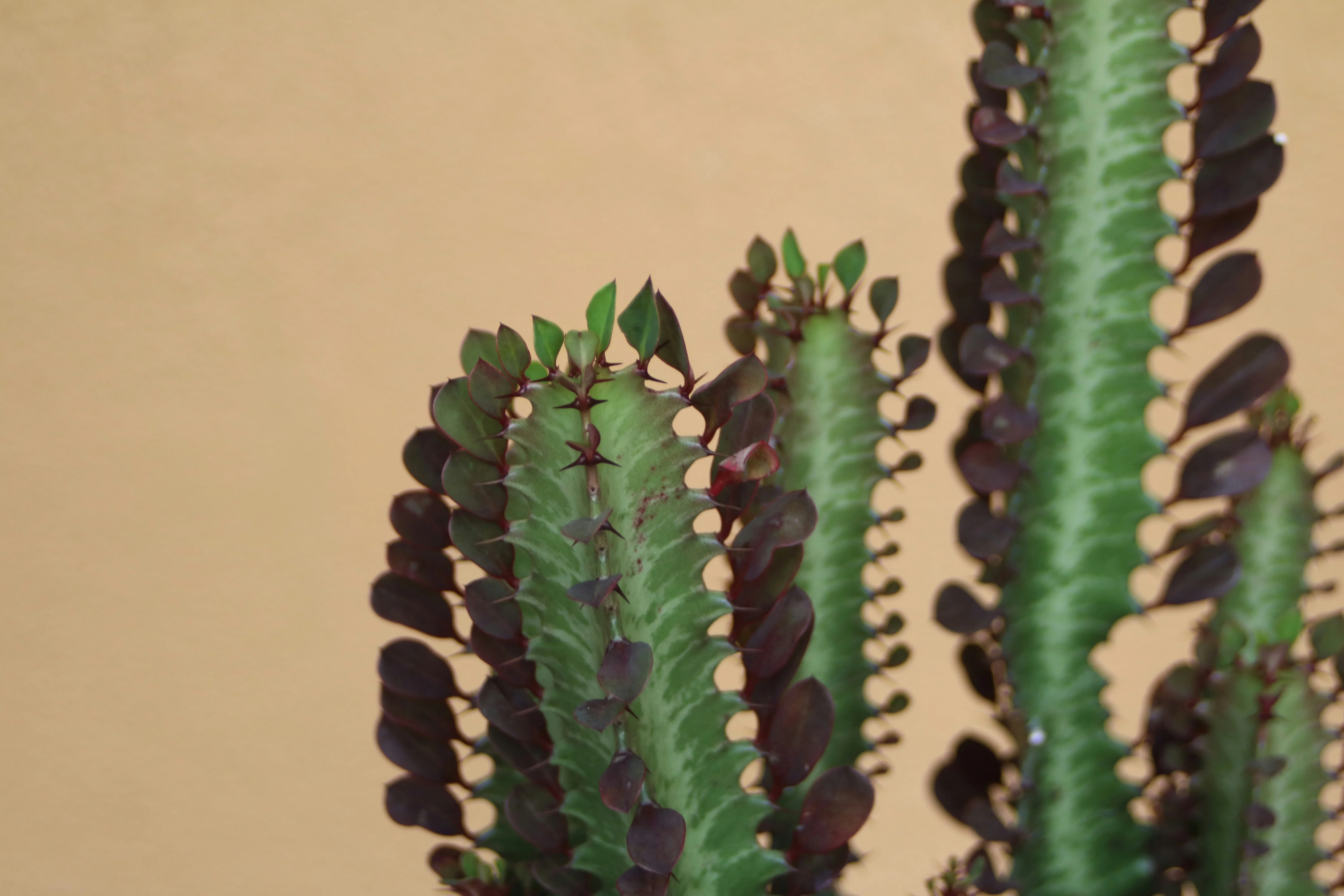
The African Milk Tree (Euphorbia trigona) is a spectacular, fast-growing architectural plant that brings a distinct desert vibe to any room. It features tall, three-sided, triangular green stems with sharp thorns running along the ridges. Between the thorns, it grows dozens of small, teardrop-shaped green (or red) leaves.
Because of its appearance, 90% of people assume it is a cactus. It is not. It belongs to the Euphorbia family (the same family as the Poinsettia). Unlike a cactus, it grows leaves, and more importantly, it bleeds a thick, milky white sap when damaged. While it is incredibly easy to care for and highly drought-tolerant, its toxic sap requires extreme caution, making it unsuitable for homes with curious pets or small children.
Light Requirements: Sun Stressing the Rubra
The African Milk Tree is a true sun-worshiper. It must be placed directly in front of the brightest window in your home, preferably a south or west-facing one. It thrives in blazing, direct afternoon sunlight that would scorch most other houseplants.
If you have the highly sought-after Euphorbia trigona 'Rubra' (which features stunning ruby-red stems and leaves), light is doubly important. The red coloring is an active response to intense light (often called sun stressing). If you place a Rubra in a dim room, it will completely revert to solid green in order to maximize its ability to photosynthesize. To keep it red, bake it in the sun.
Watering Strategy
Because it is a succulent, the thick, three-sided stems act as massive water reservoirs. Overwatering is the fastest and most common way to kill it. You must allow the potting soil to dry out 100% completely—all the way to the bottom of the pot—before watering.
Depending on the heat and light, this means you may only water it once a month in the summer, and perhaps only three times during the entire winter. When you do water, soak the pot thoroughly to hydrate the roots, then let it drain completely. If the base of the plant turns yellow, wrinkled, and mushy, it is suffering from root rot caused by wet soil.
Temperature and Humidity
It prefers high temperatures between 65°F and 90°F (18°C - 32°C). As a desert-adapted plant, it has zero need for humidity and perfectly tolerates the bone-dry air of centrally heated homes. Keep it far away from freezing drafts; temperatures below 50°F (10°C) will cause permanent cellular damage.
Soil and Potting
Standard potting soil will hold water for far too long and kill the roots. You must use a fast-draining cactus and succulent mix, heavily amended with coarse sand, perlite, or pumice. Because it grows very tall very quickly, it can easily become top-heavy. It is highly recommended to plant it in a heavy, unglazed terracotta pot to prevent it from tipping over, as the unglazed clay also helps pull excess moisture out of the soil.
The "Leaf Drop" Panic
Many new owners panic when their African Milk Tree suddenly drops all of its small teardrop leaves. Do not panic! This is a natural response to seasonal changes or drought. During the winter, or if the plant goes too long without water, it will shed its leaves to conserve energy. As long as the main stems are green and firm (not mushy), the plant is perfectly healthy. It will push out a brand new flush of leaves in the spring.
Toxicity Warning: The "Milk"
The "milk" in the African Milk Tree is a thick latex sap. This sap is highly toxic and caustic. It is an extreme irritant to the skin and mucous membranes. If you get it on your hands, it can cause severe rashes and chemical burns. If it gets in your eyes, it requires immediate medical attention and can cause blindness. If chewed by a pet, it causes intense, burning pain in the mouth and throat. Whenever you are pruning or repotting this plant, you must wear thick gloves and protective eyewear.
Calculator
Interactive Calculators for Euphorbia Trigona
Recommended next actions
Next Best Actions
Use calculators and guides to turn this plant profile into a practical care routine.
Topic Guide
Watering
Learn everything about watering for your indoor and aquarium plants. Expert care tips, troubleshooting, and related guides.
Calculator
Potting Mix Calculator: Build the Perfect Soil Blend
Calculate the ideal potting mix ratios for any plant type — from moisture-loving tropicals to drought-tolerant succulents.
Guide
Stem Rot vs Root Rot: How to Tell the Difference
With over 15 years of indoor plant diagnostics and more than 3,000 rot and fungal collapse cases assessed across aroids, succulents, and tropical houseplants, we've built a three-way framework that distinguishes stem rot, root rot, and crown rot by their above-soil presentation alone — so you know within minutes whether rescue is viable and exactly what to do.
Topic Guide
Root Rot
Learn how to identify and treat root rot in houseplants. Discover causes, symptoms, and step-by-step solutions to save your plants from overwatering.
Structured Plant Data
Plant Data Profile
The following data is extracted directly from our botanical knowledge graph for accuracy and transparency.
Growth Characteristics
Growth Rate
fast
Mature Height
6-8 feet indoors
Mature Spread
2-3 feet wide
Life Cycle
Perennial
Flowering Season
Rarely flowers indoors
Container Friendly
yes
Indoor Capable
yes
Environmental Parameters
| Parameter | Recommended | Survivable |
|---|---|---|
| Temperature | 65°F - 90°F (18°C - 32°C) | 55°F - 100°F (13°C - 38°C) |
| Humidity | 30% - 50% | 10% - 70% |
| Soil PH | 6.0 - 7.5 | 5.5 - 8.0 |
Lighting
Description
Requires intense, bright light to thrive. It can handle hours of blazing, direct afternoon sun. The popular 'Rubra' variety requires direct sun to maintain its red color.
Nutrients
Nitrogen Demand
low
Phosphate Demand
low
Potassium Demand
low
Micronutrient Notes
Requires very little fertilizer.
Fertilizer Frequency
Once in spring and once in summer with a cactus fertilizer diluted to half strength.
Organic Options
A light layer of worm castings in spring.
Relationships
-
Root Rot
Vulnerability | Strength 9
Highly susceptible to rot if overwatered. The thick green stems will quickly turn yellow and mushy at the base.
Euphorbia vs. Cactus Comparison
| Feature | Euphorbia (African Milk Tree) | True Cactus |
|---|---|---|
| Sap | Bleeds thick, toxic white latex | Bleeds clear water/gel |
| Foliage | Grows small teardrop leaves | Rarely grows true leaves |
| Spines | Grows pairs of sharp thorns | Grows clusters of needles (areoles) |
Troubleshooting & Diagnostics Guide
1 Why is my African Milk Tree dropping all its leaves?
Diagnosis: Normal winter leaf drop or overwatering stress
Treatment: If stems are firm, it's normal; if stems mushy, reduce water and check for rot.
Prevention: Water sparingly in winter; ensure good drainage.
2 Why is my red African Milk Tree (Rubra) turning green?
Diagnosis: Insufficient sun stress – needs more light for red colour
Treatment: Move to brighter, direct sunlight; red colour will return on new growth.
Prevention: Provide full sun.
Authoritative Resources
For additional peer-reviewed information on plant diseases, toxicity, and care, consult these trusted botanical and agricultural extensions:
Glossary of Terms
- Sun Stressing
- A phenomenon where succulents produce red or purple pigments (anthocyanins) to protect themselves from intense sunlight. This is what gives the 'Rubra' variety its red color.
- Callus
- The hard, dry tissue that forms over a plant wound. When taking a succulent cutting, you must let it callus for a week before planting, or it will rot.
Frequently Asked Questions
Is the African Milk Tree a cactus?
Why is my African Milk Tree dropping all its leaves?
Why is my red African Milk Tree (Rubra) turning green?
How do I propagate the African Milk Tree?
How dangerous is the white sap?
Sources & References
-
Source: powo.science.kew.org
-
Source: ucanr.edu
Explore More