Stem Rot vs Root Rot vs Crown Rot: The Above-Soil Diagnosis Guide That Tells You Which One You Have
With over 15 years of indoor plant diagnostics and more than 3,000 rot and fungal collapse cases assessed across aroids, succulents, and tropical houseplants, we've built a three-way framework that distinguishes stem rot, root rot, and crown rot by their above-soil presentation alone — so you know within minutes whether rescue is viable and exactly what to do.
Quick Answer
Stem rot darkens and softens the stem at soil level while roots often remain healthy; root rot destroys the root system first while the stem stays firm until late stages; crown rot collapses the entire plant base within 48–72 hours with visible mycelium. All three need different treatments — improving drainage alone only reliably addresses root rot.
Key Takeaways
- Distinguish stem rot (basal softening) from root rot (subterranean decay).
- Recognize crown rot by the rapid, complete collapse of central leaf rosettes.
- Excise all necrotic tissue thoroughly before repotting in sterile substrate.
- Correct overwatering and compacted soils to prevent anaerobic fungal growth.
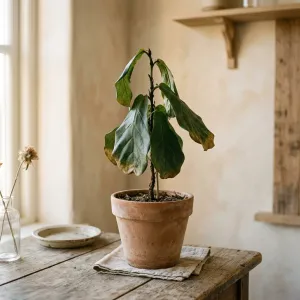
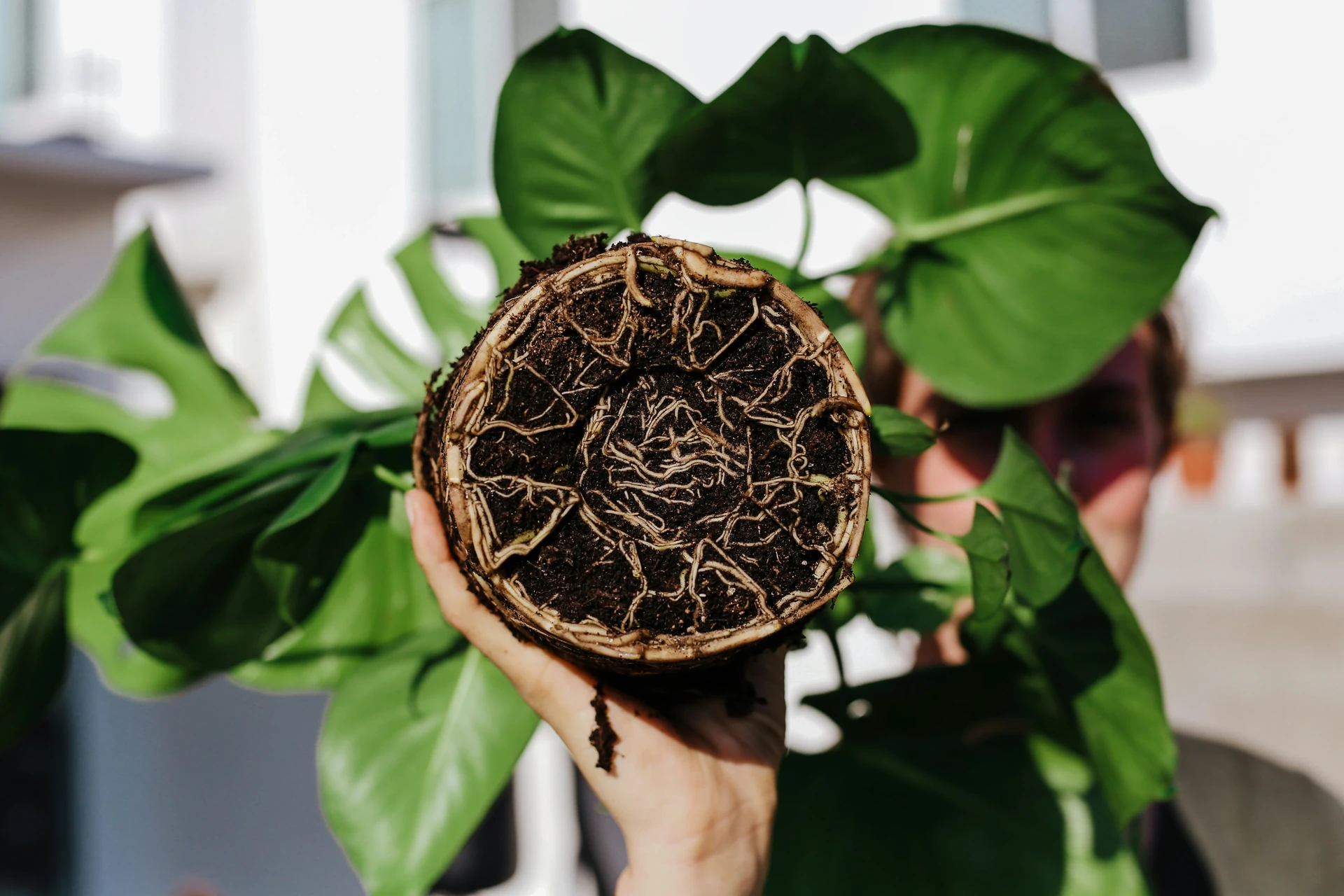
You have lifted your plant out of its pot and the roots look surprisingly fine — pale, firm, mostly intact — but the base of the stem is dark, soft, and collapsing. Or the opposite: the roots are brown and mushy but the stem above soil looks perfectly healthy. You've read every root rot guide available and none of them describe what you're actually seeing. That disconnect is diagnostic, not coincidental. Stem rot, root rot, and crown rot are three distinct conditions caused by different pathogens, progressing at different speeds, and responding to different interventions. Treating them interchangeably is the single most common reason plants that could have been saved are lost.
The Science: Three Different Conditions, Three Different Causes
The umbrella term "root rot" is used loosely in houseplant care to describe any basal collapse — but conflating these conditions leads directly to failed rescues. Understanding the mechanism behind each tells you immediately what you're dealing with and what it will respond to.
Root rot is caused primarily by oomycete water molds — most commonly Pythium spp. and Phytophthora spp. — that thrive in saturated, oxygen-depleted soil. These are not true fungi but fungus-like organisms that produce motile zoospores that swim through waterlogged soil to colonize root tips. The rot begins at fine feeder root tips and progresses inward toward the root crown over days to weeks depending on soil temperature (progression accelerates above 24°C). By the time above-soil symptoms appear — wilting despite moist soil, yellowing lower leaves — significant root mass has already been destroyed. Crucially, the stem itself remains structurally intact until very late stages.
Stem rot is caused by a different group of pathogens — primarily Fusarium spp., Rhizoctonia solani, and in some cases the same Pythium species responsible for root rot — but attacking the stem tissue at or just above soil level rather than the root system. Stem rot progresses faster than root rot, can appear in soil that is not severely waterlogged (particularly in humid conditions with poor airflow around the stem base), and produces a characteristic darkening and constriction of the stem called a "damping off" lesion. The roots below a stem rot lesion can be entirely healthy.
Crown rot is typically caused by Sclerotinia sclerotiorum or Botrytis cinerea (gray mold) and attacks the crown — the junction between the root system and stem where the plant's growing point is located. It progresses extremely rapidly, often collapsing a plant within 48–72 hours, and characteristically produces white cottony mycelium or gray fuzzy growth visible at the soil surface around the stem base. Crown rot has the poorest rescue prognosis of the three because the growing point itself is compromised.
Identifying Which Condition You Have: Above-Soil Diagnosis
Before unpotting, you can gather most of the information you need from the above-soil presentation. Work through these diagnostic axes in sequence.
| Diagnostic Factor | Root Rot | Stem Rot | Crown Rot |
|---|---|---|---|
| First visible symptom | Wilting despite moist soil; lower leaf yellowing | Dark, water-soaked lesion on stem at/above soil | Sudden collapse of entire plant; stem base mushy |
| Stem appearance at soil level | Firm, normal color until late stage | Brown-black constriction; stem may pinch inward | Wet, translucent, often cream-colored collapse |
| Progression speed | Slow — days to weeks | Medium — 3–7 days for visible lesion spread | Very fast — 24–72 hours to full collapse |
| Smell | Earthy-sour when roots exposed | Mild; sometimes slightly fermented | Strong foul odor; sometimes sweet-rotting |
| Visible mycelium at soil surface | None | Rare; occasional white threads | White cottony or gray fuzzy growth common |
| Root condition on unpotting | Brown, mushy, easily pulled apart | Often healthy and white below lesion | Variable — may be intact or partially rotted |
| Leaves before collapse | Progressive yellowing bottom-up | May wilt suddenly on one side | All leaves wilt simultaneously within hours |
| Primary cause | Sustained waterlogging; low soil oxygen | Humidity + poor airflow at stem base; overwatering | Standing water at crown; cold + wet combination |
| Rescue prognosis | Good if caught early; moderate if advanced | Good if lesion caught before girdling stem | Poor — depends entirely on growing point survival |
| Key rescue action | Prune roots, dry, repot, improve drainage | Remove lesion tissue, dust with fungicide, dry stem | Remove all affected tissue; propagate if possible |
Root Rot: Confirming and Treating
If wilting, lower-leaf yellowing, and moist soil are your primary symptoms with a structurally intact stem, unpot the plant and inspect the roots. Healthy roots are white to cream-colored and firm; they snap cleanly when bent. Root-rotted roots are brown to black, soft, and collapse to a hollow thread when squeezed — the outer cortex slips off the inner stele in a wet sheath. Using sterile scissors or pruning shears, remove all brown and mushy root tissue, cutting back to firm white root. If more than 60–70% of the root mass is affected, the rescue prognosis drops substantially; remove the equivalent proportion of top growth (leaves and stems) to bring the plant into balance with its reduced root capacity.
Allow the trimmed root system to air-dry for 30–60 minutes, then dust cut surfaces lightly with powdered cinnamon (a mild natural fungicide) or a commercial copper-based fungicide. Repot into fresh, dry potting mix — never reuse the original soil, which retains pathogen populations — in a clean pot. Do not water for 5–7 days after repotting to allow root recovery. Our [ultimate root rot rescue guide] covers advanced-stage rescue, aftercare, and the specific soil mix ratios that prevent recurrence in detail.
Stem Rot: Confirming and Treating
Stem rot presents as a darkened, often water-soaked or constricted lesion on the stem at or just above the soil surface. On succulents and cacti, the tissue turns translucent and collapses inward. On aroids, the lesion is typically brown-black and may have a slightly shrunken appearance where the stem diameter narrows. Press the affected area gently — stem rot tissue will feel soft and give under slight pressure, while healthy stem is firm and springy.
If the lesion has not yet fully girdled the stem (meaning healthy tissue remains on at least one side of the circumference), rescue is viable. Using a clean, alcohol-sterilized blade, excise the entire lesion plus 1–2 cm of visually healthy tissue above and below it. Examine the cut surface: healthy stem shows white or pale green tissue; rotted tissue is brown or discolored all the way through. Continue cutting upward in 0.5 cm increments until you reach entirely clean tissue. Allow the cut surface to callous in open air for 2–4 hours, then dust with sulfur-based fungicide powder. Do not bury the treated section in soil; position the repotted plant so the treated stem section is above soil level and receives good airflow. Reduce watering frequency by 30–40% for 3 weeks.
If the lesion has fully girdled the stem — dark tissue extends completely around the circumference — the section below the lesion cannot recover. Take a clean stem cutting from above the lesion, strip the lower leaves, and propagate the healthy top section in fresh water or moist perlite. The base and roots can be discarded. This rescue-by-propagation approach saves the genetic plant even when the original root system and lower stem are unrecoverable. The full framework for [spring repotting guide] covers sterile technique and pot selection that reduces stem rot risk at the most vulnerable repotting window.
Crown Rot: Confirming and Responding
Crown rot is the most serious of the three conditions and requires the fastest response. The crown is the biological control center of the plant — the growing point from which all new stems, leaves, and roots originate. Destruction of the crown means the plant cannot regenerate regardless of root health. Confirm crown rot by gently pressing the stem base at soil level; crown rot tissue feels wet, slippery, and offers almost no resistance. In many cases you will see white cottony mycelium (Sclerotinia) or gray-brown fuzzy spore masses (Botrytis) at the soil surface within 2–3 cm of the stem.
Immediate response: remove the plant from its pot, do not attempt to save the root system, and examine whether any above-crown stem tissue is firm and healthy. If even one healthy stem or offset extends from above the rot line, take it as a cutting or division immediately — this is your propagation window. For rosette plants like African violets, aglaonema, or bromeliads, check for offsets or pups at the base; these often escape crown rot even when the central crown is lost. Treat any salvaged cuttings with fungicide before propagating. Discard all soil, clean the pot with a 10% bleach solution before reuse, and never replant a crown-rot-affected species in the same location without correcting the underlying cause — typically a combination of standing water at the crown, cold temperatures, and stagnant airflow. For context on how environmental conditions interact with fungal disease risk, the mechanisms discussed in our [calathea humidity masterclass] on airflow and vapor pressure deficit are directly applicable to crown rot prevention in high-humidity environments.
Recommended next actions
Next Best Actions
Move from reading to action with related calculators, plant profiles, and quiz-based recommendations.
Topic Guide
Watering
Learn everything about watering for your indoor and aquarium plants. Expert care tips, troubleshooting, and related guides.
Guide
ZZ Plant Care Guide: Light, Water & Rhizome Tips
After growing ZZ plants across offices, low-light apartments, and sun-drenched rooms for over eight years, we have worked out exactly how this rhizome-powered survivor operates — and why the growers who kill it are almost always doing one specific thing wrong.
Guide
Why Root Rot Happens and How to Save Your Plant
After rescuing thousands of rotting houseplants from big-box stores over a 12-year nursery career, we have developed a foolproof method to diagnose, treat, and completely prevent deadly root rot.
Frequently Asked Questions
How do I know if my plant has stem rot or root rot without unpotting it?
Can a plant survive if more than half its roots are rotted?
What does stem rot smell like compared to root rot?
Is it safe to reuse potting soil after a rot infection?
Can stem rot spread from one plant to another?
Why did my succulent get stem rot even though I barely watered it?
What is the white fluffy growth at the base of my plant — is it mold or roots?
Can I save a plant by taking cuttings if the base is already rotted?
Explore More