African Violet Care Guide: Watering, Light & Reblooming
African Violets are classic indoor bloomers, but their fuzzy leaves demand a unique watering approach. We break down the 'bottom-watering' technique essential for preventing crown rot and triggering year-round flowers.
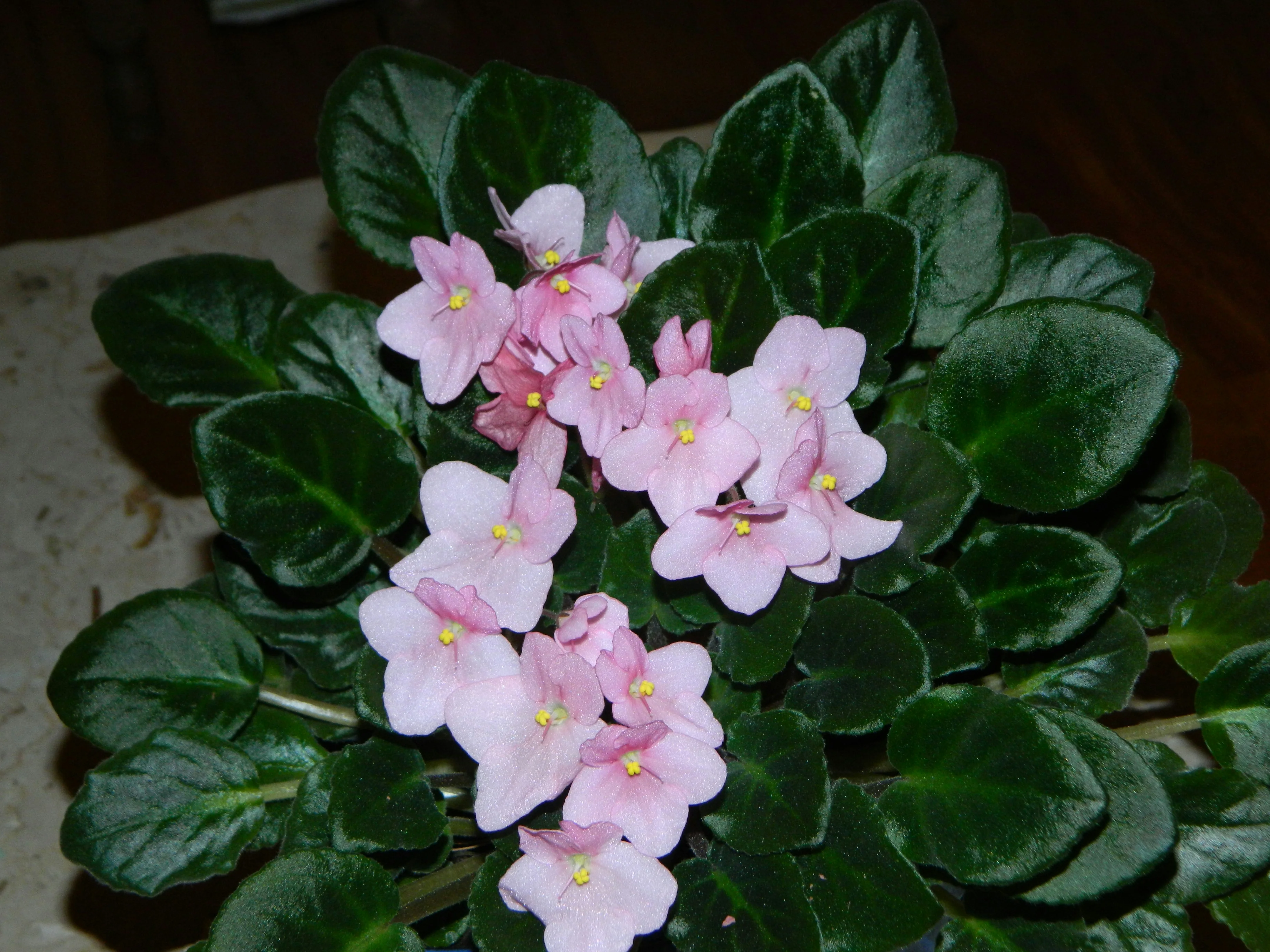
-
Difficulty
intermediate
-
Light
Requires bright, indirect light to bloom continuously. Direct sun will burn the leaves, but too little light will stop flower production completely.
-
Temperature
65°F - 80°F (18°C - 27°C)
-
Growth
moderate
-
Humidity
50% - 70%
-
pH range
6.0 - 6.5
-
Biggest Owner Mistake
Getting water on the leaves causes permanent brown rings because the fuzzy surface traps moisture and the cells beneath collapse. Many owners also pot them in oversized containers, which holds excess moisture around the roots and leads to crown rot.
-
What Nobody Tells You
They actually bloom best when slightly root-bound—a too-large pot directs energy to roots instead of flowers. Cold tap water shocks the root system and creates yellow halos on leaves; always use room-temperature water.
-
Real Home Conditions
In dry indoor air, flowers fade and drop within days instead of lasting weeks. They suffer near drafty windows in winter, and direct afternoon sun scorches their fuzzy leaves within hours.
Quick Answer
African Violet (Streptocarpus sect. Saintpaulia) is a compact flowering perennial that needs bright, indirect light, an airy well-draining mix, and stable temperatures around 65–80°F (18–27°C). Bottom-water with room-temperature water only when the top inch of soil is dry, keeping moisture off the fuzzy leaves and crown to prevent spotting and rot. It is non-toxic to cats, dogs, and humans.
Key Takeaways
- Bottom-water with room-temperature water to prevent spots on fuzzy foliage.
- Provide bright, indirect sunlight from an east-facing window for steady blooms.
- Keep the light peat-perlite substrate evenly moist without waterlogging.
- Keep ambient room temperatures stable between 18°C and 27°C (65°F–80°F).
Overview
The African Violet (Saintpaulia) is one of the most beloved indoor flowering plants in the world, prized for its ability to produce vibrant clusters of purple, pink, or white flowers year-round. However, they also have a reputation for being finicky, largely because they are highly susceptible to crown rot and leaf spotting if watered incorrectly. The key to mastering African Violet care is understanding that their fuzzy leaves are a delicate defense mechanism that cannot get wet. This guide will teach you the art of bottom-watering and how to find the perfect light balance to keep your plant blooming continuously.
Native to the humid cloud forests of Tanzania and Kenya, African Violets grow in rocky crevices or on the forest floor, sheltered from direct sun and heavy downpours. They absorb moisture from the humid air and the damp, mossy ground. Their leaves are covered in tiny hairs (trichomes) designed to collect dew. When we water them from above with cold tap water in a dry home, we bypass their natural defenses, leading to shock, fungal infections, and rapid death.
Light
Light is the absolute critical factor for getting an African Violet to bloom. They require bright, indirect light. An east-facing window is ideal because it provides gentle morning sun and bright ambient light for the rest of the day. If the light is too low, the plant will survive and grow green leaves, but it will never produce flowers. Conversely, if placed in harsh, direct afternoon sun (like a south-facing window), the leaves will become pale, scorched, and burnt.
Temperature
These plants prefer the exact same temperatures that humans find comfortable: 65°F to 80°F (18°C - 27°C). They are highly sensitive to sudden temperature changes. Keep them away from cold, drafty windows in the winter, and do not place them directly in the path of a heater or air conditioning vent. Even the water you use should be room temperature; cold water shocks the roots.
Humidity
Originating from cloud forests, they thrive in high humidity (50% to 70%). While they will tolerate average household humidity, they will bloom more profusely if humidity is higher. However, you must never mist an African Violet. To raise humidity safely, place the pot on a pebble tray filled with water (ensuring the bottom of the pot is not touching the water) or use a room humidifier nearby.
Watering: The Bottom-Watering Method
This is the most important rule of African Violet care: Do not water from the top, and never get the leaves wet. If cold water touches the fuzzy leaves, it causes permanent, unsightly white or brown ring spots. If water pools in the center of the plant, it will cause fatal crown rot. You must bottom-water. Wait until the top inch of the soil feels dry. Fill a saucer or a shallow bowl with room-temperature water. Place the plant's pot (which must have drainage holes) into the water. Allow the plant to sit for 30 to 45 minutes to soak up the water through capillary action. Once the top of the soil feels moist, remove the pot and let it drain completely. Never leave the plant sitting in water for hours.
Soil
African Violets have incredibly fine, delicate roots that need oxygen. Standard indoor potting soil is far too dense and holds too much water, suffocating the roots. You must use a specialized, extremely airy African Violet mix, or make your own by blending equal parts peat moss, perlite, and vermiculite. The soil should feel incredibly light and fluffy.
Fertilizer
To bloom continuously, they need consistent nutrition, specifically phosphorus. Use a dedicated African Violet liquid fertilizer. You can apply it every two weeks at half strength, or use the "weakly, weekly" method by adding a quarter-strength dose of fertilizer to the water every time you bottom-water. Always ensure the soil is slightly damp before fertilizing to prevent root burn.
Propagation
African Violets are famous for being incredibly easy to propagate from a single leaf. Snip a healthy, firm leaf from the middle row of the plant, leaving about an inch of the stem (petiole) attached. Push the stem into a small pot filled with moist perlite or vermiculite. Place it in a warm, bright spot. Within 4 to 6 weeks, a tiny cluster of new leaves will sprout from the base of the cutting. Once the new plantlet is an inch tall, you can carefully separate it and pot it in its own container.
Repotting
African Violets actually bloom best when they are slightly root-bound. You generally only need to repot them once a year, not to move them to a larger pot, but to refresh the depleted soil. They have shallow root systems and should be planted in shallow "azalea" pots rather than deep standard pots. A mature African Violet rarely needs a pot larger than 4 or 5 inches in diameter.
Toxicity
One of the best qualities of the African Violet is that it is completely non-toxic to cats, dogs, and humans. It is one of the few plants that provides vibrant, year-round indoor flowers without posing any danger to curious pets.
Common Problems
The most devastating problem is crown rot, indicated by the center of the plant turning brown and mushy. This is caused by overwatering or top-watering; the plant cannot be saved. White or brown rings on the leaves are caused by cold water splashing on them. If the plant is healthy but refusing to bloom, it almost certainly needs more light or a phosphorus-heavy fertilizer. Finally, carefully pinch off dead flowers (deadheading) to encourage the plant to put energy into creating new blooms rather than seed pods.
Calculator
Interactive Calculators for African Violet
Recommended next actions
Next Best Actions
Use calculators and guides to turn this plant profile into a practical care routine.
Topic Guide
Watering
Learn everything about watering for your indoor and aquarium plants. Expert care tips, troubleshooting, and related guides.
Guide
Yellow Houseplant Leaves: Diagnose & Fix Guide 2026
After diagnosing hundreds of yellow-leaf cases across dozens of plant species, we've mapped the ten distinct causes that look nearly identical at first glance — and built the only systematic guide that tells you not just what's wrong, but exactly how to confirm it and fix it.
Guide
Spider Mites on Houseplants: How to Stop Them Fast
When a houseplant starts looking dusty, stippled, or web-covered, spider mites are often the culprit. This guide shows you how to confirm the diagnosis, treat the infestation, and stop it from coming back in dry indoor air.
Topic Guide
Root Rot
Learn how to identify and treat root rot in houseplants. Discover causes, symptoms, and step-by-step solutions to save your plants from overwatering.
Structured Plant Data
Plant Data Profile
The following data is extracted directly from our botanical knowledge graph for accuracy and transparency.
Growth Characteristics
Growth Rate
moderate
Mature Height
6-12 inches indoors
Mature Spread
6-12 inches
Life Cycle
Perennial
Flowering Season
Year-round indoors under optimal lighting
Container Friendly
yes
Indoor Capable
yes
Environmental Parameters
| Parameter | Recommended | Survivable |
|---|---|---|
| Temperature | 65°F - 80°F (18°C - 27°C) | 60°F - 85°F (15°C - 29°C) |
| Humidity | 50% - 70% | 40% - 80% |
| Soil PH | 6.0 - 6.5 | 5.5 - 7.0 |
Lighting
Description
Requires bright, indirect light to bloom continuously. Direct sun will burn the leaves, but too little light will stop flower production completely.
Nutrients
Nitrogen Demand
low
Phosphate Demand
high
Potassium Demand
moderate
Micronutrient Notes
Requires a phosphorus-heavy fertilizer to promote continuous blooming.
Fertilizer Frequency
Every two weeks during spring and summer (or quarter strength at every watering).
Organic Options
Dedicated African Violet liquid organic feed.
Relationships
-
Root Rot
Vulnerability | Strength 9
Highly susceptible to crown rot if water is allowed to pool in the center of the rosette or on the leaves.
African Violet Cultivar Comparison
| Flower Type | Description | Leaf Type |
|---|---|---|
| Single | Classic 5-lobed flower | Standard fuzzy |
| Double | Multiple layers of petals, resembling a tiny rose | Ruffled or scalloped |
| Variegated Foliage | Flowers vary, but leaves have striking white or pink edges | Variegated (requires more light) |
Troubleshooting & Diagnostics Guide
1 Center of the plant is turning brown and mushy
Diagnosis: Crown rot caused by getting water in the center of the rosette or chronic overwatering.
Treatment: Crown rot is usually fatal. Discard the plant and soil to prevent spreading the fungus.
Prevention: Maintain optimal care conditions.
Authoritative Resources
For additional peer-reviewed information on plant diseases, toxicity, and care, consult these trusted botanical and agricultural extensions:
Glossary of Terms
- Bottom-Watering
- A watering technique where the plant pot is placed in a saucer of water, allowing the soil to absorb moisture from the bottom up via capillary action, keeping the foliage completely dry.
- Crown Rot
- A fatal fungal disease that attacks the central growing point (the crown) of a plant, turning it mushy and brown, usually caused by water sitting in the center of the rosette.
Frequently Asked Questions
Why is my African Violet not blooming?
Why can't I get the leaves of my African Violet wet?
How do I bottom-water an African Violet?
Are African Violets safe for cats?
Why is the center of my African Violet turning mushy and brown?
How do you propagate an African Violet?
Why do the leaves on my African Violet look pale and yellowish?
Do I need special soil for African Violets?
Sources & References
-
Source: powo.science.kew.org
-
Source: missouribotanicalgarden.org
-
Source: plants.ces.ncsu.edu
-
Source: edis.ifas.ufl.edu
-
Source: worldfloraonline.org
Explore More