Stem Cutting
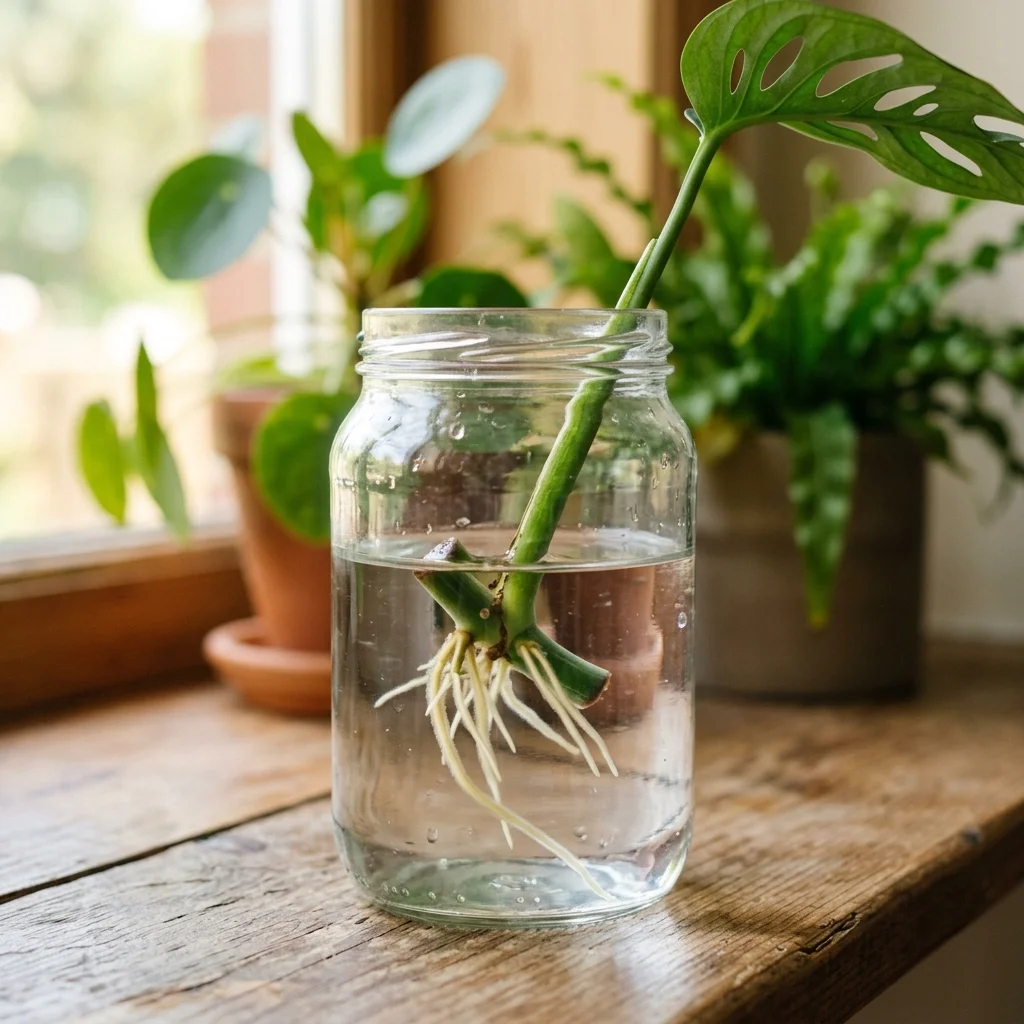
Stem cutting propagation is the most widely practiced vegetative propagation technique in horticulture, producing genetically identical offspring from a parent plant without the variability that seed reproduction introduces. A cutting is a severed portion of shoot tissue that, under the right conditions, regenerates an entirely new root system. The underlying biological mechanism is the plant hormone auxin, which accumulates at the basal cut end of a severed stem through polar transport, triggering dedifferentiation of cells and the eventual formation of new adventitious roots, resulting in a true clone of the parent plant.
Quick Answer
Stem cutting propagation produces a genetically identical clone from a severed shoot section, driven by the hormone auxin accumulating at the cut end to trigger new root formation. It's the most widely practiced vegetative propagation technique in horticulture. This method preserves exact cultivar traits, unlike seed propagation, which introduces genetic variability.
What Is Stem Cutting Propagation?
Stem cutting propagation is the most widely practised vegetative propagation technique in horticulture, used to produce genetically identical offspring from a parent plant without the variability introduced by seed reproduction. A stem cutting is a severed portion of shoot tissue that, under the right conditions, regenerates an entirely new root system from undifferentiated callus tissue or from pre-formed root initials already present in the stem. The resulting plant is a true clone of the parent, carrying identical genetics, growth habit, and ornamental characteristics — a property of enormous value for maintaining cultivar integrity in both commercial production and home collections.
The biological mechanism underlying stem cutting propagation is the plant hormone auxin, principally indole-3-acetic acid (IAA), which accumulates at the basal cut end of a severed stem through polar auxin transport. This accumulation triggers the dedifferentiation of parenchyma cells in the cambium and cortex into meristematic callus tissue, from which adventitious roots subsequently emerge. The rate and reliability of this process varies significantly between species, reflecting differences in endogenous auxin levels, the presence or absence of pre-formed root initials in the nodal tissue, and the concentration of rooting inhibitors such as phenolic compounds in the stem. Species like pothos and tradescantia root adventitiously so readily that auxin supplementation is unnecessary; others, such as camellias and many conifers, require precise wounding, hormone treatment, and controlled environment conditions to achieve reliable rooting.
The condition of the cutting — its developmental stage, water status, and the physiological state of the parent plant at the time of harvest — is as important as aftercare. Cuttings taken from actively growing, well-nourished parent plants contain higher carbohydrate reserves and more competent meristematic cells than those taken from stressed or starved stock. The internode length and the position on the plant from which the cutting is taken also influence success: material from the current season's growth, taken just below a node where auxin concentration is highest and cell division most active, consistently outperforms older, more lignified tissue taken from the mid or lower stem.
Tools and Materials You'll Need
- Sharp, sterile cutting blade: A scalpel, grafting knife, or pair of bypass pruners with a freshly cleaned blade is essential. Blunt blades crush rather than sever cell walls at the cut surface, damaging the cambial cells that form callus and increasing the entry points for pathogens. Sterilise cutting tools between parent plants with 70% isopropyl alcohol to prevent cross-contamination of fungal and bacterial diseases that can colonise cut surfaces before callus formation begins.
- Rooting hormone powder or gel (IBA-based): Indole-3-butyric acid (IBA) is the synthetic auxin most widely used in rooting preparations, available in powder, gel, and liquid formulations at concentrations typically ranging from 0.1% to 0.8% for softwood and semi-hardwood cuttings. IBA is stable and has low phytotoxicity relative to other auxins. Gel formulations adhere better to cut surfaces and provide a moisture seal in addition to hormonal stimulus; powder formulations are more convenient for large batches.
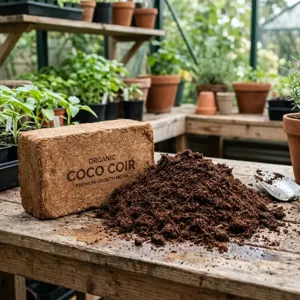
- Propagation medium: A rooting medium must support the cutting upright, retain enough moisture to prevent desiccation, and drain freely enough to prevent anaerobic conditions at the developing root zone. Coarse perlite alone, or a blend of 50% perlite and 50% coir or vermiculite, are widely used. Avoid rich potting mix for rooting — high nutrient levels stimulate shoot growth at the expense of root initiation and can cause osmotic damage to the un-rooted base.
- Propagation tray or individual cells: A shallow tray of 5–8 cm depth is sufficient for most softwood cuttings. Individual cells or small pots allow cuttings to be potted on without root disturbance when rooted. Clear plastic propagation trays with vented lids maintain high humidity around the foliage while allowing CO₂ exchange, preventing the excessive condensation that promotes fungal disease.
- Humidity enclosure or propagation dome: Un-rooted cuttings have no root system to replace water lost through stomatal and cuticular transpiration. A humidity enclosure — a plastic bag, propagation dome, or purpose-built misting unit — reduces vapour pressure deficit around the foliage, slowing water loss to a rate the unrooted stem can compensate for through direct uptake from the moist medium. Maintaining relative humidity above 80% around cuttings is the single most important environmental factor in preventing wilting during the rooting phase.
- Heating mat or propagation bench with bottom heat: Rooting is a metabolically active process driven by cell division, and its rate is strongly temperature-dependent. Bottom heat at 21–24°C accelerates callus formation and root emergence while keeping air temperatures slightly cooler, which reduces transpiration demand. For tropical species in particular, cold medium dramatically slows rooting even when air temperatures are adequate.
- Fungicide drench or powder (optional): In high-humidity propagation environments, fungal pathogens — particularly Botrytis cinerea — can colonise cut surfaces and fallen leaves rapidly. A preventive drench of a copper-based or thiram fungicide applied to the medium at the time of sticking cuttings reduces the risk of damping-off without harming developing callus tissue. Good hygiene — removing fallen leaves promptly, ensuring adequate airflow — reduces the need for chemical intervention.
Step-by-Step: How to Take and Root Stem Cuttings
- Select and prepare the parent plant two to three weeks before taking cuttings. Water and fertilise the parent plant regularly in the weeks leading up to propagation to ensure cuttings are taken from well-hydrated, carbohydrate-rich material. Avoid taking cuttings from plants that have recently been drought-stressed or heavily pruned, as their auxin distribution and cellular vigour will be sub-optimal. If the parent plant is in flower, remove flower buds a week before harvesting cuttings — flowering diverts auxin and carbohydrates away from vegetative tissue and reduces rooting competence.
- Take cuttings of 8–12 cm from the current season's growth, cutting just below a node. Using a sterile blade, sever the stem cleanly just below a node — the point of highest auxin concentration and the location of pre-formed root initials in many species. Cuttings of 8–12 cm typically carry two to four nodes, providing sufficient meristematic tissue for root initiation while limiting the shoot length that must be maintained by stem water uptake alone. Make the basal cut at a slight angle to increase the surface area available for auxin accumulation and water absorption.
- Remove lower leaves and any flowers or buds from the cutting. Strip all leaves from the lower half to two-thirds of the cutting — any leaf tissue buried in the rooting medium will rot and provide an entry point for pathogens. Retain two to four leaves at the tip to maintain photosynthetic activity, which provides carbohydrates that support callus formation and root growth. For large-leaved species, reduce the remaining leaves by cutting them in half to lower transpirational demand without eliminating photosynthetic capacity.
- Apply rooting hormone to the basal 1–2 cm of the cutting. For powder formulations, dip the moistened cut base into the hormone powder and tap gently to remove excess — a thin coating is more effective than a thick crust. For gel formulations, coat the basal section and insert directly. Rooting hormone is most effective when applied immediately after cutting and before any wound-response signalling has progressed. For difficult-to-root species, wounding the basal section with a scalpel to expose cambial tissue before hormone application significantly improves uptake.
- Insert cuttings into pre-moistened propagation medium, spacing them so leaves do not overlap. Use a dibber or pencil to create insertion holes to prevent the hormone coating from being wiped off as the cutting enters the medium. Insert cuttings to a depth of approximately one-third of their length — deep enough for stability and medium-to-stem contact, but not so deep that the remaining leaf nodes are buried. Overlapping leaves trap moisture and create the humid microclimate that Botrytis requires; spacing cuttings so foliage remains separated is a simple preventive measure.
- Enclose in a humidity chamber and provide bottom heat of 21–24°C. Place the tray inside a propagation dome or a clear plastic bag tent supported above the foliage, and position on a heating mat set to maintain medium temperature at 21–24°C. Vent the enclosure briefly each day to prevent CO₂ depletion and to remove excess condensation, which can drip onto foliage and initiate fungal lesions. Do not place the enclosure in direct sunlight — bright indirect light is sufficient for photosynthesis without driving transpiration to levels the unrooted cuttings cannot compensate for.
- Check for rooting after two to four weeks by gently tugging each cutting. Resistance to a gentle pull — rather than the cutting sliding cleanly from the medium — indicates that roots have formed and anchored into the propagation mix. For confirmation, ease one cutting from the medium with a dibber and inspect the base: white, actively growing roots of 1–2 cm indicate the cutting is ready for potting on. Transfer rooted cuttings to a nutrient-rich potting mix appropriate to the species, and acclimatise gradually to lower humidity conditions over five to seven days to prevent wilting shock as the root system adjusts to its new role.
Best Practices and Pro Tips
Time harvest to morning turgidity: Cuttings harvested in the early morning, before the heat of the day has driven transpirational water loss, have the highest internal water content and the greatest cellular turgidity. A cutting taken in the afternoon from a plant under mild heat stress has already lost a portion of its cellular water, and this deficit compounds the transpirational stress of being severed from the parent root system. Where possible, water the parent plant the evening before and harvest in the first hours of daylight.
Wound difficult species at the base: For woody or difficult-to-root species such as camellias, gardenias, and many conifers, wounding the basal 2–3 cm of the cutting by scraping the bark on one or two sides with a knife to expose the green cambial layer increases the surface area available for auxin uptake and adventitious root emergence. Wounded cuttings treated with 0.3–0.8% IBA gel consistently outperform unwounded cuttings in rooting percentage and root mass in controlled trials.
Perlite alone outperforms rich mixes for rooting: A rooting medium of pure coarse perlite, or 50:50 perlite and vermiculite, provides the free drainage and aeration that developing root initials require while offering no nutritional signal that might stimulate shoot growth at the expense of root formation. Rooting in a nutrient-rich medium redirects the cutting's limited carbohydrate reserves toward vegetative cell expansion rather than the root meristem development that is the actual goal. Transfer to a standard potting mix only after roots of at least 1–2 cm are clearly formed.
Mist, don't soak, during the rooting phase: The rooting medium should be moist throughout but never saturated — consistently wet conditions at the cut base create the anaerobic environment that suppresses callus formation and encourages rot. After the initial thorough wetting at sticking, allow the medium surface to dry slightly between mistings. A medium that holds its shape when squeezed but releases no water is at the correct moisture level for most softwood cuttings.
Harden off gradually over five to seven days: Moving freshly rooted cuttings directly from a high-humidity propagation environment to open ambient air causes rapid water loss through stomata that have not yet fully adjusted their aperture regulation to drier conditions. Over five to seven days, progressively increase ventilation of the propagation dome — opening vents wider each day — before removing the cover entirely. This gradual reduction in relative humidity from above 80% to ambient conditions allows stomatal guard cells to re-calibrate and prevents the wilting that leads many growers to assume their cuttings have failed when roots are in fact fully formed.
Quick Reference Table
| Factor | Recommended Range | Why It Matters |
|---|---|---|
| Cutting length | 8–12 cm with 2–4 nodes | Provides sufficient meristematic tissue for root initiation while limiting the shoot mass that must be supported by stem water uptake alone before roots form |
| Bottom heat temperature | 21–24°C at medium level | Callus formation and root cell division are temperature-dependent enzymatic processes; below 18°C, rooting slows dramatically even in species with high inherent competence |
| Humidity around foliage | Above 80% RH during rooting phase | Un-rooted cuttings cannot replace water lost through transpiration; reduced vapour pressure deficit is the primary mechanism preventing wilting before roots form |
| IBA rooting hormone concentration | 0.1–0.3% for softwood; 0.3–0.8% for semi-hardwood and difficult species | Too low provides insufficient auxin signal for adventitious root induction; too high causes cytotoxic inhibition of the very cell division it is intended to stimulate |
| Rooting medium perlite fraction | 50–100% perlite or perlite-vermiculite blend | High porosity prevents anaerobic conditions at the wound surface and provides the oxygen availability that aerobic callus metabolism requires; nutrient-rich mixes redirect resources away from root initiation |
Best Plants for Stem Cutting Propagation
Pothos (Epipremnum aureum) is arguably the most forgiving plant for learning stem cutting technique. Pre-formed root initials are present at every node, meaning adventitious roots emerge within seven to fourteen days in plain water or moist medium without any hormone treatment. Even cuttings taken carelessly — cut in the middle of an internode, left in a glass of water for weeks — will root reliably, making pothos an ideal species for building confidence and understanding the fundamentals of the process before attempting more exacting subjects.
Tradescantia (Tradescantia zebrina and related species) roots with similar ease and speed, making it a standard teaching plant in horticultural programmes. Tip cuttings of three to five nodes placed directly in moist perlite under a humidity dome root within one to two weeks without hormone treatment. The speed of rooting also makes tradescantia an excellent subject for demonstrating the effect of variables — bottom heat, hormone concentration, medium composition — because results are visible quickly enough to draw meaningful conclusions.
Roses (Rosa spp.) represent the classic semi-hardwood cutting challenge that separates casual from serious propagators. Cuttings of pencil-thick current-season stems, taken in late summer when the wood has partially hardened, treated with 0.3% IBA gel and stuck into a perlite-sand mix under mist or a humidity dome, root reliably over six to ten weeks. The species and cultivar influence success significantly — some modern shrub roses root at near 90% while hybrid teas may achieve 40–60% even under ideal conditions — making roses a useful species for practising and refining technique.
Fuchsias (Fuchsia spp.) are among the most propagation-responsive woody plants in container horticulture. Softwood tip cuttings of 6–8 cm taken in spring from actively growing parent plants root within two to three weeks in a standard perlite-coir mix at 18–20°C, even without rooting hormone. Their rapid response makes them a reliable commercial crop for nurseries and an excellent species for growers who want consistent success with minimal specialist equipment.
Camellias (Camellia japonica and C. sinensis) are among the most valued but technically demanding stem cutting subjects. Semi-hardwood cuttings taken in mid to late summer from the current season's growth require wounding, treatment with 0.8% IBA gel, and rooting in a free-draining bark-perlite mix at bottom heat of 21–23°C under intermittent mist or a sealed humidity tent. Rooting takes eight to sixteen weeks, and success rates of 60–80% are considered excellent — lower than for herbaceous species, but consistent with careful technique.
Basil (Ocimum basilicum) demonstrates that stem cutting propagation is as relevant in the kitchen garden as in the ornamental border. Tip cuttings of 8–10 cm placed in a glass of room-temperature water and positioned in a bright, warm windowsill produce visible root initials within five to seven days, without any specialist equipment. This makes basil an accessible entry point for propagation for anyone who grows culinary herbs, and the resulting plants establish quickly when potted into a fertile, well-draining mix.
The composition of the rooting medium plays a crucial role in the success of stem cuttings, and understanding how different media components affect drainage and aeration is foundational — we explore this in detail in our Potting Mix guide. The transition from rooted cutting to established plant often involves repotting, and timing that correctly makes a significant difference to survival rates, which we cover thoroughly in our Repotting guide. Root development during the early stages of cutting establishment is also closely linked to watering discipline in those first weeks — a subject addressed comprehensively in our Soil Moisture guide.
Common Mistakes to Avoid
Taking cuttings from stressed or flowering parent plants: A parent plant under water stress, nutrient deficiency, or in active flower production redirects auxin and carbohydrate resources away from vegetative tissue. Cuttings harvested under these conditions have lower rooting competence and reduced carbohydrate reserves, producing slower, less uniform rooting and higher failure rates. Bring the parent plant to peak condition — fully hydrated, actively vegetative, and recently fertilised — at least two to three weeks before harvesting cutting material.
Using blunt or unsterilised cutting tools: A blunt blade crushes the cambial cells at the cut surface rather than making a clean severance, and crushed tissue is unable to form the callus from which adventitious roots emerge. The necrotic zone created by a crush injury also provides an ideal colonisation site for Botrytis and Fusarium species. Sterilising blades with 70% isopropyl alcohol between each parent plant prevents the cross-contamination of pathogens that can devastate an entire propagation batch within days.
Burying leaf nodes in the rooting medium: Leaves and petioles buried in moist rooting medium decay rapidly, and the decomposing organic matter feeds fungal populations at precisely the location where callus tissue is forming. Always strip leaves cleanly from the lower half of the cutting and ensure no leaf material contacts the medium surface. A clean, bare stem below the medium line and healthy leaves above it is the correct configuration for virtually all stem cutting types.
Placing cuttings in direct sunlight during rooting: Strong direct sunlight drives stomatal opening and raises leaf temperature, increasing transpirational water loss to levels that un-rooted cuttings cannot compensate for regardless of how high humidity is maintained around them. Wilting under direct sun initiates abscisic acid production in leaf cells, which signals stomatal closure and simultaneously suppresses the cell division activity needed for callus and root formation. Bright indirect light of 1,000–3,000 lux provides sufficient photosynthate production without the transpirational stress that delays or prevents rooting.
Potting on too early before roots are well established: Moving a cutting into potting mix at the first sign of root emergence — a few small root initials of 2–5 mm — places it in a nutritionally rich, less aerated medium before its root system is capable of the ion uptake and structural support it requires. Roots of at least 1–2 cm in length, present at multiple points around the cutting base, indicate sufficient development to support the transition. Premature potting on typically results in a cutting that stalls, fails to resume growth, and collapses several weeks later as its limited root system cannot support the shoot in a denser medium.
What is the best time of year to take stem cuttings?
For most tropical houseplants, late spring to early summer is optimal — the parent plant is entering its peak growth phase, auxin levels in shoot tips are at their seasonal high, and the increasing day length and warmth accelerate callus formation and root emergence. For hardy woody garden plants, timing varies by cutting type: softwood cuttings in late spring, semi-hardwood in mid to late summer, and hardwood cuttings of dormant deciduous shrubs in autumn to early winter. Matching cutting type to the correct seasonal window is as important as technique for reliable results with woody subjects.
Do all stem cuttings need rooting hormone?
No — many plants root readily without any supplemental hormone. Pothos, tradescantia, impatiens, begonias, and most soft-stemmed tropical houseplants have sufficiently high endogenous auxin levels and pre-formed root initials that hormone treatment adds little measurable benefit. Rooting hormone becomes genuinely valuable for woody, semi-hardwood, and difficult-to-root species — camellias, gardenias, conifers, roses — where endogenous auxin is insufficient to trigger adventitious root formation at commercially or practically acceptable rates. For a beginner working with easy species, rooting hormone is reassuring but not necessary; for a propagator working with specialist material, it is an essential tool.
Why are my stem cuttings wilting even though I have them in a humidity dome?
Wilting inside a humidity dome usually indicates one of three problems: the dome is not sealing adequately and humidity is lower than assumed; the medium is too dry and the cutting is losing water faster than it can absorb through the cut base; or the cutting was already water-stressed when harvested and is unable to recover turgidity. Check that the dome creates a visible condensation film on its inner surface — if not, seal edges with cling film. Ensure the medium is uniformly moist at all depths, not just on the surface. If the parent plant was dry or the cuttings wilted between harvest and sticking, pre-hydrate them by standing the basal ends in clean water for one to two hours before inserting into the medium.
Can I root stem cuttings in water instead of a solid medium?
Water rooting works well for many soft-stemmed species — pothos, tradescantia, coleus, impatiens, and basil root prolifically in a clean glass of water changed every two to three days to prevent stagnant anaerobic conditions. The roots that form in water are morphologically adapted to a low-oxygen, aquatic environment and may experience a brief check when transferred to solid medium, as the root system reconfigures to function in a different physical substrate. For species that root easily in water, this adaptation period is short; for species that produce fewer, thicker water roots, the transition check can be more pronounced. Rooting directly in a perlite medium avoids this adjustment entirely.
How do I know when a stem cutting has successfully rooted?
The most reliable non-destructive test is a gentle resistance pull — grip the cutting lightly between two fingers and apply upward pressure of a few grams. A cutting without roots slides out cleanly; a rooted cutting resists and the medium moves slightly with it as the roots grip the substrate. Secondary signs include the resumption of active shoot growth — new leaf buds extending and unfurling — which only occurs when the root system is functional enough to support active cell division above ground. Root tips emerging from the drainage holes of individual cells provide visual confirmation. When in doubt, ease one cutting from the medium with a dibber and inspect the base before disturbing the entire batch.
Frequently Asked Questions
What is the best time of year to take stem cuttings?
For most tropical houseplants, late spring to early summer is optimal — the parent plant is entering its peak growth phase, auxin levels in shoot tips are at their seasonal high, and the increasing day length and warmth accelerate callus formation and root emergence. For hardy woody garden plants, timing varies by cutting type: softwood cuttings in late spring, semi-hardwood in mid to late summer, and hardwood cuttings of dormant deciduous shrubs in autumn to early winter. Matching cutting type to the correct seasonal window is as important as technique for reliable results with woody subjects.
Do all stem cuttings need rooting hormone?
No — many plants root readily without any supplemental hormone. Pothos, tradescantia, impatiens, begonias, and most soft-stemmed tropical houseplants have sufficiently high endogenous auxin levels and pre-formed root initials that hormone treatment adds little measurable benefit. Rooting hormone becomes genuinely valuable for woody, semi-hardwood, and difficult-to-root species — camellias, gardenias, conifers, roses — where endogenous auxin is insufficient to trigger adventitious root formation at commercially or practically acceptable rates. For a beginner working with easy species, rooting hormone is reassuring but not necessary; for a propagator working with specialist material, it is an essential tool.
Why are my stem cuttings wilting even though I have them in a humidity dome?
Wilting inside a humidity dome usually indicates one of three problems: the dome is not sealing adequately and humidity is lower than assumed; the medium is too dry and the cutting is losing water faster than it can absorb through the cut base; or the cutting was already water-stressed when harvested and is unable to recover turgidity. Check that the dome creates a visible condensation film on its inner surface — if not, seal edges with cling film. Ensure the medium is uniformly moist at all depths, not just on the surface. If the parent plant was dry or the cuttings wilted between harvest and sticking, pre-hydrate them by standing the basal ends in clean water for one to two hours before inserting into the medium.
Can I root stem cuttings in water instead of a solid medium?
Water rooting works well for many soft-stemmed species — pothos, tradescantia, coleus, impatiens, and basil root prolifically in a clean glass of water changed every two to three days to prevent stagnant anaerobic conditions. The roots that form in water are morphologically adapted to a low-oxygen, aquatic environment and may experience a brief check when transferred to solid medium, as the root system reconfigures to function in a different physical substrate. For species that root easily in water, this adaptation period is short; for species that produce fewer, thicker water roots, the transition check can be more pronounced. Rooting directly in a perlite medium avoids this adjustment entirely.
How do I know when a stem cutting has successfully rooted?
The most reliable non-destructive test is a gentle resistance pull — grip the cutting lightly between two fingers and apply upward pressure of a few grams. A cutting without roots slides out cleanly; a rooted cutting resists and the medium moves slightly with it as the roots grip the substrate. Secondary signs include the resumption of active shoot growth — new leaf buds extending and unfurling — which only occurs when the root system is functional enough to support active cell division above ground. Root tips emerging from the drainage holes of individual cells provide visual confirmation. When in doubt, ease one cutting from the medium with a dibber and inspect the base before disturbing the entire batch.
Explore More
Related Topics

Related Plant Guides
No specific plant guides found matching this topic.
Recommended next actions
Continue Exploring
Dive deeper into related plant care tools and profiles.
Topic Guide
Potting Mix
Learn everything about potting mix for your indoor and aquarium plants. Expert care tips, troubleshooting, and related guides.
Topic Guide
Repotting
Learn everything about repotting for your indoor and aquarium plants. Expert care tips, troubleshooting, and related guides.
Topic Guide
Soil Moisture
Learn how to accurately check soil moisture for houseplants. Discover when to water using finger tests, moisture meters, and pot weight.