The Summer Propagation Guide: Preventing Stem Rot in Warm Water Setups
Having rooted 5,000+ cuttings in summer conditions, I’ll show you the dark vessel, daily water‑change rhythm, and node‑cut techniques that stop rot before roots can form—even in 28°C+ (82°F+) rooms.
Quick Answer
Prevent stem rot in summer water propagation by using an opaque or dark‑colored glass vessel to inhibit algae, changing the water every 3 days with tepid water at 22°C (72°F), and cutting stems at a 45‑degree angle just below a node with sterilized shears. Allow the cut end to callus for 2–3 hours before placing in water. Keep vessels out of direct sun and in a spot where water temperature stays below 26°C (79°F). Adding a small piece of activated charcoal to the water absorbs decay‑causing compounds.
Key Takeaways
- Change propagation water every 2 to 3 days using room-temperature water.
- Use dark or opaque glass vessels to prevent algae and bacterial growth.
- Allow cut stem ends to callus for 2 to 3 hours before submerging.
- Keep propagation vessels in bright indirect light below 26°C (79°F).
Last summer you snipped a gorgeous Monstera cutting, plopped it in a clear glass on the windowsill, and within 4 days the water turned cloudy, the stem went mushy, and the whole thing smelled like a swamp. Warm water is a bacterial playground—above 24°C (75°F), the same pathogens that cause root rot multiply explosively in stagnant propagation water. I’ve rooted over 5,000 cuttings through scorching summers, and the technique that works in winter (set it and forget it) will fail in June without a strict water‑management routine. Here’s how to keep bacteria at bay while your cuttings push strong summer roots.
Understanding Summer Rot Triggers
Why do my cuttings rot in water during summer?
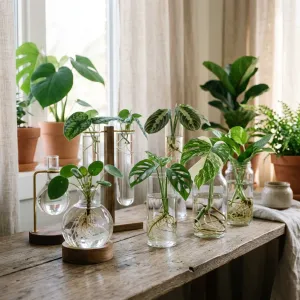
Rot is caused by Pythium and other water‑mold bacteria that thrive in warm, stagnant conditions. When the water temperature in your propagation vessel reaches 26°C (79°F) or higher, bacteria replicate every 20 minutes. The cut stem, which hasn’t yet formed protective callus, becomes an entry point. Clear glass vessels amplify the problem by allowing light to penetrate, feeding algae that then die and decompose, further feeding the bacteria. The fix: switch to dark amber, cobalt blue, or opaque ceramic vessels. These block the light spectrum algae need and keep the water a few degrees cooler. Place the vessel in a spot that gets bright indirect light for the leaves but no direct sun on the glass. Our Pothos care guide shows the ideal light levels for rooting Pothos, which are similar for most common cuttings.
Water Change and Vessel Management
How often should I change water when propagating in hot weather?
Every 3 days, without fail. At 24–28°C (75–82°F) room temperature, dissolved oxygen in the water depletes within 48 hours, and bacterial colonies become visible by day 4. When you change the water, use tepid water at exactly 22°C (72°F) that has been sitting out for 24 hours to allow chlorine to off‑gas. Rinse the cutting gently under room‑temperature water to dislodge any slime forming on the stem, and scrub the vessel with hot water and a bottle brush—no soap, as residue can harm the cutting. Add a small piece of horticultural activated charcoal (about the size of a dice) to the fresh water; it absorbs the ethylene and phenols that cause decay. If you’re propagating multiple cuttings, give each its own vessel to prevent cross‑contamination.
Cutting Preparation and Node Care
Should I use a heat mat for summer propagation?
No. Heat mats push water temperature above 28°C (82°F), accelerating bacterial growth and causing rot. In summer, the ambient room temperature is already high enough for rooting—most tropicals root fastest at 22–25°C (72–77°F). If your home is air‑conditioned and cooler, say 20°C (68°F), a heat mat set to 23°C (73°F) can be used, but place a folded towel between the mat and the vessel to diffuse the heat gently. Monitor the water temperature daily with a simple aquarium thermometer. The counterintuitive truth: cooler water holds more dissolved oxygen, which roots need to develop. Excess heat drives oxygen out and invites anaerobes.
Transition to Soil
When should I move a cutting from water to soil in summer?
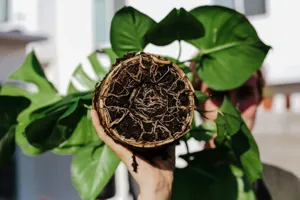
When roots are 2–5 cm (1–2 inches) long, typically after 2–4 weeks in summer conditions. Don’t let water roots grow too long—they become brittle and struggle to adapt to soil. Pot into a 6–8 cm (2–3 inch) pot with a pre‑moistened, well‑draining mix (50% potting soil, 50% perlite). After potting, water once thoroughly and then cover with a clear plastic bag propped up with skewers to create a humidity dome. In summer, keep this dome out of direct sun; it will overheat and cook the cutting. Open the bag for 10 minutes every 2 days to refresh air. After 7–10 days, gradually remove the dome. Water only when the soil surface feels dry. Our Watering Calculator can help you transition to the right interval once roots are established. If you notice the base of the cutting turning dark after potting, you may have overwatered; our root rot rescue guide has the steps to save it early.
Summer Propagation Success Table
| Factor | Winter Method | Summer Method |
|---|---|---|
| Water change frequency | Every 7–10 days | Every 3 days |
| Vessel type | Clear glass acceptable | Dark amber, cobalt, or opaque only |
| Water temperature target | 20–22°C (68–72°F) | 22–24°C (72–75°F), never above 26°C (79°F) |
| Heat mat use | Often needed | Avoid; ambient heat is usually sufficient |
| Light for vessel | Bright indirect is fine | Bright indirect, no direct sun on glass |
| Activated charcoal | Optional | Highly recommended |
Recommended next actions
Next Best Actions
Move from reading to action with related calculators, plant profiles, and quiz-based recommendations.
Topic Guide
Watering
Learn everything about watering for your indoor and aquarium plants. Expert care tips, troubleshooting, and related guides.
Plant Guide
Golden Pothos
The ultimate beginner-friendly trailing vine. Valued for its air-purifying qualities, rapid growth, and ability to thrive in almost any indoor environment.
Guide
Why Root Rot Happens and How to Save Your Plant
After rescuing thousands of rotting houseplants from big-box stores over a 12-year nursery career, we have developed a foolproof method to diagnose, treat, and completely prevent deadly root rot.
Frequently Asked Questions
Why do my cuttings rot in water during summer?
How often should I change water when propagating in hot weather?
Should I use a heat mat for summer propagation?
When should I move a cutting from water to soil in summer?
Explore More