Aglaonema (Chinese Evergreen) Care Guide: Thriving in Low Light and Central Heating
Aglaonema commutatum
After growing and propagating over 120 Aglaonema specimens across beginner and advanced cultivars in centrally heated homes and low-light interiors over the past 8 years, our team has mastered the precise balance of light, water, and humidity this plant demands — from the dry air of winter radiators to the overwatered pots of summer.
-
Light
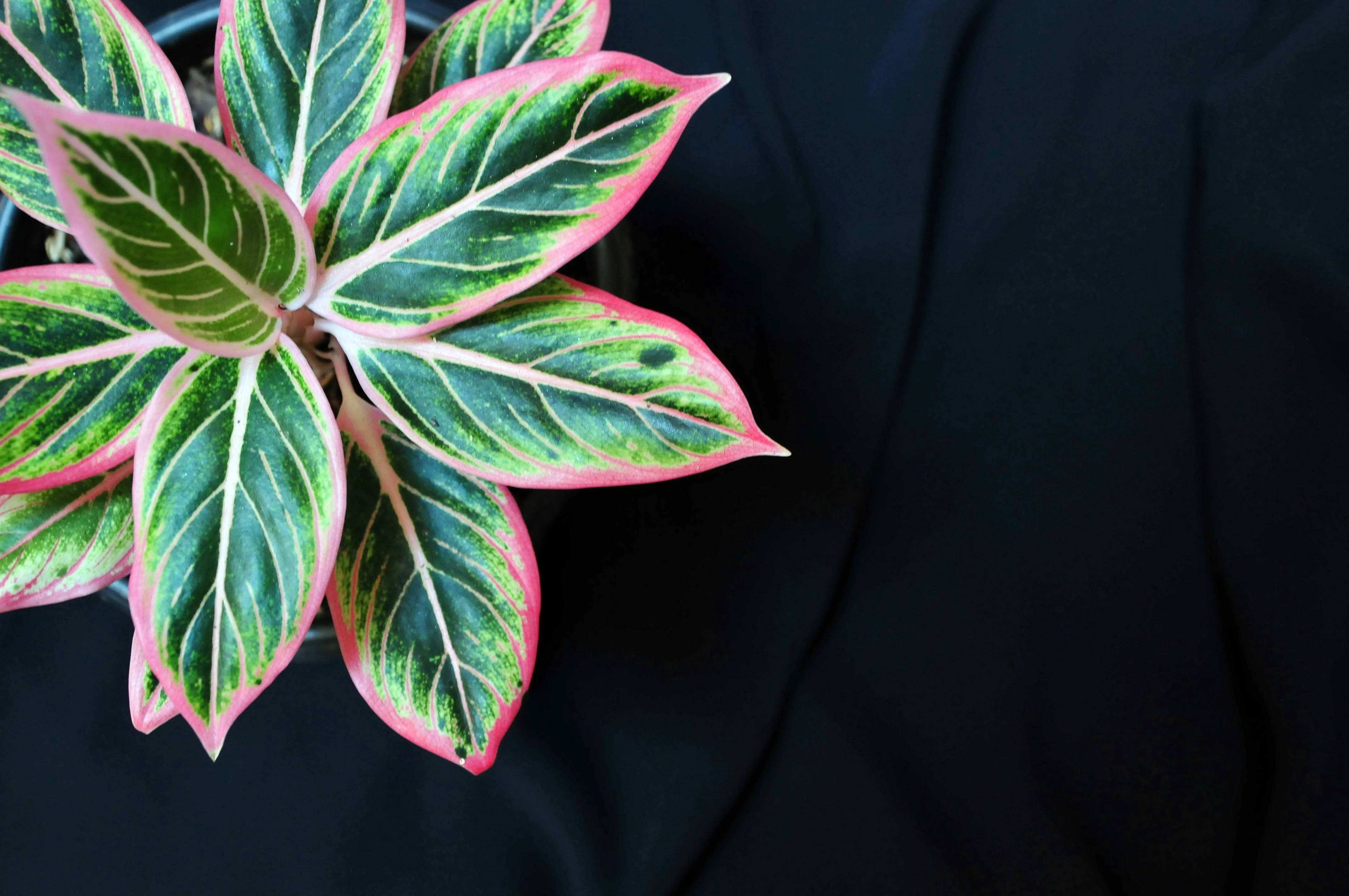
Tolerates low to moderate indirect light; classic green-silver cultivars adapt to deep shade while variegated red, pink, or yellow cultivars require brighter indirect light to maintain coloration
-
Temperature
18°C–29°C (64°F–84°F)
Growth
moderate
pH Range
6.0–7.0
-
Biggest Owner Mistake
Overwatering because the large, lush leaves suggest a high-moisture tropical plant—but aglaonemas are drought-tolerant and store water in their thick stems. Letting the soil stay wet causes root rot that often goes unnoticed until entire stems soften and collapse. Wait until the top inch is dry before watering, and reduce further in winter.
-
What Nobody Tells You
They occasionally bloom indoors with a small peace-lily-like spathe—but unlike peace lilies, the flowers divert significant energy away from the colorful foliage that's actually the plant's appeal. Many experienced growers cut the flower off as soon as it appears.
-
Real Home Conditions
In low light, variegated varieties lose their reds, pinks, and creams and revert toward plain green as the plant maximizes chlorophyll over decorative pigments. They survive shade but genuinely look much better with bright indirect light.
Quick Answer
Aglaonema (Chinese Evergreen) thrives in low to moderate indirect light, needs watering every 10–21 days depending on the season, and requires a well-draining aroid mix. Keep it away from heating vents and cold windowsills to prevent brown tips. Feed at half strength every 4–6 weeks from spring through early autumn.
You brought home an Aglaonema because everyone told you it was impossible to kill — and yet here you are, staring at brown papery leaf edges creeping inward from the tips while the plant looks progressively sadder each week. This exact pattern plays out in homes across the US, UK, Canada, and Europe every winter, and the cause is almost never what growers assume. This guide identifies the precise chain of events behind those brown edges, explains the mechanism behind each failure mode in Western indoor conditions, and gives you a seasonal care framework that works year-round.
Light Requirements
Chinese Evergreen is one of the few foliage plants that genuinely performs well in low to moderate indirect light — making it ideal for north-facing rooms, interior hallways, and office environments. The critical distinction every grower must understand is the difference between "low light" and "no light." Aglaonemas cannot sustain photosynthesis under purely artificial light alone or in windowless dark corners; they need ambient daylight or dedicated grow lighting for a minimum of 6 to 8 hours daily. Variegated cultivars with white, yellow, pink, or red leaf patterns — such as 'Red Anjamani' or 'Creta' — require brighter indirect light than the classic green-and-silver types; in true low-light conditions these revert toward green as the plant redirects energy toward survival-level photosynthesis. Avoid direct afternoon sun from south or west-facing glass — UV intensity will bleach leaf surfaces and cause permanent scorch damage.
Temperature and Heating Vents
Aglaonema's ideal temperature window is 18°C to 29°C (64°F to 84°F). The most consistent problem in Western homes is not outdoor cold — it is the microclimate created by central heating. Air flowing from a radiator or heating vent is warm but carries very low relative humidity (often 20–30%), creating a dry zone around any plant placed nearby. Leaf margins desiccate faster than the root system can compensate, producing the distinctive dry brown edges that are almost universally misdiagnosed as underwatering. Move the plant at least 60 cm from any radiator or heating vent. Cold winter windowsills present the opposite problem: even double-glazed glass can conduct outdoor cold, chilling the root zone below 13°C, which stops root function and causes yellowing and leaf drop. Keep the plant set back from the glass during winter.
Humidity
Aglaonema thrives at 50–70% relative humidity. A centrally heated home in winter often drops to 25–40% RH, causing progressive leaf-tip browning as plants lose moisture faster than their root systems can supply it. Use a humidity tray or a compact room humidifier during dry months. A pebble tray of water beneath the pot raises local humidity by 10–15% through evaporation at zero cost. Grouping multiple broadleaf tropicals together creates a shared transpiration microclimate that passively raises local humidity.
Watering
The most dangerous watering period is winter — not summer. In spring and summer, warmth and longer days mean soil dries relatively quickly and watering every 10–14 days is appropriate. In winter, low light dramatically reduces the plant's water uptake and heated indoor air slows soil evaporation less than you'd expect; the same pot that needed water every 12 days in June may now need 20 days in December. Always perform the finger-test before watering: insert a finger 3–4 cm into the soil and water only when completely dry at that depth. Water at the soil level — never into the rosette — as standing water in the growing tip creates a pathway for bacterial stem rot. If your tap water is heavily chlorinated or fluoridated, letting it stand overnight before use helps prevent progressive root tip damage.
Soil Composition and Drainage
The Aglaonema root system evolved in loose, humus-rich forest floor debris that drains almost instantly while retaining moisture around every root hair. Standard potting mix, once transferred into a closed container, compacts progressively as organic material breaks down, eliminating the air pockets roots need. Root rot follows a well-documented sequence: water fills pore spaces, creating anaerobic conditions; water-molds Pythium and Phytophthora proliferate and dissolve root cell walls; by the time above-ground symptoms appear, 40–60% of the root system is already non-functional. Use a blend of 40% coco coir, 30% perlite, and 30% compost. Water should flow freely from the drainage holes within seconds of application — if it pools on the surface, the soil is too dense.
Fertilizing Your Aglaonema
Feed with a balanced liquid fertilizer (NPK 20-20-20 or 10-10-10) diluted to half strength every 4–6 weeks from spring through early autumn. Half strength is critical: Aglaonema roots are sensitive to salt accumulation, and full-strength doses cause root tip burn that appears as sudden yellowing. Withhold fertilizer entirely through late autumn and winter. If you see a white crust on the soil surface, flush thoroughly with two to three times the pot volume of water to leach accumulated salts before resuming feeding.
Propagation Methods
Propagate through stem tip cuttings, basal stem division, or separation of rooted offsets that emerge alongside the mother plant. For stem cuttings, select a stem with 3–4 visible nodes, cut below the lowest node with a sterilized blade, remove lower leaves, and root in water or moist coco coir. In a warm room above 22°C, rooting occurs within 3–5 weeks. In cooler conditions the same process takes 6–8 weeks. Division is most efficiently done at repotting time — pull rooted offshoots apart carefully and pot individually in fresh aroid mix.
Repotting Guidelines
Repot every 2–3 years, or sooner when roots emerge from drainage holes or the plant wilts within a day or two of watering. Spring is the optimal window — plant reserves are at their seasonal peak and the growing season provides conditions for rapid root recovery. Choose a pot only 1–2 cm wider than the current one; excess soil holds moisture the roots cannot yet access and dramatically increases root rot risk. See our repotting shock rescue guide for a step-by-step process. Withhold fertilizer for 6–8 weeks after repotting.
Toxicity Information
Aglaonema is toxic to humans, cats, dogs, and other household animals. Every plant part contains calcium oxalate crystals — microscopic needle-shaped structures that embed into soft oral tissue on contact, causing immediate burning, swelling, and inflammation. In pets, ingestion triggers excessive drooling, pawing at the mouth, vomiting, and in severe cases throat swelling. Skin contact with sap can cause dermatitis in sensitive individuals. Keep well out of reach of children and pets; contact a veterinarian or poison control centre immediately if ingestion is suspected.
Common Problems and Solutions
Brown leaf-tip margins almost always trace back to dry air from heating vents or cold winter drafts — not underwatering. Increasing watering makes it worse. Yellow leaves with a soft or mushy stem base confirm root rot: unpot immediately, trim all dark soft roots to healthy white tissue, soak briefly in 3% hydrogen peroxide, and repot in fresh dry aroid mix. For mealybugs, isolate the plant immediately, treat colonies with 70% isopropyl alcohol on a cotton swab, then apply diluted neem oil (5 ml neem oil plus 2 ml dish soap per liter) to all leaf surfaces every 5 days for three full cycles.
Recommended next actions
Next Best Actions
Use calculators and guides to turn this plant profile into a practical care routine.
Calculator
Plant Watering Calculator: How Often to Water
Calculate the correct watering frequency for your plant based on species, pot size, soil type, season, and climate.
Calculator
Plant Humidity Calculator: Right Levels for Tropical Plants
Assess your home's current humidity and get specific improvement recommendations for tropical houseplants like Calatheas, Orchids, and Ferns.
Calculator
Repotting Calculator: Does Your Plant Need a Bigger Pot?
Find out if your plant needs repotting now and get the correct new pot size based on species, current pot size, and root health indicators.
Guide
Humidity Tray vs Humidifier: Which Works Better?
With over 14 years of indoor climate management across more than 1,800 diagnosed humidity-failure cases — from browning Calathea tips in air-conditioned apartments to crisping Alocasia leaves during dry winters — we've measured exactly how much humidity each method actually delivers at leaf level, and the gap is larger than most plant owners expect.
Guide
Repotting Shock Rescue: Save Your Wilting Houseplant
After rehabilitating stressed nursery stock and rescuing more than 1,500 cases of severe transplant collapse over 12 years, we have mapped the precise physiological timeline of repotting shock and the critical rescue steps required to prevent total hydraulic failure.
Guide
ZZ Plant Care Guide: Light, Water & Rhizome Tips
After growing ZZ plants across offices, low-light apartments, and sun-drenched rooms for over eight years, we have worked out exactly how this rhizome-powered survivor operates — and why the growers who kill it are almost always doing one specific thing wrong.
Structured Plant Data
Plant Data Profile
Care values below are generated from the plant JSON fields so users and crawlers can read the structured plant profile directly on the page.
Growth Characteristics
Growth Rate
moderate
Mature Height
60–90 cm (compact cultivars 30–45 cm)
Mature Spread
45–75 cm
Life Cycle
Perennial
Flowering Season
Rarely flowers indoors; occasional small white spathe flowers possible in spring–summer under bright indirect light
Container Friendly
yes
Indoor Capable
yes
Environmental Parameters
| Parameter | Recommended | Survivable |
|---|---|---|
| Temperature | 18°C–29°C (64°F–84°F) | 13°C–38°C (55°F–100°F) |
| Humidity | 50%–70% RH | 30%–85% RH |
| Soil PH | 6.0–7.0 | 5.5–7.5 |
Lighting
Description
Tolerates low to moderate indirect light; classic green-silver cultivars adapt to deep shade while variegated red, pink, or yellow cultivars require brighter indirect light to maintain coloration
Nutrients
Nitrogen Demand
moderate
Phosphate Demand
low
Potassium Demand
moderate
Micronutrient Notes
Benefits from occasional magnesium supplementation if older leaves show interveinal chlorosis; dissolve a pinch of Epsom salt (magnesium sulphate) in irrigation water once every 6–8 weeks
Fertilizer Frequency
Every 4–6 weeks during active growth (spring through early autumn); withhold entirely from late autumn through winter
Organic Options
Worm casting tea for balanced nutrition; seaweed extract for micronutrients; slow-release organic pellets as a top-dressing
Relationships
-
Root Rot
Vulnerability | Strength 9
Highly susceptible in winter when low light reduces water uptake and heated indoor air slows soil evaporation; dense soil or oversized pots dramatically increase risk
-
Mealybugs
Vulnerability | Strength 7
Mealybugs colonise leaf axils and stem junctions; stress from dry centrally heated air lowers plant immunity and accelerates infestations
-
Spider Mites
Vulnerability | Strength 5
Occur primarily in dry centrally heated rooms in winter; inspect leaf undersides regularly and increase humidity to deter them
Aglaonema Variety Comparison
| Variety | Key Feature | Mature Size |
|---|---|---|
| Silver Bay | Broad silver-green variegated leaves; most shade-tolerant cultivar; ideal for dark north-facing rooms | 60–90 cm |
| Red Anjamani | Vivid red and pink leaf coloration; requires moderately brighter indirect light to maintain pigmentation | 40–60 cm |
| Creta | Compact white-green variegation with a neat rosette form; excellent for tabletops and office desks | 30–45 cm |
Troubleshooting Guide
1 Brown, dry margins creeping inward from leaf tips on otherwise green leaves
Cause: Dry air from central heating or heating vents, creating a dehydration gradient in leaf margin cells that outpaces root-supplied moisture
Move the plant away from radiators and heating vents; add a humidity tray or compact humidifier nearby; do not increase watering frequency as the root cause is atmospheric, not hydration-related
2 Widespread yellowing of multiple leaves combined with soft, mushy stem base
Cause: Root rot caused by overwatering in compacted or dense soil, most commonly in winter when low light reduces the plant's water uptake
Unpot immediately; trim all black, brown, or mushy root sections to healthy white tissue; soak trimmed roots in 3% hydrogen peroxide for 5 minutes; repot in fresh, dry aroid mix (40% coco coir, 30% perlite, 30% compost) in a clean container with drainage holes
3 White cottony masses clustered in leaf axils and along stem joints
Cause: Mealybug infestation, accelerated by plant stress from dry centrally heated air which reduces the plant's natural pest resistance
Isolate the plant immediately; treat all visible colonies with a cotton swab dipped in 70% isopropyl alcohol; follow with neem oil spray (5 ml neem oil plus 2 ml dish soap per liter water) applied to all leaf surfaces every 5 days for 3 complete treatment cycles
Glossary of Terms
- Aroid Mix
- A specialized, fast-draining potting blend designed for plants in the Araceae family (aroids), typically combining coco peat or orchid bark for moisture retention, perlite or coarse sand for macro-drainage, and compost for nutrition. It mimics the loose, humus-rich forest floor conditions where aroids naturally grow and prevents the anaerobic soil conditions that cause root rot.
- Calcium Oxalate Crystals
- Microscopic, needle-shaped insoluble crystals (raphides) produced and stored in the cell vacuoles of many plants in the Araceae family, including Aglaonema. When plant tissue is chewed or cut, the crystals are mechanically released and embed into soft tissue, causing immediate pain, burning, and inflammation in the mouth and digestive tract of humans and animals.
- Transpiration
- The physiological process by which water absorbed by plant roots travels upward through the stem and is released as water vapor through microscopic pores (stomata) on the leaf surface. Transpiration drives nutrient transport, regulates leaf temperature, and creates the turgor pressure that keeps leaves firm. In AC environments with very low humidity and cold drafts, transpiration is dramatically accelerated at leaf margins, causing desiccation and browning before the root system can compensate.