Brown Tips: Diagnostic Treatment
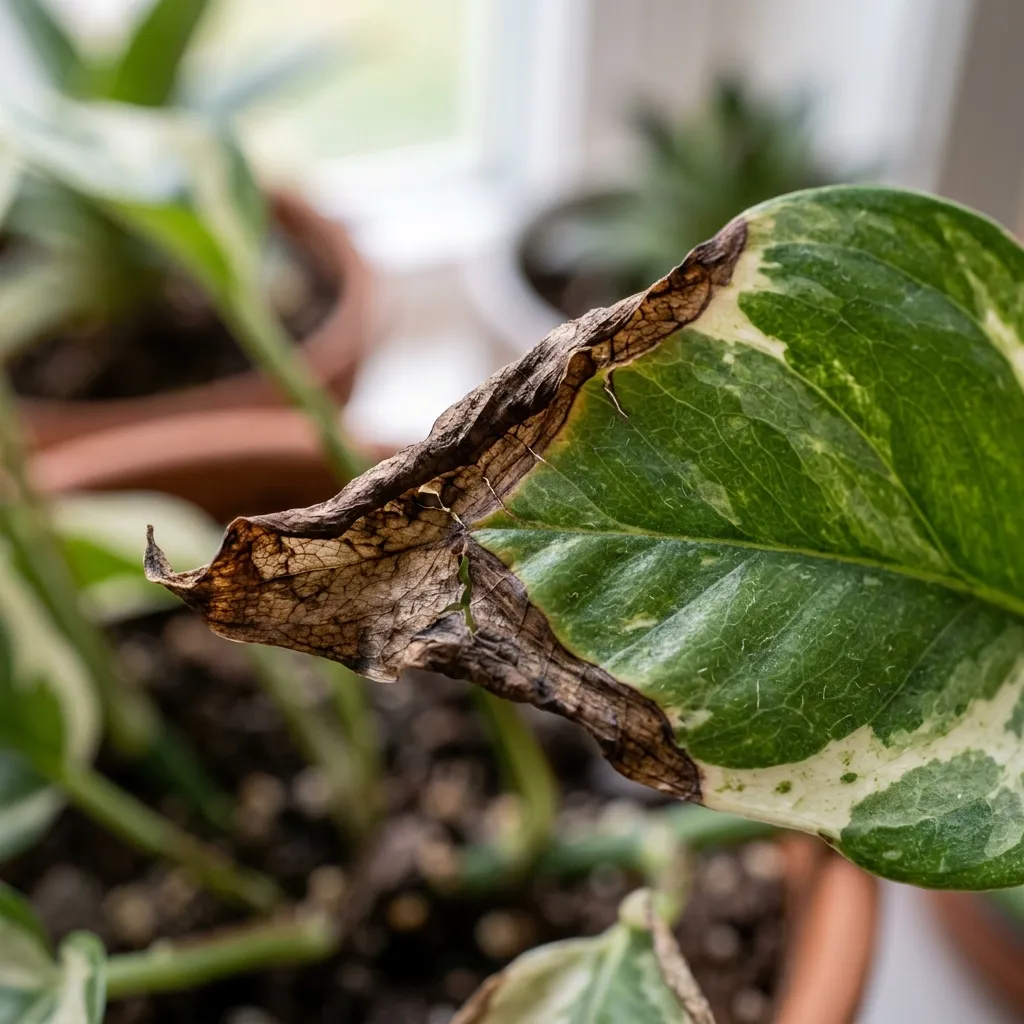
Brown tips, also called leaf tip burn, appear when a plant's cells become damaged under stress, most often related to disrupted water balance. Overwatering, underwatering, low humidity, high temperatures, and direct sun exposure can all produce this symptom, making diagnosis dependent on ruling out each possibility. Because brown tips are a visible signal of an underlying imbalance rather than a standalone problem, addressing only the cosmetic symptom by trimming leaves without correcting the root cause typically allows the issue to recur or spread.
Quick Answer
Brown tips, or leaf tip burn, result from a plant's inability to regulate water balance, commonly caused by overwatering, underwatering, low humidity, or mineral buildup from tap water. Trimming affected tips won't fix the underlying cause, so identifying whether it's a watering, humidity, or water-quality issue is essential. Left unaddressed, brown tips can spread further into the leaf.
What Is Brown Tips?
Brown tips, also known as leaf tip burn, is a common problem that affects many types of plants. It is characterized by the appearance of brown or yellowish-brown tips on the leaves of a plant, which can be caused by a variety of factors, including overwatering, underwatering, high temperatures, low humidity, and exposure to direct sunlight. The underlying botanical science behind brown tips is related to the plant's ability to regulate its water balance and maintain its cellular structure. When a plant is exposed to stress, its cells can become damaged, leading to the formation of brown tips.
The reason why brown tips matter for plant health is that it can be a sign of a larger problem. If left unchecked, brown tips can spread to other parts of the plant, causing further damage and potentially leading to the death of the plant. Therefore, it is essential to identify the cause of brown tips and take corrective action to prevent further damage.
Brown tips can be caused by a combination of factors, including environmental conditions, nutrient deficiencies, and pests or diseases. For example, plants that are exposed to high temperatures (above 85°F/30°C) or low humidity (below 40%) can develop brown tips due to water loss and cellular damage. Similarly, plants that are deficient in essential nutrients, such as nitrogen, phosphorus, or potassium, can also develop brown tips.
Signs and Symptoms
- Brown or yellowish-brown tips on the leaves
- Leaf curl or drooping
- Yellowing or browning of the leaves
- Slow growth or stunted growth
- Increased susceptibility to pests or diseases
Step-by-Step: How to Treat Brown Tips
- Check the plant's watering schedule and adjust it to ensure that the plant is receiving the right amount of water. Water the plant when the top 1-2 inches (2.5-5 cm) of soil feels dry to the touch, and avoid getting water on the leaves to prevent fungal diseases.
- Adjust the plant's temperature to a range of 65-75°F (18-24°C) during the day and 55-65°F (13-18°C) at night to promote healthy growth and prevent stress.
- Increase the humidity around the plant to a range of 50-70% by placing the plant on a tray filled with water and pebbles or using a humidifier to prevent water loss and cellular damage.
- Provide the plant with bright, indirect light, but avoid direct sunlight, which can cause burning and scorching of the leaves. East- or west-facing windows are ideal for most plants.
- Fertilize the plant with a balanced fertilizer (10-10-10 NPK) at a concentration of 1-2 teaspoons per gallon (5-10 mL/L) of water to provide essential nutrients for healthy growth.
- Prune the plant to remove any damaged or diseased leaves or stems, making clean cuts just above a node using sterile pruning tools to prevent the spread of disease.
- Monitor the plant's progress and adjust its care as needed to ensure that the plant is receiving the right amount of water, nutrients, and light.
Best Practices and Pro Tips
- Watering Schedule: Water the plant when the top 1-2 inches (2.5-5 cm) of soil feels dry to the touch, and avoid getting water on the leaves to prevent fungal diseases.
- Temperature Control: Keep the plant in a room with a consistent temperature between 65-75°F (18-24°C) during the day and 55-65°F (13-18°C) at night to promote healthy growth and prevent stress.
- Humidity Levels: Maintain a humidity level of 50-70% around the plant to prevent water loss and cellular damage.
- Fertilization: Fertilize the plant with a balanced fertilizer (10-10-10 NPK) at a concentration of 1-2 teaspoons per gallon (5-10 mL/L) of water to provide essential nutrients for healthy growth.
- Pruning: Prune the plant regularly to remove any damaged or diseased leaves or stems, making clean cuts just above a node using sterile pruning tools to prevent the spread of disease.
Quick Reference Table
| Factor | Recommended Range | Why It Matters |
|---|---|---|
| Temperature | 65-75°F (18-24°C) during the day, 55-65°F (13-18°C) at night | Regulates growth and prevents stress |
| Humidity | 50-70% | Prevents water loss and cellular damage |
| Watering | Water when top 1-2 inches (2.5-5 cm) of soil feels dry | Prevents overwatering and underwatering |
| Fertilization | 1-2 teaspoons per gallon (5-10 mL/L) of water | Provides essential nutrients for healthy growth |
| Lighting | Bright, indirect light, avoiding direct sunlight | Prevents burning and scorching of the leaves |
Plants Most Susceptible to Brown Tips
Some plants are more susceptible to brown tips than others. The Dracaena marginata (Red-Edged Dracaena) is one such plant, which can develop brown tips due to overwatering or underwatering. The Spider Plant (Chlorophytum comosum) is another plant that can develop brown tips due to low humidity or exposure to direct sunlight. The Peace Lily (Spathiphyllum wallisii) is also prone to brown tips, which can be caused by a combination of factors, including overwatering, underwatering, and low humidity. The Snake Plant (Sansevieria trifasciata) is a low-maintenance plant that can develop brown tips due to neglect or poor care. The Philodendron (Philodendron spp.) is a popular houseplant that can develop brown tips due to overwatering or underwatering. The Pothos (Epipremnum aureum) is a versatile plant that can develop brown tips due to low humidity or exposure to direct sunlight.
For more information on how to care for these plants, as we explain in our Leaf Propagation guide, which we cover in detail in our Fertilizer article, and see our Pruning guide for a deeper look at how to prune your plants to prevent brown tips.
Common Mistakes to Avoid
- Overwatering: Watering the plant too frequently can cause the roots to rot, leading to brown tips. Check the soil moisture by inserting a finger into the soil up to the first knuckle, and water only when the top 1-2 inches (2.5-5 cm) of soil feels dry.
- Underwatering: Failing to water the plant regularly can cause the leaves to become scorched and develop brown tips. Water the plant when the top 1-2 inches (2.5-5 cm) of soil feels dry, and avoid getting water on the leaves to prevent fungal diseases.
- Low Humidity: Failing to maintain a humid environment can cause the plant to lose water and develop brown tips. Use a humidifier to maintain a humidity level of 50-70% around the plant.
- Direct Sunlight: Exposing the plant to direct sunlight can cause the leaves to become scorched and develop brown tips. Provide the plant with bright, indirect light, avoiding direct sunlight.
- Poor Fertilization: Failing to fertilize the plant regularly can cause it to become deficient in essential nutrients, leading to brown tips. Fertilize the plant with a balanced fertilizer (10-10-10 NPK) at a concentration of 1-2 teaspoons per gallon (5-10 mL/L) of water.
What is the success rate of treating brown tips?
The success rate of treating brown tips depends on the underlying cause of the problem. If the cause is due to overwatering or underwatering, the success rate can be as high as 90% if the plant is given the right amount of water and care. However, if the cause is due to a more serious problem, such as root rot or a pest infestation, the success rate can be lower, around 50-60%.
What is the best season to treat brown tips?
The best season to treat brown tips is during the spring and summer months when the plant is actively growing. During this time, the plant is more responsive to treatment and can recover more quickly from damage. However, it's essential to monitor the plant's progress and adjust its care as needed, regardless of the season.
Is pruning a mandatory step in treating brown tips?
Pruning is not always a mandatory step in treating brown tips, but it can be beneficial in removing damaged or diseased leaves or stems. Pruning can help prevent the spread of disease and promote healthy growth. However, it's essential to prune the plant correctly, making clean cuts just above a node using sterile pruning tools, to prevent further damage.
What aftercare is required after treating brown tips?
After treating brown tips, it's essential to monitor the plant's progress and adjust its care as needed. This includes checking the soil moisture, adjusting the watering schedule, and providing the plant with the right amount of nutrients and light. It's also essential to maintain a humid environment and avoid exposing the plant to direct sunlight.
How do I troubleshoot brown tips that persist after treatment?
If brown tips persist after treatment, it's essential to re-evaluate the plant's care and environment. Check the soil moisture, temperature, and humidity levels, and adjust them as needed. Also, inspect the plant for any signs of pests or diseases, and take corrective action if necessary. It's also essential to consider the plant's nutritional needs and adjust the fertilization schedule accordingly.
Frequently Asked Questions
What is the success rate of treating brown tips?
The success rate of treating brown tips depends on the underlying cause of the problem. If the cause is due to overwatering or underwatering, the success rate can be as high as 90% if the plant is given the right amount of water and care. However, if the cause is due to a more serious problem, such as root rot or a pest infestation, the success rate can be lower, around 50-60%.
What is the best season to treat brown tips?
The best season to treat brown tips is during the spring and summer months when the plant is actively growing. During this time, the plant is more responsive to treatment and can recover more quickly from damage. However, it's essential to monitor the plant's progress and adjust its care as needed, regardless of the season.
Is pruning a mandatory step in treating brown tips?
Pruning is not always a mandatory step in treating brown tips, but it can be beneficial in removing damaged or diseased leaves or stems. Pruning can help prevent the spread of disease and promote healthy growth. However, it's essential to prune the plant correctly, making clean cuts just above a node using sterile pruning tools, to prevent further damage.
What aftercare is required after treating brown tips?
After treating brown tips, it's essential to monitor the plant's progress and adjust its care as needed. This includes checking the soil moisture, adjusting the watering schedule, and providing the plant with the right amount of nutrients and light. It's also essential to maintain a humid environment and avoid exposing the plant to direct sunlight.
How do I troubleshoot brown tips that persist after treatment?
If brown tips persist after treatment, it's essential to re-evaluate the plant's care and environment. Check the soil moisture, temperature, and humidity levels, and adjust them as needed. Also, inspect the plant for any signs of pests or diseases, and take corrective action if necessary. It's also essential to consider the plant's nutritional needs and adjust the fertilization schedule accordingly.
Explore More
Related Topics
Related Plant Guides
No specific plant guides found matching this topic.
Recommended next actions
Continue Exploring
Dive deeper into related plant care tools and profiles.
Topic Guide
Leaf Propagation
Learn everything about leaf propagation for your indoor and aquarium plants. Expert care tips, troubleshooting, and related guides.
Topic Guide
Fertilizer
Learn everything about fertilizer for your indoor and aquarium plants. Expert care tips, troubleshooting, and related guides.