Anubias Nana Care: The Complete Aquarium Plant Guide for Beginners
Anubias barteri var. nana
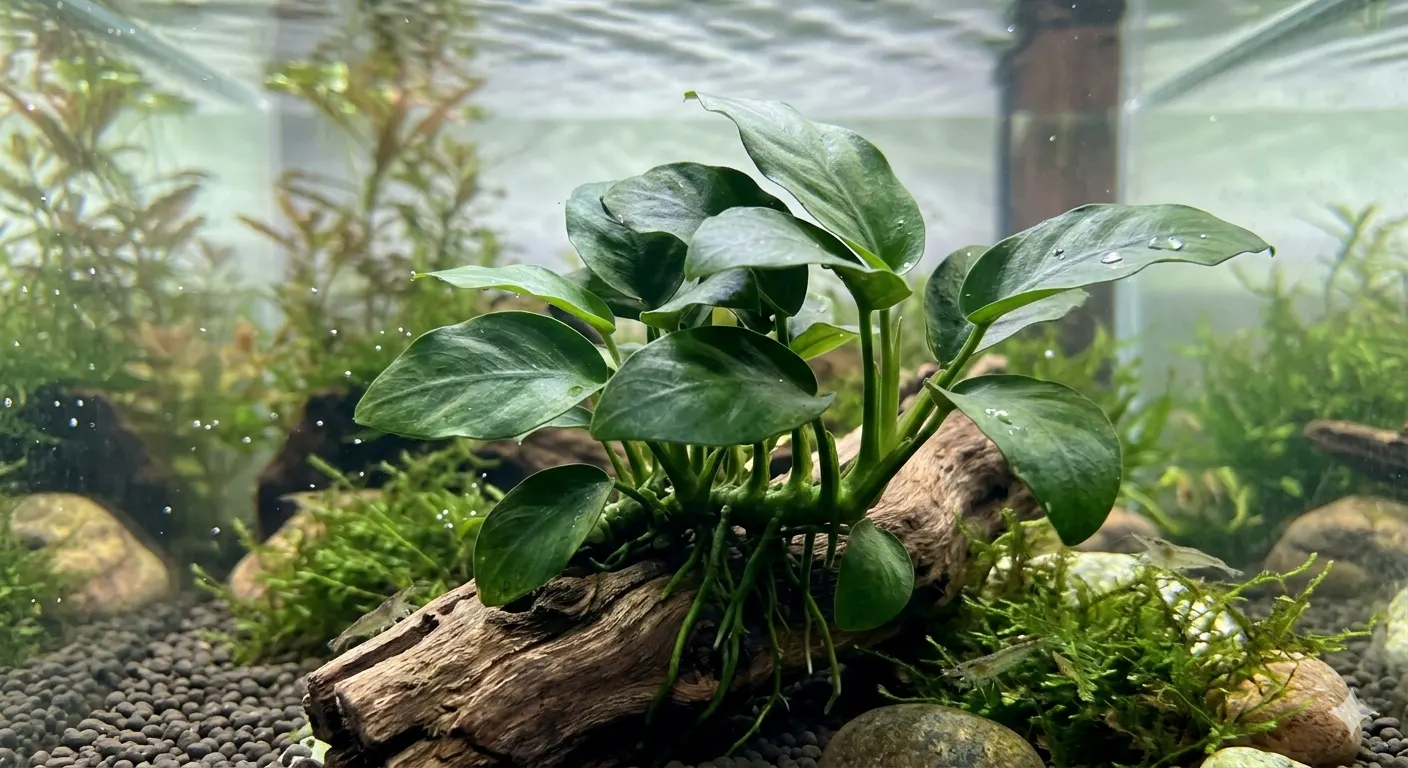
Anubias Nana is a hardy, slow-growing, low-light epiphyte perfect for beginner aquariums and aquascaping.
-
Light
Thrives in low to medium light conditions.
-
Temperature
22-28°C (72-82°F)
Growth
very slow
pH Range
6.0-7.5
-
Biggest Owner Mistake
Burying the rhizome (the thick horizontal stem) in the substrate—when covered, it rots and kills the plant within weeks. The rhizome must remain fully exposed above the substrate; only the roots should be anchored, ideally by attaching the plant to driftwood or rock.
-
What Nobody Tells You
Green spot algae on the leaves is nearly inevitable in any lit aquarium, but it's cosmetic and doesn't harm the plant—adding Amano shrimp or nerite snails clears it naturally without chemicals. CO₂ injection is unnecessary and can actually promote more algae growth.
-
Real Home Conditions
In brightly lit tanks, leaves quickly become coated in algae because Anubias grows too slowly to outcompete algae for nutrients. Positioning it in shaded areas under floating plants is the most effective long-term solution.
Quick Answer
Anubias Nana is a slow-growing, low-light aquatic plant that must be attached to rocks or driftwood, never buried in substrate. It thrives in stable freshwater conditions with low to medium lighting.
Overview
Anubias Nana is arguably the most resilient plant in the aquarium hobby. Native to the streams of West Africa, it is an epiphyte, meaning it naturally grows on rocks and wood rather than in soil. Its thick, dark green leaves provide excellent cover for shy fish and resting spots for slow-swimming species.
Its slow growth rate makes it an ideal choice for aquascapers who want a low-maintenance setup. It can adapt to a wide range of water parameters, making it beginner-friendly.
- Anubias Nana is a true aquatic plant that is perfect for low-tech setups.
- Its leathery leaves make it resistant to most herbivorous fish, such as goldfish.
- It is commonly used as a foreground or midground plant in freshwater aquariums.
- The plant helps improve water quality by absorbing excess nitrates.
Botanical Profile
The botanical name is Anubias barteri var. nana. It is a slow-growing aquatic herb with dark green, broad leaves that are thick and leathery to the touch.
The plant features a rhizome—a horizontal stem that grows along the surface. This rhizome is the most vital part of the plant and should never be buried.
- Anubias Nana is small, typically reaching only 2-4 inches in height.
- It can be propagated easily by cutting the rhizome into pieces, ensuring each piece has at least 3-4 healthy leaves.
- The plant can flower underwater in healthy aquarium conditions, producing a small white spathe.
Light and Placement
Anubias Nana prefers low to medium light. It is highly adaptable but thrives best when shaded from direct, intense light to prevent algae accumulation on its leaves.
Place it attached to driftwood, rocks, or other hardscape features in the foreground or midground of your aquarium.
- Avoid placing the plant directly under high-intensity lighting.
- If you notice Green Spot Algae on the leaves, move the plant to a shaded area or reduce your light duration.
- Good water circulation around the rhizome is essential for preventing rot.
Care and Maintenance
The most important rule for Anubias is to keep the rhizome exposed to the water column. If buried, it will rot. Attaching it to hardscape is the standard method.
Maintenance is minimal. Occasional pruning of dead or decaying leaves is all that is required to keep the plant healthy.
- Remove decaying leaves promptly to maintain water quality.
- Clean the leaves gently if they become covered in algae or detritus.
- Ensure the aquarium water has good oxygenation and filtration.
Propagation Methods
Propagation is straightforward and usually done by division. Use a clean, sharp pair of scissors or a razor blade to cut the rhizome.
Each section must have a piece of the rhizome and several leaves to survive. Once cut, reattach the pieces to rocks or wood using fishing line or glue.
- Sterilize tools before cutting to prevent infection.
- Allow the cut section to heal for a few minutes before attaching.
- The plant will slowly re-establish its root system on the new surface.
Common Problems and Troubleshooting
Anubias Nana is generally hardy, but 'melting' or rhizome rot is the most common issue. This is usually due to poor water flow or burying the rhizome.
Algae issues, specifically Green Spot Algae, are common due to the plant's slow growth rate.
- Monitor for signs of rhizome decay (mushy texture, bad smell).
- Ensure regular water changes to maintain stable parameters.
- Adjust light levels if algae becomes a persistent problem on the leaves.
Recommended next actions
Next Best Actions
Use calculators and guides to turn this plant profile into a practical care routine.
Calculator
Watering Calculator
Calculate the correct watering frequency for your plant based on species, pot size, soil type, season, and climate.
Calculator
Sunlight Calculator
Determine the ideal indoor light placement for your plant based on species, window direction, and seasonal light availability.
Plant Guide
Java Fern
Ultimate Java Fern (Microsorum pteropus) care guide. Learn planting, propagation, solving black leaves, potassium deficiency, and the best low-tech aquarium setup.
Guide
Tap Water for Houseplants: Which Plants Are Sensitive and What to Use Instead
Most houseplants tolerate tap water without issue — but a specific group of fluoride-sensitive and mineral-sensitive plants develop brown leaf tips, bleached patches, and stunted growth from ordinary municipal water. This guide explains the chemistry, identifies which plants are actually at risk, and gives you the cheapest effective fix for each scenario.
Guide
ZZ Plant Care Guide: Growing Zamioculcas Zamiifolia Indoors
After growing ZZ plants across offices, low-light apartments, and sun-drenched rooms for over eight years, we have worked out exactly how this rhizome-powered survivor operates — and why the growers who kill it are almost always doing one specific thing wrong.
Guide
Snake Plant Care Guide: Growing Dracaena Trifasciata Indoors
After growing snake plants across a decade in environments ranging from near-windowless offices to sun-drenched conservatories, we've identified the handful of conditions that make or break this supposedly indestructible plant — and overwatering tops the list every time.
Structured Plant Data
Plant Data Profile
Care values below are generated from the plant JSON fields so users and crawlers can read the structured plant profile directly on the page.
Growth Characteristics
Growth Rate
very slow
Mature Height
2-4 inches
Mature Spread
3-6 inches
Life Cycle
Perennial
Flowering Season
rare (can flower submerged)
Container Friendly
yes
Indoor Capable
yes
Environmental Parameters
| Parameter | Recommended | Survivable |
|---|---|---|
| Temperature | 22-28°C (72-82°F) | 20-30°C (68-86°F) |
| Humidity | N/A (Aquatic) | N/A |
| Soil PH | 6.0-7.5 | 5.5-8.0 |
Lighting
Description
Thrives in low to medium light conditions.
Nutrients
Nitrogen Demand
low
Phosphate Demand
low
Potassium Demand
low
Micronutrient Notes
Absorbs nutrients primarily through the water column.
Fertilizer Frequency
Liquid fertilizer once every 2 weeks.
Organic Options
Root tabs can be used if planted in substrate (though not recommended for the rhizome).
Relationships
-
Light
Requirement | Strength 7
Low light is preferred; excessive light encourages algae growth on the leaves.
-
Rhizome Exposure
Requirement | Strength 10
The rhizome must be exposed to water flow; burying it will cause rot.
-
Green Spot Algae
Vulnerability | Strength 8
Slow growth makes it susceptible to Green Spot Algae in high-light conditions.
Anubias Varieties & Requirements
| Variation | Light Requirement | Growth Rate | Difficulty |
|---|---|---|---|
| Anubias Nana | Low | Very Slow | Easy |
| Anubias Nana Petite | Low to Medium | Very Slow | Easy |
| Anubias Barteri | Low | Slow | Easy |
Troubleshooting Guide
1 Rhizome Rot
Cause: Buried in substrate or poor water flow
Remove from substrate, attach to hardscape, and ensure water movement around the rhizome.
2 Algae on Leaves
Cause: Too much light or excess nutrients
Move to a shaded area or reduce the daily light photoperiod.
3 Melting Leaves
Cause: Nutrient deficiency or transplant shock
Ensure liquid fertilization; remove dead leaves to encourage new growth.
Glossary of Terms
- Rhizome
- The thick, horizontal stem of the plant from which roots and leaves grow. This part must remain above the substrate.
- Epiphyte
- A plant that grows on the surface of another object, such as a rock or piece of wood, rather than rooting in soil.
- Aquascaping
- The craft of arranging aquatic plants, rocks, stones, and driftwood in an aesthetically pleasing manner within an aquarium.
Scientific References
- Anubias barteri var. nana - Aquatic Plant Central
- Anubias Genus Care Guide - Tropica