Snake Plant Care Guide (Sansevieria): How to Grow It Indoors
After growing snake plants across a decade in environments ranging from near-windowless offices to sun-drenched conservatories, we've identified the handful of conditions that make or break this supposedly indestructible plant — and overwatering tops the list every time.
Quick Answer
Snake Plant Care Guide: Water only when the soil has dried out completely (every 2–4 weeks in summer, monthly in winter), use a fast-draining cactus mix, and place in bright indirect to low indirect light. Overwatering in dense soil is the primary cause of snake plant death. Propagate variegated varieties by division only — leaf cuttings produce plain green offspring.
Key Takeaways
- Water sparingly every 2 to 4 weeks, allowing soil to dry completely.
- Tolerate low ambient light, but provide bright indirect light for best growth.
- Use gritty, fast-draining cactus and succulent potting mixes.
- Propagate variegated cultivars by root division to preserve leaf striping.
The Snake Plant: Genuinely Hard to Kill, But Not Impossible
Snake plants have earned their reputation as the houseplant world's most forgiving survivor, and that reputation is largely deserved. They tolerate low light, infrequent watering, irregular feeding, and general neglect with a patience that most other tropical houseplants simply do not possess. Over a decade of growing them across offices, apartments, and houses with wildly varying conditions, we have watched snake plants thrive in spots where almost nothing else would. We have also watched them die — and when they die, it is almost always for one of two reasons: overwatering, or being planted in the wrong soil.
One important note before we begin: you will find this plant sold under two scientific names. Sansevieria trifasciata is the name most growers, nurseries, and plant retailers still use, and the one you are most likely to see on a label. In 2017, taxonomists formally reclassified the entire Sansevieria genus into Dracaena based on genetic evidence, making the correct current name Dracaena trifasciata. Both names refer to the same plant. Throughout this guide we use both interchangeably, as the horticultural world currently does.
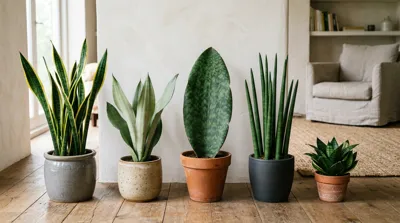
Popular Snake Plant Varieties
Dracaena Trifasciata 'Laurentii'
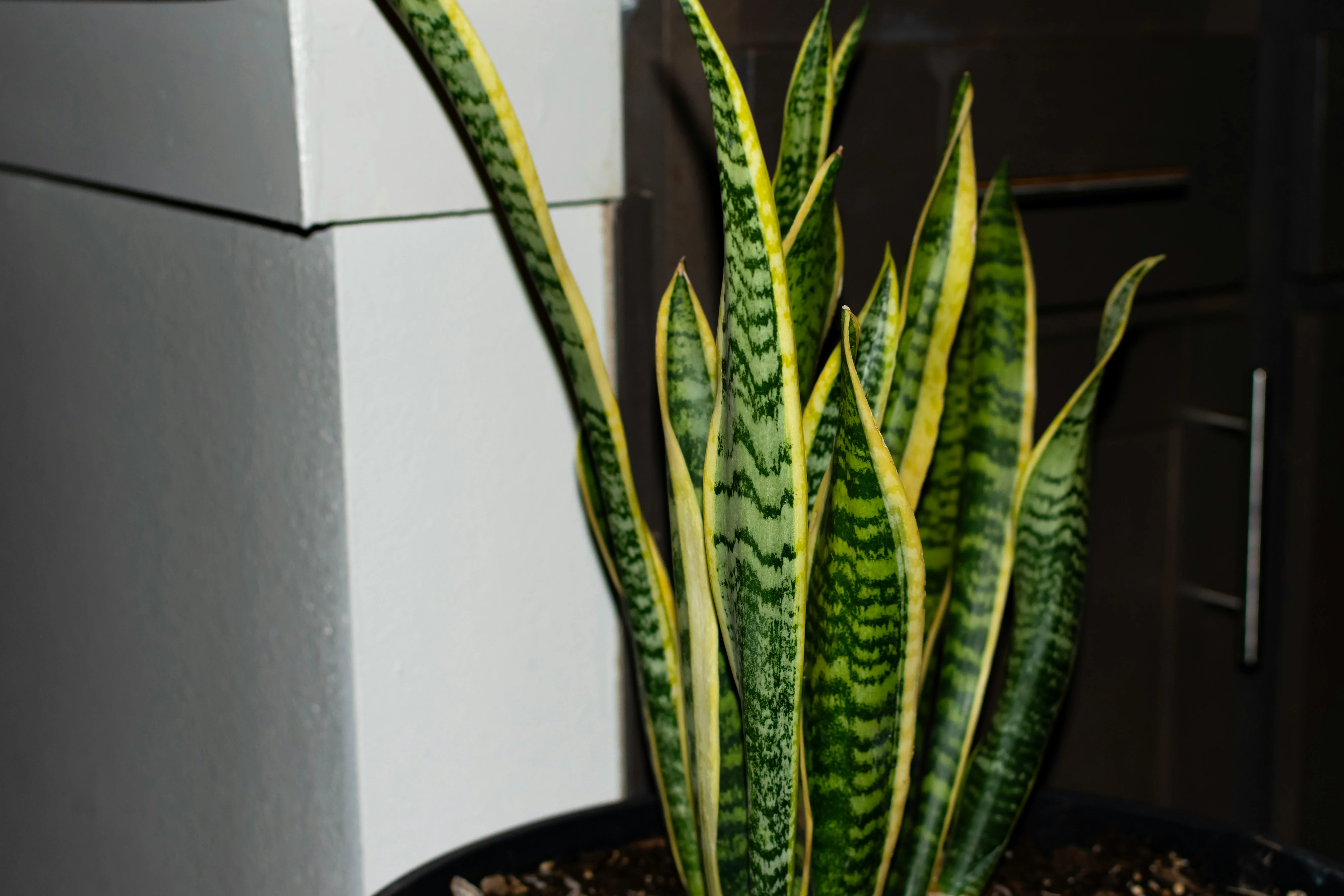
The most widely sold and recognized variety, with upright sword-shaped leaves banded in dark and light green, edged with a bright yellow-gold margin running the full length. It typically reaches 60–120 cm (2–4 feet) indoors. Important for propagation: 'Laurentii' cannot be propagated true-to-type from leaf cuttings — divisions from the root base are required to preserve the yellow margins.
Dracaena Trifasciata 'Black Gold'
Similar upright form to 'Laurentii' but with darker, almost charcoal-green leaf centres and a narrower gold edge. It is slightly more compact and one of the most architectural-looking varieties for modern interiors.
Dracaena Trifasciata 'Moonshine'
A striking cultivar with broad, upright leaves in a pale silver-green that is almost white under bright light. It is one of the most visually distinctive snake plant varieties and grows more slowly than the standard form. Light levels directly impact the silver coloration — more light produces a paler, brighter tone.
Dracaena Trifasciata 'Hahnii' (Bird's Nest Snake Plant)
A compact dwarf form that grows in a low, rosette shape rather than upright. It typically reaches only 15–20 cm (6–8 inches) tall, making it ideal for small spaces, desks, and windowsills. Care requirements are identical to the full-sized forms.
Dracaena Cylindrica (African Spear Plant)
Closely related and often sold alongside Sansevieria varieties, this species produces smooth, cylindrical spear-like leaves rather than flat blades. It is equally drought-tolerant and shares the same care requirements. The braided or fan-shaped arrangements sold in garden centres are created by training multiple young plants together.
The NASA Air Purification Claim: What the Research Actually Says
Snake plants are frequently marketed as powerful air purifiers based on a 1989 NASA study that tested various houseplants for their ability to remove volatile organic compounds (VOCs) such as benzene and formaldehyde from sealed test chambers. The study did confirm that Sansevieria trifasciata removed measurable quantities of certain VOCs. However, subsequent peer-reviewed research has consistently shown that the number of plants required to meaningfully improve air quality in a ventilated room is far higher than any practical home setting — estimates range from 10 to 1,000 plants per square metre depending on air exchange rate. Your snake plant contributes something to your indoor air quality, but it is not a replacement for ventilation. Grow them because they are beautiful and low-maintenance, not because of outsized air purification expectations.
Essential Care Requirements
Temperature
60–85°F (15–29°C) covers the full comfortable range. Snake plants are tropical natives and do not tolerate cold well — temperatures below 50°F (10°C) cause cellular damage to the leaves, resulting in soft, mushy patches that do not recover. Keep them away from draughty windows, exterior doors, and air conditioning vents that direct cold air onto the foliage. They are not frost-hardy and must be brought indoors before autumn temperatures drop in temperate climates.
Humidity
Average indoor humidity of 30–50% is perfectly adequate. This is one of the few houseplants that genuinely does not benefit from additional humidity — it is adapted to the seasonally dry conditions of tropical west Africa and handles the dry air produced by winter central heating without any symptoms. No humidifier, no misting, no pebble tray required.
Light
Snake plants tolerate a wider light range than almost any other popular houseplant — from bright indirect light to genuinely low-light conditions such as a north-facing room or a spot several metres from a window. However, tolerating low light is not the same as thriving in it. In bright indirect light, snake plants produce new leaves regularly and maintain the most vivid coloration. In low light, growth slows significantly and may stall entirely, and variegated varieties may lose contrast and intensity in their patterning. Direct midday sun through unfiltered glass can scorch the leaf tips and edges over time.
Watering
This is where the majority of snake plant failures occur, including among experienced houseplant growers. Snake plants store water in their thick, fleshy leaves and rhizomes, which means they have substantial reserves to draw on between waterings. In summer, water only when the soil has dried out completely from top to bottom — this typically means every 2–4 weeks depending on pot size, soil type, and ambient temperature. In winter, once a month or even less is often sufficient. When you do water, water thoroughly so it drains freely from the base. Then empty the saucer and wait until the soil is completely dry again before repeating. The single most reliable test is to push your finger 5–7 cm (2–3 inches) into the soil — if there is any moisture at that depth, do not water.
Soil
A fast-draining, low-peat mix is essential. A cactus and succulent potting mix is the most widely available option and works well straight from the bag. Alternatively, blend 50% standard potting mix with 40% perlite and 10% coarse horticultural sand. The goal is a mix that drains within seconds of watering and does not retain moisture for extended periods. Standard all-purpose potting mix retains too much water for snake plants and is the most common soil-related cause of root rot in this species.
Pot Choice
Terracotta pots are the best choice for snake plants. The porous clay walls allow moisture to evaporate through the sides, significantly reducing the time the soil stays wet after watering. Snake plants also develop strong, expanding rhizomes that can crack brittle plastic or ceramic pots over time — a well-documented phenomenon that surprises many growers who do not expect a slow-growing plant to exert that kind of pressure. Terracotta is more forgiving. Whatever material you choose, drainage holes are non-negotiable.
Why Leaf Cuttings Lose Their Variegation
Snake plants are easily propagated from leaf cuttings placed in water or moist soil — but there is a critical caveat that most guides bury or omit entirely. Variegated cultivars such as 'Laurentii' (gold margins) and 'Moonshine' (silver coloration) cannot be propagated true-to-type from leaf cuttings. The new plants that emerge from leaf cuttings will revert to the plain, non-variegated form of the species — solid mid-green leaves with no margins or silver tones. To produce a new plant that retains the exact variegation of the parent, you must propagate by division: separate a rooted offset (pup) from the base of the plant along with its own rhizome section. This is the most common and most frustrating surprise for growers who propagate a beautiful 'Laurentii' and end up with plain green offspring.
Fertilizing Snake Plants
Snake plants are light feeders and do not require aggressive fertilizing. During the growing season (April through August), feed once a month with a balanced liquid fertilizer (NPK 10-10-10 or similar) diluted to half the recommended strength. Do not fertilize at all from September through March — the plant is in a low-growth period and cannot use the nutrients, which leads to salt accumulation in the soil. Over-fertilizing a snake plant does more harm than under-fertilizing; symptoms include brown leaf tips and a white crusty deposit on the soil surface. Flush with plain water every 3–4 months to clear accumulated salts.
Step-by-Step Propagation Guide
- By division (recommended for variegated varieties): Remove the plant from its pot and locate the offsets (pups) growing from the base. Each pup will have its own small root system attached to the parent rhizome. Use clean, sharp scissors or a knife to separate the pup, ensuring it retains some roots. Pot it immediately into well-draining mix and water lightly. New growth appears within 4–8 weeks.
- By leaf cutting in water (non-variegated or plain green varieties): Cut a healthy leaf into sections of 7–10 cm (3–4 inches). Allow the cut ends to callous for a few hours, then place the cuttings upright in a jar of water with the bottom 2–3 cm submerged. Keep in bright indirect light and change the water weekly. Roots and small offset shoots emerge from the base within 4–8 weeks. Once roots are established, pot into well-draining mix.
- Note on polarity: Snake plant leaf cuttings must be planted the correct way up — the end that was closest to the base of the plant must go into the water or soil. Cuttings planted upside down will not root. Mark the bottom of each cutting with a pen before you start if you are cutting multiple sections.
Repotting Guide
Snake plants are slow growers and are genuinely comfortable being root-bound for extended periods. Only repot when roots are visibly emerging from drainage holes, when pups are crowding the pot, or when the plant has physically cracked or deformed the container. Spring is the best time. Choose a pot only 2–5 cm (1–2 inches) larger in diameter. Going too large is a common mistake — excess soil retains water the roots cannot absorb and dramatically increases rot risk. After repotting, wait 2–3 weeks before watering to allow any damaged roots to callous and reduce infection risk.
Toxicity Warning
Snake plants contain saponins throughout their tissues — chemical compounds that are toxic to cats and dogs if ingested. The ASPCA lists Dracaena trifasciata (Sansevieria) as toxic to both cats and dogs. Ingestion typically causes nausea, vomiting, and diarrhoea. Symptoms are rarely life-threatening but are unpleasant and require veterinary attention. Place snake plants out of reach of pets that chew on foliage.
Common Problems & Solutions
- Soft, mushy leaves at the base of the plant are the primary sign of root rot caused by overwatering or waterlogged soil. Unpot the plant immediately, cut away all soft, brown, or black roots and any affected leaf bases with sterile scissors, dust the cuts with powdered cinnamon or sulphur as a natural fungicide, and repot into completely fresh, dry cactus mix. Allow to dry for a week before watering lightly.
- Yellow leaves typically indicate overwatering, especially when combined with softness at the leaf base. Assess your watering frequency and ensure the soil is drying out completely between waterings.
- Brown, dry leaf tips are usually caused by one of three things: fluoride or chlorine sensitivity from tap water (switch to filtered or rainwater), low humidity causing desiccation of the leaf tip, or physical damage. The tips do not regenerate — trim neatly with scissors following the leaf's natural point if appearance matters.
- Wrinkled or curling leaves, when the soil is dry, indicate underwatering. Water thoroughly and the leaves should firm up within 24–48 hours. Consistent wrinkling over time suggests the plant has been drought-stressed for an extended period.
- Pale, washed-out coloration on variegated varieties often means the plant needs more light. Move it 30–60 cm closer to a bright window.
- Mealybugs are the most common pest, appearing as white cottony clusters in leaf joints and along the rhizome. Treat with 70% isopropyl alcohol applied with a cotton bud directly to each colony, followed by neem oil spray weekly for a month.
Recommended next actions
Next Best Actions
Move from reading to action with related calculators, plant profiles, and quiz-based recommendations.
Topic Guide
Watering
Learn everything about watering for your indoor and aquarium plants. Expert care tips, troubleshooting, and related guides.
Calculator
Plant Light Calculator: Find the Best Window for Your Plant
Determine the ideal indoor light placement for your plant based on species, window direction, and seasonal light availability.
Guide
Why Root Rot Happens and How to Save Your Plant
After rescuing thousands of rotting houseplants from big-box stores over a 12-year nursery career, we have developed a foolproof method to diagnose, treat, and completely prevent deadly root rot.
Frequently Asked Questions
How often should I water a snake plant?
Can snake plants grow in low light?
Is snake plant toxic to cats and dogs?
Why did my snake plant propagation lose its yellow edges?
Why are my snake plant leaves turning yellow?
Do snake plants really purify air?
What is the best soil for a snake plant?
When should I repot my snake plant?
Explore More