Compost
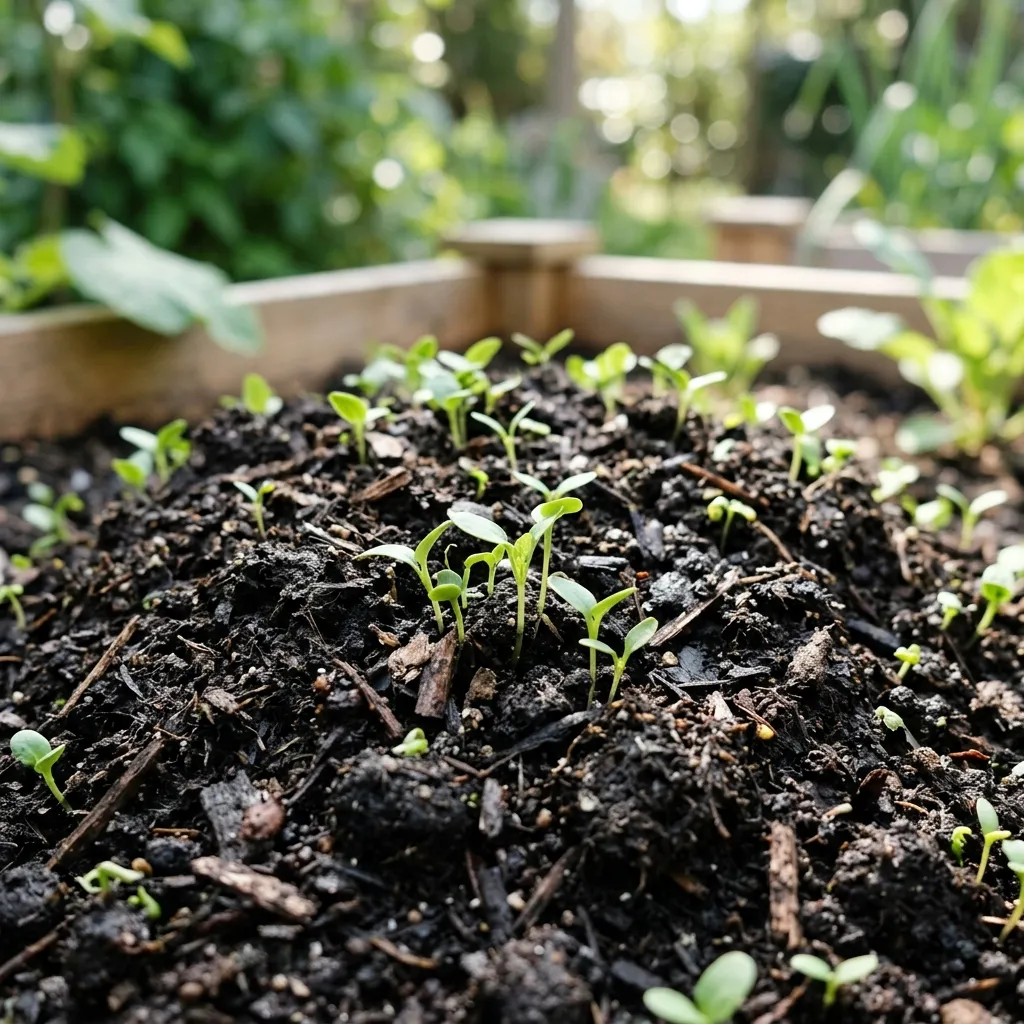
Compost forms through the natural decomposition of organic matter by microorganisms, resulting in a nutrient-rich, dark, crumbly amendment that supports healthy soil ecosystems. This biological process requires oxygen, water, and a diverse population of bacteria, fungi, and protozoa working together. Beyond supplying nutrients gradually, compost improves soil structure, water retention, and aeration while fostering beneficial microbial communities that can help protect plants from disease and environmental stress over time. This approach helps maintain optimal conditions and prevents common issues that can affect your plant's overall health and longevity over time.
Quick Answer
Compost is decomposed organic matter that provides a slow release of nutrients while improving soil structure and supporting beneficial microorganisms. It's created through the microbial breakdown of plant and animal waste in the presence of oxygen and water. Adding compost to soil reduces reliance on synthetic fertilizers while building long-term soil health.
What Is Compost?
Compost is a naturally occurring process where microorganisms break down organic matter into a nutrient-rich soil amendment. This process involves the decomposition of plant and animal waste, resulting in a dark, crumbly, and earthy-smelling material that is teeming with life. Compost is essential for plant health, as it provides a slow release of nutrients, improves soil structure, and supports the growth of beneficial microorganisms. By adding compost to the soil, gardeners can create a thriving ecosystem that promotes healthy plant growth and reduces the need for synthetic fertilizers.
The science behind composting is rooted in the principles of microbiology and ecology. As microorganisms feed on organic matter, they release enzymes that break down complex molecules into simpler compounds. This process occurs in the presence of oxygen, water, and a diverse range of microorganisms, including bacteria, fungi, and protozoa. The resulting compost is a rich source of nutrients, including nitrogen, phosphorus, and potassium, which are essential for plant growth.
Compost matters for plant health because it provides a natural and sustainable way to promote soil fertility. By using compost, gardeners can reduce their reliance on synthetic fertilizers, which can pollute waterways and harm the environment. Compost also helps to improve soil structure, increasing its water-holding capacity and aeration, which can lead to healthier root growth and improved plant resilience.
Tools and Materials You'll Need
- A compost bin or pile
- Organic materials, such as leaves, grass clippings, and kitchen scraps
- Water
- Aeration tools, such as a pitchfork or shovel
- A thermometer, to monitor temperature
- A moisture meter, to monitor humidity
- A carbon-to-nitrogen ratio calculator, to balance the compost mix
Step-by-Step: How to Apply Compost
- Collect organic materials, such as leaves, grass clippings, and kitchen scraps, and add them to the compost bin or pile. Aim for a mix of 2/3 "brown" materials, such as leaves and twigs, and 1/3 "green" materials, such as grass clippings and kitchen scraps.
- Monitor the temperature of the compost pile, which should reach 130°F to 140°F (54°C to 60°C) within a few days. This indicates that the microorganisms are actively breaking down the organic matter.
- Every 7 to 10 days, turn the compost pile to aerate it and speed up the decomposition process. This should be done when the pile has reached a humidity level of 40% to 50%.
- After 2 to 3 months, the compost should be ready to use. It should have a dark, crumbly texture and an earthy smell. At this stage, the compost should have a pH level between 6.0 and 7.0.
- Apply the compost to the soil at a rate of 1 to 2 inches (2.5 to 5 cm) per 10 square feet (1 square meter). This can be done at any time of the year, but it's best to apply it during the growing season, when the plants are actively growing.
- Water the compost thoroughly, to a depth of 6 to 8 inches (15 to 20 cm), to help it settle and become incorporated into the soil.
- Monitor the soil moisture and adjust the watering schedule as needed. The ideal soil moisture level should be between 20% and 30%.
Best Practices and Pro Tips
- Carbon-to-Nitrogen Ratio: Aim for a mix of 2/3 "brown" materials and 1/3 "green" materials, to create a balanced compost mix.
- Temperature Monitoring: Monitor the temperature of the compost pile regularly, to ensure it reaches the optimal range of 130°F to 140°F (54°C to 60°C).
- Aeration: Turn the compost pile every 7 to 10 days, to aerate it and speed up the decomposition process.
- Moisture Levels: Maintain a humidity level of 40% to 50% in the compost pile, to support microbial growth.
- pH Levels: Monitor the pH level of the compost, which should be between 6.0 and 7.0, to ensure it's suitable for plant growth.
Quick Reference Table
| Factor | Recommended Range | Why It Matters |
|---|---|---|
| Temperature | 130°F to 140°F (54°C to 60°C) | Optimal range for microbial growth and decomposition |
| Humidity | 40% to 50% | Supports microbial growth and decomposition |
| pH Level | 6.0 to 7.0 | Suitable range for plant growth and microbial activity |
| Carbon-to-Nitrogen Ratio | 2/3 "brown" materials to 1/3 "green" materials | Creates a balanced compost mix and supports microbial growth |
| Moisture Levels | 20% to 30% | Optimal range for plant growth and soil health |
Best Plants for Compost
Compost is suitable for a wide range of plants, including vegetables, fruits, and flowers. Some of the best plants for compost include the tomato (Solanum lycopersicum), which thrives in well-draining soil with a pH level between 6.0 and 7.0. The cucumber (Cucumis sativus) is another excellent choice, as it prefers a slightly acidic to neutral soil pH, ranging from 6.0 to 7.0. The carrot (Daucus carota) is also a good option, as it prefers a well-draining soil with a pH level between 6.0 and 7.0. The radish (Raphanus sativus) is a fast-growing crop that prefers a slightly acidic to neutral soil pH, ranging from 6.0 to 7.0. The lettuce (Lactuca sativa) is a cool-season crop that prefers a well-draining soil with a pH level between 6.0 and 7.0. The pepper (Capsicum annuum) is a warm-season crop that thrives in well-draining soil with a pH level between 6.0 and 7.0. As we explain in our Fertilizer guide, compost can be used as a natural fertilizer to promote plant growth. Which we cover in detail in our Soil Moisture article, compost can help improve soil structure and increase its water-holding capacity. See our Potting Mix guide for a deeper look at how compost can be used to create a well-draining and nutrient-rich potting mix.
Common Mistakes to Avoid
- Insufficient Aeration: Failing to turn the compost pile regularly can lead to anaerobic conditions, which can slow down the decomposition process and produce unpleasant odors. This can occur when the compost pile is too dense, with a moisture level above 50%.
- Incorrect Carbon-to-Nitrogen Ratio: Adding too much "green" material can lead to a nitrogen-rich compost that is prone to ammonia production, which can be toxic to plants. This can occur when the carbon-to-nitrogen ratio is below 2:1.
- Overwatering: Excessive moisture can lead to a waterlogged compost pile, which can slow down the decomposition process and produce unpleasant odors. This can occur when the compost pile is watered too frequently, with a moisture level above 40%.
- Underwatering: Inadequate moisture can lead to a dry and inactive compost pile, which can slow down the decomposition process. This can occur when the compost pile is not watered frequently enough, with a moisture level below 20%.
- Incorrect pH Levels: Failing to monitor the pH level of the compost can lead to a compost that is too acidic or too alkaline, which can be detrimental to plant growth. This can occur when the compost pile is not turned regularly, with a pH level outside the range of 6.0 to 7.0.
What is the success rate of composting?
The success rate of composting depends on various factors, such as the carbon-to-nitrogen ratio, moisture levels, and aeration. With optimal conditions, composting can achieve a success rate of 80% to 90%, resulting in a nutrient-rich compost that can support plant growth. However, if the conditions are not optimal, the success rate can be as low as 20% to 30%.
What is the best season to compost?
The best season to compost is during the spring and fall, when the temperatures are mild and the humidity is moderate. This allows for optimal microbial growth and decomposition, resulting in a high-quality compost. However, composting can be done at any time of the year, as long as the conditions are optimal.
Is turning the compost pile mandatory?
Turning the compost pile is not mandatory, but it is highly recommended. Turning the compost pile every 7 to 10 days can help to aerate the pile, speed up the decomposition process, and prevent anaerobic conditions. However, if the compost pile is not turned regularly, it can still produce a high-quality compost, but it may take longer.
What is the best aftercare for compost?
The best aftercare for compost is to monitor the soil moisture and adjust the watering schedule as needed. The ideal soil moisture level should be between 20% and 30%. Additionally, it's essential to maintain a pH level between 6.0 and 7.0, and to provide adequate nutrients for plant growth.
How do I troubleshoot common composting problems?
Troubleshooting common composting problems requires identifying the underlying cause of the issue. For example, if the compost pile is too dry, it may be necessary to add more water. If the compost pile is too wet, it may be necessary to add more "brown" materials. If the compost pile is producing unpleasant odors, it may be necessary to turn the pile more frequently or add more aeration. By identifying the underlying cause of the issue, it's possible to take corrective action and produce a high-quality compost.
Frequently Asked Questions
What is the success rate of composting?
The success rate of composting depends on various factors, such as the carbon-to-nitrogen ratio, moisture levels, and aeration. With optimal conditions, composting can achieve a success rate of 80% to 90%, resulting in a nutrient-rich compost that can support plant growth. However, if the conditions are not optimal, the success rate can be as low as 20% to 30%.
What is the best season to compost?
The best season to compost is during the spring and fall, when the temperatures are mild and the humidity is moderate. This allows for optimal microbial growth and decomposition, resulting in a high-quality compost. However, composting can be done at any time of the year, as long as the conditions are optimal.
Is turning the compost pile mandatory?
Turning the compost pile is not mandatory, but it is highly recommended. Turning the compost pile every 7 to 10 days can help to aerate the pile, speed up the decomposition process, and prevent anaerobic conditions. However, if the compost pile is not turned regularly, it can still produce a high-quality compost, but it may take longer.
What is the best aftercare for compost?
The best aftercare for compost is to monitor the soil moisture and adjust the watering schedule as needed. The ideal soil moisture level should be between 20% and 30%. Additionally, it's essential to maintain a pH level between 6.0 and 7.0, and to provide adequate nutrients for plant growth.
How do I troubleshoot common composting problems?
Troubleshooting common composting problems requires identifying the underlying cause of the issue. For example, if the compost pile is too dry, it may be necessary to add more water. If the compost pile is too wet, it may be necessary to add more "brown" materials. If the compost pile is producing unpleasant odors, it may be necessary to turn the pile more frequently or add more aeration. By identifying the underlying cause of the issue, it's possible to take corrective action and produce a high-quality compost.
Explore More
Related Topics


Related Plant Guides
No specific plant guides found matching this topic.
Recommended next actions
Continue Exploring
Dive deeper into related plant care tools and profiles.
Topic Guide
Fertilizer
Learn everything about fertilizer for your indoor and aquarium plants. Expert care tips, troubleshooting, and related guides.
Topic Guide
Soil Moisture
Learn how to accurately check soil moisture for houseplants. Discover when to water using finger tests, moisture meters, and pot weight.
Topic Guide
Potting Mix
Learn everything about potting mix for your indoor and aquarium plants. Expert care tips, troubleshooting, and related guides.