Organic vs Synthetic Fertilizer: Which Should You Use?
A side-by-side comparison of organic and synthetic fertilizers to help you choose the right option for your garden.
Quick Answer
Organic fertilizers release nutrients slowly and improve long-term soil health, while synthetic fertilizers act quickly and allow precise nutrient control. The right choice depends on whether you need fast correction or gradual, sustainable feeding over time. Our experience shows that providing a stable environment helps the plant establish a strong root system faster.
The Problem
Standing in the garden aisle deciding between a bag of compost and a box of water-soluble crystals is confusing without understanding what each actually does differently for a plant.
When to Use This Tool
Reference this guide when choosing a fertilizer type for a new garden, switching from one type to another, or troubleshooting why a fertilizer isn't producing expected results.
Who is this for?
- Home gardeners choosing a fertilizer philosophy for the first time
- Vegetable gardeners weighing soil health against speed of results
- Houseplant owners deciding between natural and synthetic plant food
- Environmentally conscious gardeners minimizing chemical inputs
Application Reference
| Context | Guideline |
|---|---|
| pots | Varies by fertilizer type, see comparison table |
| garden | Varies by fertilizer type, see comparison table |
Recommended next actions
Next Best Actions
Use fertilizer guidance with calculators, plant profiles, and related care articles.
Fertilizer Guide
NPK 19-19-19 for Houseplants: Safe Dosage & Dilution Guide
A balanced water-soluble fertilizer containing equal labeled proportions of nitrogen, phosphate, and potash.
Fertilizer Guide
NPK 20-20-20 for Houseplants: Safe Dosage & Dilution
A balanced water-soluble fertilizer containing equal labeled proportions of nitrogen, phosphate, and potash.
Fertilizer Guide
NPK 10-26-26 for Flowering Plants: Dosage & Use Guide
A low-nitrogen fertilizer analysis with higher labeled phosphate and potash proportions, used for flowering and fruiting applications when appropriate.
Fertilizer Guide
NPK Ratio Comparison: 10-10-10 vs 19-19-19 vs 20-20-20 Guide
A side-by-side comparison of common NPK fertilizer analyses, their concentration differences, and how to choose between them without assuming a universal dosage.
Fertilizer Guide
Fertilizer Burn on Houseplants: Symptoms & Fast Fixes
How to identify, treat, and prevent fertilizer burn in houseplants and garden plants.
Calculator
Plant Fertilizer Calculator: Right Dose for Every Plant
Calculate the exact fertilizer dose and feeding schedule for your plant based on species, pot size, growth stage, and season.
What's the Real Difference?
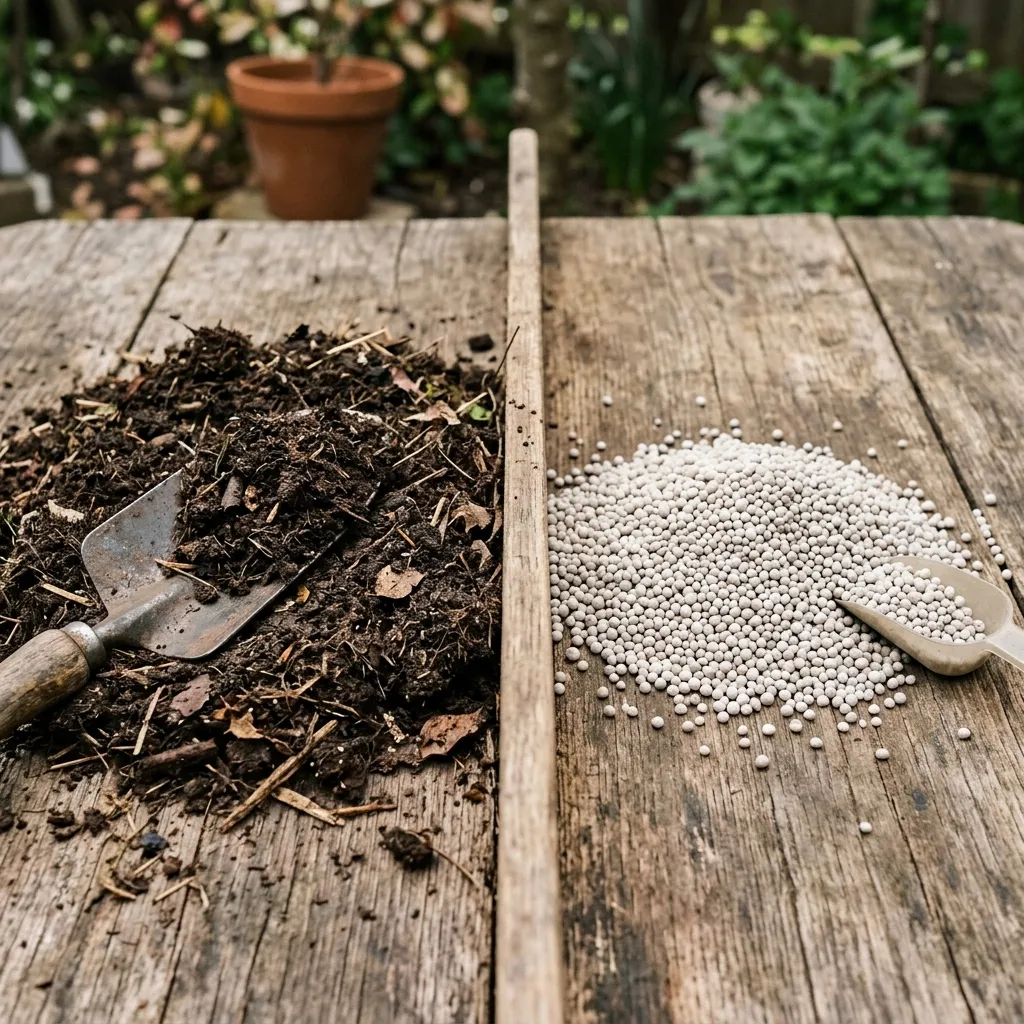
Both organic and synthetic fertilizers ultimately supply the same three macronutrients: Nitrogen, Phosphorus, and Potassium. Once absorbed, a plant's roots cannot tell whether a nutrient molecule came from compost or a chemical bag. The real differences lie in source, release speed, and long-term impact on soil.
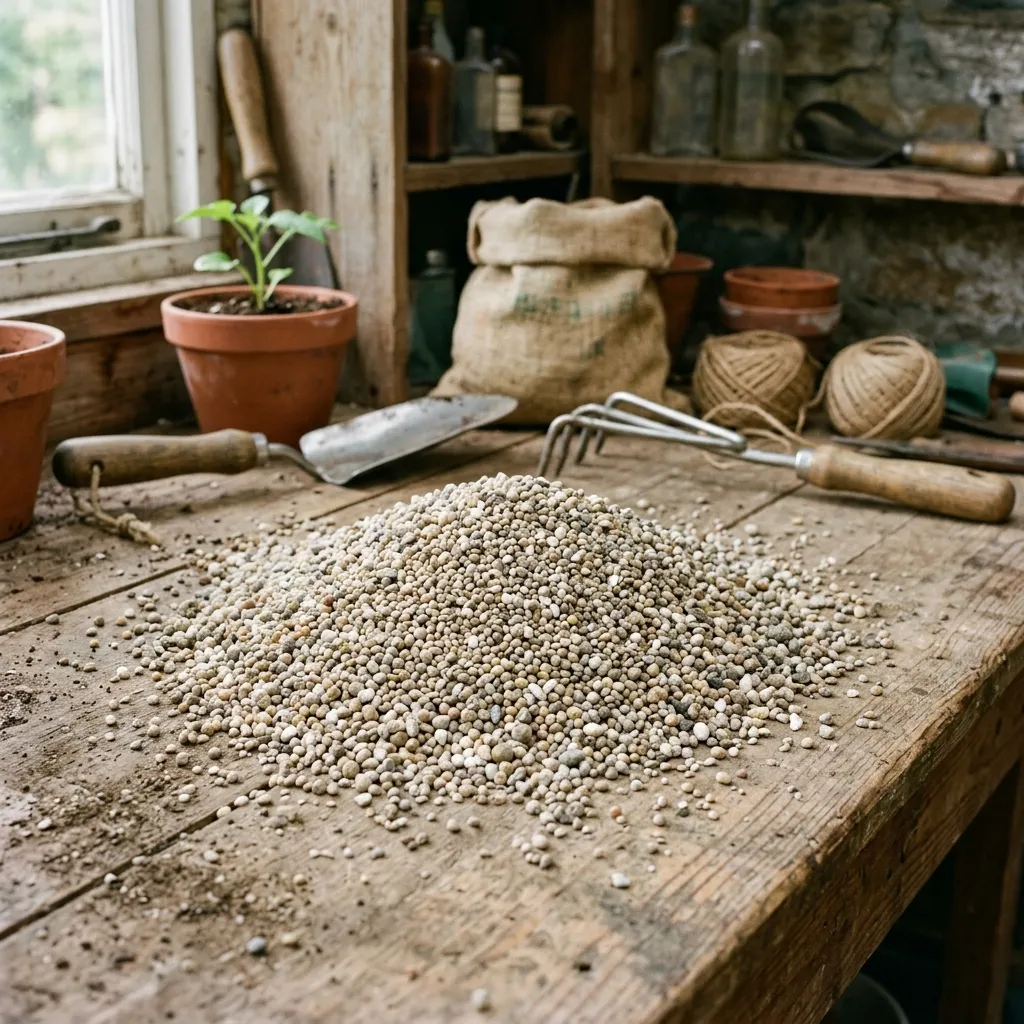
- Organic fertilizer comes from plant, animal, or mineral sources like compost, manure, bone meal, or fish emulsion, and releases nutrients gradually as soil microbes break it down.
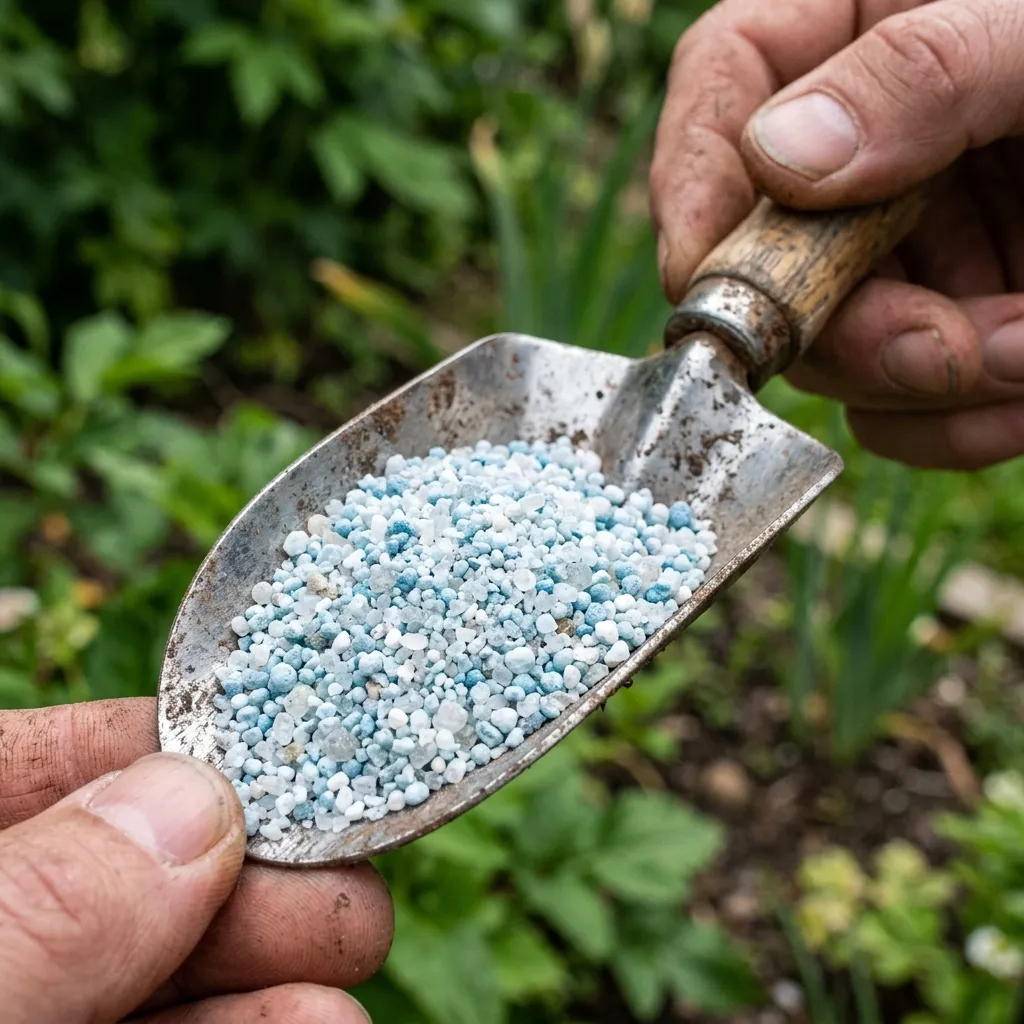
- Synthetic fertilizer is chemically manufactured to deliver an exact, concentrated NPK ratio that's immediately available to plant roots.
Speed and Precision
Synthetic fertilizers act fast, often producing visible improvement within 5 to 10 days, and allow gardeners to dial in an exact nutrient ratio for a specific growth stage. Organic fertilizers work on a slower timeline, typically 3 to 6 weeks, since nutrients must first be broken down by microbial activity before becoming plant-available.
Long-Term Soil Health
Organic fertilizers do more than feed plants; they improve soil structure, boost microbial diversity, and increase water retention over time. Repeated heavy use of synthetic fertilizer, by contrast, can lead to salt buildup in the soil and offers no direct benefit to soil biology, though it does not inherently harm soil when used at recommended rates.
Risk of Burn and Safety
Because synthetic fertilizers are highly concentrated, they carry a greater risk of fertilizer burn if overdosed or applied to dry soil. Organic fertilizers are far more forgiving in this regard, though some varieties can introduce a temporary odor or attract curious pets during application.
Which Should You Choose?
- Choose synthetic when you need fast correction of a specific deficiency, precise control for container plants, or an odorless option for indoor use.
- Choose organic when prioritizing long-term soil health, gardening organically, or feeding edible crops with a lower risk of chemical residue.
- Combine both by using organic matter as a soil health foundation and synthetic fertilizer for targeted, fast-acting boosts when needed.
Organic vs Synthetic Fertilizer at a Glance
| Factor | Organic Fertilizer | Synthetic Fertilizer |
|---|---|---|
| Speed of results | Slow, 3-6 weeks | Fast, 5-10 days |
| Risk of burn | Low | Higher if overdosed |
| Effect on soil health | Improves long-term soil structure and microbial life | Neutral to negative with repeated heavy use |
| Precision of nutrient control | Lower, nutrient content varies naturally | High, exact NPK ratios |
| Typical cost | Moderate to higher upfront | Lower upfront, ongoing purchases |
| Odor | Often present, fades after 1-2 days | Typically odorless |
Troubleshooting & Diagnostics Guide
1 No visible improvement weeks after applying organic fertilizer
Diagnosis: Organic fertilizers depend on soil microbial activity to break down nutrients, which is a slower process than synthetic feeding.
Treatment: Allow 3 to 6 weeks for organic fertilizer to take effect, or supplement with a diluted synthetic fertilizer for a faster nutrient boost.
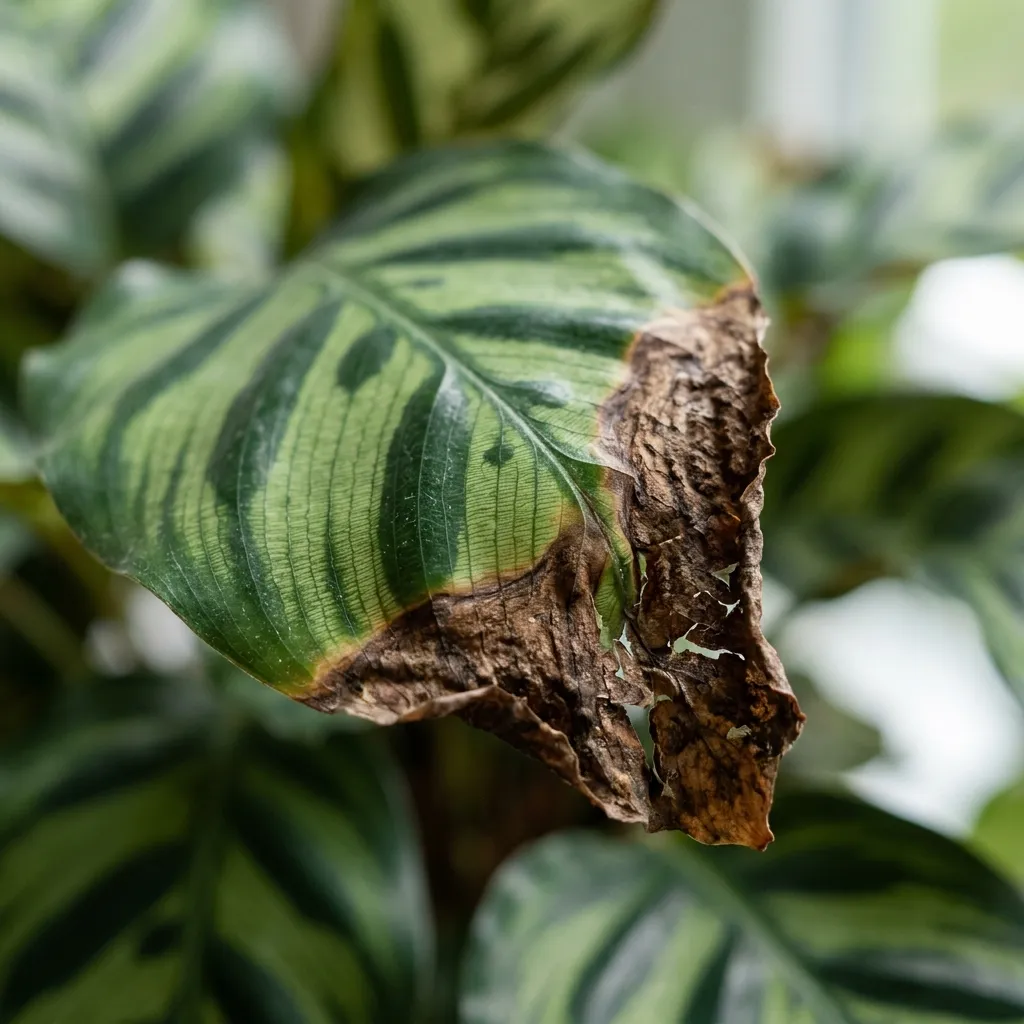
2 Leaf burn after switching from organic to synthetic fertilizer
Diagnosis: Synthetic fertilizers are far more concentrated than most organic amendments, so applying the same volume can overwhelm the plant.
Treatment: Always follow the synthetic product's specific dilution instructions rather than matching the volume used for organic feeding.
3 Persistent odor after applying organic fertilizer
Diagnosis: Fish emulsion, manure, or bone meal-based organic fertilizers naturally smell during decomposition.
Treatment: Water the fertilizer into the soil thoroughly and allow 1-2 days for the odor to dissipate; this is normal and not a sign of misuse.
Glossary of Terms
- Organic Fertilizer
- A fertilizer derived from plant, animal, or mineral sources, such as compost, manure, or bone meal, that releases nutrients slowly as it decomposes.
- Synthetic Fertilizer
- A chemically manufactured fertilizer providing precise, fast-acting nutrient concentrations, typically labeled with an exact NPK ratio.
- Nutrient Runoff
- The washing away of excess fertilizer nutrients from soil into nearby waterways, which can contribute to algae blooms and water pollution.
- Slow-Release Fertilizer
- A fertilizer, organic or synthetic, formulated to release nutrients gradually over weeks or months rather than all at once.
Frequently Asked Questions
Is organic fertilizer better than synthetic fertilizer?
Does organic fertilizer work as fast as synthetic fertilizer?
Is synthetic fertilizer bad for the environment?
Can I mix organic and synthetic fertilizers?
Which is safer for pets and children, organic or synthetic fertilizer?
Why does my organic fertilizer smell?
Which type of fertilizer is better for houseplants?
Explore More