Fertilizer Burn: Symptoms, Causes, and How to Fix It
How to identify, treat, and prevent fertilizer burn in houseplants and garden plants.
Quick Answer
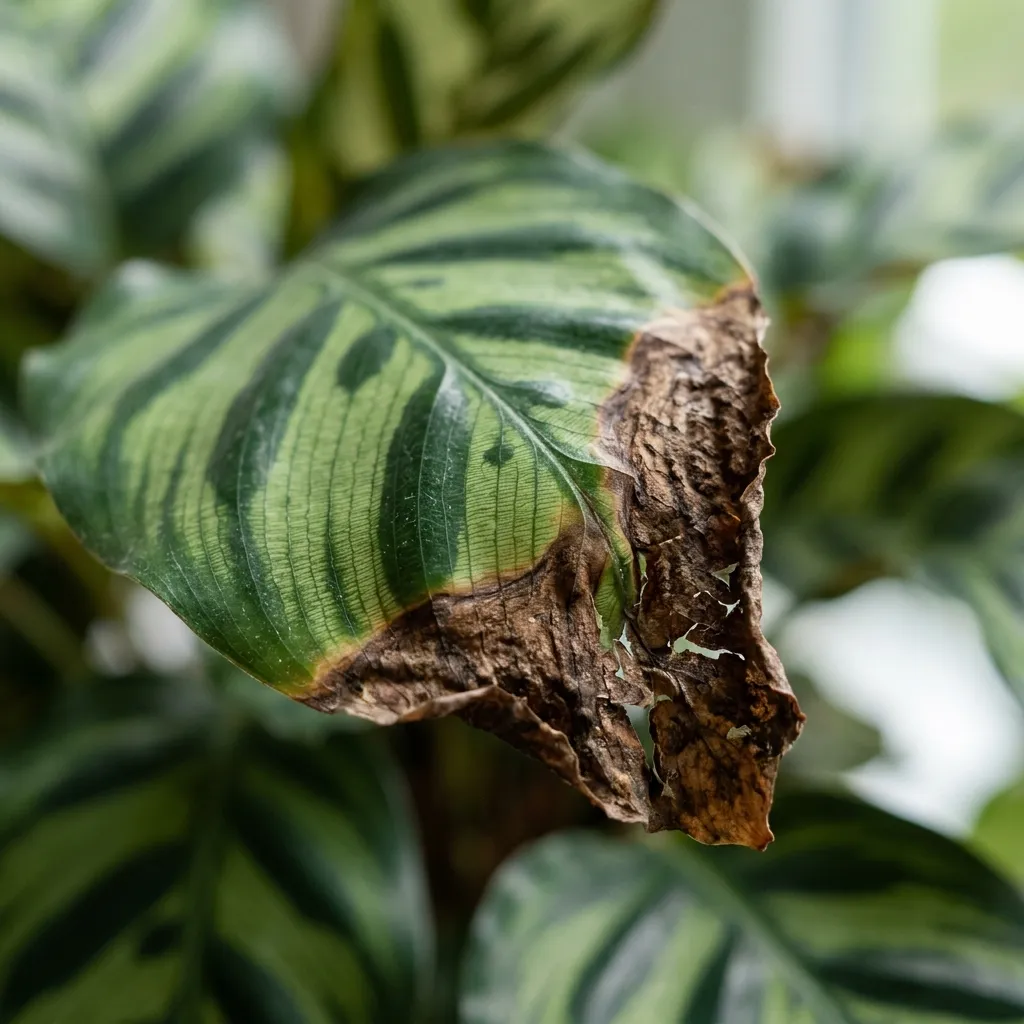
Fertilizer burn is caused by a buildup of mineral salts in the soil that draws moisture out of plant roots and leaves, showing up as brown, crispy leaf edges. Fix it by flushing the soil with plain water and pausing fertilizer applications until the plant recovers.
The Problem
Brown, crispy leaf edges after fertilizing are alarming and often mistaken for disease or pests. Recognizing fertilizer burn quickly prevents further damage and helps the plant recover faster.
When to Use This Tool
Reference this guide as soon as brown or scorched leaf edges appear shortly after a fertilizer application, or whenever white salt crust is visible on the soil surface.
Who is this for?
- Houseplant owners noticing brown leaf edges after feeding
- New gardeners unsure why leaves are scorched
- Anyone who recently switched to a more concentrated fertilizer
Application Reference
| Context | Guideline |
|---|---|
| pots | Flush with 3x the pot's volume in plain water |
| garden | Water deeply to dilute and disperse excess salts |
Recommended next actions
Next Best Actions
Use fertilizer guidance with calculators, plant profiles, and related care articles.
Fertilizer Guide
NPK 19-19-19 for Houseplants: Safe Dosage & Dilution Guide
A balanced water-soluble fertilizer containing equal labeled proportions of nitrogen, phosphate, and potash.
Fertilizer Guide
NPK 20-20-20 for Houseplants: Safe Dosage & Dilution
A balanced water-soluble fertilizer containing equal labeled proportions of nitrogen, phosphate, and potash.
Fertilizer Guide
NPK 10-26-26 for Flowering Plants: Dosage & Use Guide
A low-nitrogen fertilizer analysis with higher labeled phosphate and potash proportions, used for flowering and fruiting applications when appropriate.
Fertilizer Guide
NPK Ratio Comparison: 10-10-10 vs 19-19-19 vs 20-20-20 Guide
A side-by-side comparison of common NPK fertilizer analyses, their concentration differences, and how to choose between them without assuming a universal dosage.
Calculator
Plant Fertilizer Calculator: Right Dose for Every Plant
Calculate the exact fertilizer dose and feeding schedule for your plant based on species, pot size, growth stage, and season.
What is Fertilizer Burn?
Fertilizer burn is tissue damage caused by an excess of mineral salts in the soil. When salt concentration around the roots gets too high, water is pulled out of root cells through osmosis instead of into them, effectively dehydrating the plant from the roots up even when the soil feels moist.
How to Recognize Fertilizer Burn
- Brown, crispy leaf edges and tips, often the first and most obvious sign.
- Yellowing between leaf veins on affected leaves.
- Wilting despite moist soil, since the damage is osmotic rather than caused by drought.
- White, crusty residue on the soil surface or around the pot's drainage holes.
- Stunted or halted growth shortly after a fertilizer application.
Common Causes
- Applying fertilizer at a stronger concentration than the label recommends.
- Fertilizing dry soil instead of pre-watering first.
- Fertilizing too frequently without allowing salts to disperse.
- Using a fertilizer not suited to the plant type, such as a garden-strength product on a delicate houseplant.
- Feeding a plant that is already stressed from drought, pests, or recent repotting.
How to Fix Fertilizer Burn Step by Step
- Stop fertilizing immediately. Do not apply any more fertilizer until the plant shows signs of recovery.
- Flush the soil. Slowly pour plain water through the pot, using about three times its volume, and let it drain fully from the bottom. This dissolves and washes away excess salts.
- Trim severely damaged leaves. Remove leaves that are more than half browned, since they will not recover and drain the plant's energy.
- Move to indirect light. Reduce additional stress while the plant recovers from root damage.
- Resume feeding gradually. Wait 2 to 4 weeks, then restart at half the normal fertilizer strength.
Preventing Fertilizer Burn
- Always pre-water before fertilizing to ensure salts disperse evenly rather than concentrating around dry roots.
- Follow label dilution rates exactly, and when in doubt, use a weaker solution rather than a stronger one.
- Avoid fertilizing during dormancy, typically fall and winter for most houseplants.
- Flush pots every few months with plain water to prevent long-term salt accumulation, even if no symptoms are visible yet.
Fertilizer Burn Severity and Response
| Severity | Signs | Recommended Action |
|---|---|---|
| Mild | Slight browning at leaf tips only | Flush soil once, resume normal feeding schedule after 2 weeks |
| Moderate | Brown, crispy edges on multiple leaves | Flush soil, trim damaged leaves, pause fertilizing for 3-4 weeks |
| Severe | Widespread leaf drop or wilting despite moist soil | Flush soil repeatedly, consider repotting with fresh soil, pause fertilizing for a full growth cycle |
Troubleshooting & Diagnostics Guide
1 Brown, crispy edges on lower or older leaves
Diagnosis: Salt buildup from repeated fertilizer applications accumulating in the root zone over time.
Treatment: Flush the pot with plain water equal to three times its volume, letting it drain fully from the bottom.
2 Sudden leaf scorch shortly after a single fertilizer application
Diagnosis: Fertilizer was applied at too high a concentration or onto dry soil.
Treatment: Flush the soil immediately and skip the next scheduled feeding to give the plant time to recover.
3 White, crusty film on the soil surface or pot rim
Diagnosis: Mineral salts from fertilizer accumulating and crystallizing as water evaporates.
Treatment: Scrape off visible crust where possible and flush the soil thoroughly with plain water.
4 Wilting leaves despite moist soil, shortly after fertilizing
Diagnosis: Excess salts pulling moisture out of root cells through osmosis, even when the soil itself is wet.
Treatment: Flush the soil to dilute and remove excess salts, and hold off on fertilizing until new growth appears healthy.
Glossary of Terms
- Fertilizer Burn
- Tissue damage caused when excess mineral salts in the soil draw moisture out of plant roots and leaves through osmosis.
- Salt Buildup
- The accumulation of mineral salts from repeated fertilizer applications, often visible as a white crust on soil or pots.
- Soil Flushing
- The practice of running a large volume of plain water through soil to dissolve and wash away excess fertilizer salts.
- Osmosis
- The movement of water across a membrane from an area of low salt concentration to high salt concentration, which in reverse can pull moisture out of plant roots when soil salinity is too high.
Frequently Asked Questions
What does fertilizer burn look like?
Can a plant recover from fertilizer burn?
How do I flush fertilizer burn out of soil?
How long does it take for fertilizer burn to heal?
Should I remove burned leaves?
What causes fertilizer burn besides overdosing?
How do I prevent fertilizer burn in the future?
Explore More