Watering
Watering supplies one of the most important resources for plant growth, acting as both a raw material for photosynthesis and a transport medium carrying dissolved nutrients throughout plant tissues. Roots absorb water from the growing medium and transport it upward through the xylem to support metabolic function. Water also plays a role in temperature regulation, since its evaporation through stomata during transpiration helps cool the plant while supporting the continuous movement of nutrients from roots to shoots. Effective watering involves more than simply adding water on a schedule; it requires responding to a plant's actual moisture needs.
Quick Answer
Watering supplies the moisture plants need for photosynthesis, nutrient transport, cell expansion, and temperature regulation, absorbed by roots and moved upward through the xylem. It also carries dissolved mineral nutrients required for metabolic function. Proper watering means responding to actual soil moisture and plant needs rather than following a rigid, one-size-fits-all schedule.
What Is Watering?
Watering is the practice of supplying water to plants to support essential physiological processes including photosynthesis, nutrient transport, cell expansion, and temperature regulation. Water is one of the most important resources for plant growth because it acts as both a raw material and a transport medium within plant tissues. Without adequate water, plants cannot maintain turgor pressure, absorb nutrients efficiently, or produce new growth.
Roots absorb water from the growing medium and transport it upward through the xylem. This water carries dissolved mineral nutrients that are required for metabolic functions. Water also plays a direct role in photosynthesis, where it contributes to the production of carbohydrates that fuel growth and development. As water evaporates through stomata during transpiration, it helps regulate plant temperature and supports the continuous movement of nutrients from roots to shoots.
Proper watering involves more than simply adding water on a schedule. Plant species, pot size, root development, growing medium composition, light intensity, temperature, humidity, and seasonal growth patterns all influence water requirements. A watering routine that is ideal for one plant may be harmful to another.
Both excessive and insufficient watering can damage plants. Overwatering may reduce oxygen availability around roots and contribute to root diseases, while underwatering can cause dehydration, reduced photosynthesis, and growth decline. Successful plant care depends on maintaining an appropriate balance between moisture retention and root-zone aeration.
Tools and Materials You'll Need
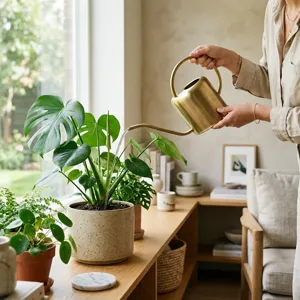
- Watering can: Provides controlled water application and helps distribute moisture evenly throughout the container.
- Clean water source: Essential for maintaining healthy root function and preventing the accumulation of harmful contaminants.
- Moisture meter: Helps evaluate root-zone moisture levels and supports more informed watering decisions.
- Drainage tray: Collects excess water and prevents damage to indoor surfaces.
- Pot with drainage holes: Allows excess water to exit the container and improves root-zone aeration.
- Quality potting mix: Balances moisture retention and drainage for healthy root growth.
- Mulch or surface dressing: Reduces evaporation in some container and landscape applications.
Step-by-Step: How to Perform Watering
- Check the growing medium before watering by feeling the soil surface or using a moisture meter.
- Confirm that the plant actually requires water rather than watering according to a fixed calendar schedule.
- Apply water slowly and evenly across the entire soil surface to encourage uniform moisture distribution.
- Continue watering until excess water begins draining from the container's drainage holes.
- Allow the container to drain completely for several minutes before returning it to its display location.
- Empty accumulated water from drainage trays within 30 minutes to prevent roots from remaining submerged.
- Monitor the plant over the following days and adjust future watering frequency based on drying rate, growth conditions, and season.
Best Practices and Pro Tips
- Water by Need: Assess moisture levels before watering rather than following a rigid schedule.
- Soak Thoroughly: Apply enough water to wet the entire root zone and encourage deep root growth.
- Use Proper Drainage: Containers should always have drainage holes to prevent water accumulation.
- Check Weekly: Inspect moisture conditions at least every 7 days, and more frequently during active growth.
- Adjust Seasonally: Many plants require less water during slower growth periods and more during active development.
Quick Reference Table
| Factor | Recommended Range | Why It Matters |
|---|---|---|
| Tray Emptying Time | Within 30 minutes | Reduces prolonged root exposure to standing water. |
| Moisture Inspection | At least every 7 days | Supports informed watering decisions. |
| Water Application | Until drainage occurs | Ensures complete root-zone hydration. |
| Drainage Requirement | Drainage holes required | Prevents waterlogging and oxygen deprivation. |
| Observation Period | Several days after watering | Helps determine future watering frequency. |
Best Plants for Proper Watering Management
The peace lily (Spathiphyllum wallisii) responds quickly to moisture changes and serves as an excellent indicator plant for learning proper watering practices. Its leaves visibly droop when water becomes limited.
The pothos (Epipremnum aureum) adapts well to varying conditions and recovers readily from minor watering errors, making it suitable for beginners.
The spider plant (Chlorophytum comosum) stores water within its fleshy roots and demonstrates the importance of allowing moderate drying between irrigations.
The monstera (Monstera deliciosa) develops extensive roots that benefit from thorough watering followed by partial drying of the growing medium.
The snake plant (Dracaena trifasciata) highlights the risks of excessive watering because its drought-adapted root system prefers periods of drying.
The rubber plant (Ficus elastica) performs best when consistent moisture is maintained without prolonged saturation around the roots.
Container selection influences irrigation practices, as explained in our Pot Size guide. The relationship between moisture and root health is discussed further in our Root Rot guide. Choosing the right growing medium is equally important, which we cover in our Potting Mix guide.
Common Mistakes to Avoid
- Watering on a Fixed Schedule: Plant water requirements change with light, season, growth rate, and container size. Always assess moisture before watering.
- Leaving Water in Saucers: Standing water should be removed within 30 minutes to reduce the risk of root problems.
- Applying Small Amounts Frequently: Shallow watering encourages surface rooting and may leave deeper roots dry. Water thoroughly instead.
- Ignoring Drainage: Containers without drainage holes increase the likelihood of root stress and disease development.
- Treating All Plants the Same: Succulents, tropical foliage plants, and flowering species often have very different moisture requirements.
Frequently Asked Questions
How important is proper watering for plant health?
Watering is one of the most important aspects of plant care because water supports photosynthesis, nutrient transport, temperature regulation, and cell expansion. Even plants receiving excellent light and nutrition may decline if watering practices are inappropriate. Consistent moisture management helps maintain healthy roots and supports vigorous growth.
How often should I water my plants?
There is no universal watering schedule because requirements vary among species, container sizes, growing media, and environmental conditions. Rather than watering on specific calendar dates, assess soil moisture before each irrigation. Some plants require frequent watering, while others perform best when the growing medium dries partially between applications.
What equipment helps improve watering accuracy?
A watering can, moisture meter, and containers with drainage holes are among the most useful tools. Moisture meters can provide additional information about root-zone conditions, while proper containers and growing media help maintain an appropriate balance between water retention and aeration.
What should I do after watering a plant?
Allow excess water to drain completely from the container and remove any standing water from saucers within 30 minutes. Observe the plant over the next several days to understand how quickly the growing medium dries. This information helps refine future watering decisions and improves long-term plant care.
Why are my plant's leaves turning yellow even though I water regularly?
Yellow leaves can result from either excessive or insufficient watering. Overwatering often damages roots by reducing oxygen availability, while underwatering can cause dehydration and nutrient transport problems. Evaluate drainage, inspect moisture levels, and consider the plant's overall growing conditions before adjusting your watering routine.
Frequently Asked Questions
How important is proper watering for plant health?
Watering is one of the most important aspects of plant care because water supports photosynthesis, nutrient transport, temperature regulation, and cell expansion. Even plants receiving excellent light and nutrition may decline if watering practices are inappropriate. Consistent moisture management helps maintain healthy roots and supports vigorous growth.
How often should I water my plants?
There is no universal watering schedule because requirements vary among species, container sizes, growing media, and environmental conditions. Rather than watering on specific calendar dates, assess soil moisture before each irrigation. Some plants require frequent watering, while others perform best when the growing medium dries partially between applications.
What equipment helps improve watering accuracy?
A watering can, moisture meter, and containers with drainage holes are among the most useful tools. Moisture meters can provide additional information about root-zone conditions, while proper containers and growing media help maintain an appropriate balance between water retention and aeration.
What should I do after watering a plant?
Allow excess water to drain completely from the container and remove any standing water from saucers within 30 minutes. Observe the plant over the next several days to understand how quickly the growing medium dries. This information helps refine future watering decisions and improves long-term plant care.
Why are my plant's leaves turning yellow even though I water regularly?
Yellow leaves can result from either excessive or insufficient watering. Overwatering often damages roots by reducing oxygen availability, while underwatering can cause dehydration and nutrient transport problems. Evaluate drainage, inspect moisture levels, and consider the plant's overall growing conditions before adjusting your watering routine.
Sources & References
-
Source: yardandgarden.extension.iastate.edu
Explore More
Related Topics
Related Plant Guides
No specific plant guides found matching this topic.
Recommended next actions
Continue Exploring
Dive deeper into related plant care tools and profiles.
Topic Guide
Potting Mix
Learn everything about potting mix for your indoor and aquarium plants. Expert care tips, troubleshooting, and related guides.
Topic Guide
Pot Size
Learn everything about pot size for your indoor and aquarium plants. Expert care tips, troubleshooting, and related guides.
Topic Guide
Root Rot
Learn how to identify and treat root rot in houseplants. Discover causes, symptoms, and step-by-step solutions to save your plants from overwatering.