NPK 10-26-26
A low-nitrogen fertilizer analysis with higher labeled phosphate and potash proportions, used for flowering and fruiting applications when appropriate.
Quick Answer
NPK 10-26-26 is a fertilizer analysis containing 10% total nitrogen (N), 26% available phosphate expressed as P₂O₅, and 26% soluble potash expressed as K₂O by weight. It may be useful in flowering or fruiting nutrient programs when the product label and plant requirements call for a lower-nitrogen analysis. There is no universal grams-per-liter or per-plant dose.
The Problem
Gardeners may assume that a high-phosphate fertilizer automatically increases flowering or that 10-26-26 has one universal dilution rate. In practice, fertilizer selection depends on the plant, growing conditions, existing nutrient supply, product formulation, and label directions.
When to Use This Tool
Use NPK 10-26-26 when the product label and plant nutrient requirements call for a lower-nitrogen fertilizer analysis, including some flowering or fruiting programs. Do not switch automatically at bud formation without considering the plant's actual requirements.
Who is this for?
- Flower gardeners comparing lower-nitrogen fertilizer analyses
- Vegetable gardeners checking fertilizer options for fruiting crops
- Houseplant owners growing flowering species
- Gardeners calculating a labeled 10-26-26 dilution
Application Reference
| Context | Guideline |
|---|---|
| pots | Follow the product label for the specific plant, formulation, and application method. Use the Fertilizer Calculator to convert a labeled concentration to your available water volume. |
| garden | Follow the product label for the specific crop and application method. There is no universal per-plant rate for all 10-26-26 products. |
Recommended next actions
Next Best Actions
Use fertilizer guidance with calculators, plant profiles, and related care articles.
Fertilizer Guide
NPK 19-19-19 for Houseplants: Safe Dosage & Dilution Guide
A balanced water-soluble fertilizer containing equal labeled proportions of nitrogen, phosphate, and potash.
Fertilizer Guide
NPK 20-20-20 for Houseplants: Safe Dosage & Dilution
A balanced water-soluble fertilizer containing equal labeled proportions of nitrogen, phosphate, and potash.
Fertilizer Guide
NPK Ratio Comparison: 10-10-10 vs 19-19-19 vs 20-20-20 Guide
A side-by-side comparison of common NPK fertilizer analyses, their concentration differences, and how to choose between them without assuming a universal dosage.
Calculator
Plant Fertilizer Calculator: Right Dose for Every Plant
Calculate the exact fertilizer dose and feeding schedule for your plant based on species, pot size, growth stage, and season.
Fertilizer Guide
Fertilizer Burn on Houseplants: Symptoms & Fast Fixes
How to identify, treat, and prevent fertilizer burn in houseplants and garden plants.
Fertilizer Guide
Organic vs Synthetic Fertilizer: What's Best for Houseplants?
A side-by-side comparison of organic and synthetic fertilizers to help you choose the right option for your garden.
What is NPK 10-26-26?
NPK 10-26-26 is a fertilizer analysis containing 10% total nitrogen (N), 26% available phosphate expressed as P₂O₅, and 26% soluble potash expressed as K₂O by weight. Its lower nitrogen and higher phosphate and potash proportions can make it appropriate for some flowering or fruiting nutrient programs, but the ratio alone does not determine whether a plant needs it.
- Nitrogen (10% N): Supplies nitrogen for plant growth and development, in a smaller proportion than balanced analyses.
- Phosphate (26% P₂O₅): Represents the available phosphate portion of the fertilizer analysis. Phosphorus is involved in energy transfer, root development, and reproductive processes.
- Potash (26% K₂O): Represents the soluble potash portion of the fertilizer analysis. Potassium contributes to water regulation and enzyme activity.
Reading the 10-26-26 Ratio
Simplified, 10-26-26 works out to roughly 1 : 2.6 : 2.6. For every unit of nitrogen, the product carries about two and a half units of P₂O₅ and K₂O. In 100 g of product, that is about 10 g of N, 26 g of P₂O₅, and 26 g of K₂O.
Remember that phosphate and potash are reported as oxides, not as elemental phosphorus and potassium. As a rough guide, P₂O₅ is about 44% elemental phosphorus and K₂O is about 83% elemental potassium. So 26% P₂O₅ corresponds to roughly 11.3% elemental phosphorus, and 26% K₂O to roughly 21.6% elemental potassium. This matters when you compare a product label with a soil test or research recommendation that reports elemental values.
What Else to Check on a 10-26-26 Label
- Nitrogen sources: Total nitrogen may be listed as nitrate, ammoniacal nitrogen, urea, or a combination, and these forms behave differently in growing media.
- Micronutrients and secondary nutrients: Some products add trace elements, calcium, magnesium, or sulfur. Others do not, so do not assume they are included.
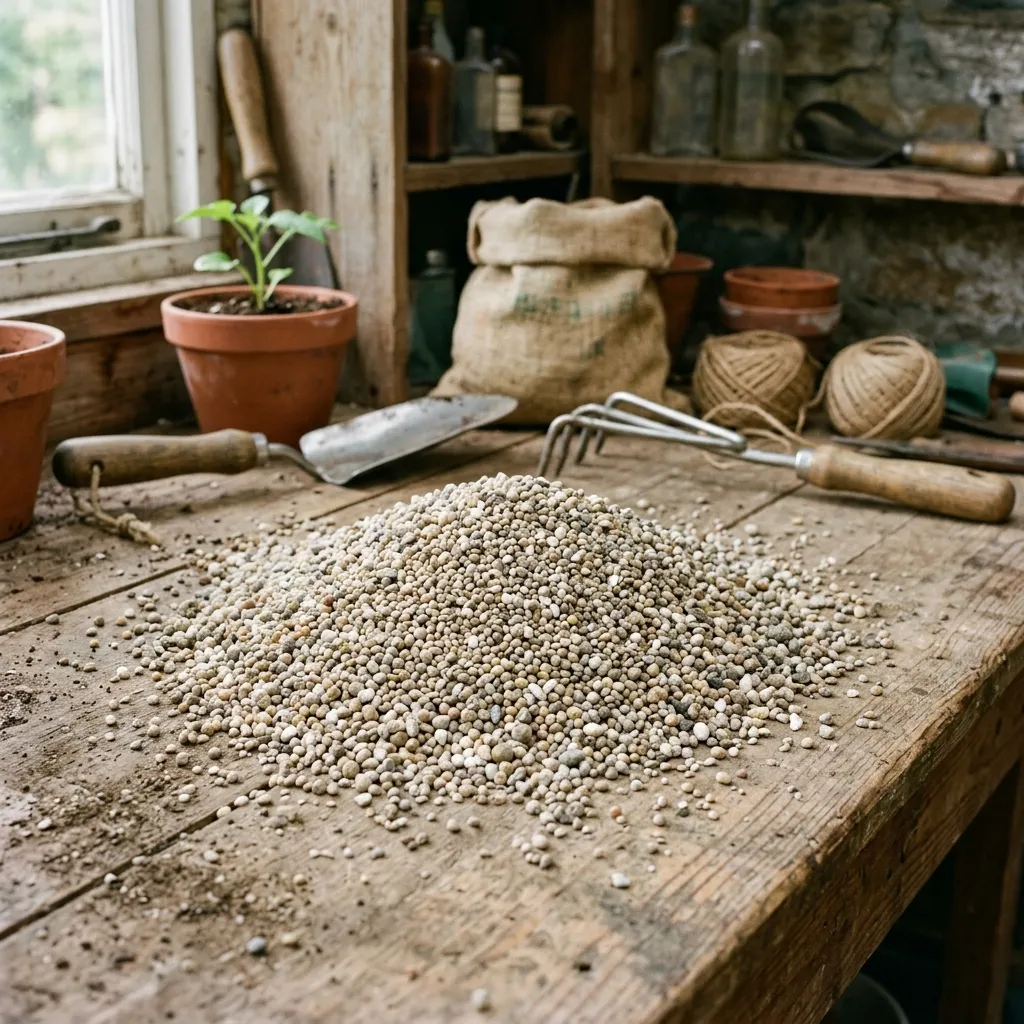
- Product form: Water-soluble, granular, and complex-fertilizer products with the same analysis can have different directions and release behavior.
- Intended crops and methods: Confirm that the label covers your plant and your intended method, such as drench, fertigation, or foliar spray.
- Cautions: Look for warnings on dry plants, foliage contact, edible crops, storage, and handling.
When to Use NPK 10-26-26
This analysis can be appropriate when a plant or crop requires relatively less nitrogen and a fertilizer program calls for higher phosphate and potash proportions. Flowering or fruiting may be part of that program, but plants do not universally require a high-phosphate fertilizer when buds appear.
- Following a product label that recommends the formulation for flowering or fruiting plants.
- Supporting a crop-specific nutrient program where the analysis is appropriate.
- Comparing a lower-nitrogen fertilizer with balanced analyses such as 10-10-10 or 20-20-20.
Why Fertilizer Alone Rarely Fixes Poor Flowering
The name "bloom booster" suggests a simple cause and effect, but flowering is controlled by many factors, and fertilizer is only one of them.
- Light: Many plants need adequate light intensity or duration to initiate flowers.
- Temperature and photoperiod: Some species need cooler periods or particular day lengths.
- Plant maturity: Young plants may not yet be old enough to flower.
- Watering: Both drought and waterlogging can cause buds to fail or drop.
- Pruning and training: Cutting at the wrong time can remove flower-bearing wood.
- Existing nutrient supply: If the growing medium already holds enough phosphorus, adding more does not guarantee a response.
Review these factors before assuming a plant needs a different fertilizer. If flowering does not improve after you correct growing conditions, a soil or growing-medium test is a more reliable guide than guessing at ratios.
The Nitrogen Trade-Off
Because 10-26-26 contains half the nitrogen percentage of a 20-20-20 product, using it in place of a higher-nitrogen fertilizer reduces the nitrogen supplied per unit of product. That can be appropriate for a plant that has finished vegetative growth, but it can also slow leaf growth in plants that still need nitrogen.
If growth slows after a switch, resist increasing the concentration to make up the difference. Increasing the dose also raises phosphate and potash, and it raises total salt load. Instead, review what the plant actually needs and compare the new label with the previous program.
Application Methods and Dilution
1. Soil Drench
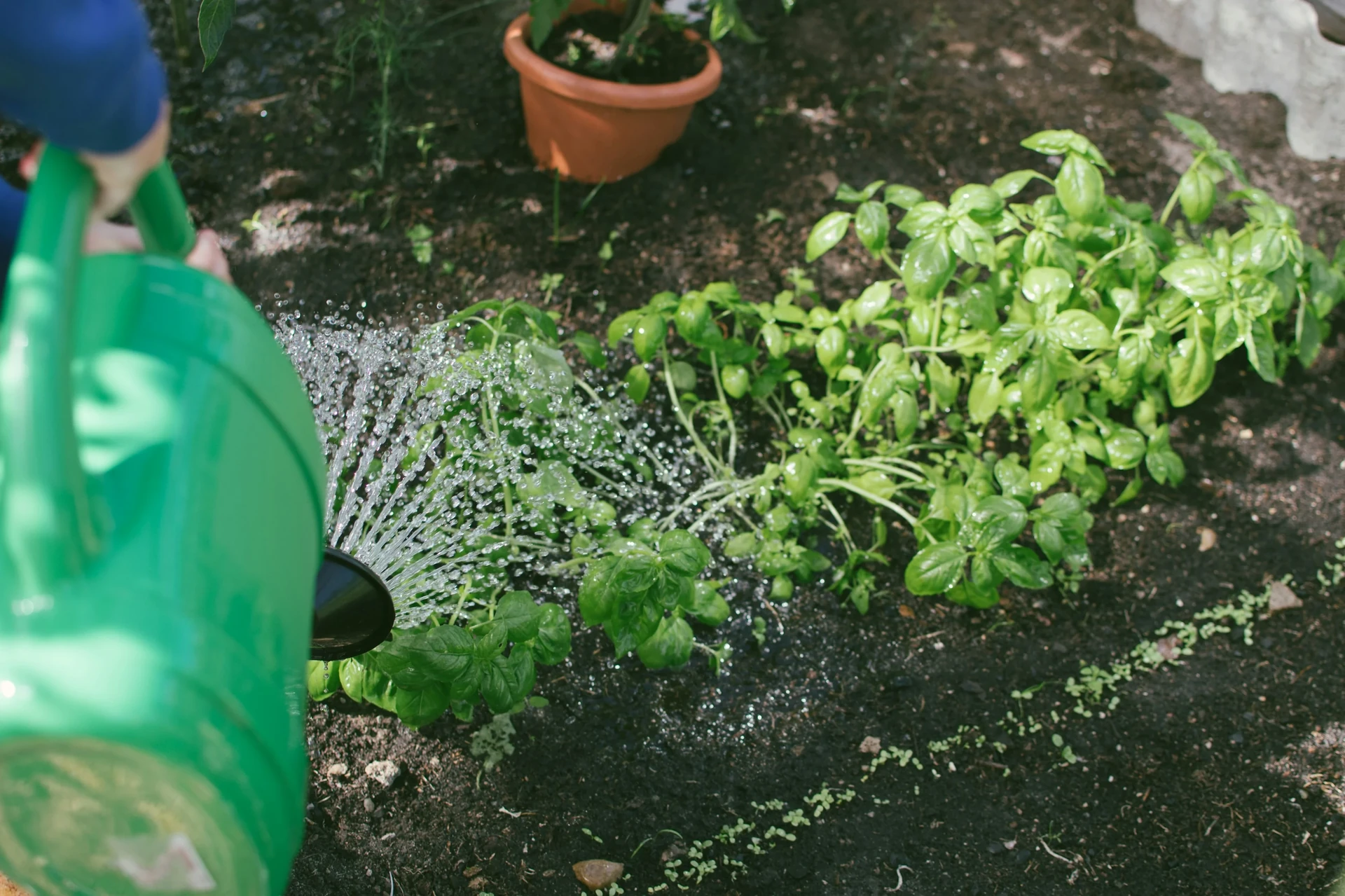
Start with the fertilizer product's labeled concentration for the intended plant or crop. Use the PlantSolve Fertilizer Dosage Calculator to convert a labeled rate to the water volume you need.
Do not use a generic 0.5-1 g/L or 2-4 g/L recommendation as a universal rate because different 10-26-26 products can have different formulations and directions.
2. Foliar Spray
Use a foliar application only when the specific product label permits it and provides a foliar concentration. A soil-drench rate should never be assumed to be safe for leaves.
3. Fertigation
In irrigation systems, fertilizer is usually managed against a target concentration set by a label or a crop-specific program. Check compatibility before mixing several products in one tank or stock solution, since some combinations form precipitates that can clog emitters.
NPK 10-26-26 vs Balanced Fertilizers
Balanced analyses such as 10-10-10 or 20-20-20 contain equal labeled proportions of nitrogen, phosphate, and potash. NPK 10-26-26 contains a lower nitrogen percentage and higher phosphate and potash percentages. The different analyses may serve different nutrient programs, but neither ratio is universally better.
| Product | N in 100 g | P₂O₅ in 100 g | K₂O in 100 g |
|---|---|---|---|
| 10-10-10 | 10 g | 10 g | 10 g |
| 20-20-20 | 20 g | 20 g | 20 g |
| 10-26-26 | 10 g | 26 g | 26 g |
Compared with 10-10-10, 10-26-26 supplies the same nitrogen but 2.6 times as much P₂O₅ and K₂O per 100 g. Compared with 20-20-20, it supplies half the nitrogen and about 30% more P₂O₅ and K₂O. For more balanced-product detail, see the NPK 20-20-20 guide, the NPK 19-19-19 guide, and the NPK ratio comparison guide.
Switching From a Balanced Fertilizer
Because the nutrients are not in equal proportion, you cannot match every nutrient at once when changing from a balanced product. This example shows why, and it is not an application rate.
- 100 g of 20-20-20 supplies 20 g of N, 20 g of P₂O₅, and 20 g of K₂O.
- To supply the same 20 g of nitrogen from 10-26-26, you would need about 200 g of product (20 ÷ 0.10).
- That 200 g would also supply about 52 g of P₂O₅ and 52 g of K₂O, roughly 2.6 times the phosphate and potash of the original program.
Matching nitrogen therefore means a large jump in phosphate and potash, while matching phosphate would leave nitrogen well below the earlier level. Neither is automatically right, which is why the label directions and the plant's actual requirements should guide the switch rather than simple mass conversion.
How to Measure for Small Pots
- Confirm that the label rate applies to your plant and application method.
- Decide how much solution you need and measure the water.
- Weigh the fertilizer on a small scale if the label gives grams, since volume measures such as teaspoons can vary between products.
- Stir until fully dissolved before applying.
- Apply only what the pot and medium require, allowing excess to drain where the container has drainage.
Do not make a stronger mix to compensate for a small pot. A small root zone builds up salts faster.
Unit Conversion Example (Hypothetical Label Rate)
This example only illustrates the arithmetic. The 1 g/L figure is a made-up label rate and is not a recommendation for any product or plant. Always use the figure on your own label.
- Per US gallon: 1 US gallon is about 3.785 liters, so 1 g/L × 3.785 ≈ 3.8 g per US gallon.
- Per UK (imperial) gallon: 1 UK gallon is about 4.546 liters, so the same concentration is about 4.5 g per UK gallon.
- For a small batch: To prepare 500 mL, 1 g/L × 0.5 L = 0.5 g of fertilizer.
- Nutrients supplied: 0.5 g of 10-26-26 contains about 0.05 g N, 0.13 g P₂O₅, and 0.13 g K₂O.
Where 10-26-26 Is Commonly Considered
- Flowering houseplants: Follow the houseplant or flowering-plant directions on the label, and remember that light and temperature often matter more than fertilizer.
- Fruiting vegetables: Crops such as tomatoes and peppers have different needs from leafy vegetables. Use crop-specific label directions and any edible-crop restrictions. The presence of flowers does not by itself mean the crop needs this analysis.
- Bulbs and tubers: Use only if the label recommends it for the crop. A high-phosphate analysis does not automatically improve bulb or root development.
- Established ornamentals: Consider it when the nutrient program calls for a lower-nitrogen analysis, and evaluate light and other growing conditions first.
Phosphorus Considerations
Because 10-26-26 carries a high proportion of phosphate, a few extra cautions apply.
- Nutrient interactions: Excess phosphorus in a growing medium can interfere with the uptake of some micronutrients, such as iron and zinc. Chronic over-application can therefore create problems rather than solving them.
- Runoff: Phosphorus that reaches streams, ponds, or drains can contribute to water-quality problems. Avoid applying fertilizer where runoff can leave the site, and do not apply before heavy rain unless the label allows it.
- Local rules: Some regions restrict phosphorus-containing fertilizers for certain uses such as lawns. Check local regulations and label directions.
Reading Plant Signs
Symptoms are rarely specific to one cause, so treat them as prompts to investigate.
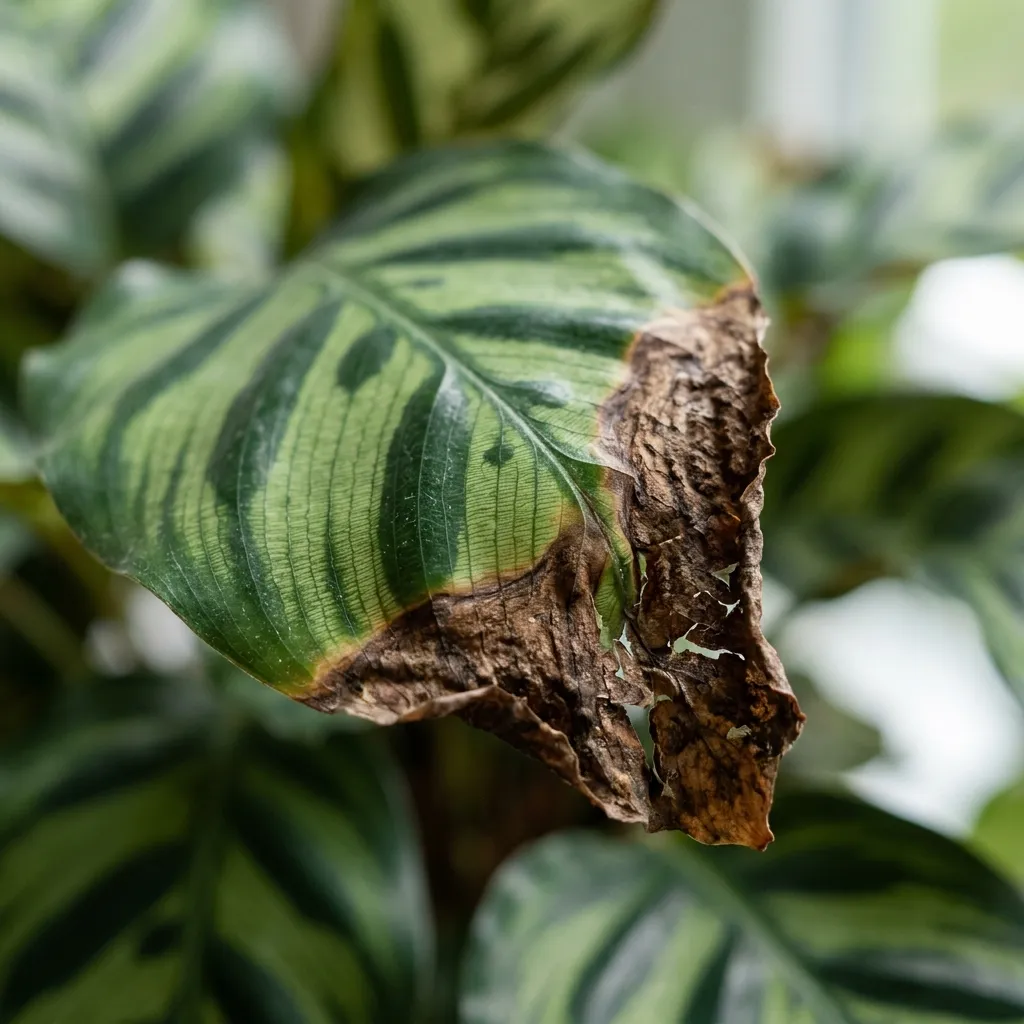
- Possible excess: Brown leaf tips or margins, white crust on the medium, wilting despite moist medium, or sudden leaf drop after feeding.
- Possible nitrogen shortfall after switching: Slower leaf growth or paler foliage, though light, water, and root problems can look similar.
- Possible non-nutrient causes: Bud drop, poor flowering, and stunted growth are frequently caused by light, watering, temperature, pests, or disease rather than fertilizer.
Correct growing conditions first, review the label rate, and change one variable at a time.
Mixing and Storage Tips
- Mix fresh: Prepare only what you will use unless the label says a prepared solution can be stored.
- Store dry: Keep the product in its original, tightly closed container in a cool, dry place, away from children and pets.
- Label mixing containers: Make sure they cannot be mistaken for drinking water.
Safety Warnings and Precautions
- Follow the product label: The NPK analysis alone does not determine a universal dilution or application frequency.
- Measure accurately: Avoid estimating concentrated fertilizer, especially for small containers.
- Watch for salt accumulation: Repeated applications can contribute to soluble-salt buildup in container media. Where appropriate, leach the growing medium with plain water and maintain adequate drainage.
- Do not automatically switch at flowering: Flowering stage alone does not establish that a plant requires a high-phosphate fertilizer.
- Foliar use: Apply as a foliar spray only when the product label specifically permits it and supplies a foliar rate.
- Handle safely: Follow the label's handling and first-aid directions, avoid inhaling dust, and keep fertilizer away from children, pets, food, and open water sources.
Practical NPK 10-26-26 Application Strategies
| Plant Situation | Starting Approach | Application Method | Frequency / Context | Adjustment / Safety Note |
|---|---|---|---|---|
| Flowering houseplants | Use the product's labeled houseplant or flowering-plant rate | Soil drench when permitted by the label | Follow product-specific directions | Do not assume a fixed 0.5-1 g/L rate applies to every formulation. |
| Fruiting vegetables | Use the labeled rate for the specific edible crop | Soil application or drench when permitted | Follow crop-specific directions | Flowering does not automatically mean the crop requires 10-26-26. |
| Bulbs and tubers | Use only when the product label recommends the formulation for the crop | Application method specified by the label | Follow product-specific directions | Do not assume a high-phosphate analysis automatically improves root or bulb development. |
| Established ornamental flowering plants | Use the labeled rate when the nutrient program calls for a lower-nitrogen analysis | Soil drench or other labeled method | Follow product label and plant requirements | Flowering depends on more than fertilizer ratio; evaluate light and other growing conditions. |
| Young seedlings and transplants | Use only the rate specifically labeled for young plants, if provided | Application method specified by the label | Follow establishment-stage directions | Do not automatically use a mature flowering-plant rate on young roots. |
| Foliar application | Use only a manufacturer-labeled foliar concentration | Foliar spray | Follow product-specific directions | Never substitute a soil-drench rate for a foliar rate. |
Troubleshooting & Diagnostics Guide
1 Plant has healthy foliage but is not flowering
Diagnosis: Poor flowering can have many causes, including insufficient light, unsuitable temperature, plant maturity, watering problems, genetics, or nutrient imbalance. It should not automatically be attributed to a lack of phosphorus.
Treatment: Check light, watering, temperature, plant maturity, and overall growing conditions before changing fertilizer. Use 10-26-26 only when the plant's nutrient requirements and product label support it.
2 Buds form but drop before opening
Diagnosis: Bud drop can result from environmental stress, inconsistent watering, temperature changes, pests, disease, or other plant-specific factors.
Treatment: Check environmental conditions and plant health first. Do not assume that increasing 10-26-26 will solve bud drop.
3 Leaf growth slows after switching to 10-26-26
Diagnosis: The fertilizer contains a lower nitrogen percentage than balanced analyses such as 20-20-20, so it supplies less nitrogen per unit of fertilizer when applied at the same mass.
Treatment: Review the plant's actual nutrient requirements and compare the product label with the previous fertilizer program. Do not increase the dose simply to compensate for the lower nitrogen percentage.
4 Leaf burn after applying 10-26-26
Diagnosis: The fertilizer may have been applied at excessive concentration, too frequently, or using an application method not permitted by the label.
Treatment: Stop fertilizing temporarily, review the product directions, and assess the growing medium for soluble-salt accumulation. For containers, leach with plain water when appropriate and ensure adequate drainage.
5 White or crusty deposits on container soil
Diagnosis: Repeated applications of soluble fertilizer can contribute to soluble-salt accumulation in container media.
Treatment: Review fertilizer concentration and frequency against the product label. Where appropriate, flush the container with plain water and maintain adequate drainage.
Glossary of Terms
- Bloom Booster
- A marketing or product category commonly used for fertilizers with relatively higher phosphorus and/or potassium proportions compared with nitrogen. The term does not guarantee increased flowering.
- NPK Analysis
- The fertilizer analysis expresses the percentage by weight of total nitrogen (N), available phosphate expressed as P₂O₅, and soluble potash expressed as K₂O.
- Phosphate
- In conventional fertilizer analysis, the middle NPK number represents available phosphate expressed as P₂O₅ rather than elemental phosphorus.
- Potash
- In conventional fertilizer analysis, the third NPK number represents soluble potash expressed as K₂O rather than elemental potassium.
Frequently Asked Questions
What is NPK 10-26-26 used for?
When should I use NPK 10-26-26?
Is NPK 10-26-26 safe for houseplants?
How much NPK 10-26-26 should I use per liter?
How much NPK 10-26-26 should I use per gallon?
How often should I apply NPK 10-26-26?
Can I use NPK 10-26-26 on vegetables?
Can NPK 10-26-26 make plants flower more?
What is the difference between NPK 10-26-26 and a balanced fertilizer?
Can I use NPK 10-26-26 during vegetative growth?
Can I use NPK 10-26-26 as a foliar spray?
Will NPK 10-26-26 burn my plants?
Is NPK 10-26-26 organic or synthetic?
Explore More