Soil pH Calculator: Correct Your Soil with Lime or Sulfur
Know exactly how much lime or elemental sulphur you need to reach your target soil pH. No more over‑application or wasted amendments.
Quick Answer
To raise pH, apply agricultural limestone. To lower pH, use elemental sulphur (not aluminium sulphate – it risks aluminium toxicity). The amount depends on your current pH, target pH, and soil type: clay soils need up to 60% more material than sandy soils because they buffer pH changes. Always wait 3-4 months after applying lime (or 4-6 months for sulphur) before retesting. Never apply more than 5 lbs of sulphur per 100 sq ft (250 g/m²) at once.
Enter your details
Enter your details below to generate a custom recommendation.
Recommended Output
Total Material Required
Application Rate
Application Method
Safety & Timing Advice
The Problem
Adding too much lime or sulphur can severely damage soil chemistry and take years to correct. Most gardeners guess the amount, leading to nutrient lockout.
When to Use This Tool
Use immediately after receiving a soil test report, before planting season begins.
Who is this for?
- Gardeners preparing beds for acid-loving plants like blueberries
- Lawn care enthusiasts fixing acidic turf
How to Calculate Soil pH Amendments
- Test Current Soil pH: Collect a representative soil sample 4 to 6 inches deep and test using a calibrated digital probe or laboratory soil test kit.
- Identify Target pH: Select your target pH range based on your plant species (e.g., 4.5 to 5.5 for acid-loving crops like blueberries; 6.0 to 7.0 for general vegetables and turf).
- Calculate Amendment Dosage: Input your current pH, target pH, square footage, and soil texture (sand, loam, or clay) to determine the exact weight of elemental sulfur (to lower pH) or agricultural lime (to raise pH).
- Incorporate into Substrate: Broadcast the calculated amendment weight evenly over the area and till into the top 4 to 6 inches of soil 3 to 4 weeks prior to planting.
About this calculator
Adjusting soil pH is the single most important step in nutrient management – more important than any single fertilizer you can add.
The Science: Why pH Controls Everything
Soil pH dictates which nutrients are chemically available to plant roots. In acidic soils (low pH), iron, manganese, and aluminium become too soluble – potentially toxic. In alkaline soils (high pH), phosphorus, iron, and zinc form insoluble compounds that plants cannot absorb. The sweet spot for most vegetables, lawns, and ornamentals is pH 6.2–6.8, where nearly all nutrients are maximally available.
Blueberries, azaleas, rhododendrons, and potatoes prefer acidic soil (pH 4.5–5.5), while asparagus, lavender, and clematis thrive in slightly alkaline conditions (pH 7.0–7.5). Always match your target pH to the plants you're growing.
How Lime Works (Raising pH)
Agricultural limestone (calcium carbonate or dolomitic lime) neutralises soil acidity by releasing calcium and magnesium carbonates. It reacts slowly – it can take 3 to 6 months to fully change pH, depending on soil moisture, temperature, and how finely it's ground. Pelletised lime is easier to spread but reacts at the same slow rate. Never use hydrated lime (builder's lime) – it acts too quickly and can burn roots.
How Sulphur Works (Lowering pH)
Elemental sulphur is the safest and most reliable acidifier. Soil bacteria (Thiobacillus species) oxidise sulphur into sulphuric acid, which lowers pH. This biological process requires warm, moist soil and can take 4 to 8 months. Do not expect rapid results. Aluminium sulphate can lower pH quickly, but repeated use builds up toxic aluminium – avoid it for edible gardens.
Soil Texture = Buffering Capacity
Clay soils have a massive surface area and high 'buffering capacity' – they resist pH changes. To shift clay soil by 1 pH point, you need roughly twice the lime or sulphur compared to sandy soil. Our calculator automatically applies these texture factors (clay = 1.6×, sand = 0.7×, loam = 1.0×).
Application Best Practices
- Apply lime or sulphur evenly using a broadcast spreader (drop or rotary) for large areas.
- Water lightly after application to move material into the root zone.
- For existing beds, incorporate into the top 4-6 inches (10-15 cm) where possible. For lawns, apply and water in.
- Never exceed 5 lbs of sulphur per 100 sq ft (250 g/m²) in a single application. If more is needed, split into two applications 3 months apart.
- For large pH changes (>1.5 points), plan amendments over two seasons.
Visual Reference: Testing Soil
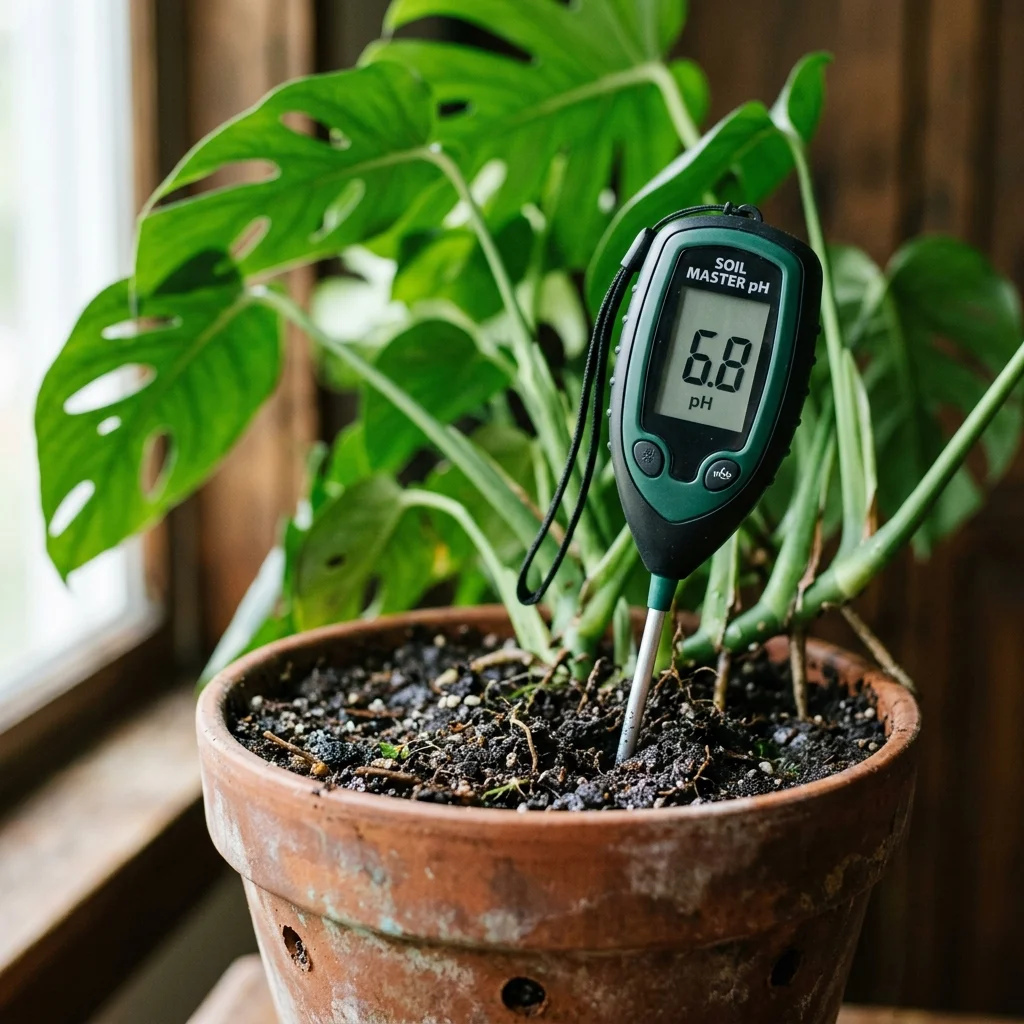
Using a Digital Meter: When testing, ensure the probe is clean and inserted deep into wet soil near the root zone. A digital meter provides the specific decimal readings needed for this calculator.
Recommended next actions
Next Best Actions
Use the result in a real care workflow with plant profiles, guides, and personalized quizzes.
Troubleshooting & Diagnostics Guide
1 I applied lime 2 weeks ago and the pH hasn't changed
Diagnosis: Agricultural limestone is practically insoluble in water. It requires time and soil microbial activity to break down.
Treatment: Wait at least 3 to 4 months before re-testing the soil. Keep the soil moderately moist to help the reaction.
2 Leaves are turning yellow between the veins after adding sulphur
Diagnosis: Rapid pH drop can induce magnesium or iron deficiency, or the sulphur application rate was too high (above 5 lb/100 sq ft).
Treatment: Test soil pH immediately. If pH has dropped below 5.0 for most vegetables, stop further applications and add finely ground lime cautiously. For mild yellowing, apply a foliar spray of Epsom salts (magnesium) or chelated iron.
3 Plants look stunted, and the soil surface has a white crust after repeated lime applications
Diagnosis: Over-liming has raised pH above 7.5, causing calcium to precipitate and lock up phosphorus, iron, and manganese.
Treatment: Stop adding lime. Incorporate organic matter (compost, leaf mould) to help buffer the excess alkalinity. For severe cases, add elemental sulphur very slowly (1 lb per 100 sq ft per season) while monitoring pH monthly.
4 I applied sulphur six months ago, and pH hasn't changed at all
Diagnosis: Sulphur oxidation requires warm, moist, well-aerated soil. Cold, dry, or compacted soil slows bacteria to a crawl.
Treatment: Ensure the soil is not waterlogged. Aerate compacted areas. In cold climates, apply sulphur in early spring so it has the full growing season to react. Consider using a finer grind (pelletised sulphur can be slower).
Frequently Asked Questions
Can I use aluminum sulfate instead of elemental sulphur?
Why do I need to know my soil type?
How long should I wait after applying lime or sulphur before retesting pH?
Can I add lime and sulphur at the same time?
Will wood ash raise pH like lime?
My soil test says 'buffer pH' – what is that?
Reader Feedback
Feedback from PlantSolve readers who have used this guide. (2 reviews)
Sarah T.
London, UK
Estimated sulfur amendment for alkaline soil
My soil pH was too alkaline for the blueberries I was planting. The amendment calculation gave me a clear baseline for how much sulfur treatment to apply.
Austin E.
Raleigh, NC
Calculated garden lime application rate
My clay soil tested acidic at 5.2 pH. Told me how many pounds of agricultural lime to till in to target a 6.5 pH level for my lawn.