Alocasia Black Velvet Care: Getting Soil & Humidity Right
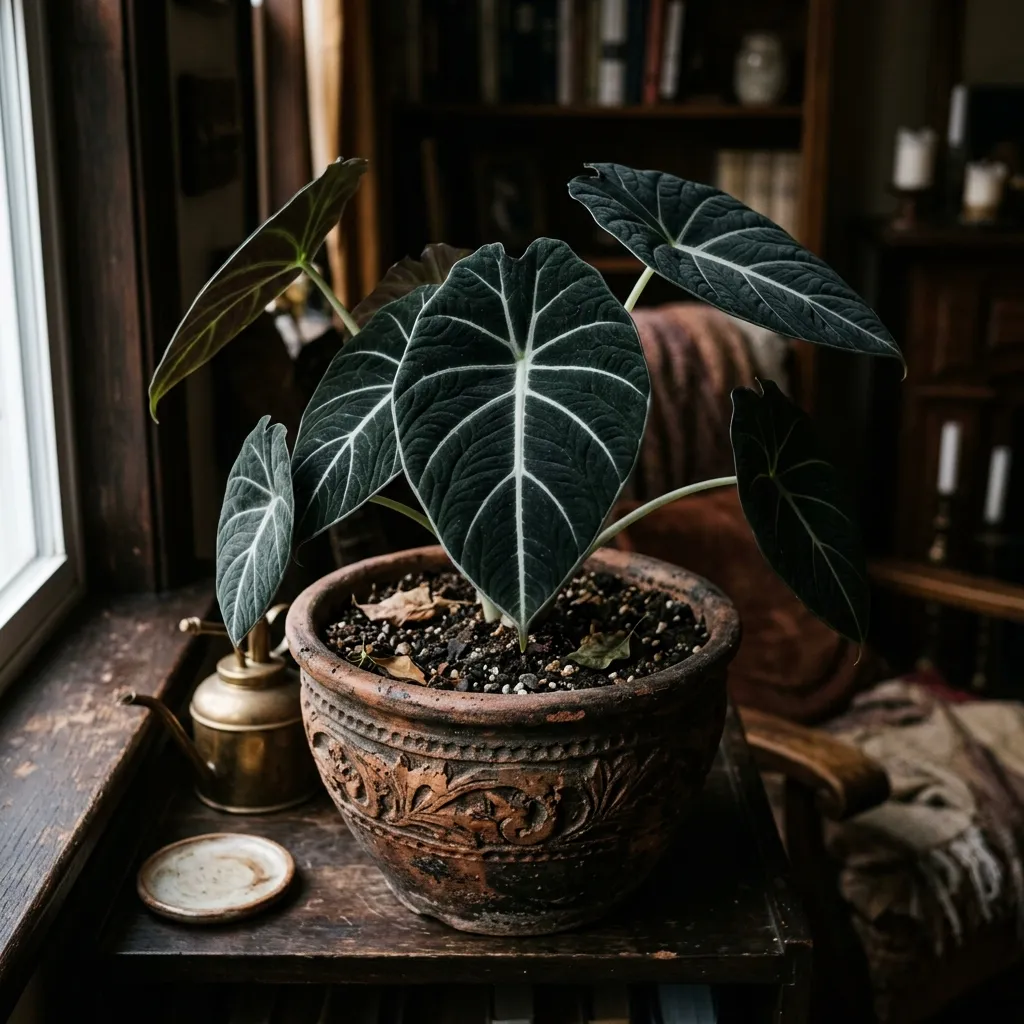
Alocasia reginula
After growing and propagating over 80 Alocasia specimens across humid subtropical and temperate climates, we have mastered the exact soil and humidity requirements needed to keep the Black Velvet thriving through summer humidity swings and dry winter heating.
-
Light
Thrives in bright, dappled sunlight similar to a rainforest understory. Direct sun will severely scorch the velvety leaves.
-
Temperature
65-80°F (18-27°C)
Growth
slow
pH Range
5.5-6.5
-
Biggest Owner Mistake
Keeping the soil constantly moist because owners treat it like a tropical that needs perpetual wetness—but its thick rhizome stores water between drinks, and soggy soil causes root rot within days. Let the top inch dry out before watering again.
-
What Nobody Tells You
It naturally holds only 2–3 leaves at a time—when a new leaf unfurls, the oldest one yellows and dies as part of its normal growth cycle. This turnover is not a nutrient problem; it's how this species is built.
-
Real Home Conditions
In low-humidity homes, the velvety leaf surface desiccates quickly, causing edges to crisp and the dark color to dull. It thrives in bathrooms or kitchens where ambient steam keeps humidity naturally elevated.
Quick Answer
Alocasia Black Velvet needs high humidity (60%+), bright indirect light, and a chunky, fast-draining soil mix to avoid deadly root rot. Never mist its velvety leaves.
The Alocasia reginula is the undisputed crown jewel of moody indoor foliage, but watching its thick, velvety black leaves curl, crisp, and drop within weeks of bringing it home from the nursery is a frustrating rite of passage. This plant is notoriously unforgiving of standard indoor conditions, specifically the wild swings between high summer humidity and bone-dry, air-conditioned indoor air. To keep this striking specimen alive and pushing out new growth, you have to stop treating it like a standard houseplant and start managing its microclimate.
Light
In its native Southeast Asian habitat, the Black Velvet grows exclusively on the forest floor, shielded by a dense canopy. Replicate this indoors by providing 12 to 14 hours of bright, indirect light daily. An east-facing window with a sheer curtain is ideal. Placing the plant in direct sunlight will permanently scorch the dark foliage within 48 hours, bleaching the black pigment into a pale, sickly yellow. If your indoor space lacks natural light, position a full-spectrum LED grow light exactly 12 inches above the canopy.
Temperature
This species thrives in a tight thermal window of 65°F to 80°F (18°C–27°C). While summer heatwaves easily exceed this, the real danger is the air conditioning you use to combat the heat. Placing an Alocasia directly in the path of a cold AC draft causes immediate thermal shock, prompting the plant to drop its leaves. Keep the plant in a temperature-stable room away from sudden blasts of artificially cooled air.
Humidity
Humidity is the absolute non-negotiable factor for this plant. It requires a sustained relative humidity of 60% to 80%. During natural high-humidity periods, ambient moisture is perfect, but when the AC or winter heating is running constantly, indoor humidity plummets to a lethal 30% to 40%. You must run an ultrasonic humidifier 60 cm away from the plant during AC hours. Do not mist the velvety leaves; water droplets trapped in the fine leaf hairs create the perfect breeding ground for fungal infections.
Watering
The fastest way to destroy this plant is overwatering it. The thick leaves and stems store water, making it surprisingly drought-tolerant for a tropical species. Water thoroughly until liquid flows from the drainage holes, but allow the top 5 cm (2 inches) of the soil to dry completely before watering again. If the soil remains soggy for more than 3 days, the fleshy roots will suffocate. Use our watering calculator to establish a baseline, adjusting for slower evaporation rates during cooler or more humid months.
Soil
Standard potting soil is an immediate death sentence for an Alocasia reginula. It requires an extremely chunky, highly aerated "aroid mix." Combine 30% high-quality potting soil, 30% orchid bark, 30% coarse perlite, and 10% horticultural charcoal. This structural matrix ensures that water flushes through the pot instantly, pulling fresh oxygen down to the roots and preventing the suffocating conditions that cause rot.
Fertilizer
Despite their slow growth rate, Alocasias are heavy feeders that require massive nutrient reserves to push out their thick, heavily veined leaves. Feed the plant every 14 days during the active growing season (spring and summer) using a liquid fertilizer diluted to half the recommended label strength. The optimal NPK ratio is 3-1-2, prioritizing nitrogen for foliage and potassium for root health. Cease all fertilization during the cooler winter months when the plant enters dormancy, as unused chemical salts will burn the resting roots. If you see signs of salt buildup, refer to our fertilizer burn guide.
Propagation
You cannot propagate an Alocasia from a leaf or stem cutting. They propagate exclusively by producing small, bulb-like structures called corms beneath the soil surface. To harvest corms, wait until the annual spring repotting. Gently sift through the root system and locate the hard, pea-sized bulbs attached to the main root mass. Snap them off cleanly, peel away the thin brown outer husk, and place them in a shallow container of damp sphagnum moss inside a high-humidity propagation box. Roots will emerge in 3 to 5 weeks.
Repotting
Alocasias prefer to be slightly root-bound and resent unnecessary root disturbance. Repot only every 18 to 24 months, strictly during the active growing season (early spring to mid-summer). When upgrading, choose a pot only 2 inches wider in diameter than the current container. Carefully remove the plant, leaving the central root ball largely intact to prevent tearing the microscopic root hairs, and backfill with your fresh aroid mix. Water lightly to settle the soil.
Toxicity
The Alocasia Black Velvet is highly toxic to cats, dogs, and humans. The plant tissues contain microscopic, needle-like calcium oxalate crystals. If chewed or swallowed, these crystals embed themselves in the mucous membranes, causing severe, immediate swelling of the mouth, tongue, and throat, accompanied by intense pain and excessive drooling. The plant must be kept on high shelves or inside enclosed greenhouse cabinets out of reach of pets and small children.
Common Problems
The two most devastating issues for this species are root rot and spider mites. Root rot manifests as lower leaves turning completely yellow and dropping, accompanied by a sour smell from the soil. This is always the result of dense soil or overwatering. Spider mites are drawn to the plant during dry, air-conditioned periods. They hide on the undersides of the leaves, sucking sap and causing the dark foliage to look dusty, stippled, and grey. Wipe the leaves proactively with a damp microfiber cloth every 10 days to physically remove mites before an infestation takes hold.
Recommended next actions
Next Best Actions
Use calculators and guides to turn this plant profile into a practical care routine.
Calculator
Plant Humidity Calculator: Right Levels for Tropical Plants
Assess your home's current humidity and get specific improvement recommendations for tropical houseplants like Calatheas, Orchids, and Ferns.
Calculator
Plant Watering Calculator: How Often to Water
Calculate the correct watering frequency for your plant based on species, pot size, soil type, season, and climate.
Guide
Alocasia Care Guide: Light, Humidity & Water Needs
After successfully growing and rescuing over 80 Alocasia plants across 7 years in varying home environments, we've refined the exact conditions these dramatic elephant ear plants need to thrive indoors.
Guide
How to Increase Humidity for Calatheas (Without Mold)
After maintaining high-humidity greenhouse environments and rescuing hundreds of tropicals over the last 10 years, we have mastered the exact microclimate techniques needed to keep Calatheas thriving without crispy brown edges.
Guide
Fertilizer Burn on Houseplants: Symptoms & Fix Guide
Fertilizer burn is one of the most misdiagnosed houseplant problems because its symptoms — brown tips, wilting, yellowing leaves — are nearly identical to overwatering, underwatering, and root rot. The treatment for root rot is opposite to the treatment for fertilizer burn, which means getting the diagnosis wrong makes the plant worse. This guide is built around that diagnostic problem first.
Calculator
Repotting Calculator: Does Your Plant Need a Bigger Pot?
Find out if your plant needs repotting now and get the correct new pot size based on species, current pot size, and root health indicators.
Structured Plant Data
Plant Data Profile
Care values below are generated from the plant JSON fields so users and crawlers can read the structured plant profile directly on the page.
Growth Characteristics
Growth Rate
slow
Mature Height
1-2 feet
Mature Spread
1-1.5 feet
Life Cycle
Perennial
Flowering Season
Spring
Container Friendly
yes
Indoor Capable
yes
Environmental Parameters
| Parameter | Recommended | Survivable |
|---|---|---|
| Temperature | 65-80°F (18-27°C) | 60-85°F (15-29°C) |
| Humidity | 60-80% | 50-90% |
| Soil PH | 5.5-6.5 | 5.0-7.0 |
Lighting
Description
Thrives in bright, dappled sunlight similar to a rainforest understory. Direct sun will severely scorch the velvety leaves.
Nutrients
Nitrogen Demand
high
Phosphate Demand
moderate
Potassium Demand
high
Micronutrient Notes
Heavy feeders during the growing season. Prone to calcium deficiency.
Fertilizer Frequency
Feed every 2 weeks during spring/summer with a half-strength liquid fertilizer.
Organic Options
Top dress with worm castings.
Relationships
-
Root Rot
Vulnerability | Strength 9
Their thick, fleshy roots are highly susceptible to rot if left sitting in dense, waterlogged soil.
Alocasia Variety Comparison
| Variety | Key Feature | Size |
|---|---|---|
| Black Velvet (A. reginula) | Dark, nearly black textured leaves with white veins | Compact (1-2 ft) |
| Polly (A. amazonica) | Arrow-shaped glossy leaves with distinct edges | Medium (2-3 ft) |
| Zebrina | Tall stalks with striking zebra-striped patterns | Large (3-5 ft) |
Troubleshooting Guide
1 Yellowing leaves
Cause: Overwatering or poor drainage leading to root suffocation.
Check the roots immediately for mushiness. Repot into a chunkier soil mix.
Glossary of Terms
- Aroid Mix
- A chunky, airy potting medium designed for plants in the Araceae family, usually consisting of orchid bark, perlite, and soil to prevent root rot.
- Corm
- A small, swollen underground plant stem that serves as a storage organ. Alocasias propagate by producing corms rather than leaf cuttings.