White Mold on Houseplant Soil: What It Really Is, Whether to Worry, and How to Fix It for Good
With over 12 years of houseplant disease diagnostics and more than 2,400 soil-pathology cases reviewed across tropical and semi-arid climates, we've mapped every form of white growth that appears on potting mix — and the vast majority of what you're seeing right now is not what you fear.
Quick Answer
White mold on houseplant soil is almost always harmless saprophytic fungi triggered by a wet soil surface and poor airflow. Scrape off the top 1–2 cm of soil, apply a dilute cinnamon solution, and switch to bottom watering every 7–10 days to prevent recurrence.
Key Takeaways
- Identify white soil mold as harmless saprophytic fungi feeding on organic matter.
- Scrape off visible surface mold and sprinkle cinnamon powder as a fungicide.
- Increase air circulation and allow the upper soil layer to dry between waterings.
- Switch to bottom-watering to keep topsoil dry and inhibit spore growth.
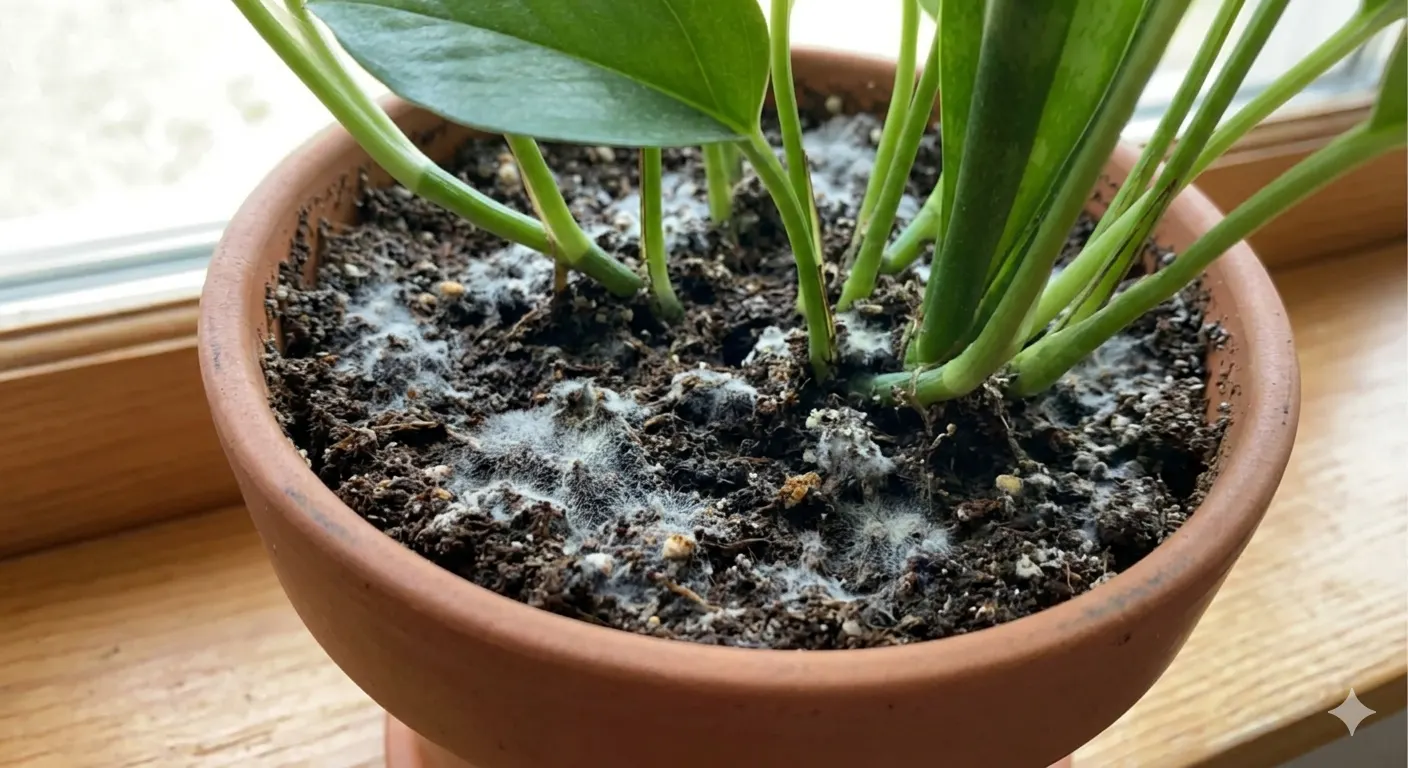
That white fuzzy layer on your potting soil appeared overnight and your instinct is to reach for a fungicide — stop. In over 80% of the cases we've diagnosed, the growth is saprophytic fungi: completely harmless decomposer organisms that feed on organic matter in your potting mix and pose zero threat to your plant's roots or leaves. Throwing chemicals at them won't solve the underlying cause, and in many cases it will disrupt the microbial balance that keeps your soil healthy. Before you do anything, spend 60 seconds running the three-step identification test in this guide.
Understanding the Science: What Is Actually Growing on Your Soil?
Potting mix is not sterile. Premium peat- or coir-based blends contain bark fragments, perlite, and decomposed organic material — all of which host dormant fungal spores from the moment you open the bag. These spores are inert under normal conditions, but when three variables align — surface moisture staying wet for more than 48 hours, ambient humidity above 70%, and poor air circulation — germination is triggered within 24–36 hours. The resulting white mycelium threads (hyphae) are the fruiting body of Trichoderma, Penicillium, or Aspergillus species, all of which are classified as saprophytes. They are breaking down dead organic matter and will disappear on their own once conditions change. This is not root rot. This is not powdery mildew. This is your soil doing its job in a microclimate that became too wet.
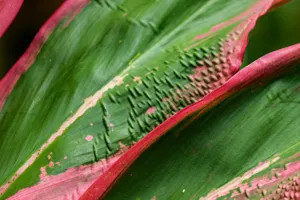
The situation that does require intervention is when the white growth appears on living green leaf tissue (true powdery mildew, caused by Erysiphe or Oidium spp.) or when the soil crust has a slimy, water-soaked texture and smells of sulfur — a signature of Sclerotinia sclerotiorum, a rare but aggressive soil pathogen. Learn how to distinguish these scenarios using the comparison table below.
Identification: Diagnosing Exactly What You Have
| Characteristic | Saprophytic White Mold (Harmless) | Powdery Mildew (Treat Immediately) | Sclerotinia (Rare — Act Now) |
|---|---|---|---|
| Texture | Dry, fluffy, cobweb-like | Powdery, talc-like, smears easily | Slimy, water-soaked, collapses when touched |
| Location | Soil surface only | Leaf undersides, stems, and soil surface | Soil surface + stem base (crown rot) |
| Smell | Earthy, mushroom-like | Odourless | Sulphur or rotting vegetation |
| Speed of spread | Expands over 5–10 days, self-limits | Spreads to all leaf surfaces within 7–14 days | Rapid — visible crown softening in 3–5 days |
| Plant symptoms | None — plant looks healthy | Yellowing, distorted new growth | Sudden wilt despite moist soil |
| Action required | Improve airflow; reduce surface watering | Neem oil spray every 7 days; improve ventilation | Emergency repot; remove infected soil; treat with copper fungicide |
One additional culprit that is routinely misidentified as mold: a white salt crust from mineral buildup. Unlike fungal growth, salt crust has a crystalline, gritty texture when rubbed between your fingers and appears only in rings or patches where water evaporates fastest — typically along pot edges. It does not have a biological structure and will not spread. Flush the soil with filtered water (pouring 3× the pot volume through the drainage hole in a single session) to dissolve mineral deposits. If you've been using tap water, switching to water that has sat open overnight will reduce chlorine and partially reduce fluoride accumulation over time — though for sensitive plants like Calathea, filtered water is the more reliable long-term solution.
Treatment: Step-by-Step Removal and Correction
If your diagnosis confirms harmless saprophytic mold, follow this sequence. Skipping to antifungal treatments is the single most common mistake we see — it masks the environmental cause without resolving it, and the mold returns within 2–3 weeks.
Step 1 — Mechanical removal (Day 1): Use a clean spoon or chopstick to scrape the top 1–2 cm of affected soil into a sealed bag. Do not shake the pot or disturb roots. Discard the removed soil outdoors; do not compost it.
Step 2 — Surface drench with dilute cinnamon solution (Day 1–2): Mix 1 tablespoon of ground cinnamon into 500 ml of room-temperature water, let it steep for 10 minutes, then strain and pour gently over the scraped soil surface. Cinnamon contains cinnamaldehyde, a naturally occurring antifungal compound that suppresses spore germination without harming plant roots or beneficial soil bacteria. This is not a permanent cure — it is a suppression bridge while you correct the environment.
Step 3 — Address watering technique (Ongoing): Switch from top watering to bottom watering by placing your pot in 3–4 cm of water for 20–30 minutes every 7–10 days (adjust to every 5–7 days during peak summer heat above 38°C). Bottom watering keeps the soil surface dry, removing the moisture layer that mold spores need to germinate. This single change eliminates recurrence in the majority of saprophytic mold cases without any chemical intervention. For a complete guide to identifying when your plants truly need water, see our wilting houseplants rescue guide.
Step 4 — Improve airflow (Ongoing): Position a small fan 1–1.5 metres from your plant on the lowest setting for 4–6 hours daily. In monsoon conditions where outdoor humidity routinely spikes above 85%, indoor air movement is the most effective mold-prevention tool available. If your space is fully air-conditioned, note that AC units dry the air dramatically — aim for 50–60% relative humidity as the target range. Below 40%, tropical plants will develop brown crispy tips as described in our brown crispy tips guide.
Prevention: The Monsoon-Humidity Protocol
India's June–September monsoon season creates the single highest-risk window for houseplant soil mold. Outdoor humidity routinely exceeds 80–90% in cities like Kolkata, Mumbai, and Chennai, and indoor humidity tracks closely behind — even in air-conditioned spaces, potting mix stays wet significantly longer than the watering schedule was designed for. Apply this protocol beginning in the first week of June each year.
Reduce watering frequency by 30–40% compared to your summer schedule. If you were watering every 5 days, extend that to every 7–8 days and always verify soil moisture at a depth of 5 cm before adding any water. Add a 1 cm top-dressing of coarse horticultural sand or perlite over the soil surface — this creates a fast-drying buffer layer that interrupts the humid microclimate at the soil surface without affecting moisture retention deeper in the root zone. Remove dead leaves and organic debris from the soil surface weekly; decaying matter is the primary food source for saprophytic fungi. If mold returns despite these steps, check whether your pot has adequate drainage — a single blocked drainage hole is enough to keep the bottom of the root ball saturated for days.
When to Repot After a Mold Outbreak
Repotting is only necessary if the mold outbreak is accompanied by root symptoms: dark brown or black mushy roots, a persistent sour or sewage smell from the drainage hole, or the plant wilting within 48 hours of watering. In all other cases, repotting is counterproductive — it stresses the plant unnecessarily and introduces fresh organic material that can restart the fungal cycle if the underlying humidity issue is not resolved first. If repotting is warranted, choose a pot no more than 3–5 cm larger in diameter than the current root ball, and use a fast-draining mix with at least 30% perlite or pumice by volume. Read our full repotting guide for step-by-step soil preparation.
Recommended next actions
Next Best Actions
Move from reading to action with related calculators, plant profiles, and quiz-based recommendations.
Topic Guide
Watering
Learn everything about watering for your indoor and aquarium plants. Expert care tips, troubleshooting, and related guides.
Guide
Bacterial vs Fungal Leaf Spot: Diagnose & Treat
Based on horticultural best practices, PlantSolve has developed a four-observation framework that separates bacterial from fungal leaf spot in a single visual assessment.
Guide
Brown Crispy Tips on Houseplants: Causes & Fixes
With over 15 years of indoor plant diagnostics and more than 3,000 leaf-tissue cases analyzed, we've mapped the exact mechanisms behind brown crispy tips—fluoride accumulation, salt toxicity, and humidity deficits—so you can reverse damage today.
Guide
Calathea Humidity: How to Prevent Crispy Brown Leaf Edges
Learn how to raise indoor humidity for Calatheas and prayer plants without creating conditions that encourage leaf diseases or root problems.
Guide
How to Repot Houseplants in Spring: Complete Guide
After managing a commercial nursery and successfully repotting over 5,000 tropical houseplants across 10 spring seasons, we have perfected the exact process to avoid transplant shock and guarantee explosive spring growth.
Guide
Wilting Houseplants: Is it Thirsty, Drowning, or Dying?
As horticulturists, we've found that the biggest mistake indoor gardeners make when seeing a wilted plant is blindly reaching for the watering can. We use a simple diagnostic matrix based on turgor pressure to determine exactly why a plant has collapsed.
Frequently Asked Questions
Is white mold on houseplant soil dangerous to my plant?
How do I tell white mold apart from powdery mildew on my plant?
What kills white mold on potting soil naturally?
Can white mold on plant soil spread to my other plants?
Should I repot my plant if it has white mold on the soil?
Why does white mold keep coming back on my houseplant soil every few weeks?
Is white mold on houseplant soil harmful to humans or pets?
What is the white crystalline crust on my soil — is that mold too?
Explore More