How to Fix an Overwatered Plant: Step-by-Step Recovery
Learn how to fix an overwatered plant, with or without repotting. This guide covers immediate triage, root-damage checks, recovery, and prevention.
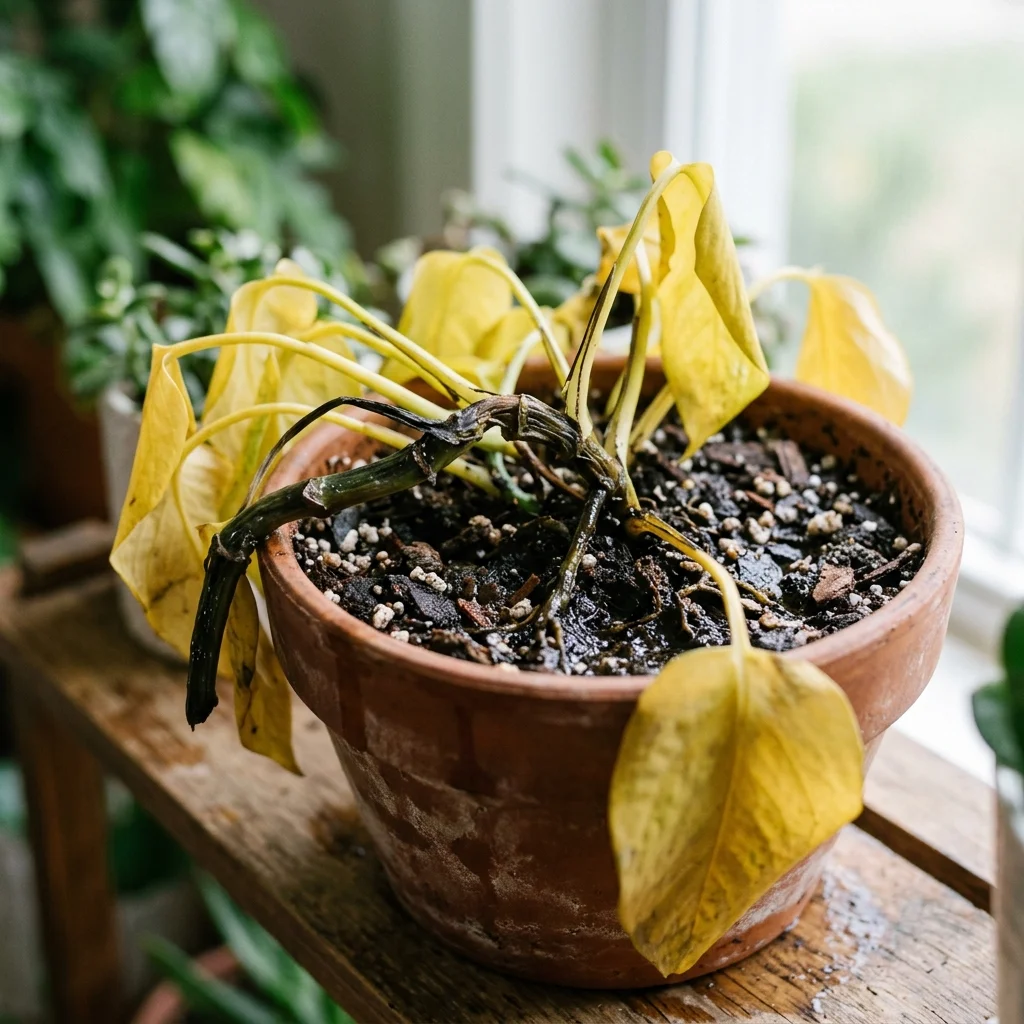
Quick Answer
If a plant is overwatered, stop watering and check how wet the root zone remains. Empty any standing water and make sure the drainage holes are functioning. If the plant is stable and the medium can dry appropriately, repotting may not be necessary. If the medium stays saturated, the plant is declining rapidly, or roots are clearly soft and damaged, inspect the roots, remove severely rotten tissue, and repot into fresh, appropriately structured medium. Recovery time varies with species, root damage, growing medium, and how quickly conditions are corrected.
Key Takeaways
- Stop adding water and check the moisture and drainage of the root zone.
- Determine whether the plant can recover by drying appropriately or needs root inspection and repotting.
- Remove only clearly damaged roots when root rot is present and repot into fresh, appropriately structured medium when necessary.
- Judge recovery by stabilisation and healthy new growth rather than a fixed number of days.
If you need to know how to fix an overwatered plant, start by stopping additional watering and checking how wet the root zone actually is. Empty standing water and check whether the container drains normally. If the plant is stable, allowing the medium to return to an appropriate moisture level may be enough. If the medium remains saturated, the plant is deteriorating, or root damage is suspected, inspect the roots and decide whether repotting is necessary.
What Happens to a Plant When It Is Overwatered?
Roots need oxygen as well as water. When potting mix remains saturated for too long, water fills many of the air spaces around the roots and oxygen availability falls. Prolonged low-oxygen conditions can weaken roots and reduce their ability to absorb water and nutrients.
Damaged roots are also more vulnerable to root and crown diseases. Pathogens such as Phytophthora and Pythium can cause serious root damage under favourable conditions, although the exact cause varies between plants and growing environments.
This creates the confusing situation where an overwatered plant can wilt as though it is thirsty. The problem is not necessarily a lack of water in the soil; damaged roots may simply be unable to transport enough water to the leaves.
Signs Your Plant May Be Overwatered
- Yellowing leaves: Particularly older or lower leaves that become soft as the plant remains stressed.
- Wilting while the soil is wet: A strong warning that the roots may not be functioning normally.
- Soft stems: Especially concerning when softness occurs near the soil line.
- Leaf drop: Root stress can cause older or damaged leaves to fall.
- Slow growth: Persistent root-zone stress can limit normal growth.
- Fungus gnats: Damp organic-rich growing media can support fungus gnat populations.
- Surface mold: Persistent moisture can encourage fungal growth on the surface of the potting mix.
- Unpleasant soil smell: A stagnant or sour smell can indicate that the medium is staying excessively wet.
- Soft, dark roots: Roots that are mushy and deteriorating are a strong indication of root damage.
Overwatering vs. Underwatering: How to Tell the Difference
| Symptom | Overwatering | Underwatering |
|---|---|---|
| Soil moisture | Wet, heavy, or slow to dry | Dry, light, and may pull away from the pot |
| Leaves | Often yellow, soft, or limp | Often dry, crispy, curled, or brown at the edges |
| Wilting | Can occur despite wet soil | Usually occurs when the root zone is dry |
| Roots | May be soft, dark, and deteriorating | May be dry, brittle, or shrivelled |
| Pot weight | Remains heavier than expected | Becomes unusually light |
| After watering | Plant may remain wilted | Plant often begins to recover after adequate watering |
These are diagnostic clues rather than absolute rules. Heat stress, pests, disease, compacted soil, transplant shock, and root damage can produce similar symptoms.
How to Fix an Overwatered Plant
Step 1: Stop Watering
Do not add more water simply because the leaves are wilting. First determine how wet the growing medium actually is.
Check several centimetres below the surface rather than judging only by appearance. You can also lift the pot and compare its weight with how it feels after the medium has dried substantially.
If water is standing in a saucer or decorative cachepot, empty it immediately.
Step 2: Decide Whether the Plant Needs to Be Unpotted
If the plant is otherwise stable and the medium is merely wetter than normal, allowing it to dry may be sufficient. Good airflow and appropriate light can help the plant use and lose moisture naturally.
Unpot the plant if the medium remains saturated for an unusually long period, the plant is deteriorating rapidly, the stem base is soft, or you strongly suspect root rot.
Step 3: Inspect the Roots
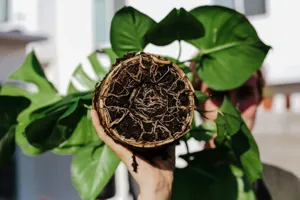
Gently remove the plant from its container and inspect the root system.
Healthy roots are generally firm and may be white, cream, tan, or another normal colour depending on the species. Damaged roots may be soft, mushy, collapsing, or easily separated from the plant.
Do not diagnose root health from colour alone. Some healthy roots naturally become brown or darker as they mature or as they are exposed to the growing medium. Texture and structural integrity are more useful indicators.
Step 4: Remove Severely Damaged Roots
If roots are clearly rotten, use clean, sharp scissors or pruning shears to remove the damaged sections. Cut back to firm, healthy tissue and avoid unnecessarily removing healthy roots.
Clean tools between plants, particularly when disease is suspected, to reduce the chance of transferring pathogens.
Do not automatically remove large amounts of healthy foliage. A plant with fewer roots may need to conserve water, but excessive pruning can also create additional stress. Remove leaves that are clearly dead, badly damaged, or diseased.
Step 5: Repot Into Fresh Growing Medium
If the old medium is waterlogged, badly compacted, or associated with root rot, replace it with fresh, appropriately structured potting mix.
Choose a container with drainage holes and avoid dramatically increasing pot size. The new container should provide enough room for the remaining root system without surrounding it with a large volume of unused wet medium.
Perlite, pumice, coarse bark, or other structural components can improve aeration and drainage when appropriate for the plant. The correct mix depends on the species rather than one universal recipe.
There is generally no need to treat damaged roots with hydrogen peroxide. Concentrated or inappropriate chemical treatments can further stress sensitive tissues. Physical removal of badly damaged roots, fresh medium, appropriate drainage, and corrected watering are the more important interventions.
Step 6: Reassess Watering After Repotting
After repotting, avoid immediately returning to the previous watering routine. The plant's water use has changed because the root system and growing medium have changed.
Follow the requirements of the particular species and monitor the moisture of the new medium. Do not fertilize a severely stressed plant simply to encourage new growth; wait until the plant has recovered sufficiently and is actively growing.
For a starting estimate based on growing conditions, see the PlantSolve Watering Calculator.
How to Save an Overwatered Plant Without Repotting
Repotting is not automatically necessary. If the roots appear healthy and the main problem is simply that the soil has become too wet, less invasive measures may be enough.
- Stop watering: Allow the growing medium to dry to an appropriate level for the plant.
- Remove standing water: Empty saucers and decorative containers.
- Improve airflow: Increase air circulation around the plant and growing medium.
- Provide appropriate light: Move the plant to suitable brighter conditions if its current location is excessively dim, but avoid suddenly exposing a stressed plant to intense direct sunlight.
- Check drainage holes: Make sure they are not blocked by roots or compacted medium.
- Remove severely damaged leaves: This can improve appearance and reduce the burden of dead tissue, but avoid excessive pruning.
There is no need to repeatedly disturb the root ball simply to make the soil dry faster. If the roots are healthy, stable conditions are often better than continual handling.
How Long Does an Overwatered Plant Take to Recover?
There is no single recovery time because the outcome depends on how long the roots remained stressed, how much root tissue was lost, the plant species, and whether growing conditions are corrected.
- Mild moisture stress: A plant with healthy roots may begin looking better as the growing medium returns to an appropriate moisture level.
- Moderate root damage: Recovery can take several weeks, particularly after repotting and root pruning.
- Severe root rot: Recovery may take months and some plants may not survive if too much of the root system has been lost.
The most useful sign is not a particular number of days. Look for stabilisation followed by healthy new growth. Continued decline, spreading stem rot, or repeated leaf loss indicates that the underlying problem has not been resolved.
Can an Overwatered Plant Recover on Its Own?
Sometimes. If the soil became too wet only briefly and the roots remain healthy, stopping watering and allowing the growing medium to return to an appropriate moisture level may be enough.
Once significant root rot has developed, however, simply waiting is unlikely to solve the problem. Dead roots cannot resume normal function, and continued wet conditions can allow the damage to progress.
How to Fix Overwatered Plants in the Ground
Outdoor plants require a different approach because the problem may involve the surrounding soil rather than a container.
- Stop supplemental irrigation: Allow the soil to drain naturally when weather conditions permit.
- Identify the source of excess water: Look for irrigation runoff, downspouts, compacted soil, poor grading, or naturally wet areas.
- Improve site drainage: Where appropriate, drainage channels, raised beds, mounds, or engineered drainage can move excess water away from root zones.
- Avoid working saturated soil: Walking or digging heavily in very wet soil can increase compaction.
- Improve soil structure over time: Organic matter can improve soil structure, but simply adding a small amount of compost to heavy clay does not instantly solve severe drainage problems.
- Choose suitable plants: Wet-tolerant species are better suited to locations that naturally remain damp.
For established landscape plants, correcting the reason water accumulates is usually more important than simply reducing the watering schedule.
How to Prevent Overwatering in the Future
Check Soil Moisture Before Watering
Check the moisture in the root zone before adding water. A finger test can work for smaller containers, while pot weight can be useful for larger plants. Moisture meters can provide another data point, but they should not be treated as infallible because readings vary with the medium and device.
Water According to Plant Need
Watering frequency depends on several factors:
- Plant species: Succulents generally tolerate and often require drier conditions than moisture-loving plants.
- Light: Higher usable light often increases water demand.
- Temperature: Warm conditions can increase water loss.
- Humidity: Atmospheric moisture can influence transpiration and drying.
- Season: Water use often changes as daylight and growth rates change.
- Pot size: Larger volumes of medium generally dry more slowly.
- Pot material: Porous containers can dry differently from plastic or glazed containers.
- Growing medium: Mix structure strongly affects drainage and water retention.
Use Pots With Drainage Holes
Functional drainage is one of the simplest safeguards against persistent waterlogging. If you use a decorative cachepot, keep the plant in a draining nursery pot and remove standing water after irrigation.
Choose the Right Pot Size
When repotting, avoid moving a small root system into a disproportionately large container. Choose a pot that gives the roots room to grow without creating an unnecessarily large reservoir of wet medium.
Match the Growing Medium to the Plant
Use a well-structured mix appropriate for the species. Plants that require rapid drying generally benefit from more open, coarse media, while plants that prefer consistent moisture may need greater water retention.
What If the Plant Cannot Be Saved?
If the original root system has suffered extensive damage, propagation may provide a backup. Many houseplants can be propagated from healthy stem, leaf, or other appropriate cuttings, depending on the species.
Take propagation material only from healthy tissue and use a clean propagation medium. The propagation method should be chosen according to the plant rather than assuming every species roots successfully in water.
Frequently Asked Questions
Can overwatered plants recover on their own?
Some can. If the soil became too wet briefly and the roots remain healthy, stopping watering and allowing the medium to dry appropriately may be enough. Plants with significant root rot generally need intervention.
How fast can an overwatered plant recover?
A mildly overwatered plant may stabilise within days to a few weeks once the root zone returns to appropriate conditions. Plants with root damage can take several weeks or longer to produce meaningful new growth.
How do you stop overwatering plants?
Stop relying on a fixed calendar schedule. Check the root-zone moisture before watering, use a container with drainage, choose an appropriate growing medium, and adjust watering as light, temperature, season, and plant growth change.
How can I save a plant I accidentally overwatered?
Stop watering and check how wet the growing medium is. Remove standing water and improve airflow. If the medium remains saturated or the plant is deteriorating, inspect the roots and remove clearly rotten tissue before repotting into fresh, appropriately draining medium.
How do you dry out an overwatered plant?
Stop watering, remove standing water, ensure the drainage holes are functioning, and provide suitable light and airflow. Do not expose a stressed plant to sudden intense sunlight simply to speed drying. If the medium remains saturated for too long, inspect the roots and consider repotting.
What should you give an overwatered plant?
Usually, the plant needs corrected growing conditions rather than fertilizer. Give it appropriate light, airflow, functioning drainage, and a suitable moisture level. If roots are damaged, address the root-zone problem before feeding the plant.
How can you tell the difference between overwatering and underwatering?
Check the soil as well as the leaves. Overwatered plants often wilt while the growing medium is still wet and may develop yellow, soft leaves or deteriorating roots. Underwatered plants generally have a dry root zone and may develop crispy or curled leaves. Both conditions can cause wilting, so soil moisture is an important part of the diagnosis.
Should I use hydrogen peroxide on overwatered plant roots?
Routine hydrogen peroxide treatment is not necessary for recovering an overwatered plant. Focus first on removing clearly damaged roots, replacing unsuitable wet medium when necessary, providing drainage, and correcting watering practices.
Should I fertilize an overwatered plant?
Do not use fertilizer as a treatment for root damage. Severely stressed roots may not be able to use nutrients normally, and unnecessary feeding can add further stress. Resume normal fertilization only after the plant has stabilised and is actively growing.
For long-term prevention, see the PlantSolve overwatering guide, which covers the environmental, soil, container, and watering factors that determine how quickly a plant's root zone dries.
Recommended next actions
Next Best Actions
Move from reading to action with related calculators, plant profiles, and quiz-based recommendations.
Explore More