Potting Mix
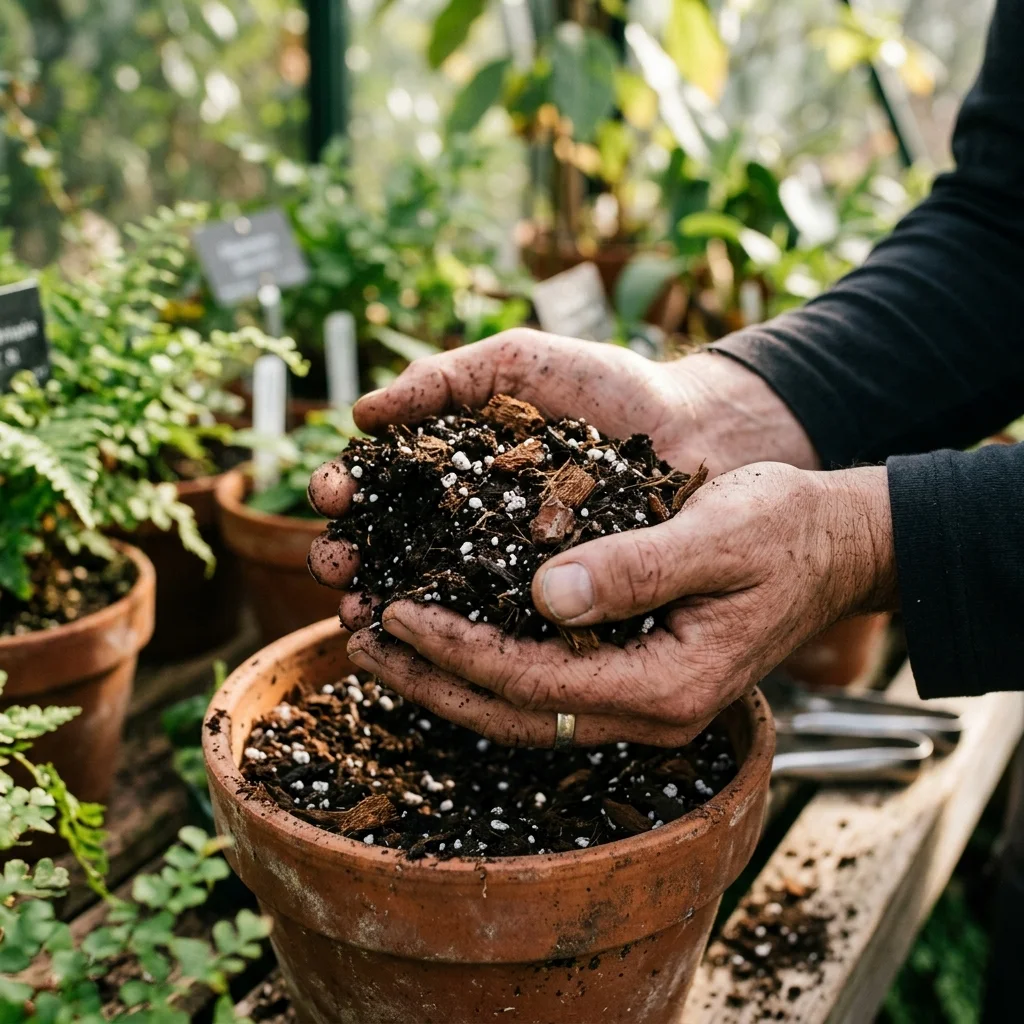
Potting mix is a purpose-engineered growing medium formulated to support plant roots within the confined environment of a container, delivering specific physical and chemical properties, drainage, aeration, moisture retention, and nutrient supply, that garden soil cannot replicate in that limited space. Garden soil brought indoors or into containers performs poorly because it compacts under repeated watering, loses pore structure, and creates the anaerobic conditions that drive root rot. Quality potting mix balances the competing needs of water retention and oxygen access using coarse particles like perlite, bark, or coarse sand alongside finer organic material.
Quick Answer
Potting mix is an engineered growing medium designed to deliver drainage, aeration, moisture retention, and nutrients within the confined space of a container, unlike garden soil. Coarse particles like perlite and bark create air pockets that balance a plant's competing need for both water and oxygen. Using garden soil in containers instead causes compaction and root rot over time.
What Is Potting Mix?
Potting mix is a purpose-engineered growing medium designed to support plant roots in the confined environment of a container. Unlike garden soil, which derives its fertility and structure from centuries of biological activity, mineral weathering, and organic matter accumulation, potting mix is formulated to deliver specific physical and chemical properties — drainage, aeration, moisture retention, and nutrient supply — within the limited and isolated volume of a pot. The distinction matters because garden soil brought indoors or into containers performs poorly: it compacts under repeated watering, loses its pore structure, and creates the anaerobic root-zone conditions that drive root rot and slow plant decline.
The physical architecture of a quality potting mix is as important as its nutrient content. Plant roots require both water and oxygen, and these two needs are in direct tension within any growing medium. Coarse particles — perlite, bark chips, coarse sand — create macropores that drain freely after watering, allowing air to re-enter the root zone within hours. Fine particles — peat, coir, fine compost — create micropores that hold water by capillary action against the pull of gravity, providing the moisture reserve roots draw from between waterings. The ratio of these two pore types determines the medium's air-filled porosity and its water-holding capacity, and getting this balance right for a given plant type is the central challenge of potting mix formulation.
Cation exchange capacity (CEC) is the chemical dimension of potting mix performance. Nutrient cations — ammonium, potassium, calcium, magnesium — are held on the negatively charged surfaces of organic matter particles and clay minerals, from which they can be exchanged into the soil solution and taken up by roots. A mix with high organic matter content has a high CEC and buffers against both nutrient deficiency and over-fertilisation; a mineral-heavy mix with little organic content has low CEC and requires more frequent, precise feeding to maintain adequate nutrition. Understanding CEC explains why plants in aged, depleted mixes respond poorly to fertiliser even at correct rates — the exchange sites are occupied by competing ions or have structurally degraded to the point where they no longer function effectively.
pH is the third governing factor. Most potting mixes are formulated to a slightly acidic pH of 5.8–6.5, the range in which the broadest spectrum of nutrients remains plant-available. Peat-based mixes tend to acidify over time; mixes incorporating lime or coir hold pH more stably. For specialist plants — ericaceous species requiring pH 4.5–5.5, or succulents tolerating slightly higher pH — the standard formulation is inappropriate, and purpose-made mixes are necessary for the plant to access its full nutritional range.
Tools and Materials You'll Need
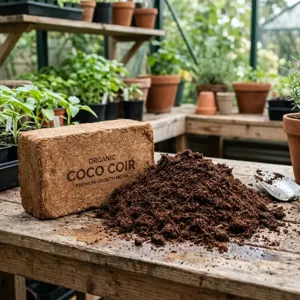
- Base organic component (peat or coir): The primary moisture-retaining and CEC-contributing component of most potting mixes. Peat moss is traditional and widely available but non-renewable; coir (coconut fibre) is a sustainable alternative with similar physical properties and excellent water retention. Either forms the backbone of a general-purpose mix at 50–70% by volume.
- Perlite: Expanded volcanic glass granules that create stable, large-diameter macropores in the mix. Perlite does not compress or break down over time, providing long-term aeration even as organic components slowly decompose. A 20–30% inclusion is standard for tropical foliage plants; up to 50% for succulents and cacti requiring rapid drainage.
- Bark chips or orchid bark: Coarse composted pine or fir bark adds both macroporosity and a slow-release organic component. Essential in mixes for epiphytic plants such as orchids, hoyas, and anthuriums, where root aeration is the primary requirement. Use medium-grade bark (approximately 1–2 cm pieces) for most applications.
- Horticultural grit or coarse sand: Washed, angular grit (not builder's sand, which is too fine and can impede drainage) adds mineral weight and drainage macropores. Particularly useful in mixes for Mediterranean herbs, cacti, and alpines that require extremely free-draining conditions. A 10–20% inclusion is typical.
- Compost or worm castings: Mature compost or worm castings contribute fertility, biological diversity, and high CEC to the mix. Inclusion at 10–20% by volume provides a slow-release nutrient reserve and introduces the microbial community that supports nutrient cycling. Avoid immature or hot compost, which can damage roots through residual ammonia release.
- Slow-release fertiliser granules: Polymer-coated granules incorporated at mixing time provide a background nutrient supply for the first three to six months in a new mix. Most commercial potting mixes include a starter charge; when mixing your own, follow product label rates — typically 3–5 g per litre of finished mix — to avoid salt accumulation.
- Dolomitic lime (for peat-based mixes): Peat has a naturally acidic pH of 3.5–4.0 and must be limed to bring the finished mix pH to 5.8–6.5. Dolomitic limestone supplies both calcium and magnesium while raising pH; the standard inclusion rate is approximately 3–5 g per litre of peat. Without liming, a peat-based mix will be too acidic for most plants and will suppress microbial activity.
Step-by-Step: How to Mix a Custom Potting Mix
- Determine the plant type and its drainage requirements before selecting components. A mix for tropical foliage plants such as monsteras or philodendrons requires different proportions than one for succulents or orchids. Write down the approximate ratios you intend to use before beginning — a general tropical mix might be 60% coir, 25% perlite, and 15% compost; a succulent mix might be 40% coir, 50% perlite, and 10% horticultural grit. Having a clear formula prevents inconsistency between batches.
- Pre-moisten dry coir or peat before mixing. Dry coir and peat are hydrophobic and resist wetting when dry — water applied to a freshly potted plant in a bone-dry coir or peat mix will channel around the medium rather than absorbing evenly. Add warm water to the coir or peat and work it through with your hands until the material feels uniformly moist but not sodden — it should hold together when squeezed and release only a drop or two of water. This step ensures even moisture distribution from the first watering.
- Combine dry components in a large container or on a clean surface. Measure each component by volume using a consistent measure — a 1-litre jug works well for small batches. Add perlite, bark, grit, and compost to the pre-moistened organic base and blend thoroughly until the mix is visually uniform with no unmixed pockets of any single component. Thorough mixing ensures consistent drainage and aeration throughout the pot volume.
- Incorporate slow-release fertiliser granules if required. If mixing a base medium without pre-added nutrients, incorporate polymer-coated slow-release granules at the manufacturer's recommended rate — typically 3–5 g per litre of finished mix. Measure carefully; exceeding label rates causes salt accumulation in the root zone within weeks of potting. For plants that will receive regular liquid feeding, omit or halve the granule rate to prevent over-fertilisation.
- Test the mix pH with a calibrated meter or pH strips. Mix a small sample with distilled water at a 1:2 ratio of mix to water, stir thoroughly, and measure the pH of the resulting slurry. For most tropical houseplants, target pH 5.8–6.5; for ericaceous plants, 4.5–5.5. If peat-based and too acidic, incorporate dolomitic limestone at approximately 2–3 g per litre and retest after 24 hours before using the mix. pH outside the optimal range makes fertiliser applications ineffective regardless of their quality.
- Fill the pot to approximately one-third with the finished mix, then position the plant. Place a layer of mix in the base of the pot — deep enough so the plant's root crown will sit 1–2 cm below the pot rim when positioned. This space prevents water and mix from spilling over during watering. Spread roots gently over this layer without cramming or folding them, then backfill with mix, firming gently to eliminate large air pockets without compacting the medium.
- Water thoroughly immediately after potting and assess drainage. Apply water slowly until it runs freely from the drainage holes, confirming that drainage channels are open and the mix is uniformly moist. The time to drain should be relatively quick — within a minute or two for a well-structured mix in a pot with adequate holes. If water pools on the surface for extended periods before absorbing, the mix is too compacted or the perlite fraction is too low for the intended plant. Set the newly potted plant in bright indirect light for the first two to three weeks to allow root establishment before exposing it to high-demand conditions.
Best Practices and Pro Tips
Refresh mix every two years: Organic components in potting mix — peat, coir, bark — break down over time into increasingly fine particles that fill macropores, reduce aeration, and lower CEC. A mix that performed well at potting time becomes progressively more compacted and less oxygenated over one to two growing seasons. Repotting into fresh medium every two years, even without moving to a larger container, resets the physical and chemical properties that support healthy root function.
Bark fraction improves orchid and hoya mixes: For epiphytic plants whose roots require extended air contact, increasing the bark chip fraction to 40–50% by volume and reducing the organic fine material accordingly produces a mix that behaves more like the plant's natural substrate. The bark holds some moisture in its outer layer while the spaces between chunks remain air-filled — precisely the alternating wet-dry cycle that epiphytic root systems are adapted to exploit.
Avoid fine sand in indoor mixes: Builder's sand or beach sand — both of which have rounded, fine particles — actually reduces drainage when incorporated into potting mix because it fills the macropores between organic particles rather than creating new drainage channels. Only angular horticultural grit with particle sizes of 2–4 mm provides genuine drainage improvement. The difference in particle shape and size is the determining factor, not the material itself.
Match CEC to feeding programme: A mix high in compost and fine organic matter has high CEC and buffers nutrient supply effectively, making it forgiving of irregular feeding. A mineral-dominant mix with low CEC drains rapidly and has little buffering capacity — nutrients applied are available immediately but leach out quickly, requiring more frequent, precise liquid feeding to maintain adequate nutrition. Choose the CEC level that matches your fertiliser management habits rather than selecting a mix based on drainage alone.
Layer drainage material only at the base: The traditional advice to place a layer of gravel or broken crockery at the base of a pot to improve drainage is counterproductive — it creates a perched water table where the potting mix meets the coarser material below, keeping the base of the mix perpetually saturated. Drainage is improved by the composition of the mix itself and by the number and size of drainage holes in the pot, not by what is placed beneath the medium.
Quick Reference Table
| Factor | Recommended Range | Why It Matters |
|---|---|---|
| pH of finished mix | 5.8–6.5 for most plants; 4.5–5.5 for ericaceous | Controls nutrient availability; outside this range, key elements precipitate or become toxic regardless of fertiliser application rate |
| Perlite content by volume | 20–30% for tropical foliage; 40–50% for succulents and cacti | Determines air-filled porosity after drainage; too little causes saturation, too much reduces moisture retention below root needs between waterings |
| Slow-release fertiliser inclusion rate | 3–5 g per litre of finished mix (polymer-coated) | Below this range provides insufficient starter charge; above it causes salt accumulation and osmotic stress to newly established roots within weeks |
| Mix repotting interval | Every 18–24 months for container plants in active growth | Organic components degrade progressively, reducing macroporosity and CEC; aged mix compacts and holds excess moisture regardless of watering frequency |
| pH testing method | 1:2 mix-to-water slurry with distilled water; calibrated pH meter | Tap water alkalinity interferes with results; a 1:2 ratio dilutes the mix enough to measure pH accurately without over-diluting the sample |
Best Plants for Potting Mix Customisation
Monsteras (Monstera deliciosa) are ideal candidates for a thoughtfully customised potting mix because their vigorous root systems respond quickly and visibly to medium quality. In a well-aerated mix with good drainage, monstera roots develop extensively and the plant produces large, fenestrated leaves on a regular schedule. In a compacted or waterlogged medium, the same plant stalls, produces small undivided leaves, and becomes susceptible to root rot — making it an excellent indicator of mix performance.
Orchids — particularly moth orchids (Phalaenopsis spp.) — represent the most demanding case for potting mix customisation, as their epiphytic roots require a medium that is more air than substance. Standard potting mix is entirely unsuitable; a blend dominated by medium-grade bark with perlite and a small proportion of sphagnum moss provides the brief moisture retention and prolonged aeration that their aerial root physiology is adapted for. Correctly mixed orchid medium transforms their care from difficult to straightforward.
Succulents and cacti — using Echeveria spp. as a representative example — thrive only in mixes where drainage is near-instantaneous and moisture retention is minimal. A mix of 50% perlite or coarse grit and 50% coir or low-peat compost drains within seconds of watering and dries back to near-field capacity within 24–48 hours, closely replicating the rocky, mineral substrates of their natural habitat. Standard potting mix holds water for far too long and is the primary cause of succulent failure indoors.
Blueberries (Vaccinium corymbosum) require an acidic, high-organic mix that most standard potting media cannot provide. A blend of ericaceous compost (pH 4.5–5.5) with 20–30% composted pine bark creates the acidic, humus-rich, well-drained environment their fine hair-like roots require. Without this specialist mix, iron and manganese chlorosis develop rapidly and the plant fails to establish, regardless of how well other conditions are managed.
Hoyas (Hoya spp.) occupy a middle ground between truly epiphytic orchids and terrestrial foliage plants, and their mix requirements reflect this. A blend incorporating 40% coir, 30% perlite, and 30% medium bark chips provides the combination of modest moisture retention and high aeration that allows their semi-epiphytic root system to function efficiently. In a standard peat mix, hoyas sit in moisture longer than their roots tolerate and develop the characteristic yellowing lower leaves that signal root stress.
Peace lilies (Spathiphyllum wallisii) demonstrate that not all plants benefit from maximum drainage — they genuinely prefer a moisture-retentive mix that stays evenly damp between waterings. A blend of 70% quality peat or coir with only 15–20% perlite and 10–15% compost suits them well, holding enough moisture to sustain their large transpiring leaf surface without the prolonged saturation that causes root rot. Getting this balance right prevents both the dramatic wilting they show when too dry and the slow decline that follows chronic overwatering.
The interaction between potting mix drainage and watering behaviour is fundamental to plant health, a relationship we examine in depth in our Drainage guide. Understanding how medium composition affects nutrient availability connects directly to fertiliser management, which we cover thoroughly in our Fertilizer guide. And because the decision to repot — and what to repot into — directly shapes long-term root health, our Repotting guide provides the practical framework for applying these mix principles at the right time.
Common Mistakes to Avoid
Using garden soil in containers: Garden soil brought into pots compacts rapidly under the weight of regular irrigation, eliminating the macropores that allow drainage and aeration. Within one to two growing seasons, it behaves like a dense clay regardless of its original texture. The microbial and pest populations it carries — including fungal pathogens, weed seeds, and soil insects — create problems that never arise in sterile or pasteurised potting media. Always use a formulated potting mix for container growing.
Reusing old potting mix without amendment: Spent potting mix has depleted CEC, collapsed pore structure, and potentially elevated pathogen populations from previous root decay. Topping up a pot with a small amount of fresh mix or pouring old mix from one pot to another carries these problems forward. If reusing components, at minimum combine old mix with 30–40% fresh perlite and compost to restore some structural function, and consider pasteurising it at 82°C for 30 minutes to reduce pathogen load before reuse.
Compacting the mix when potting: Pressing growing medium firmly around roots in an attempt to eliminate air pockets damages the very pore structure that makes the mix functional. Large air pockets around roots are a legitimate concern — they leave roots in contact with dry mix rather than moist medium — but they are corrected by watering thoroughly after potting, which settles the mix around roots naturally. Firm the mix gently with fingers rather than pressing with palms, and rely on the first thorough watering to complete the settling process.
Adding drainage layers at the pot base: Placing gravel, pebbles, or broken pottery at the base of a pot before adding mix is a persistent myth that actively worsens drainage. The transition between fine-textured potting mix and coarse drainage material creates a textural discontinuity that prevents water from moving from the mix into the coarser layer until the fine-textured mix above is fully saturated — the opposite of the intended effect. Remove this material and rely on drainage holes and well-structured mix instead.
Choosing mix by brand recognition rather than composition: Many widely available commercial potting mixes are formulated for short-term nursery use and contain high peat content with minimal perlite — adequate for a plant that will be sold and repotted within weeks, but suboptimal for multi-year container growing. Reading the ingredients label and, ideally, testing pH and feeling the texture before purchase allows informed selection. A quality mix should feel light and open with visible perlite particles, smell earthy rather than sour, and drain freely when a handful is squeezed and released.
Frequently Asked Questions
What is the difference between potting mix and potting soil?
Potting mix is entirely soilless, while potting soil often contains actual dirt. Potting mix uses ingredients like peat, coir, and perlite to ensure fast drainage and good airflow in containers. You should always use potting mix for houseplants, as regular soil compacts too heavily in pots.
How often should I replace potting mix?
You should replace your potting mix every 18 to 24 months. Over time, the organic ingredients break down into fine dust, which clogs the air pockets and prevents drainage. Even if the plant hasn't outgrown its pot, it benefits from the fresh, aerated structure of new mix.
Can I make my own potting mix at home?
Yes, making your own mix is highly recommended. A great all-purpose recipe is 60% coco coir or peat moss, 20% perlite, and 20% compost or worm castings. This allows you to customize the drainage; for example, adding more perlite for succulents or more bark for orchids. Use our <a href="/calculators/potting-mix-calculator/">Potting Mix Calculator</a> to calculate the amount of mix needed for your specific pot size.
Why does my potting mix repel water after it dries out?
When peat moss or coco coir dries out completely, it becomes hydrophobic, meaning it repels water. When you try to water it, the water just runs down the sides of the pot. To fix this, set the pot in a bowl of water for 30 minutes so it can soak up moisture from the bottom.
My plant seems healthy but roots are coming out of the drainage holes — do I need to change the mix?
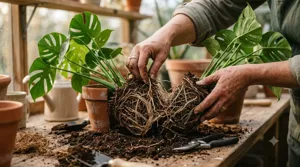
Roots escaping the pot mean the plant is rootbound and needs a larger container. When you move it to a larger pot, you should add fresh potting mix around the sides. If the old mix in the center is compacted or smells sour, gently loosen the roots and replace as much mix as possible.
Explore More
Related Topics
Related Plant Guides
No specific plant guides found matching this topic.
Recommended next actions
Continue Exploring
Dive deeper into related plant care tools and profiles.
Topic Guide
Drainage
Learn everything about drainage for your indoor and aquarium plants. Expert care tips, troubleshooting, and related guides.
Topic Guide
Fertilizer
Learn everything about fertilizer for your indoor and aquarium plants. Expert care tips, troubleshooting, and related guides.
Topic Guide
Repotting
Learn everything about repotting for your indoor and aquarium plants. Expert care tips, troubleshooting, and related guides.
Calculator
Potting Mix Calculator: Build the Perfect Soil Blend
Calculate the ideal potting mix ratios for any plant type — from moisture-loving tropicals to drought-tolerant succulents.