How Often Should I Repot My Plants?
Repotting is not on a fixed calendar. This guide helps you spot when roots, soil, and growth tell you it is time for a larger pot or fresh mix. Learn the signs, timing, and technique.
Quick Answer
Most houseplants need repotting every 12 to 24 months, but fast growers may need it sooner and slow growers can wait longer. Repot when roots circle the pot, water runs through too fast, or the soil has broken down. Always use fresh potting mix and a pot only slightly larger than the root ball.
Key Takeaways
- Repot when roots circle the pot walls or push through drainage openings.
- Select a replacement container only 1 to 2 inches larger in diameter.
- Perform repotting during active spring growth to facilitate root establishment.
- Replace degraded potting media to restore aeration and moisture retention.
Repotting should happen when the plant needs more room or when the potting mix is failing, not just because a year passed. Fast growers may need a new pot every year. Slower plants may stay happy in the same container for several years if the soil still drains well and the roots are not crowded. I have kept a snake plant in the same pot for three years, and it was perfectly happy until the mix started to compact. On the other hand, my pothos needs fresh soil every 12 months because it grows like a weed. The key is to observe your plant and its roots, not to follow a rigid calendar. This guide will walk you through every sign, step, and mistake to avoid, so you can repot with confidence and keep your plants thriving.
Key Takeaways
- Repotting frequency depends on growth rate, pot size, and soil condition, not a fixed schedule.
- Signs include roots circling or escaping, water draining too fast, slowed growth, and soil breakdown.
- Choose a pot 2.5–5 cm (1–2 in) larger in diameter, not dramatically bigger.
- Spring is generally the best time for repotting, when plants are entering active growth.
- Use fresh potting mix, never reuse old soil without refreshing it.
- Water thoroughly after repotting and keep the plant in a stable environment to reduce shock.
- Some plants, like succulents and slow-growing species, can go 2–3 years or more between repots.
Introduction
When I first started collecting houseplants, I thought repotting was an annual chore like changing the oil in my car. I repotted everything every spring, whether it needed it or not. Looking back, I stressed a lot of plants that were perfectly happy. It took me a few years to learn that repotting is a plant-specific decision, not a calendar event. Some of my ferns demand fresh soil every year; my cacti, though, go years without complaint. This guide shares what I have learned, both from my own mistakes and from horticultural research, so you can decide when to repot with confidence. We will cover the signs, the steps, the science, and the common pitfalls that turn a simple repot into a plant disaster.
Why It Matters
Repotting serves two main purposes: giving roots more space to grow, and replacing old, degraded potting mix. Over time, potting mix breaks down into fine particles, losing its air pockets and drainage. This can suffocate roots, even if the pot itself is not crowded. In a root-bound plant, roots circle the pot and become a dense mass, limiting their ability to absorb water and nutrients. If you ignore these issues, the plant may become stunted, yellow, or prone to root rot. Repotting at the right time renews the root environment, giving the plant access to fresh nutrients, oxygen, and moisture. Conversely, repotting too early or into an oversized pot can lead to overwatering because excess soil stays wet too long. Getting the timing right is a balancing act.
Science Behind It
Roots grow in response to moisture, nutrients, and oxygen. In a pot, roots initially grow outward, then circle when they hit the wall—a phenomenon called root girdling. As roots fill the container, the soil-to-root ratio decreases, and water retention changes. The potting mix also undergoes physical and chemical changes over time: organic matter (peat, coir, bark) decomposes, breaking down into smaller particles that clog air spaces. This reduces porosity and increases water holding capacity, often leading to wet feet (waterlogged roots). Additionally, salts from fertilizers and tap water can accumulate, increasing pH and potentially causing nutrient lockout. Repotting with fresh mix resets the physical structure and chemical balance, giving roots a healthy environment for continued growth. Studies show that plants in regularly refreshed media have higher growth rates and lower disease incidence compared to plants in old, compacted media.
Step-by-Step Guide
1. Assess if repotting is needed
Before you start, check for signs: roots visible at drainage holes, roots circling the top of the soil, water running straight through, slow growth, or the pot feeling light and tipping easily. If you see any of these, it is likely time. If the plant is in a plastic pot, squeeze the sides gently and slide it out to inspect the roots.
2. Choose the right time
Spring is the best season for most plants. They are entering active growth and can recover quickly. Avoid repotting during winter dormancy or when a plant is flowering, stressed, or newly purchased (give it 2–4 weeks to acclimate first).
3. Gather your supplies
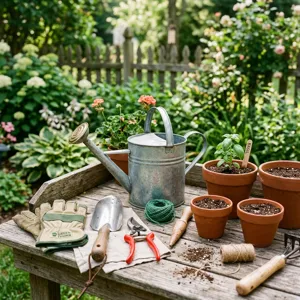
You will need: a new pot (2.5–5 cm / 1–2 in larger in diameter), fresh potting mix suitable for your plant type, a trowel or small shovel, a watering can, and optionally gloves and scissors. For succulents, use a gritty, well-draining mix; for tropicals, use a standard indoor mix with added perlite.
4. Prepare the plant
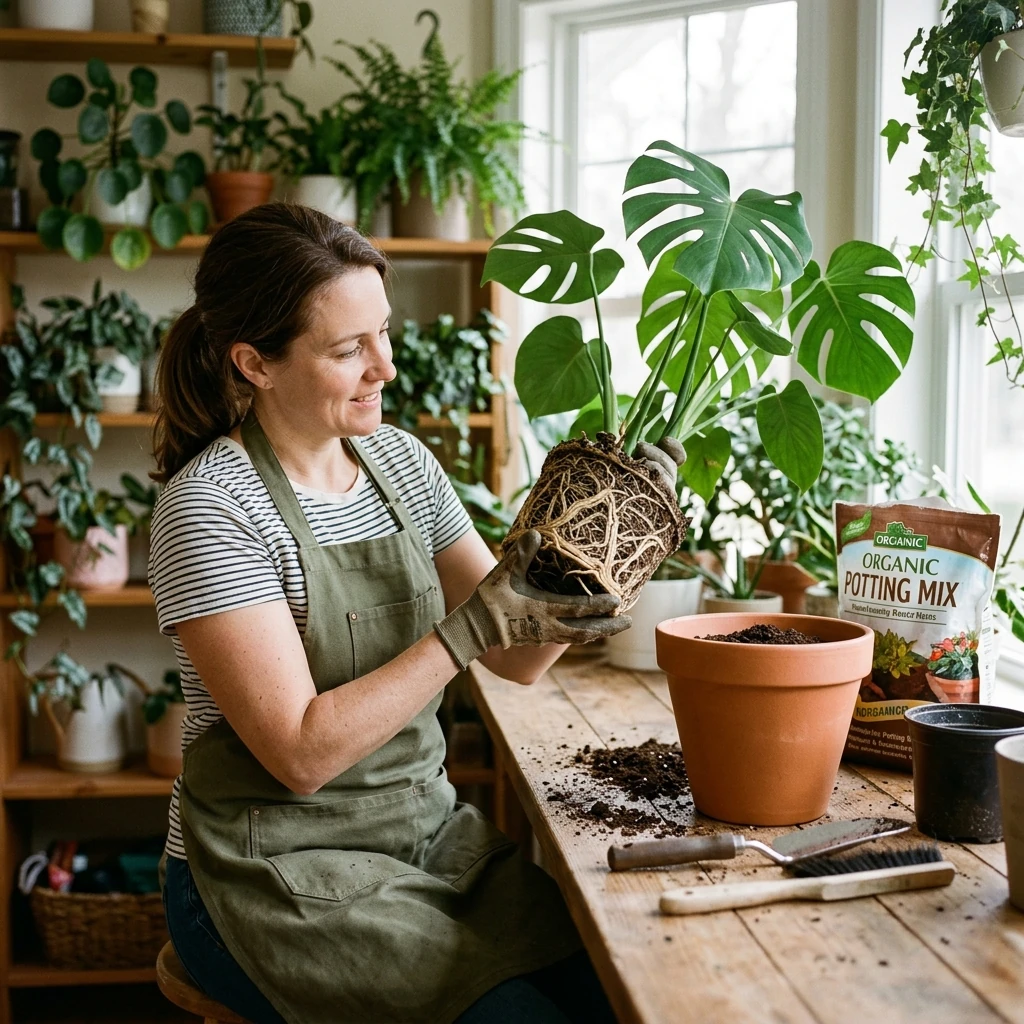
Water the plant 1–2 days before repotting. Moist soil helps the root ball hold together and reduces transplant shock. On repotting day, gently tilt the pot and slide the plant out. If it is stuck, tap the pot sides or run a knife around the inner edge to loosen it.
5. Inspect and loosen the roots
Once out, examine the roots. Healthy roots are firm and pale. If they are circling densely, gently tease them apart with your fingers or a chopstick. If they are badly girdled, you can trim the outer 1–2 cm (0.5–1 in) of roots to encourage new growth. Remove any dead or mushy roots, which indicate rot.
6. Prepare the new pot
Place a small amount of fresh potting mix in the bottom of the new pot. Position the plant so that the top of the root ball sits about 1.3–2.5 cm (0.5–1 in) below the rim to allow room for watering. The plant should be at the same depth it was in the old pot—not deeper, which can cause stem rot.
7. Fill and firm
Add fresh mix around the root ball, gently firming it as you go. Do not pack it down heavily; you want good aeration. Tap the pot on the table to settle the mix. Add more soil if needed. Leave the recommended space at the top.
8. Water and settle
Water thoroughly until water runs out the drainage holes. This helps the soil settle around the roots and eliminates air pockets. Empty the saucer after 15 minutes. If the soil settles significantly, top it up with a little more mix.
9. Post-repot care
Place the plant in its usual location (or slightly shadier for a few days) and avoid fertilizing for 4–6 weeks. The fresh mix has nutrients, and the roots need time to recover. Water as usual, but check moisture more frequently as the root system is disturbed.
| Plant Type | Example Species | Repotting Frequency | Why |
|---|---|---|---|
| Fast-growing tropicals | Pothos, Spider plant, Monstera | Every 12–18 months | They fill pots quickly and deplete soil nutrients fast |
| Slow-growing succulents | Snake plant, Aloe, Echeveria | Every 2–3 years | They store water, grow slowly, and prefer tight roots |
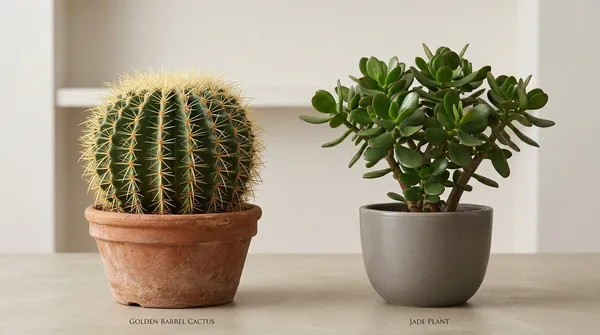
| Cacti | Golden barrel, Opuntia | Every 3–5 years | Very slow growth; over-repotting can cause root rot |
| Ferns | Boston fern, Maidenhair | Every 1–2 years | They have dense, fibrous roots and benefit from fresh organic mix |
| Orchids (epiphytic) | Phalaenopsis, Dendrobium | Every 1–2 years | Potting medium (bark) breaks down and needs replacement |
| Palms and cycads | Parlor palm, Sago palm | Every 2–3 years | Moderate growth; they prefer being slightly root-bound |
Climate Considerations
Climate affects how often you need to repot because it influences growth rate and soil breakdown. In warm, humid climates (USDA zones 8–10), plants may grow faster and use up soil more quickly, potentially needing repotting more often. In cool, dry climates, growth is slower, and soil breakdown may also be slower. However, indoor heating in cold climates dries the air and can cause soils to become hydrophobic or break down differently. In Mediterranean climates (dry summers, mild wet winters), outdoor potted plants may need more frequent repotting due to rapid summer growth. In oceanic climates (UK, Ireland, Pacific Northwest), cooler summers mean slower growth, so you can extend the interval. Always observe your specific plant's growth rate rather than relying solely on climate generalizations.
Seasonal Advice
Spring is universally the best time to repot because plants are waking up from winter dormancy and will quickly grow into their new space. Early summer is also fine, but avoid repotting in the heat of summer, which can stress plants. In autumn, only repot if absolutely necessary, because growth is slowing. Never repot in winter unless it is an emergency (e.g., root rot), as plants are dormant and will not establish well. For tropical plants that grow year-round in warm homes, you have more flexibility; still, the best time is when you see new growth beginning.
Common Mistakes
- Repotting too often—stresses the plant and disrupts root development.
- Choosing a pot that is too large—excess soil stays wet, causing root rot.
- Not loosening the root ball—roots continue circling and never spread out.
- Using old or poor-quality potting mix—compacted soil defeats the purpose.
- Planting too deep—stems can rot at the soil line.
- Forgetting to water after repotting—roots need moisture to settle and recover.
- Fertilizing immediately—burns tender new roots; wait 4–6 weeks.
Maintenance Schedule
- Annually: Check roots of all plants by gently tilting out of the pot. Make notes on which need repotting.
- Spring: Repot fast growers; refresh slow growers by top-dressing with a thin layer of compost or new potting mix.
- Summer: Monitor newly repotted plants for signs of stress; adjust watering as needed.
- Autumn: Assess any plants that declined over summer; consider repotting only if urgent.
- Winter: No repotting; focus on watering and light management.
Buying Guide
When buying new pots, choose ones with drainage holes. Terracotta is breathable and good for succulents; plastic is lightweight and retains moisture better for tropicals. Fabric grow bags are excellent for root aeration. For potting mix, buy a high-quality indoor or tropical mix and add perlite (about 20–30%) to improve drainage. For succulents and cacti, purchase a specialized mix. Avoid bargain-bin soils that are heavy and dense. Consider buying a small trowel, a repotting mat (or use newspaper), and a pair of sharp scissors for root trimming.
| Item | Budget Option | Premium Option |
|---|---|---|
| Pot (15–20 cm / 6–8 in) | $3–8 (plastic) | $12–25 (ceramic or terracotta) |
| Potting mix (10 L / 2.6 gal) | $5–8 | $10–15 (organic premium) |
| Perlite (4 L / 1 gal) | $5 | $10 |
| Trowel | $4–8 | $12–20 (stainless steel) |
| Scissors/pruners | $5–10 | $15–25 (bypass) |
| Repotting mat | $5–10 | $20–30 (heavy-duty) |
| Total | $27–49 | $79–125 |
Expert Tips
Over the years, I have learned that the most common reason repotting fails is using the wrong pot size. Go only one size up—an extra 2.5–5 cm (1–2 in) in diameter. I always water my plants a day or two before repotting; it makes the root ball much easier to handle. Also, I never repot a plant that is flowering or just arrived from the nursery—I give it at least a month to acclimate. If you have a plant that is badly root-bound, don't be afraid to gently score the root ball with a knife to encourage new roots to grow outward. Finally, keep a simple logbook: note when you repotted, what mix you used, and how the plant responded. That data is gold for future decisions.
Common Myths
- Myth: You should repot every plant every year. Reality: Many plants prefer to be root-bound and suffer from frequent repotting.
- Myth: A larger pot always makes a plant grow faster. Reality: Oversized pots hold excess moisture, which can slow growth or cause rot.
- Myth: You should add a layer of gravel at the bottom for drainage. Reality: This creates a perched water table; use a well-draining mix instead.
- Myth: Repotting is stressful, so you should not water afterwards. Reality: Watering after repotting helps settle the soil and rehydrate the roots.
- Myth: If a plant is root-bound, you must prune the roots heavily. Reality: Only prune dead or circling roots; the rest will grow into new soil.
When NOT To
- Do not repot a plant that is in active bloom—it will likely drop flowers.
- Do not repot a newly purchased plant—let it acclimate for 2–4 weeks.
- Do not repot in winter—plants are dormant and recover poorly.
- Do not repot a stressed plant (e.g., one with severe pests or disease) unless necessary to save it.
- Do not repot just because you have a new pot—only repot when the plant signals need.
Decision Guide
| Sign Observed | Action | Reason |
|---|---|---|
| Roots circling visible at surface or drainage holes | Repot to a larger pot (2.5–5 cm / 1–2 in bigger) | Roots need more space to grow |
| Water runs straight through without soaking | Repot with fresh mix | Soil has degraded and become hydrophobic |
| Plant looks stunted or yellowing despite care | Check roots; repot if root-bound or soil is old | Nutrient depletion or poor drainage |
| Soil surface has white crust (salt build-up) | Repot with fresh mix | Fertilizer salts accumulating; root health declining |
| Plant is top-heavy and tips over | Repot into a heavier, slightly larger pot | Roots insufficient to anchor the plant |
| No symptoms, but it has been 2+ years | Check roots; top-dress or repot if root-bound | Preventive maintenance |
Troubleshooting
| Problem | Likely Cause | Fix |
|---|---|---|
| Leaves wilting after repotting | Root shock or under-watering | Water gently; keep in lower light for a few days |
| Leaves yellowing and dropping | Overwatering (soil too wet) | Allow soil to dry; check drainage; ensure pot has holes |
| No new growth after weeks | Recovery period or pot too large | Be patient; if pot too large, consider downsizing |
| Roots remain circling after repotting | Did not loosen roots enough | Gently tease roots apart; root prune if necessary |
| Soil dries out very quickly | Too much perlite or a porous pot | Water more frequently; consider a more moisture-retentive mix |
| Fungus gnats appear | Overwatering or organic matter in fresh mix | Let soil dry; use sticky traps; water with BTI |
Frequently Overlooked Facts
Many beginners do not realize that the pot size you choose determines how long you can go before the next repot. A slightly larger pot gives you more time, but a huge pot can be problematic. Also, repotting is not always about size; sometimes you repot only to refresh the soil, using the same pot. This is called 'top-dressing' and is excellent for large plants that are difficult to move. Another overlooked fact is that you should match the pot material to the plant: terracotta dries faster, so it is great for succulents, while plastic is better for moisture-loving tropicals. Finally, tap water quality matters: if you have hard water, consider using filtered water to reduce salt accumulation, which can slow root growth.
Summary
Repotting is a key skill that every plant owner needs, but it is not a one-size-fits-all task. The frequency depends on the plant's growth rate, the size of the pot, and the condition of the soil. Learn to read the signs: roots circling, water drainage issues, and stunted growth all point to a need. Repot in spring, use a pot one size up, always use fresh mix, and water thoroughly afterward. Avoid common mistakes like over-potting, repotting too often, or during the wrong season. With practice, you will develop an instinct for when your plant needs more room or just a soil refresh. Your plants will reward you with vigorous growth and healthier foliage.
Recommended next actions
Next Best Actions
Move from reading to action with related calculators, plant profiles, and quiz-based recommendations.
Guide
Best Soil for Indoor Plants: Potting Mix Recipes & Guide
Learn how to build a well-aerated potting mix that balances moisture retention, drainage, and root-zone oxygen for different types of houseplants.
Guide
Beginner Botanical Toolkit: 10 Essential Growing Tools
After setting up over 1,000 beginner plant corners in western apartments, I'll share the 10 tools that actually matter—and which ones you can skip—so you don't waste money on useless gadgets.
Guide
New Plant Dropping Leaves? Causes and Fixes
Leaf drop after buying a plant is often a stress reaction, not a death sentence. This guide explains the common causes and how to help the plant settle into its new home with confidence.
Frequently Asked Questions
How do I know when my plant needs repotting?
Can I repot a plant too often?
Should I always choose a bigger pot?
Do all plants need annual repotting?
What happens if I never repot a plant?
What time of year is best for repotting?
Should I water after repotting?
How much bigger should the new pot be?
Can I repot a plant that is flowering?
Do I need to remove all old soil when repotting?
Explore More