Snake Plant Care: Watering, Light, Propagation and Why It's So Hard to Kill
Dracaena trifasciata (formerly Sansevieria trifasciata)
The ultimate unkillable houseplant. Known for its striking upright foliage, extreme drought tolerance, and unparalleled air-purifying qualities.
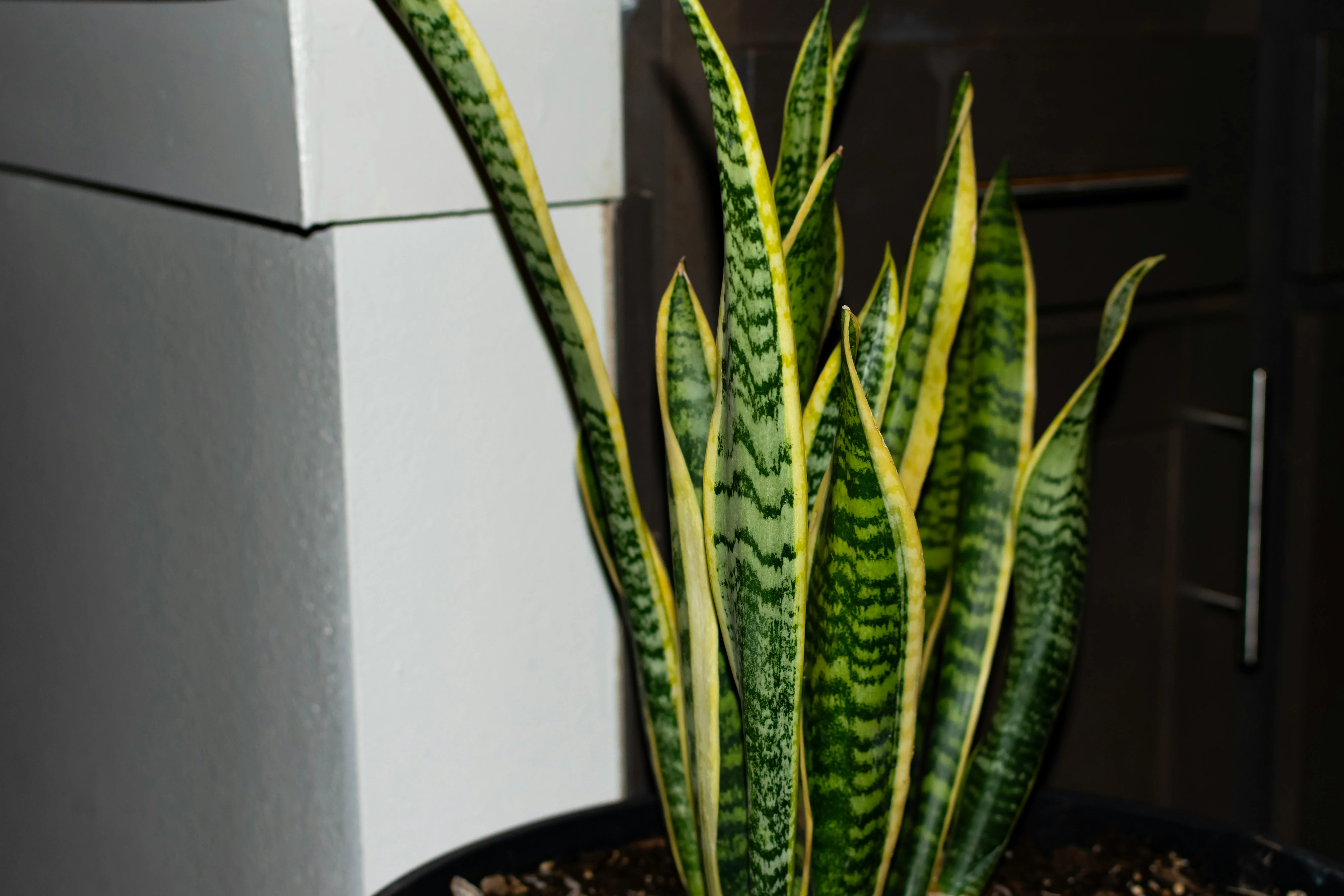
-
Light
Famous for surviving in almost no light, but it actually thrives and grows much faster in bright, indirect sunlight.
-
Temperature
65-85°F (18-29°C)
Growth
slow to moderate
pH Range
6.0-7.0
-
Biggest Owner Mistake
Overwatering because its resilience makes owners assume it can handle anything—but wet soil is its only true fatal weakness. The rhizomes store months of water, so the soil should be completely dry before the next watering, which can mean waiting 4–6 weeks in winter. Soft, mushy leaves at the base are the sign of ongoing root rot.
-
What Nobody Tells You
In very low light, the leaves gradually become thinner and begin to lean or topple as they lack the structural rigidity that only forms in brighter conditions. The plant won't die but the architectural, upright silhouette that makes it attractive will slowly deteriorate.
-
Real Home Conditions
In dark corners it enters a holding pattern—alive but completely static, producing no new leaves for months or years. Even moving it to a spot with modest indirect light from a nearby window restarts growth and improves leaf firmness.
Overview
The Snake Plant (recently reclassified as Dracaena trifasciata, though widely known as Sansevieria) is often touted as the most indestructible houseplant in existence. Native to the rocky, dry regions of West Africa, it has evolved to withstand intense drought and poor soil, making it perfectly suited for the often-neglected corners of our homes and offices.
Aside from its striking, architectural look, it is famous for its air-purifying abilities. Using a specialized process called Crassulacean Acid Metabolism (CAM), the Snake Plant absorbs carbon dioxide and releases fresh oxygen primarily at night, making it the perfect companion for a bedroom.
Light and Placement
The Snake Plant's claim to fame is its ability to tolerate almost any lighting condition. It will happily sit in a dark hallway, a windowless office, or a bathroom with a tiny frosted window.
However, 'tolerating' low light does not mean it 'prefers' it. If you want your Snake Plant to grow quickly and maintain vibrant, stiff, upright leaves, place it in bright, indirect sunlight. It can even handle a few hours of direct morning sun without issue.
Watering Strategy
The number one rule of Snake Plant care is: When in doubt, do not water. This plant is a succulent. It stores massive amounts of water in its thick, fleshy leaves and thick underground stems (rhizomes).
You must let the soil dry out 100% between waterings. Stick a wooden skewer deep into the pot; if it comes out with any damp soil attached, wait another week. Depending on your home's temperature, you may only water this plant once a month. When you do water, soak it thoroughly until water runs out the bottom, and never let the pot sit in a saucer of stagnant water.
Soil and Potting Mix
Because they are so prone to root rot from overwatering, standard indoor potting soil is too heavy and moisture-retentive for a Snake Plant. You need a fast-draining mix.
Buy a commercial cactus and succulent mix, or make your own by blending regular potting soil with equal parts coarse sand, perlite, or pumice. Heavy, unglazed terracotta pots are highly recommended, as they allow the soil to breathe and dry out rapidly.
Maintenance and Propagation
Snake Plants thrive on neglect. They actually prefer to be root-bound and rarely need repotting—often happily staying in the same pot until their thick rhizomes literally crack the plastic or clay container.
If you want to create more plants, propagation is incredibly easy. As the plant matures, it will send up baby shoots (called pups) next to the main plant. When repotting, you can simply slice the connecting root with a clean knife and plant the pup in its own pot. You can also take leaf cuttings, though any variegated yellow edges will be lost if grown from a leaf cutting (the new plant will revert to solid green).
Recommended next actions
Next Best Actions
Use calculators and guides to turn this plant profile into a practical care routine.
Guide
Snake Plant Care: Watering, Light & Yellow Leaf Fixes
After growing snake plants across a decade in environments ranging from near-windowless offices to sun-drenched conservatories, we've identified the handful of conditions that make or break this supposedly indestructible plant — and overwatering tops the list every time.
Calculator
Plant Watering Calculator: How Often to Water
Calculate the correct watering frequency for your plant based on species, pot size, soil type, season, and climate.
Calculator
Plant Light Calculator: Find the Best Window for Your Plant
Determine the ideal indoor light placement for your plant based on species, window direction, and seasonal light availability.
Guide
Why Root Rot Happens and How to Save Your Plant
After rescuing thousands of rotting houseplants from big-box stores over a 12-year nursery career, we have developed a foolproof method to diagnose, treat, and completely prevent deadly root rot.
Guide
Winter Plant Care: What to Do With Your Plants Indoors
Winter changes everything for plants: light drops, air dries out, and soil stays wet longer. This guide shows how to adjust care so your plants stay steady through the cold season. From watering to humidity, we cover it all.
Calculator
Grow Bag Size Calculator: Find the Right Bag for Every Plant
Find the perfect grow bag size for your plant based on root depth, plant type, and expected mature size.
Structured Plant Data
Plant Data Profile
Care values below are generated from the plant JSON fields so users and crawlers can read the structured plant profile directly on the page.
Growth Characteristics
Growth Rate
slow to moderate
Mature Height
2-4 feet indoors (depending on the variety)
Mature Spread
1-2 feet
Life Cycle
Perennial
Flowering Season
Rarely flowers indoors (produces fragrant white/green stalks when stressed)
Container Friendly
yes
Indoor Capable
yes
Environmental Parameters
| Parameter | Recommended | Survivable |
|---|---|---|
| Temperature | 65-85°F (18-29°C) | 50-95°F (10-35°C) |
| Humidity | 30-50% | 10-70% |
| Soil PH | 6.0-7.0 | 5.5-7.5 |
Lighting
Description
Famous for surviving in almost no light, but it actually thrives and grows much faster in bright, indirect sunlight.
Nutrients
Nitrogen Demand
low
Phosphate Demand
low
Potassium Demand
low
Micronutrient Notes
Extremely light feeder. Fertilizer burn is common if fed too often.
Fertilizer Frequency
Feed only 1-2 times during the entire spring and summer season with a half-strength succulent fertilizer.
Organic Options
A very light top dressing of worm castings in spring.
Relationships
-
Overwatering
Vulnerability | Strength 10
The single most common way to kill a Snake Plant is giving it too much water. It is highly susceptible to root rot.
-
Low Light
Compatibility | Strength 9
Will survive for years in windowless offices relying solely on fluorescent lights, though growth will stall entirely.
Snake Plant Variety Comparison
| Variety | Appearance | Mature Height | Best For |
|---|---|---|---|
| Laurentii | Tall, dark green with bright yellow edges | 3-4 feet | Floor planters, classic look |
| Zeylanica | Tall, solid green with light green wavy bands | 3-4 feet | Low light spaces |
| Hahnii (Bird's Nest) | Short, wide leaves forming a tight rosette | 6-10 inches | Desks, small shelves, windowsills |
| Cylindrica | Thick, round, spear-like cylindrical leaves | 2-3 feet | Modern decor, extreme drought tolerance |
Energy & Mindful Placement
Placement & Ancient Wisdom
The Snake Plant is an excellent Vastu plant due to its ability to absorb toxins and release oxygen at night. While Vastu traditionally advises caution with tall or sprawling plants in the South zone, the compact, upright nature of the Snake Plant brings grounded, positive energy without dominating the space.
Best Directions
East, South East, South
Best Rooms
Bedroom, Living Room, Study, Office
Light Range
Low, Medium, Bright Indirect
Care Profile
Beginner | Not pet safe | Indoor suitable
Common Goals
Reference: https://www.rhs.org.uk/plants/sansevieria
Troubleshooting Guide
1 Leaves falling over / flopping
Cause: Too much water rotting the base, or not enough light to grow strong tissue
Check the base. If mushy, treat for root rot. If firm, move the plant to a brighter location.
2 Mushy, yellow, foul-smelling leaves at the soil line
Cause: Severe overwatering / Root rot
Remove plant from pot, cut away all rotted tissue, allow healthy pieces to dry for 2 days, and repot in fresh, dry cactus soil.
3 Wrinkled, folded, or curling leaves
Cause: Severe underwatering
While they like to be dry, they do eventually need water. Give the pot a deep soak.
4 Brown, crispy tips
Cause: Inconsistent watering, bumping into walls, or extremely dry air
Trim the dead tips off with sterile scissors to improve appearance; ensure it isn't placed directly over a heating vent.
Glossary of Terms
- Rhizome
- A thick, modified underground stem that stores water and nutrients, and from which new leaves (pups) emerge.
- CAM Photosynthesis
- Crassulacean Acid Metabolism. An adaptation where the plant keeps its pores closed during the hot day to save water, and opens them at night to absorb CO2 and release oxygen.
- Pup
- A smaller, baby plant that grows from the root system of the mature mother plant, which can be separated to grow independently.
Scientific References
- Sansevieria - Royal Horticultural Society