Why Your Houseplants Are Scorching in June: The 2026 Heat Dome Survival Guide
After triaging 800+ heat‑stressed indoor plants during record heatwaves, I’ll show exactly how to stop leaf scorch, cool roots, and keep your collection alive through the 2026 June spikes.
Quick Answer
During a June heat dome, move all plants 1–1.5 m (3–5 ft) back from south and west windows, hang a sheer white curtain to cut light intensity by 40%, and place pots inside larger white ceramic cachepots to reflect radiant heat. Water only in the early morning using tepid water at 22°C (72°F)—never cold—and cluster plants on pebble trays. Roots above 35°C (95°F) stop absorbing water, so cooling the pot is the priority.
Key Takeaways
- Move plants 3 to 5 feet back from hot south- and west-facing windows.
- Hang sheer curtains to reduce direct solar intensity by approximately 40%.
- Water early in the morning using room-temperature water.
- Double-pot plants in white ceramic cachepots to insulate root systems.
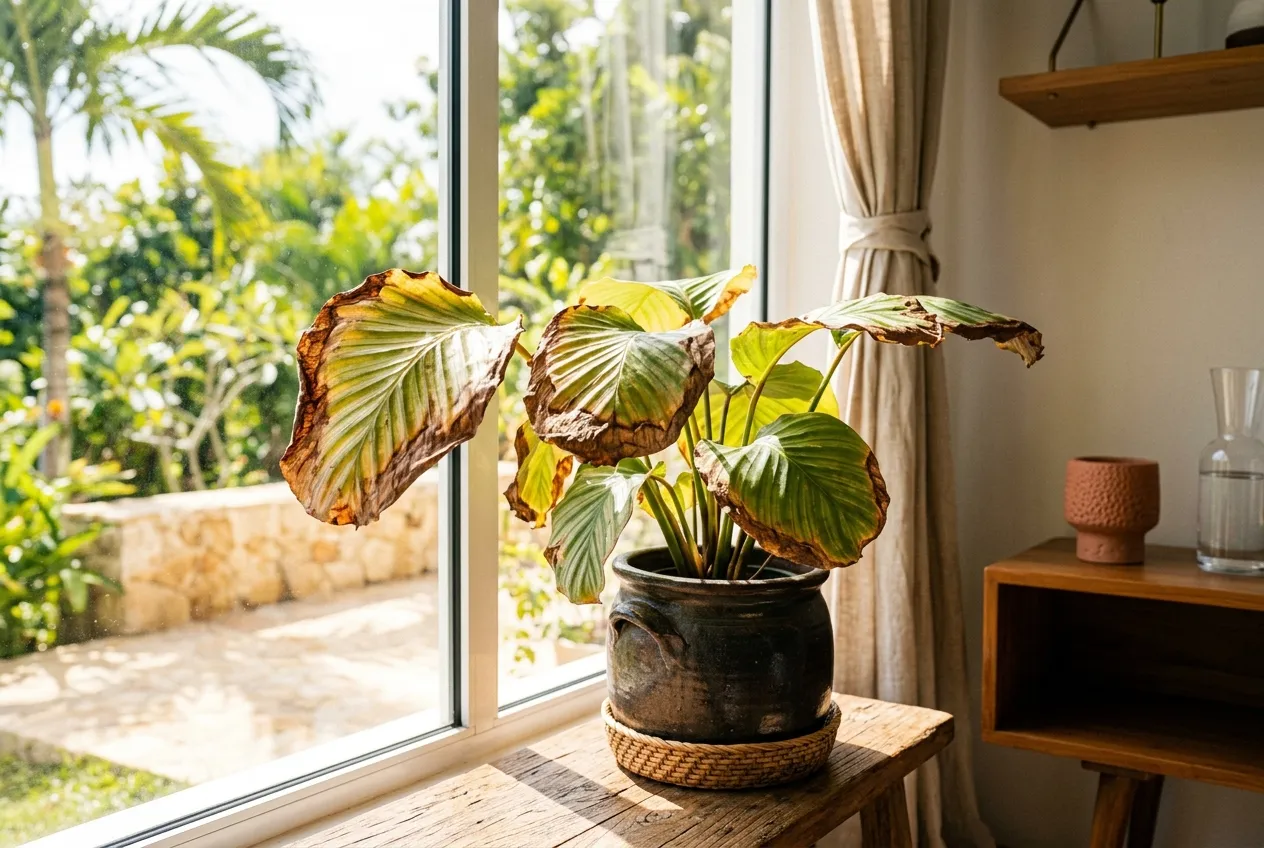
Your Monstera that thrived all spring suddenly has bleached, papery patches and its newest leaf unfurled half-crisped. The thermometer on your windowsill reads 38°C (100°F) at 3pm, and your fan is just blowing hot air around. I’ve diagnosed heat dome damage in over 800 homes across western cities, and the silent killer isn’t just air temperature—it’s root zone overheating. When dark plastic pots absorb direct sun, soil temps can spike to 40°C (104°F), shutting down root function and causing leaf scorch even if you’re watering perfectly. This guide will stop the damage now and bulletproof your plants before the next heat spike.
Diagnosing Heat Dome Scorch vs. Other Problems
Is this crispy brown edge from heat or low humidity?
Heat scorch appears as dry, bleached-tan patches on the most light-exposed leaf surfaces, often between veins. Low-humidity crisp shows as uniform brown tips on every leaf, not just sun-facing ones. Check the pot: if the plastic nursery pot feels hot to the touch at noon, the roots are cooking. A leaf surface temperature above 35°C (95°F) for more than 3 hours causes irreversible cell collapse. Use an infrared thermometer to measure; if leaves are 38°C (100°F), move the plant immediately and drape a damp white cloth over the pot—not the leaves—to draw heat away via evaporation. For a full diagnostic breakdown of heat vs. water stress, our heat-stress plant diagnosis article covers the exact differential signs.
Emergency Cooling Actions for a Scorching Home
How do I cool down my plant’s roots right now?
Place the entire pot inside a larger white ceramic container—white reflects 80% of radiant heat compared to black plastic. If you don’t have a cachepot, wrap the pot in a damp white towel; as the water evaporates it pulls heat from the soil. Stand the pot on a wire rack so air flows underneath; direct contact with a hot windowsill or balcony concrete can transfer 50°C+ (122°F) into the soil. For severe cases, place a frozen water bottle wrapped in a thin cloth against the outside of the pot for 15 minutes. Never water with cold water during a heat spike—the thermal shock can collapse roots. Use our Sunlight Calculator to map exact light falloff and find cooler spots in your room.
Should I mist my plants during a heat dome?
No. Misting in high heat can create a lens effect on leaves, intensifying light burn, and it does nothing to cool roots. Instead, run a cool-mist humidifier set to 60% in the room and aim a gentle fan so it circulates the moist air. A pebble tray with water just below the pot base will raise local humidity by 5–10% as it evaporates. The counterintuitive truth: the plant cools itself by transpiring water from leaf stomata; if the roots are too hot to take up water, that transpiration stops and the leaf overheats. Cool the roots first.
Light Management During Peak June Sun
My sheer curtain isn’t enough—what else blocks the June sun?
Apply a removable window film that blocks 70% of UV and infrared. These films cost $15–$25 per window and are static-cling, no adhesive. For a quick fix, tape a piece of white parchment paper or a thin white bedsheet across the lower half of the window where sun hits plant leaves directly. This diffuses light without plunging the plant into darkness. Measure with a light meter: during a June heat dome, a south-facing window can blast 4,000–6,000 foot-candles at midday; most tropicals scorch above 1,500 fc. Your goal is to reduce the reading at leaf level to 800–1,200 fc. Our Monstera deliciosa care guide details species-specific light tolerances for reference.
Summer Heat Damage Treatment Table
| Symptom | Likely Cause | Immediate Action | Prevention for Next Spike |
|---|---|---|---|
| Bleached, papery patches on top leaves | Direct sun through glass at 3,000+ fc | Move plant 1.5 m (5 ft) back, add window film | Install sheer curtain and UV film before summer |
| Wilting despite moist soil | Root zone above 35°C (95°F) | White cachepot, damp towel wrap, elevate pot | Use light-colored pots, keep on pebble tray |
| Crisp brown edges on all leaves | Combination of heat and AC dryness | Move away from AC vent, humidifier at 60% | Cluster plants, run humidity tray all season |
| New leaves unfurling damaged | Heat stress during development | Increase root cooling, reduce light by 50% | Move plant to morning-light-only spot in summer |
Post-Heat Dome Recovery
Can a scorched Monstera leaf recover, or should I cut it?
Scorched tissue won't turn green again, but the leaf can still photosynthesize from the undamaged portions. Leave leaves with less than 30% damage; they support recovery. If more than half the leaf is crispy, cut it at the stem with sterilized shears—the plant will redirect energy to new growth. After a heat event, don't fertilize for 4 weeks; the roots are stressed and can't process nutrients without burning. Instead, water with a diluted seaweed solution (1 ml per liter) to provide trace minerals and stress-relief hormones. If you spot soft, dark stems indicating heat-triggered rot, consult our root rot rescue guide before the entire plant collapses.
Recommended next actions
Next Best Actions
Move from reading to action with related calculators, plant profiles, and quiz-based recommendations.
Calculator
Plant Light Calculator: Find the Best Window for Your Plant
Determine the ideal indoor light placement for your plant based on species, window direction, and seasonal light availability.
Guide
Monstera Deliciosa Care: Watering, Light & Growth Tips
After growing and troubleshooting Monstera deliciosa plants across nine years and multiple home environments, we've mapped out exactly what this iconic climbing aroid needs to produce large, dramatically split leaves indoors.
Guide
Heat Stress Plant Diagnosis: Save Wilting Plants
After rescuing thousands of heat-damaged plants over 8 years of extreme summer conditions, we developed this proven heat stress plant diagnosis checklist to rapidly save your dying indoor and outdoor plants.
Frequently Asked Questions
Is this crispy brown edge from heat or low humidity?
How do I cool down my plant’s roots right now?
Should I mist my plants during a heat dome?
My sheer curtain isn’t enough—what else blocks the June sun?
Can a scorched Monstera leaf recover, or should I cut it?
Explore More