Summer Plant Panic: Yellowing Leaves, Failed Cuttings, and Mystery Pests Solved
In the last 48 hours, I’ve fielded panicked messages: ‘What is wrong with my sugarcane?’, ‘Did I kill my plant by propagating too low?’, and ‘What’s eating my plants?’ Here are the swift, science‑backed answers that stop the summer carnage.
Quick Answer
Sudden yellowing on a sugarcane or Dracaena in summer is usually heat‑shock‑induced nutrient lockout or root rot: check soil temperature and moisture immediately. A cutting that rots after being cut ‘too low’ likely missed the node—cuttings must include a node segment and be kept in tepid water (22°C/72°F) changed every 2–3 days. Black dots on leaves are typically spider mite excrement, scale insects, or thrips damage; isolate the plant, wipe leaves with a 50:50 alcohol‑water mix, and apply neem oil spray.
Key Takeaways
- Check soil temperature and moisture immediately when summer yellowing appears.
- Ensure water propagation cuttings include a viable node and fresh water.
- Inspect leaf undersides for rapid summer pest flare-ups like spider mites.
- Shield plants from intense midday window heat using sheer curtains.
“What is wrong with my sugarcane? It was bright green yesterday and now the leaves are butter‑yellow!” “Did I kill my plant by propagating too low? The stem is mush.” “What’s eating my plants? There are tiny black dots everywhere!” These three messages landed in my inbox within a few hours, all from plant parents staring at a crisis as the mercury topped 32°C (90°F). I’ve lived through countless summer panics in western homes—where a single heatwave day can trigger rapid vascular shutdown, speed up rot, and unleash pest populations. This article decodes all three emergencies and gives you the exact actions to take in the next 30 minutes to save your plant.
Case #1: Sugarcane (Dracaena) Suddenly Yellow
Why is my sugarcane suddenly turning yellow in summer?
When temperatures spike, dark pots can absorb enough heat to push root‑zone temperatures past 35°C (95°F). At that threshold, roots stop absorbing nutrients—especially nitrogen—and the plant cannibalises its oldest leaves, turning them a uniform pale yellow within 48 hours. Simultaneously, if the soil is consistently damp from a previous watering, the combination of heat and wet soil spawns root rot, which also causes yellowing. Slide the plant partially out of its pot: healthy roots are creamy white; mushy, brown, or sour‑smelling roots mean rot. For heat shock without rot, move the plant to a cooler spot (23–26°C/73–79°F), water with tepid water, and do not fertilize for 2 weeks. Use our Watering Calculator to adjust frequency because the stressed plant will use less water. For a Dracaena marginata specifically, our care guide details its recovery from heat episodes, including how to trim yellow leaves cleanly with a sterile blade.
Case #2: The Cutting That Turned to Mush
Did I kill my cutting by cutting too low on the stem?
“Too low” usually means the cut was made in the middle of an internode, far from a node, or the cutting was submerged too deeply in water. A successful cutting must contain at least one node—the slightly swollen ring where leaves or roots emerge—and that node must be the part submerged. If the cut end is a bare internode stub, it will never produce roots and will simply rot. Additionally, in warm summer water (above 25°C/77°F), bacteria proliferate and attack the wound before callus forms. To salvage a rotting cutting, trim the mushy end with a sterilised blade until you hit firm, green tissue. Ensure the new cut is 6 mm (¼ inch) below a node. Place the cutting in tepid water (22°C/72°F) with a piece of activated charcoal, and change the water every 2 days. Keep the vessel in bright indirect light (200–400 fc) and out of direct sun. Our Dracaena marginata profile explains the ideal water‑rooting depth and when to transition to soil. If rot has already claimed most of the stem, you may need to start with a fresh top cutting; never hesitate to prune above the damage.
Case #3: Black Dots and Eaten Leaves
What are the tiny black dots and eaten patches on my plant?
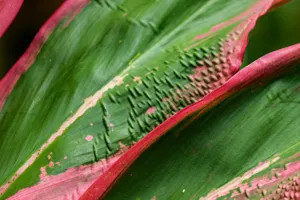
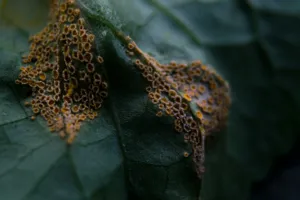
Tiny black dots grouped along leaf veins or in webbing are spider mite faeces. If the dots move when prodded, they’re thrips nymphs or adult scale insects. “Eaten” patches that look silvery or stippled are classic spider mite feeding damage; irregular holes with sticky black droppings suggest thrips. Isolate the plant immediately. Wipe every leaf with a cotton pad dipped in 50% isopropyl alcohol (70% solution mixed 50:50 with water) to physically remove pests and eggs. Rinse with tepid water, then spray a neem oil solution (5 ml cold‑pressed neem oil, 2 ml mild castile soap, 1 liter (approx. 1 quart) water) until the leaves drip. Repeat every 5–7 days for 3 weeks. Place a yellow sticky trap at soil level to catch adult gnats or thrips. If webbing is dense, increase humidity to 60% with a humidifier—spider mites hate moisture. For severe infestations, our spider mites guide provides a complete biological and chemical treatment protocol.
Summer Emergency Action Table
| Symptom | Probable Cause | Immediate Action | Prevention |
|---|---|---|---|
| Sugarcane all yellow within 2 days | Root‑zone heat shock or rot | Check roots, move to 23–26°C (73–79°F), adjust watering | White cachepot, shade during peak heat, moisture meter |
| Mushy cutting, no roots | No node, warm stagnant water | Recut below node, peroxide dip, charcoal, change water every 2 days | Opaque vessel, tepid water, 2–3 day water changes |
| Black specks + stippled/silvery leaves | Spider mites, thrips, or scale | Alcohol wipe, neem spray, isolate, sticky traps | Weekly leaf inspection, 50–60% humidity, quarantine new plants |
Recommended next actions
Next Best Actions
Move from reading to action with related calculators, plant profiles, and quiz-based recommendations.
Topic Guide
Watering
Learn everything about watering for your indoor and aquarium plants. Expert care tips, troubleshooting, and related guides.
Plant Guide
Dracaena Marginata
After cultivating and troubleshooting over 100 Dracaena marginata specimens in indoor environments across dry climates and climate-controlled offices over the past 10 years, we have isolated the exact protocols that keep Madagascar Dragon Trees upright, vibrant, and free from the chronic tip burn that frustrates Western growers.
Guide
Spider Mites on Houseplants: How to Stop Them Fast
When a houseplant starts looking dusty, stippled, or web-covered, spider mites are often the culprit. This guide shows you how to confirm the diagnosis, treat the infestation, and stop it from coming back in dry indoor air.
Frequently Asked Questions
Why is my sugarcane suddenly turning yellow in summer?
Did I kill my cutting by cutting too low on the stem?
What are the tiny black dots and eaten patches on my plant?
Explore More