Summer Vining Stress: Saving Monstera Adansonii and Syngonium from Yellow Leaves
The 'Help with syngonium' and 'What is going on with my monstera adansonii?' DMs spike in June. These vines aren't sick—they're thirsty for humidity and air moisture that AC strips away. Here's the fix.
Quick Answer
Summer yellowing on Monstera adansonii and Syngonium is primarily caused by a transpiration imbalance: high ambient heat drives rapid water loss while indoor AC prevents the plant from replacing it fast enough, leading to node dehydration and leaf yellowing. Increase humidity to 60–70% with a humidifier and pebble tray, check soil moisture every 2–3 days, and water when the top 2–3 cm is dry. Move plants out of direct AC airflow and prune yellow leaves.
Key Takeaways
- Increase ambient humidity to 60–70% to counteract high summer transpiration.
- Check substrate moisture every 2 to 3 days during warm growth periods.
- Keep vining plants away from direct, cold air conditioning drafts.
- Prune fully yellowed leaves at the stem to redirect energy to new shoots.
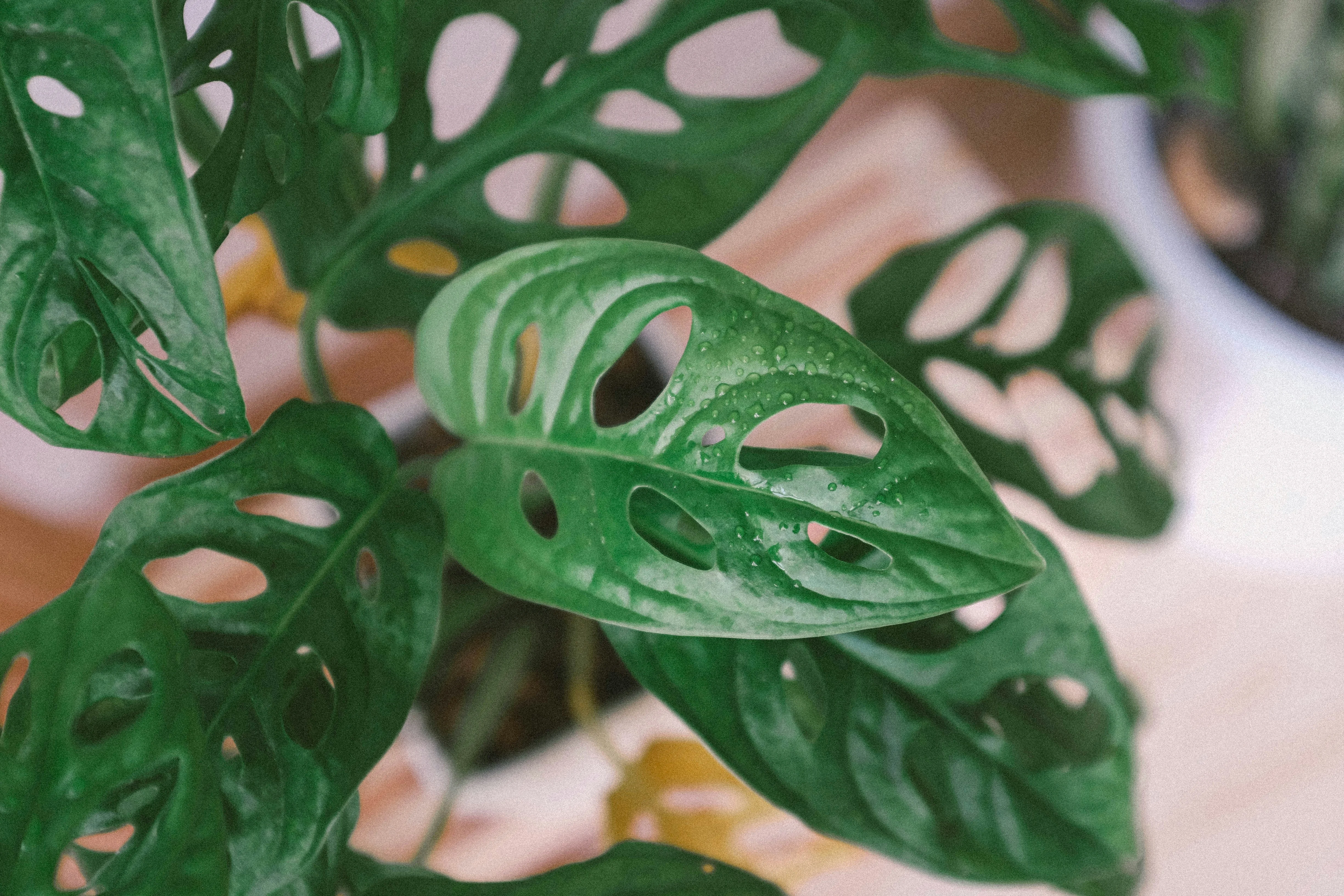
Your Monstera adansonii was a cascade of perfect, holey green leaves in spring. Now, one by one, the oldest leaves are turning a sickly yellow and dropping, and your Syngonium is following suit. The soil feels right—not too wet, not too dry—so what’s happening? In the summer, the real crisis for these thin‑leaved tropical vines isn’t just water at the roots; it’s the moisture deficit in the air. When ambient heat pushes 30°C (86°F) and your AC or a west‑facing window superheats the room, the leaves lose water faster than the vascular system can replace it. The plant sacrifices its oldest leaves to save the growing tip. I’ve diagnosed this exact problem in dozens of panicked messages: “Help with syngonium” and “What is going on with my monstera adansonii?”. The cure is not more water in the pot; it’s water in the atmosphere.
Understanding the Transpiration Crisis
Why are the lower leaves on my Monstera adansonii turning yellow in summer?
Adansonii have thin, delicate leaves with a large surface area relative to their root mass—perfect for the humid understory of a jungle, terrible for a 25% humidity living room. When the air is dry and hot, stomata stay wide open to cool the leaf, causing rapid water loss. If the roots can’t pull water up fast enough (either because the soil is too dry, too wet and rotted, or the pot is overheating), the plant jettisons older leaves to reduce transpiration load. The first step is to measure the ambient humidity with a hygrometer; if it’s below 50%, the plant is in a constant state of water stress even if you water daily. Place a cool‑mist humidifier nearby set to 65%. Group the plant with others to create a shared microclimate. Use the Sunlight Calculator to ensure it’s getting 300–500 fc of bright indirect light; too little light compounds the problem by slowing photosynthesis, which drives water uptake. Our Monstera adansonii care guide details the ideal light and watering balance for this species.
Syngonium-Specific Yellowing Fixes
How do I stop my Syngonium from getting yellow leaves in the heat?
Syngonium podophyllum is particularly sensitive to dry air and reacts with yellowing leaf margins that progress inward. Unlike many aroids, Syngonium also shows yellowing from salt buildup in the soil, which concentrates faster in summer when water evaporates quickly. Flush the pot with three times its volume of distilled water every 6 weeks during summer to prevent fertilizer salt accumulation. Check the soil moisture with a meter; Syngonium likes consistently damp, but not wet, soil. In a hot, dry apartment, that may mean watering every 5–7 days with tepid water. If the yellowing is accompanied by brown crispy tips, the air is too dry—add a pebble tray directly under the pot, and aim a small USB fan away from the plant to prevent stagnant air. Our Watering Calculator will tailor a schedule based on your exact room conditions; plug in your light and temperature to get a safe starting interval.
Misting and Other Myths
Should I mist my vining plants to stop yellowing?
No. Misting raises humidity for only 5–10 minutes and can cause leaf spot on thin‑leaved adansonii and Syngonium if water lingers. Instead, use a humidifier or a pebble tray. The tray should be wide enough that the evaporating water surrounds the plant; fill it with pebbles and water to just below the pot base. As the water evaporates, it creates a 10–15% humidity boost directly around the foliage. If your plant has already dropped many leaves, don’t despair: prune the bare, yellowed stems back to a healthy node, and with restored humidity, new growth will emerge within 3–4 weeks. Our wilting houseplants rescue guide provides additional recovery steps if the drooping is severe.
Summer Vining Plant Diagnostic Table
| Symptom | Likely Cause | Immediate Fix |
|---|---|---|
| Lower leaves uniformly yellow, dropping | Transpiration imbalance (low humidity/heat) | Humidifier to 65%, pebble tray, check soil moisture |
| Yellow leaves with brown crispy edges | Dry air + salt buildup | Flush soil with distilled water, raise humidity |
| Yellow, soft leaves; stems mushy | Overwatering/root rot | Let soil dry, check roots, repot if needed |
| Leaves bleached, yellow patches | Direct sun scorch | Move to bright indirect light, use sheer curtain |
Recommended next actions
Next Best Actions
Move from reading to action with related calculators, plant profiles, and quiz-based recommendations.
Calculator
Plant Light Calculator: Find the Best Window for Your Plant
Determine the ideal indoor light placement for your plant based on species, window direction, and seasonal light availability.
Plant Guide
Swiss Cheese Vine
Expert care guide and diagnostic data for the Swiss Cheese Vine. Learn how to properly water, light, and troubleshoot common issues.
Guide
Wilting Houseplants: Is it Thirsty, Drowning, or Dying?
As horticulturists, we've found that the biggest mistake indoor gardeners make when seeing a wilted plant is blindly reaching for the watering can. We use a simple diagnostic matrix based on turgor pressure to determine exactly why a plant has collapsed.
Frequently Asked Questions
Why are the lower leaves on my Monstera adansonii turning yellow in summer?
How do I stop my Syngonium from getting yellow leaves in the heat?
Should I mist my vining plants to stop yellowing?
Explore More