Bioactive Substrate Calculator: ABG Mix & Volume
Calculate bioactive substrate and optional drainage-layer volumes, then break the substrate into recipe components in Liters or US gallons.
Quick Answer
To calculate bioactive substrate volume, multiply the enclosure's internal length × width × substrate depth and apply the selected coverage percentage. If you select the Classic ABG-style recipe, the calculator divides the required substrate volume proportionally into 7 parts: 2 parts tree fern fiber, 2 parts orchid bark, 1 part peat moss, 1 part sphagnum moss, and 1 part horticultural charcoal.
Enter your details
Enter your details below to generate a custom recommendation.
Recommended Output
LECA / gravel media required for false bottom drainage.
7 total relative parts
The Problem
Determining how much substrate is needed for a specific enclosure footprint and chosen depth, then converting that volume into recipe component quantities without manually calculating ratios.
When to Use This Tool
When calculating substrate volume for a new bioactive terrarium or vivarium.,When calculating how much substrate is needed for a chosen depth above a drainage layer or false bottom.,When dividing a required substrate volume into individual recipe components.,When converting enclosure dimensions into Liters or US gallons.,When planning how much material to purchase using an optional extra-material allowance.
Who is this for?
- Keepers building bioactive vivariums
- Terrarium and paludarium hobbyists calculating substrate volumes
- Plant and terrarium hobbyists mixing custom substrate recipes
How to calculate bioactive substrate volume for an enclosure
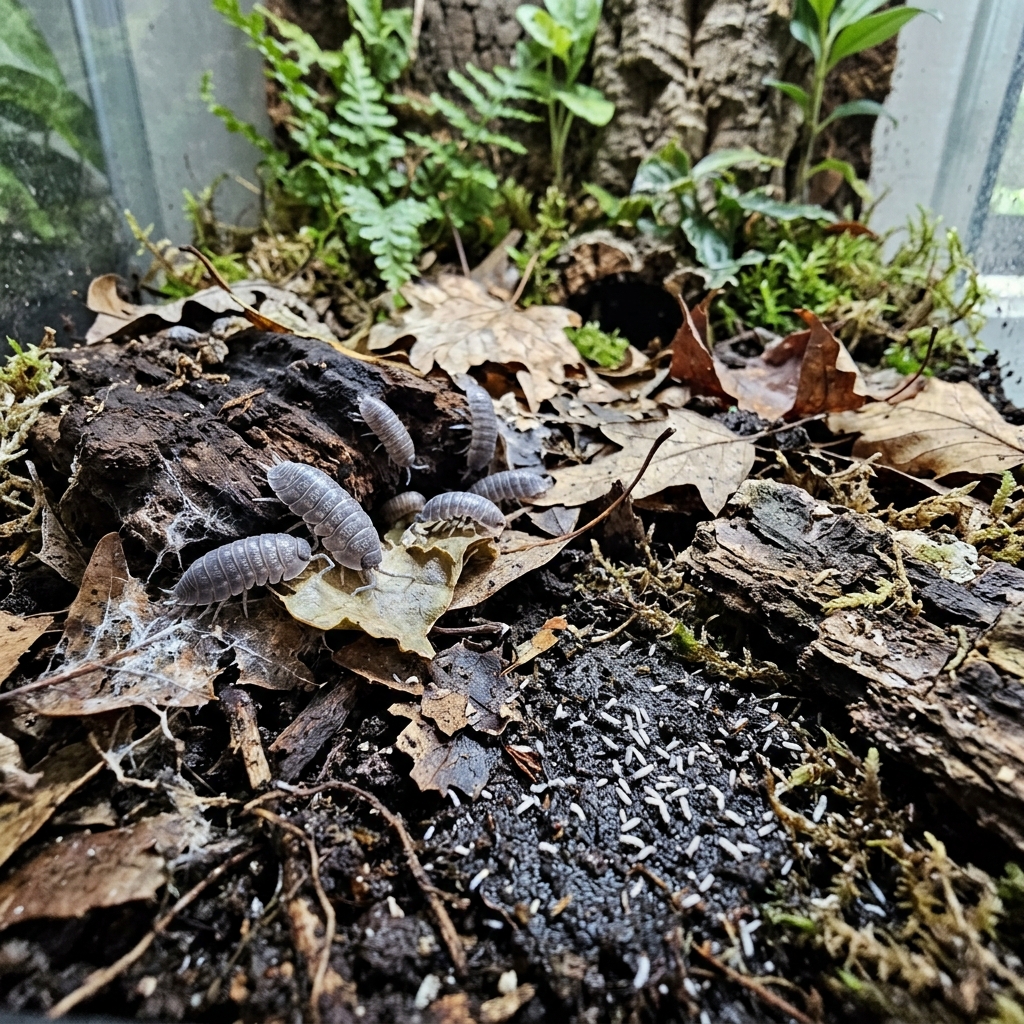
To calculate the substrate volume needed for a bioactive terrarium or vivarium, use the enclosure's usable interior footprint and the substrate depth you plan to use.
- Measure the internal length and width: Record the usable interior base dimensions of the enclosure.
- Enter your substrate depth: Measure only the substrate layer you want to calculate. Do not include a separate drainage layer when entering substrate depth.
- Calculate rectangular volume: Multiply
Length × Width × Substrate Depth. - Apply coverage: If substrate will not cover the entire enclosure floor, enter the percentage of the floor that will receive substrate.
- Choose your output units: Metric results are provided in Liters. US measurements are provided in US gallons, using 231 cubic inches per US gallon.
- Apply a recipe if needed: The calculator can divide the required substrate volume according to the Classic ABG-style preset or a custom recipe using your selected ingredient parts.
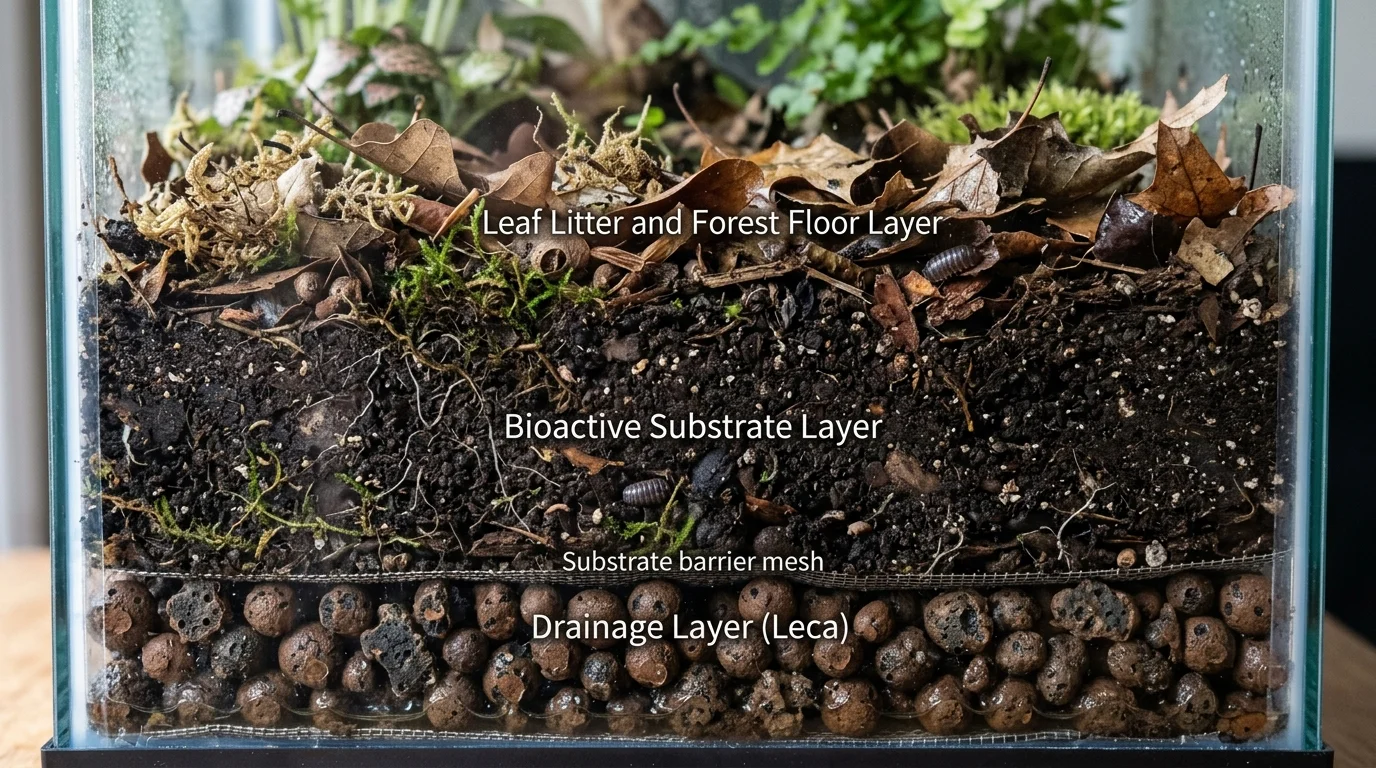
Classic ABG-style substrate recipe
The calculator includes a Classic ABG-style 7-part preset. It divides the required substrate volume into five ingredients according to their selected parts:
- Tree Fern Fiber: 2 parts (28.6%)
- Orchid Bark: 2 parts (28.6%)
- Peat Moss: 1 part (14.3%)
- Sphagnum Moss: 1 part (14.3%)
- Horticultural Charcoal: 1 part (14.3%)
You can also select Custom Recipe and enter your own ingredients and relative parts. The calculator proportionally allocates the required substrate volume across the ingredients you provide.
US gallons for substrate volume
For US measurements, the calculator converts enclosure dimensions into volume using 231 cubic inches per US gallon. This keeps the result consistent with the US gallon unit used for substrate volume.
Optional drainage layer calculation
If your enclosure uses a separate drainage layer, enable the drainage option and enter its depth. The calculator reports the drainage volume separately from the substrate volume, so the two layers are not combined.
Planning your purchase quantity
The optional extra-material purchase allowance is a planning buffer. For example, a 10% allowance increases the purchase-planning volume by 10%. It is not a required adjustment to the substrate calculation.
Recommended next actions
Next Best Actions
Use the result in a real care workflow with plant profiles, guides, and personalized quizzes.
Calculator
Isopod Substrate & Leaf Litter Calculator
Calculate exact volumes of decayed white wood, flake soil, leaf litter, worm castings, and calcium for any isopod terrarium volume or container dimensions.
Topic Guide
Bioactive Cleanup Crew Balance: Isopods and Springtails Cohabitation
Maintain the ideal isopod-to-springtail balance in bioactive terrariums: niche partitioning, crash prevention, food competition, and population control.
Topic Guide
DIY Isopod Substrate Recipe: Ratios, Ingredients & Preparation
Master DIY isopod substrate recipe by volume: decayed white-rot wood, fermented flake soil, oak leaf compost, worm castings, and calcium carbonate ratios.
Topic Guide
How to Culture Springtails on Charcoal: Setup, Feeding & Harvesting
Step-by-step springtail culturing on horticultural lump charcoal: setup, feeding with active dry yeast, flooding harvests, and crash prevention.
Topic Guide
Bioactive Terrarium: How the Living Ecosystem Works
Learn how a bioactive terrarium works, including substrate layering, drainage, springtails, isopods, live plants, ventilation, and maintenance.
Topic Guide
Springtails vs Isopods: Which Bioactive Cleanup Crew Do You Need?
Compare springtails and isopods for bioactive enclosures, including their cleanup roles, coexistence, food, moisture, and healthy starter-culture selection.
Troubleshooting & Diagnostics Guide
1 Calculated volume is higher than expected
Diagnosis: The entered depth includes space that should not be part of the substrate layer.
Treatment: Enter only the substrate depth you want to calculate. If you use a separate drainage layer, calculate it separately with the optional drainage section.
2 The calculated purchase quantity is higher than the required substrate volume
Diagnosis: An extra-material purchase allowance has been entered.
Treatment: Review the Extra Material Purchase Allowance (%) field. This optional value increases the planning quantity but does not change the required substrate volume.
Glossary of Terms
- ABG Mix
- A commonly used bioactive substrate recipe format consisting of multiple ingredients combined in specified relative parts. This calculator provides a Classic ABG-style 7-part preset.
- False Bottom
- A separate drainage zone beneath the substrate layer, often using a porous material or support structure to keep the substrate layer physically separated from collected water.
- Microfauna
- Small organisms commonly used in bioactive enclosures, including springtails and isopods.
- US Gallon
- A US unit of volume equal to 231 cubic inches or approximately 3.785411784 Liters.