Isopod Substrate & Leaf Litter Volume Calculator
Calculate exact volumes of decayed white wood, flake soil, leaf litter, worm castings, and calcium for any isopod terrarium volume or container dimensions.
Quick Answer
Enter your enclosure dimensions, substrate depth, and target isopod genus to calculate the total substrate volume, ingredient quantities, calcium carbonate dose, and loose leaf litter needed for a 2.5 cm top canopy.
Enter your details
Enter your details below to generate a custom recommendation.
Recommended Output
Lignin-rich nutrition for fungal inoculation
Fermented hardwood sawdust substrate
Primary dietary leaf litter substrate matrix
Microbial humus & toxic byproduct filter
Exoskeleton molting & shell hardening calcium reserve (~25g / 10L)
The Problem
Isopod keepers often estimate substrate ingredients by handfuls or container volume, making it difficult to reproduce a nutritious mix, provide enough consumable wood and leaf material, or calculate an appropriate calcium addition for a specific enclosure.
When to Use This Tool
Use this calculator when preparing a new isopod enclosure, replacing a depleted substrate bed, scaling a substrate recipe to a different enclosure size, or estimating the amount of loose leaf litter needed for the surface layer.
Who is this for?
- Isopod keepers building a new bioactive enclosure
- Keepers calculating substrate quantities for Cubaris, Porcellio, or Armadillidium
- Beginners who need measurable substrate ingredient ratios rather than approximate handfuls
- Experienced keepers preparing repeatable substrate batches for multiple isopod enclosures
About this calculator
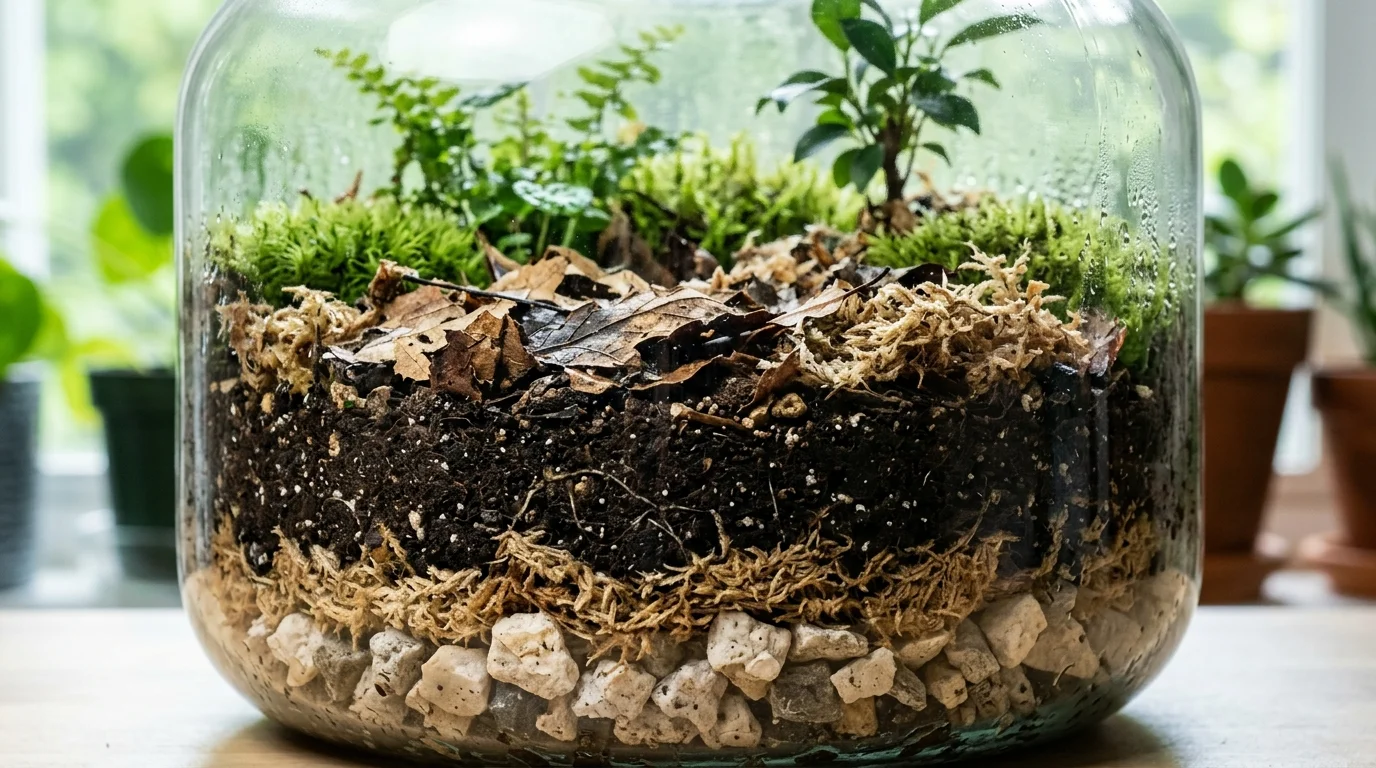
Use this isopod substrate calculator to estimate the main substrate volume, ingredient quantities, calcium carbonate dose, and loose leaf litter required for an isopod enclosure. Enter the usable enclosure length, width, substrate depth, and target isopod genus preset to scale the recipe to your actual enclosure.
How to Use the Isopod Substrate Calculator
- Choose Metric or Imperial units.
- Enter the usable inside length and width of the enclosure.
- Enter the target depth of the main substrate bed.
- Select the substrate preset that best matches your isopod genus.
- Use the calculated ingredient volumes when mixing the substrate, then add the separate loose leaf-litter canopy.
How Isopod Substrate Volume Is Calculated
For a rectangular enclosure, the main substrate volume is calculated from length, width, and depth. With metric dimensions, the result in liters is:
V = L × W × D / 1000
Here, L is enclosure length in centimeters, W is enclosure width in centimeters, and D is substrate depth in centimeters. Dividing the resulting cubic centimeters by 1,000 converts the volume to liters.
For Imperial measurements, the calculator converts the entered dimensions to the equivalent metric volume and reports the result in US dry quarts where appropriate.
Consumable Substrate Matters
Isopod substrate is more than an inert medium that holds moisture. Decayed hardwood, leaf material, and other organic components form part of the animals' food environment. A nutritious substrate should therefore contain substantial consumable material rather than relying primarily on inert filler.
The selected presets divide the calculated substrate volume among decayed white wood, fermented flake soil, leaf material, worm castings, calcium, and charcoal or biochar where specified. These are starting ratios for scaling a batch, not a substitute for observing the animals and the actual condition of the enclosure.
Why Wood and Leaf Material Are Separate
Decayed hardwood provides a long-lasting carbon-rich food source, while aged leaves break down at a different rate and also provide surface cover. The calculator therefore keeps incorporated leaf fragments separate from the loose leaf-litter canopy placed on top of the substrate.
For broader enclosure planning, compare the result with the guidance in isopod terrarium setup and the detailed isopod substrate recipe topic.
How the Calcium Dose Is Estimated
Calcium is not treated as an ordinary volumetric substrate ingredient because calcium carbonate and limestone flour have a different density from wood, leaves, and soil-like materials. Instead, the calculator estimates the dry mass of the substrate from its volume and an assumed dry bulk density of 350 grams per liter, then applies the calcium fraction selected by the genus preset.
The calculation is therefore:
Estimated dry substrate mass = substrate volume × 350 g/L
Calcium powder = estimated dry substrate mass × calcium fraction
This is an estimation rather than a laboratory measurement. Actual bulk density varies with ingredient particle size, compression, moisture content, and how the finished substrate is mixed. Use the result as a repeatable starting dose and avoid treating the calculated number as a universal biological requirement.
Leaf Litter Canopy Calculation
The calculator separately estimates enough loose aged leaves to create a nominal 2.5 cm canopy over the enclosure footprint. This uses the enclosure's length and width rather than the depth of the main substrate bed:
Leaf litter volume = length × width × 2.5 cm / 1000
Because dry leaves are highly compressible and vary substantially in size and shape, the calculated volume is an estimate. A loose canopy may occupy considerably more apparent space than the same leaves after they settle.
Moisture Capacity Should Be Tested in the Finished Mix
Volume calculations cannot determine the final moisture behavior of a substrate with complete precision. Wood, leaves, castings, and flake soil can have very different water-holding capacities. After mixing, test a small representative portion rather than saturating the entire enclosure blindly. The finished substrate should hold appropriate moisture for the target species while still retaining usable air space.
For enclosure-level guidance, see bioactive substrate and bioactive cleanup crew balance.
Charcoal and Biochar
Some presets include a small charcoal or biochar fraction. Use clean horticultural material without fertilizers, pesticides, lighter fluid, salts, or other additives. The charcoal result is a volume estimate and should not be confused with the calcium powder calculation.
For the specific use of charcoal alongside springtail cultures, see springtails culturing charcoal method.
Genus Presets Are Starting Ratios
The calculator includes general, Cubaris, Porcellio, and Armadillidium presets to make scaling a repeatable recipe easier. Species, colony density, enclosure ventilation, ambient humidity, feeding practices, and the condition of the existing substrate can all change what works in practice. For specialist setups such as Rubber Ducky isopods, also review Rubber Ducky isopod care rather than assuming that every Cubaris enclosure should use identical conditions.
Using the Calculator When Refreshing an Existing Enclosure
When refreshing a mature enclosure, do not automatically replace all substrate simply because frass is visible. Frass is part of the biological activity of a functioning colony. Consider the substrate's structure, smell, moisture gradient, food availability, and whether the material is still providing usable habitat. If a partial replacement is appropriate, calculate only the volume you intend to replace and mix fresh consumable components proportionally.
Important Measurement Notes
- Measure the usable interior footprint rather than the outside dimensions of the enclosure.
- Measure substrate depth after accounting for any drainage layer or inaccessible base.
- Do not pack the ingredients tightly before measuring their volumes.
- Calcium output is an estimated mass based on an assumed dry bulk density and should be adjusted if your actual substrate density differs substantially.
- Leaf litter is intentionally calculated as a separate loose layer rather than being included in the main substrate-bed volume.
Recommended next actions
Next Best Actions
Use the result in a real care workflow with plant profiles, guides, and personalized quizzes.
Calculator
Bioactive Substrate Calculator: ABG Mix & Volume | PlantSolve
Calculate bioactive substrate and optional drainage-layer volumes, then break the substrate into recipe components in Liters or US gallons.
Topic Guide
Bioactive Cleanup Crew Balance: Isopods and Springtails Cohabitation
Maintain the ideal isopod-to-springtail balance in bioactive terrariums: niche partitioning, crash prevention, food competition, and population control.
Topic Guide
DIY Isopod Substrate Recipe: Ratios, Ingredients & Preparation
Master DIY isopod substrate recipe by volume: decayed white-rot wood, fermented flake soil, oak leaf compost, worm castings, and calcium carbonate ratios.
Topic Guide
How to Set Up an Isopod Terrarium: Ventilation & Moisture Gradients
Step-by-step isopod terrarium setup: enclosure selection, creating a moisture gradient, cross-ventilation, cork bark hides, and leaf litter depth.
Topic Guide
How to Culture Springtails on Charcoal: Setup, Feeding & Harvesting
Step-by-step springtail culturing on horticultural lump charcoal: setup, feeding with active dry yeast, flooding harvests, and crash prevention.