Bottom Watering Plants
Bottom watering is a highly effective hydration technique for houseplants that relies on capillary action to draw moisture up from the base of the pot. By saturating the root zone from below, this method prevents soil compaction, keeps the foliage of sensitive plants dry, and deprives fungus gnats of the damp topsoil they need to breed. While it requires slightly more time than traditional top watering, the benefits for root health are significant. However, bottom watering does not flush accumulated fertilizer salts from the soil, meaning it should be periodically alternated with standard top watering for optimal long-term plant care.
Quick Answer
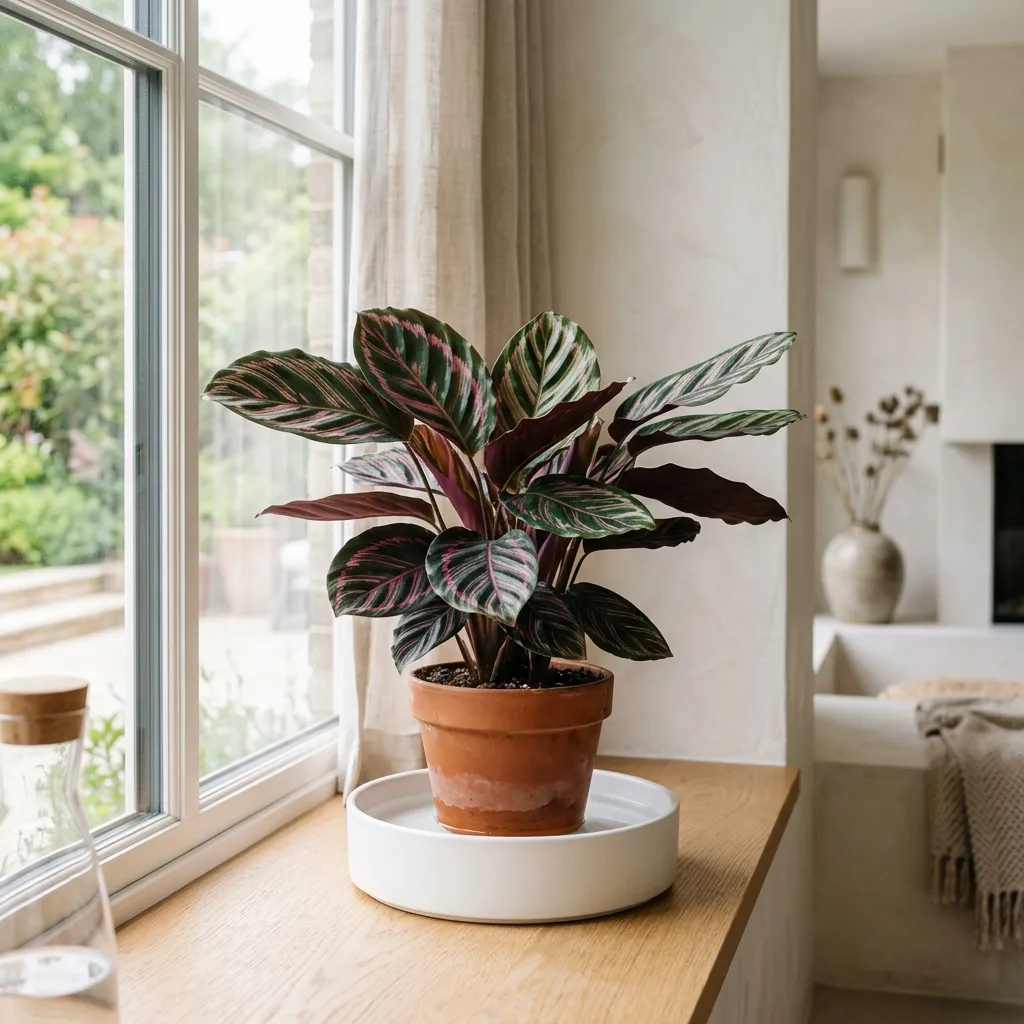
Bottom watering is a technique where a potted plant is placed in a shallow basin of water, allowing the soil to absorb moisture upward through capillary action. It encourages deep root growth, keeps delicate foliage dry, and helps prevent fungus gnats by leaving the topsoil dry. However, plants should not be left sitting in water indefinitely, and occasional top watering is still required to flush mineral salts.
What Is Bottom Watering?
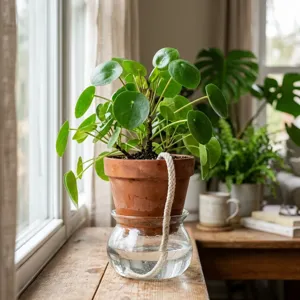
Bottom watering is a hydration method where a potted plant is placed in a basin or saucer filled with water, allowing the soil to absorb moisture from the bottom up via capillary action. This technique contrasts with traditional top watering, where water is poured directly over the soil surface.
How Capillary Action Works in Soil
Potting mixes contain tiny air pockets and organic materials like peat moss or coir that act like a sponge. When the base of the soil comes into contact with water through the pot's drainage holes, capillary action draws the water upward against gravity. The soil will only absorb as much water as it can hold, which helps evenly saturate the entire root zone without compacting the top layer of soil.
Benefits of Bottom Watering
Encourages Deep Root Growth
When water is consistently provided from the bottom, roots naturally grow downward toward the moisture source. This results in a stronger, deeper root system compared to shallow top watering, which can encourage weak, surface-level roots.
Prevents Fungus Gnats
Fungus gnats require damp topsoil to lay their eggs and complete their life cycle. Because bottom watering can leave the uppermost inch of soil dry while perfectly hydrating the lower root zone, it is an highly effective cultural control method for preventing gnat infestations.
Avoids Foliage Damage
Certain plants, such as African Violets, Cyclamen, and Begonias, are susceptible to crown rot or leaf spotting if water is splashed on their fuzzy or sensitive foliage. Bottom watering keeps the leaves completely dry.
Comparison: Bottom Watering vs. Top Watering
| Feature | Bottom Watering | Top Watering |
|---|---|---|
| Moisture Distribution | Evenly saturates the lower root zone | Can sometimes run down the sides if soil is hydrophobic |
| Soil Compaction | Keeps soil light and aerated | Can compact the topsoil over time |
| Pest Prevention | Helps deter fungus gnats by keeping topsoil dry | Wet topsoil can attract pests |
| Mineral Flushing | Does not flush accumulated salts | Flushes excess fertilizers and minerals out of the pot |
| Time Required | Slower (15–45 minutes per batch) | Fast (immediate pouring) |
How to Bottom Water Properly
- Prepare a Basin: Fill a sink, tub, or large saucer with 1 to 2 inches of room-temperature water. Add liquid fertilizer if it is feeding time.
- Place the Pots: Set your nursery pots (must have drainage holes) into the water. Ensure they are sitting flat.
- Wait and Monitor: Allow the plants to soak for 15 to 45 minutes. The exact time depends on the size of the pot and the composition of the potting mix.
- Check the Topsoil: Periodically touch the soil surface. Once the moisture reaches just below the top inch, the plant has absorbed enough water.
- Drain Thoroughly: Remove the pots from the basin and let all excess water drain freely before returning the plants to their decorative cover pots.
What NOT to Do
Never leave a plant sitting in a basin of water indefinitely. Bottom watering is an active process; forgetting a plant in a tub of water overnight is one of the most common ways to accidentally induce root rot. Additionally, do not rely on bottom watering exclusively. It is essential to top water your plants roughly once a month to flush out the mineral and fertilizer salts that slowly accumulate in the soil.
Frequently Asked Questions
Can I bottom water all of my houseplants?
Most potted plants with functioning bottom drainage holes can be bottom watered. However, extremely large or heavy pots may be impractical to move, and plants that are severely rootbound might struggle to absorb water effectively because the roots block the capillary pathways.
How long should I leave a plant in the water to bottom water it?
The duration depends on the pot size and soil density, but it generally takes 15 to 45 minutes. You can test it by pressing your finger into the top of the soil; once it feels slightly damp just below the surface, the plant has drawn up sufficient water and should be removed.
Does bottom watering prevent root rot?
Bottom watering can help prevent rot caused by overly compacted, poorly aerated topsoil. However, if you forget the plant and leave it sitting in a basin of water for many hours or overnight, it will quickly become waterlogged and develop root rot.
Do I ever need to top water if I prefer bottom watering?
Yes. When you exclusively bottom water, dissolved minerals and fertilizer salts are drawn upward and left behind as water evaporates. It is crucial to top water thoroughly about once a month to flush these accumulated salts out through the drainage holes.
Can I add liquid fertilizer when bottom watering?
Yes, you can mix water-soluble liquid fertilizer into the basin water. The plant will absorb the nutrients along with the moisture. Just be sure to use the correct dilution rate for the total volume of water in the basin.
Why is my plant not absorbing water from the bottom?
If a plant fails to draw up water, the potting mix might be completely hydrophobic (extremely dry peat moss repels water initially) or the plant is so rootbound that there is no soil left at the bottom to initiate capillary action.
Explore More
Related Articles
Related Plant Guides
No specific plant guides found matching this topic.